If you have ever waited on a Schedule K-1 and felt your stomach drop when an estimated tax deadline passed, you are not alone. I grew up watching my parents run a mid-sized agricultural supply company, and the paperwork lag was constant. The business would be humming, the numbers would be real, but the tax forms would arrive on their own schedule. The key thing to know is this: the IRS expects you to pay tax as income is earned, even if the K-1 that reports it shows up later.
So what do you do when the K-1 arrives after a quarterly due date? You make a reasonable estimate, pay on time based on what you know, then true up once the K-1 arrives.

First, what a late K-1 does and does not change
A Schedule K-1 reports your share of a partnership, S corporation, estate, or trust activity. It is common for K-1s to arrive in March or even later, especially when the entity files an extension.
A late K-1 does not move your individual estimated tax due dates. Estimated tax deadlines are generally April 15, June 15, September 15, and January 15. The exact date can shift for weekends, holidays, or disaster relief. Also, the January payment is generally not required if you file your return and pay the full balance by the IRS deadline for that option (it typically falls in late January or early February, depending on the year).
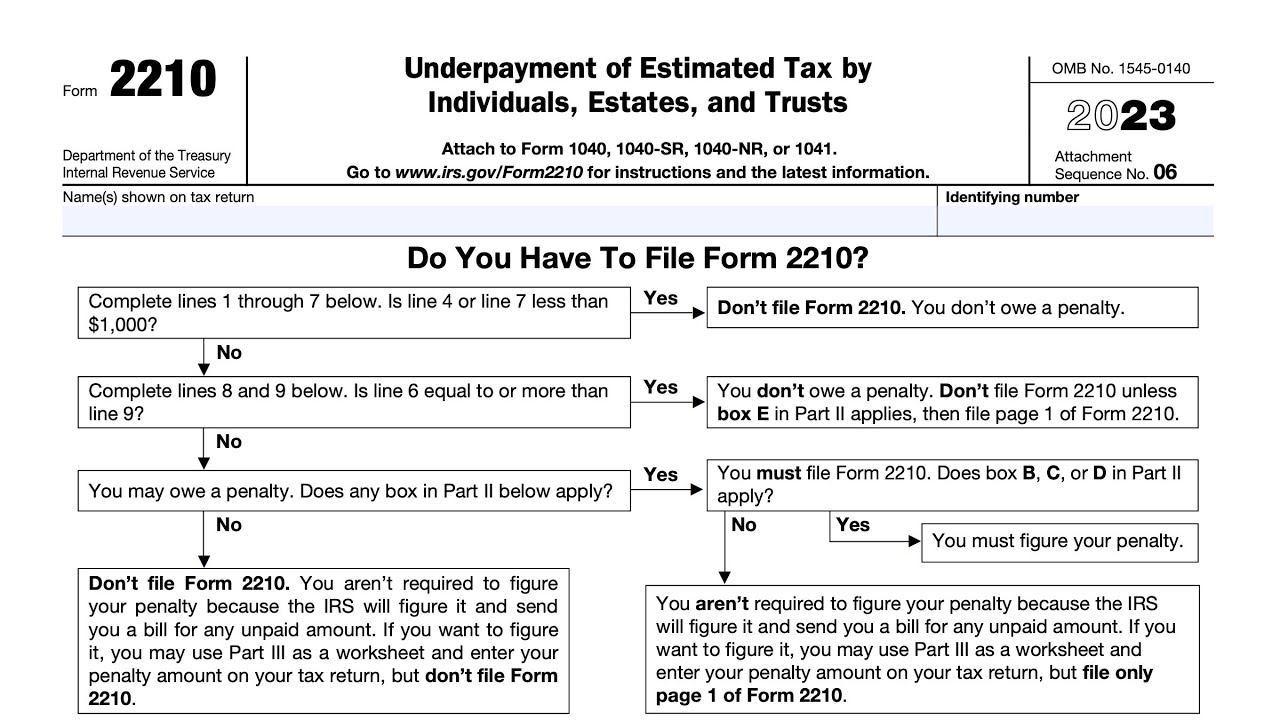
A late K-1 also does not automatically mean you owe a penalty. Penalties depend on whether you paid enough, on time, based on the required installment rules. Many people stay penalty-safe by using a safe harbor. If your income is uneven, Form 2210 Schedule AI (annualized income) can help support uneven timing, but think of that as a targeted tool, not step one.
How K-1 income fits into estimated payments
This part trips people up because it is tempting to assign the income to the quarter when the K-1 arrives. In most cases, that is not how estimated taxes work.
The default assumes income is even
Under the standard estimated tax approach, the IRS effectively assumes you earn income evenly throughout the year and expects payments in four installments. That is why a late K-1 does not, by itself, justify skipping an earlier installment.
- If the partnership or S corporation earns income steadily throughout the year, it is reasonable to treat your expected K-1 income as earned ratably (evenly) across the year unless you have better information.
- If the entity has seasonal or lumpy income (for example, a real estate sale in August or a big year-end event), you may have a stronger case for assigning more income to later periods. This is where annualized income calculations (Form 2210 Schedule AI) can matter.
Practical default: spread the estimate, then catch up
If you are missing the K-1 and you do not have precise timing details, a defensible approach is to estimate your full-year K-1 taxable income and spread it across the installments that have passed so far. Then you true up as you learn more.

How to estimate taxable K-1 income before it arrives
Your goal is not perfection. Your goal is a reasonable estimate that helps you avoid underpaying and getting surprised later. And when you can, anchor your plan to a safe harbor.
Start with what you can usually access
- Prior-year K-1: Look at last year’s ordinary business income (Box 1 is often a starting point), plus other separately stated items such as interest, dividends, capital gains, charitable contributions, Section 179, and credits. If the business is stable, last year is a solid baseline.
- Year-to-date bookkeeping or investor reports: Many entities send quarterly financials, capital account statements, or investor updates. Even a rough profit estimate can be enough for estimated taxes.
- Distributions are not the same as taxable income: A distribution can be tax-free (return of basis) or taxable depending on the entity and your basis. Do not assume cash received equals taxable income.
- Noncash taxable items are real: One of the worst surprises is taxable K-1 income with little or no cash distribution. That is another reason waiting to pay until money hits your account can backfire.
- One-time events you already know about: Asset sales, debt forgiveness, large contracts, or major expenses can swing taxable income. If management has shared guidance, incorporate it.
Translate that estimate into your personal tax picture
K-1 amounts do not land on your tax return as a single flat tax. The effect depends on your situation, including:
- your marginal federal rate
- self-employment tax (common for general partners and certain LLC members)
- the qualified business income (QBI) deduction for pass-through income
- state income taxes
- other income (W-2 wages, spouse income, investment income)
If you are doing the math quickly, a practical approach is to use a conservative blended rate (for example, 25% to 35% federal for many higher-earning households, plus state), then refine later when the K-1 arrives.
Example: K-1 arrives after a due date
Let’s use a simple scenario.
Maya is a partner in a marketing agency LLC taxed as a partnership. She expects a meaningful profit allocation, but the K-1 routinely arrives in late August because the partnership extends.
Here is what happens in her year:
- April 15 (Q1 due): No K-1 yet. Maya uses last year’s K-1 and the agency’s Q1 financial snapshot to estimate that her full-year ordinary income allocation will be about $120,000.
- June 15 (Q2 due): Still no K-1. The agency’s mid-year update suggests results are tracking slightly ahead. Maya bumps her full-year estimate to $140,000.
- September 15 (Q3 due): The K-1 arrives in late August, showing she is allocated more profit than expected, plus a separately stated item she did not anticipate.
What changed when the K-1 showed up?
The profit did not suddenly happen in August just because the K-1 arrived then. In a steady business, it was building over the earlier months as the agency operated. That is why Maya’s best move is usually to treat the K-1 as confirmation of what was happening all year and then catch up with a larger Q3 payment if needed.
How Maya true ups once the K-1 arrives
When the K-1 comes in, Maya does three things:
- Reforecast her full-year tax. She updates her expected total income and deductions, not just the K-1 line items.
- Compare what she has already paid to where she should be year to date. If she is behind, she makes a larger payment with the next installment.
- Adjust the remaining payments. She spreads the remaining amount across the rest of the year so she does not get hit with a January scramble.
If Maya is significantly behind because the partnership had a big mid-year event and the income is truly uneven, she may talk with her tax pro about the annualized income installment method (Form 2210 Schedule AI) as support for the timing of payments. That is a deeper calculation, but it can be very helpful when income is lumpy rather than steady.
True up without overcomplicating it
Most households do not need to rebuild their entire tax return every quarter. A clean true up process looks like this.
Step 1: Update your annual tax estimate
- Update your expected K-1 ordinary income and separately stated items.
- Update any withholding changes (W-2 jobs, retirement distributions).
- Update deductions, including retirement contributions and health insurance if you are self-employed.
Step 2: Do a simple catch up check
Catch up amount = (Revised annual tax target x rough percent of year passed) minus payments already made
This rule of thumb is for cash flow planning and staying generally on track. If you are trying to minimize underpayment penalty precisely, compute required installments under the IRS rules, or use Form 2210 and, if applicable, the annualized income method.
Step 3: Put the catch up into the next payment, then normalize
If your new estimate shows you are behind, you can pay extra with the next installment. Then set the remaining quarters based on the updated forecast.
If you discover you overpaid, you can reduce future estimates. You will generally get the overpayment back as part of your refund when you file, unless you choose to apply it to next year.
Penalties vs a big balance due
These are related, but not identical.
- Avoiding penalties is about meeting a safe harbor or correctly matching the required installment rules (including annualizing, if appropriate).
- Avoiding a big balance due at filing is about paying close to your actual total tax for the year so you are not writing a painful check in April.
Late K-1s tend to cause both problems, so I try to plan for penalty safety first, then refine for cash flow once the real K-1 numbers land.
Penalty risk: two quick guardrails
I keep this part short on purpose because penalties are fact-specific. But two guardrails help most people sleep better.
1) Use a safe harbor when possible
Many taxpayers avoid underpayment penalties by paying in at least:
- 90% of the current year tax, or
- 100% of the prior year tax (often 110% if prior-year AGI exceeded the IRS threshold). The prior-year return must generally cover 12 months.
If your K-1 is late, the prior-year safe harbor is often the most practical anchor because it does not require knowing the current-year K-1 yet.
2) If income is truly uneven, annualizing can help
If your K-1 income is not steady and you can substantiate that more income occurred later in the year, Form 2210 Schedule AI can sometimes reduce penalty exposure. This is typically something to do with a tax pro once you have the full-year facts.
If you already missed a payment deadline, the fix is usually a combination of making the payment as soon as possible and evaluating whether you qualify for a waiver or reduced penalty based on your facts and timing.
Common mistakes with late K-1s
- Waiting for the K-1 to pay anything. If the K-1 represents a big chunk of your income, waiting can create a large underpayment.
- Using distributions as the tax estimate. Cash received can be very different from taxable income, and some taxable income is not paid out in cash at all.
- Ignoring separately stated items. Interest, dividends, capital gains, charitable contributions, Section 179, and credits can all change the tax result.
- Forgetting state estimates. Your federal estimate might be fine while your state is underpaid, or the reverse. State due dates and safe harbors can differ.
- Not coordinating with withholding. Sometimes the simplest move is increasing W-2 withholding, which is generally treated as paid evenly throughout the year for federal purposes.

FAQ
What if my partnership or S corporation files an extension?
The entity extension can delay your K-1, but it does not extend your personal estimated tax due dates. Your personal return extension also does not extend the time to pay tax, it only extends the time to file.
If my K-1 arrives after the January 15 estimated tax due date, what then?
Do a true up as soon as you have reliable numbers. Depending on timing, you may be able to skip the January estimated payment if you file and pay your full balance by the IRS deadline for that option. If you materially underpaid across the year, you may owe an underpayment penalty, but safe harbors, annualizing, or waiver criteria might reduce it depending on your facts.
Should I pay based on last year’s K-1?
Often yes, especially as a baseline for safe harbor planning. If your current year is clearly higher, adjust upward so you are not stuck with a big balance due and potential penalties.
Is it okay if my estimate is wrong?
An estimate is allowed to be an estimate, but the system is built around safe harbors and required installments. Aim for a reasonable estimate, and use a safe harbor when you can. The bigger issue is systematically paying far too little relative to your eventual tax, especially if you had information suggesting income was higher.
The calm way to handle a late K-1
If you take nothing else from this, take this workflow:
- Estimate early using last year’s K-1 plus any year-to-date information you can get.
- Pay something on time rather than waiting for perfect data.
- Use the default rule wisely, which generally assumes income is earned evenly unless you can support uneven timing with annualizing.
- True up quickly once the K-1 arrives, then adjust remaining payments.
That combination keeps you compliant, reduces nasty surprises, and gives you back what late K-1s steal most often: a sense of control.