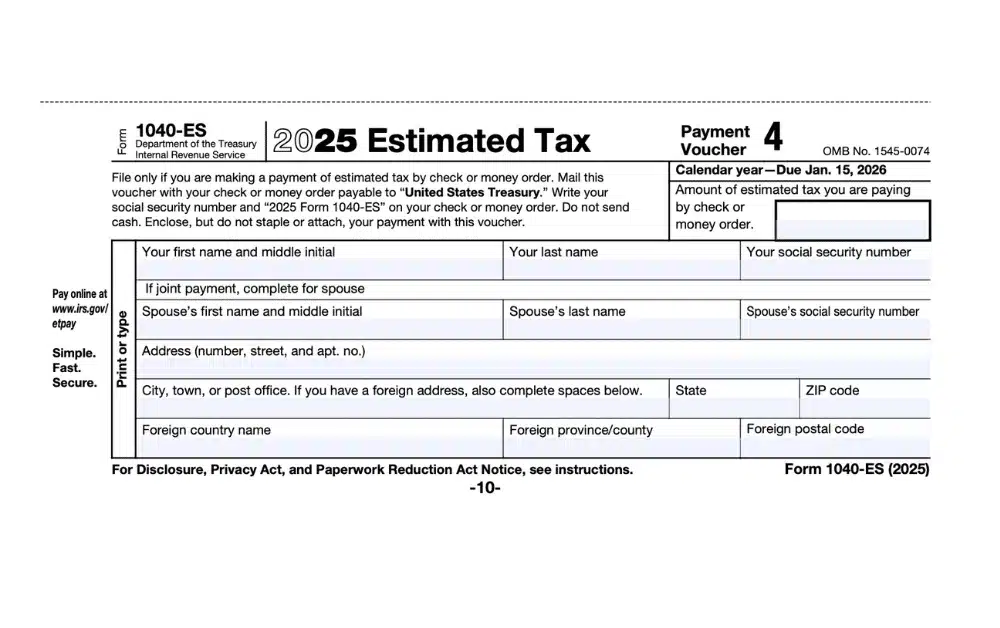
When I was growing up, I watched my parents run an agricultural supply company where cash flow came in waves. Some months were great. Some months were stressful. The tax bills, though, always arrived on schedule. That early lesson matters for today’s freelancers, founders, and investors: federal quarterly estimates (Form 1040-ES) are important, but they are not the whole game. Your state can have its own rules, its own safe harbor, and its own payment system.
This guide breaks down where state estimated taxes often differ from federal quarterly estimates, how those differences create surprises, and what to check in your own records so you can pay the right amount to the right place at the right time.

Federal 1040-ES is a framework
Estimated tax is simply “pay as you go” tax for income that does not have enough withholding attached to it, like self-employment income, investment income, or side-gig profits.
At the federal level, estimated taxes are meant to cover income tax plus self-employment tax (if applicable) when you do not have enough withholding through a W-2 job, pension, or other source.
In broad strokes, federal estimated tax rules focus on:
- Whether you’ll owe enough tax at filing time after subtracting withholding and credits. For most individuals, the commonly cited trigger is expecting to owe $1,000 or more when you file, but special situations and edge cases can change how the rules apply.
- Whether you paid in enough during the year to avoid an underpayment penalty, often evaluated through a federal safe harbor.
- Four due dates that are not evenly spaced.
The usual federal due dates are:
- April 15
- June 15
- September 15
- January 15 (of the following year)
If a due date lands on a weekend or holiday, it typically shifts to the next business day.
Now here is the key point: states often copy the concept but not the details. Many do, but “many” is not “all,” and the differences are where people get burned.
How states differ
This article applies in states that levy an individual income tax. If you live in a state with no individual income tax, you may not have state estimated income tax payments, but you still might have other state level obligations depending on your situation (for example, business taxes, franchise taxes, or gross receipts style taxes).
1) Thresholds
The federal $1,000 rule is widely cited. States set their own thresholds and definitions.
Common ways state thresholds differ:
- Different dollar trigger than the federal amount.
- Different definition of “tax due”, sometimes focusing on state income tax only, sometimes factoring in credits differently.
- Separate rules for part-year residents and people with multi-state income.
- Different treatment of pass-through income from S corporations and partnerships, especially if the state has or uses entity-level taxes or composite return rules.
Takeaway: meeting a federal threshold test does not automatically mean you are in the clear at the state level.
2) Due dates
Many states align their estimated tax due dates with the federal schedule. Some fully conform, while others use different installment periods or have nuances around weekend and holiday adjustments.
Even when the dates match, what can differ is how your state applies payments (for example, whether you must designate the tax year and payment period precisely, or whether the portal defaults to the current year).
3) Safe harbors
Federal safe harbor rules are widely discussed for a reason: they give you a penalty shield if you pay enough during the year, even if your final tax bill is higher.
States may:
- Use a different safe harbor percentage than federal rules.
- Base safe harbor on different figures (state total tax, prior-year state tax, or current-year projections).
- Limit safe harbor availability for some higher-income filers in some states.
- Use a different penalty calculation method, sometimes with different annualization options for uneven income.
If you want a concrete feel for how varied this can get, here are common patterns you will see in the wild: some states focus on paying a percentage of current-year tax (often framed like “90% of this year”), while others lean harder on prior-year tax as a benchmark (sometimes at 100% or higher for certain taxpayers). The point is not the exact numbers. The point is that the rule you rely on federally may not be the rule your state uses.
This is why I tell clients: “I’m covered federally” is not the same as “I’m covered.”
4) Payment portals
Federal estimates go to the IRS. State estimates go to your state revenue department, typically through a separate online system.
Expect differences in:
- How you authenticate (some states require an account, others allow guest payments).
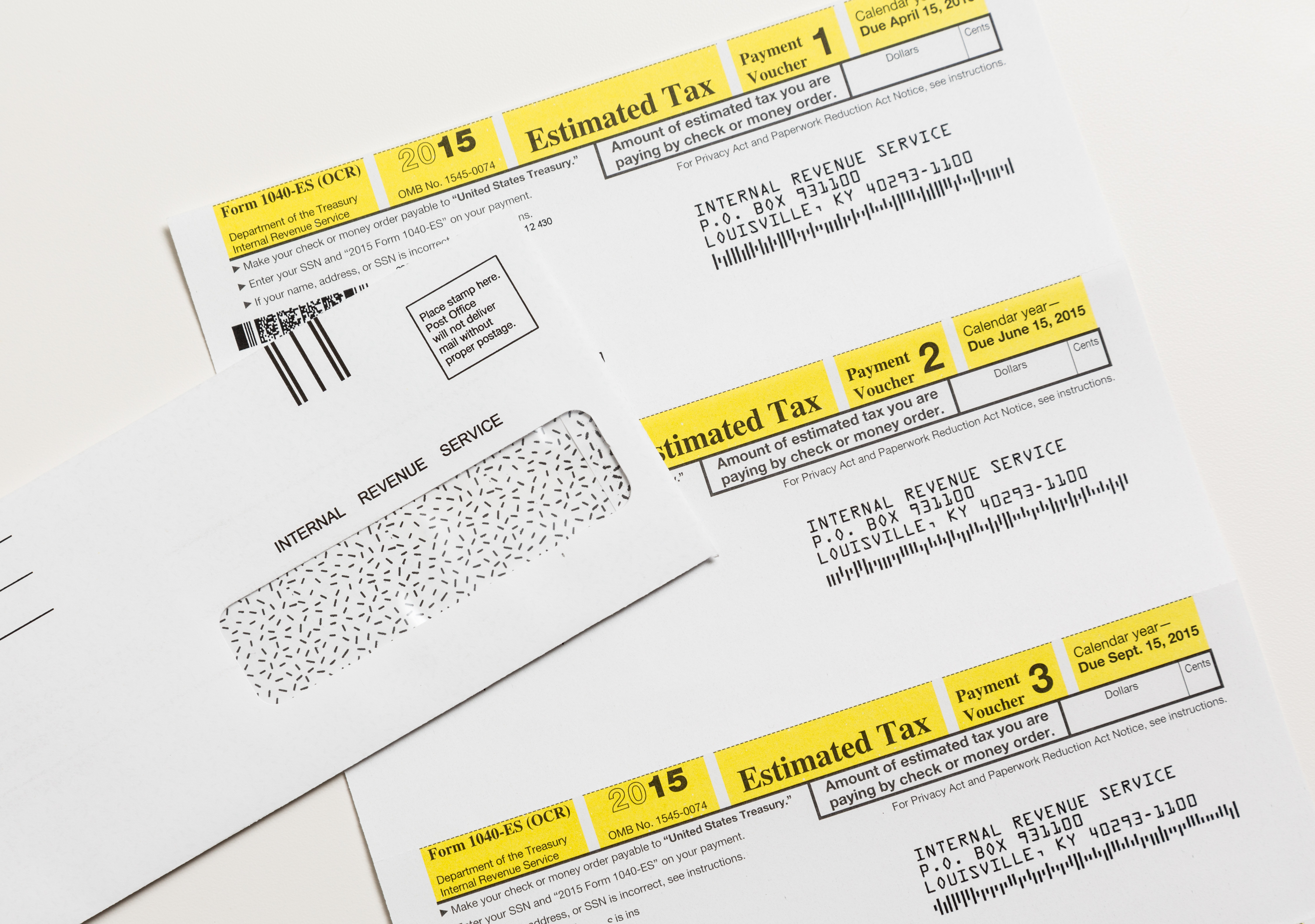
- Payment methods (ACH debit, credit card processors, check vouchers).
- How payments are labeled (period selection can matter).
- Processing and posting time, which matters if you pay close to the deadline.
One habit that saves real money and real headaches: save the confirmation number and a screenshot or PDF of the receipt, then label it by tax year and payment period so you can prove what you paid and when.

Example: federal safe harbor, state problem
Let’s use a simple, realistic scenario I see often with founders who also have a W-2 job.
The setup
- Maya lives in a state with an individual income tax.
- She has a W-2 job that withholds federal and state income tax.
- She also has a growing side consulting business (1099 income).
- Last year, her total tax was lower because the consulting work was smaller.
What Maya does for federal
Maya increases her federal W-2 withholding enough to meet a federal safe harbor based on her prior-year federal tax. She does not make separate federal quarterly payments because the extra withholding covers it. From the IRS perspective, she is likely fine on underpayment penalties.
Where the state trips her up
Her state’s safe harbor works differently. The state either:
- requires a higher pay-in percentage to be penalty-safe, or
- ties the safe harbor to current-year tax more strictly, or
- has a lower threshold that triggers estimated payments sooner.
The result
Maya files her state return and learns she should have made state estimated payments during the year because her state withholding did not increase enough to satisfy her state’s underpayment rules. She may owe a penalty or interest even though she “did everything right” for federal.
The practical lesson: federal withholding adjustments can solve federal estimates, but they do not automatically solve state estimates. You have to run the numbers twice, once under IRS rules and once under your state’s rules.
What to check in your state
If you want a clean, low-stress approach, here is what I recommend checking before you assume your federal plan covers your state.
1) Your prior-year state return
Pull last year’s state return and find:
- Total tax (the number your state uses for safe harbor calculations).
- Total payments and withholding.
- Any underpayment penalty form or worksheet included with the return.
This is the fastest way to see what the state considered “enough” last year.
2) Your most recent pay stub
Look at:
- State income tax withheld year-to-date on your pay stub.
- Whether your employer withholding is on track for your target by year-end.
- If you changed jobs mid-year, confirm the combined withholding across employers.
A lot of state underpayment issues come down to one simple fact: the withholding did not keep up with the side income.
3) Your year-to-date income picture
For business owners and freelancers, check:
- Year-to-date net profit (not revenue).
- Capital gains distributions, dividends, or interest.
- IRA conversions, stock option exercises, or large one-time bonuses.
States may treat certain income items differently, but the bigger point is to know what is actually changing your tax base.
4) Your state estimated-tax page
You are looking for five things:
- Who must pay estimates (the threshold and how it is computed).
- Due dates and whether they mirror federal.
- Safe harbor language and any income-based limitations or exceptions.
- Timing rules for withholding (whether the state treats withholding as paid evenly throughout the year for penalty purposes, or whether timing can matter).
- Where to pay (portal link, voucher rules, and how to designate the payment period).

Coordinating federal and state
Option A: Increase withholding
One of the cleanest tactics is increasing W-2 withholding, because withholding is treated as paid evenly throughout the year for penalty purposes at the federal level. At the state level, do not assume the same treatment. Some states follow the federal convention, while others use different installment-period rules or do not give late-year withholding the same “evenly paid” effect. Confirm your state’s timing rules before you rely on this strategy.
Option B: Pay quarterly to both
If you prefer clear separation, set up recurring reminders for:
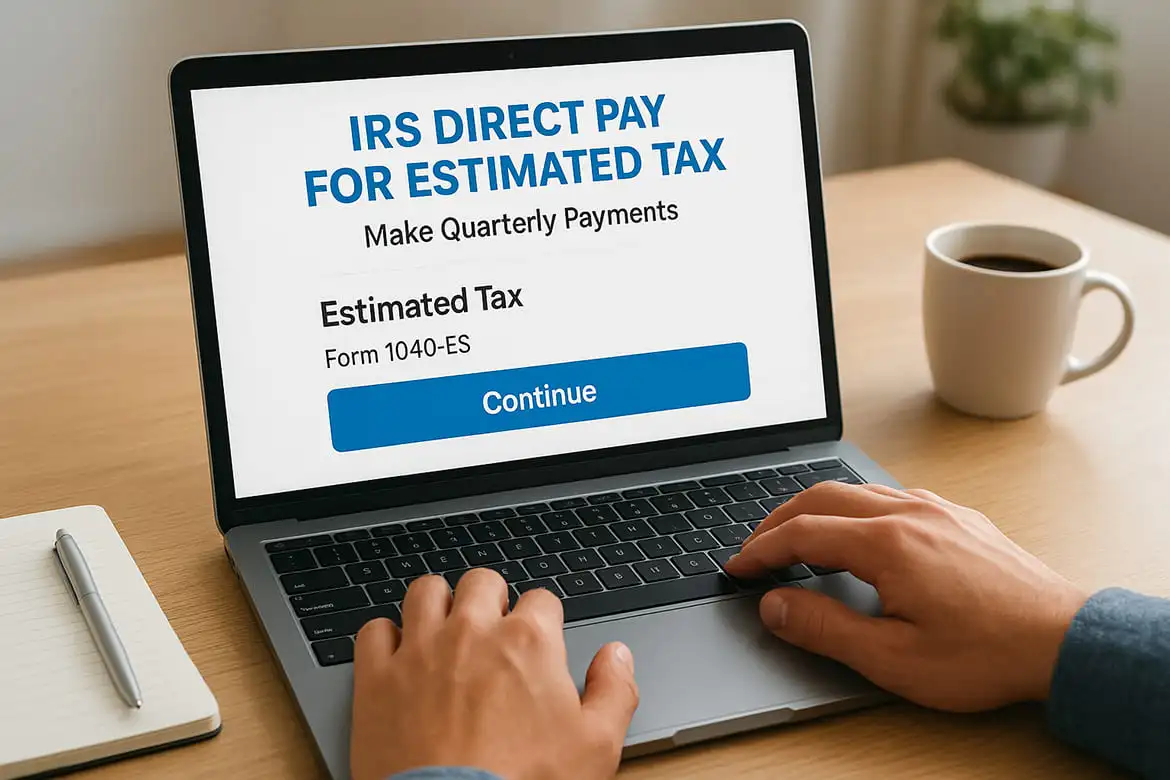
- Federal estimated payments (IRS Direct Pay or EFTPS).
- State estimated payments (your state portal).
Keep your own clean trail. Save confirmations, and note the tax year and payment period you selected so you can reconcile later.
Option C: Hybrid approach
Many founders do a hybrid:
- Increase withholding to cover one layer (often federal).
- Make explicit quarterly payments for the other layer (often state) when the state rules are stricter or less forgiving.
Local estimated taxes
Depending on where you live, you may also have city or local income taxes with their own estimated payment rules. If your pay stub shows local withholding, or your prior-year return included a local tax return, add that jurisdiction to your checklist.
Quick FAQ
If I pay federal estimates, will the state automatically know?
No. The IRS and your state revenue department are separate systems. A federal payment does not credit your state account.
If I am getting a federal refund, can I still owe my state?
Yes. Different tax rates, different credits, and different withholding levels can produce opposite outcomes.
If I live in one state and work in another, do I have to pay estimates to both?
Possibly. Often, you owe tax to your resident state on your total income, and you may owe tax to a work state on income sourced there if it is not covered by reciprocity, withholding, or credits. Depending on how withholding is allocated and how credits work, you might need estimated payments to one, the other, or both.
What is the fastest way to avoid state underpayment surprises?
Mid-year and again in early Q4, compare (1) state withholding year-to-date plus state estimates paid to (2) what your state safe harbor requires, often based on last year’s state total tax if your state offers that method. Also remember that underpayment penalties are often calculated by installment period. A big catch-up payment later can reduce the damage, but it may not erase a penalty tied to an earlier period. If your income is lumpy, check whether your state allows annualized installment calculations and whether that would reduce penalty exposure.
The checklist
Before the next quarterly deadline, answer these five questions:
- Do I know my prior-year total state tax from last year’s return?
- Does my state have a safe harbor, and what is the rule?
- Are my state withholdings on track to meet that safe harbor, and does my state care about timing?
- Do my due dates match the IRS, or do they differ?
- Do I know exactly where and how to pay on my state portal, including selecting the correct tax year and payment period, and saving proof of payment?
If you can answer those confidently, you are already ahead of most people I meet, including many high earners. Federal estimated taxes are the headline, but state rules are often the fine print that costs real money when ignored.