If you have a paycheck job and a side business, consulting income, a 1099 gig, rental income, or even a chunky pile of dividends, you have probably felt that creeping midyear anxiety: Am I going to owe a surprise tax bill?
I grew up watching my parents run an agricultural supply company where cash flow was everything. One season looked great, the next season meant juggling inventory financing, tax deposits, and payroll. That early exposure made one thing very clear to me: paying taxes is not just about the total amount. It is also about timing.
For mixed-income earners, there are two common ways to handle that timing:
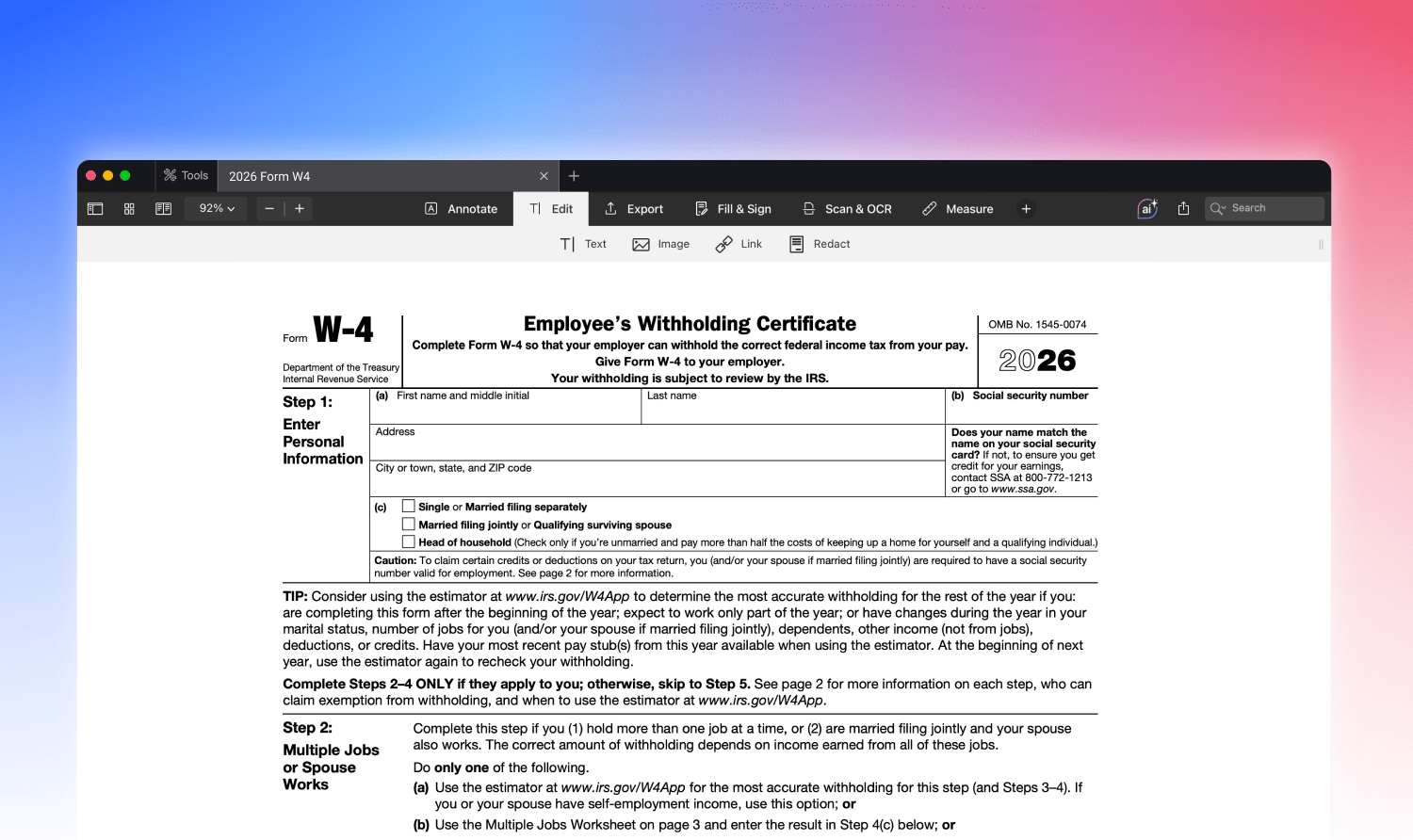
- Increase withholding from your W-2 paycheck (via Form W-4).
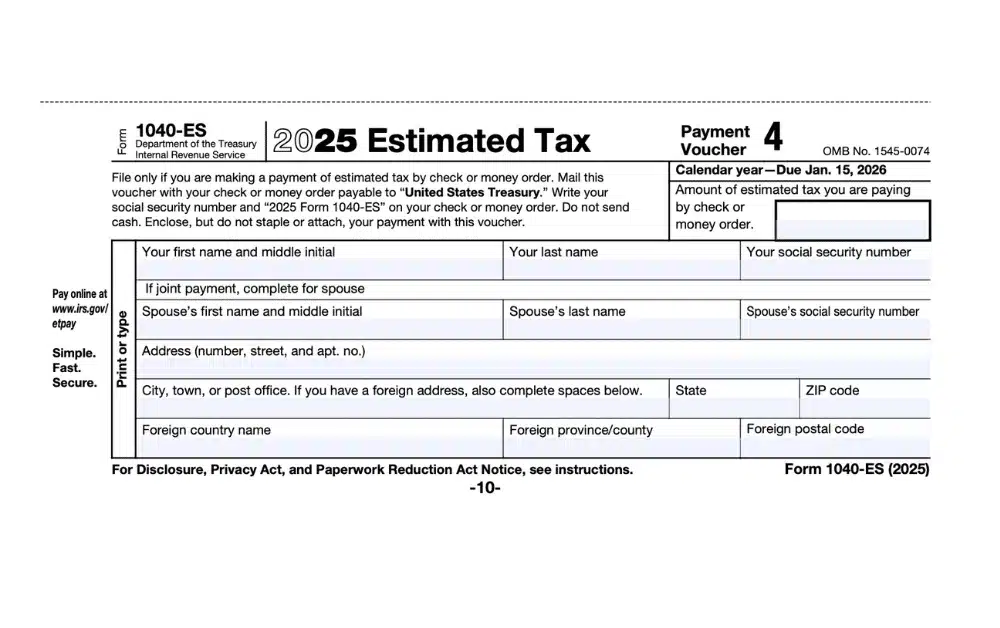
- Send quarterly estimated tax payments (typically using Form 1040-ES).
Both can work. The best choice is usually the one that keeps you penalty-free with the least friction and the fewest chances to forget a deadline.
The key difference
Here is the rule that often makes withholding the simpler tool:
Federal income tax withholding is generally treated as paid evenly throughout the year, even if the withholding happens late in the year.
Estimated tax payments are different. They are credited when they are actually paid, and the IRS expects them to arrive on time based on the estimated-tax due dates.
Why this matters
If you realize in October that your side hustle did better than expected, catching up with quarterly payments can be messy. You might already be late for one or more payment periods.
But if you increase withholding from your remaining paychecks, that extra withholding is generally treated as if it had been paid all year long. For many W-2 plus 1099 earners, that makes withholding a powerful catch-up lever for avoiding underpayment penalties.
Note: If you use special penalty calculations (for example, the annualized income installment method) or you have unusual timing issues, the clean “paid evenly” benefit can get more nuanced. Most filers still use the standard rules, and under those rules withholding is a very effective catch-up tool.
Important: This does not change how much tax you owe for the year. It changes whether you get hit with an underpayment penalty and how stressful the process feels.
Who needs to do something extra
If you have income that does not automatically withhold enough tax, you may need to either (1) increase your paycheck withholding or (2) pay estimated taxes. Common situations include:
- Self-employment or 1099 income (consulting, freelancing, gig work)
- Rental income with positive cash flow
- Investment income such as dividends and capital gains, especially from a taxable brokerage account
- Side business profits from an LLC or sole proprietorship
- Spouse’s income mix where one spouse is W-2 and the other is 1099
In these cases, “my employer withheld taxes” can be true and still not be enough.
One quick clarity point that trips people up: withholding from your W-2 is “income tax withholding,” but in practice it still counts as a prepayment toward your total federal tax liability (including the extra tax created by self-employment income).
Extra W-4 withholding
Increasing paycheck withholding is often the cleanest solution when you already have a W-2 job with regular pay periods.
Pros
- Automatic and consistent. Once set, it happens every pay period.
- Fewer deadlines. No quarterly calendar to manage.
- Helpful for catch-up. Withholding is generally treated as paid evenly all year, which can reduce or avoid underpayment penalties even if you adjust late.
- One place to manage cash flow. You can withhold taxes from yourself the way payroll does.
Cons and watch-outs
- Less visibility. If your side income swings a lot, a fixed withholding change can under- or overshoot.
- Paycheck impact. Your take-home pay drops immediately, which can be painful if you rely on it for bills.
- Not great for very uneven income. If you have one huge quarter and three small ones, withholding may not track the timing of income well. You can still use withholding, but you must be proactive about adjusting it.
How to do it
On Form W-4, many people use Step 4(c) to request an additional flat dollar amount withheld per paycheck.
Example: If you need roughly $6,000 more withheld for the year and you have 12 paychecks left, you might request about $500 extra per paycheck.
If you want a simple way to sanity-check the number, the IRS Tax Withholding Estimator can be a helpful starting point. If you file jointly, also remember that you can adjust withholding on either spouse’s paycheck, and it all lands in the same joint “prepaid tax” bucket.
Estimated payments
Estimated tax payments are common for business owners, and they can also be useful for investors with lumpy income (like a big capital gains event). That said, investors are not required to use estimates if they can cover the tax another way, including increasing wage withholding or making a targeted payment after realizing gains.
Pros
- Works even without a W-2 job. If no employer is withholding, estimates are often the default.
- Flexible amounts by period. You can pay more after strong income periods and less after weaker ones.
- Cleaner separation for business finances. Many founders like setting aside and paying from a business account.
Cons and watch-outs
- Deadlines matter. Miss a due date and you can trigger penalties even if you “catch up” later.
- More admin. You need to track, schedule, and send payments, and keep confirmation records.
- Potential for uneven stress. Writing a larger check several times a year can feel harder than smaller withholding increments.
The due dates (and why “quarterly” is a little misleading)
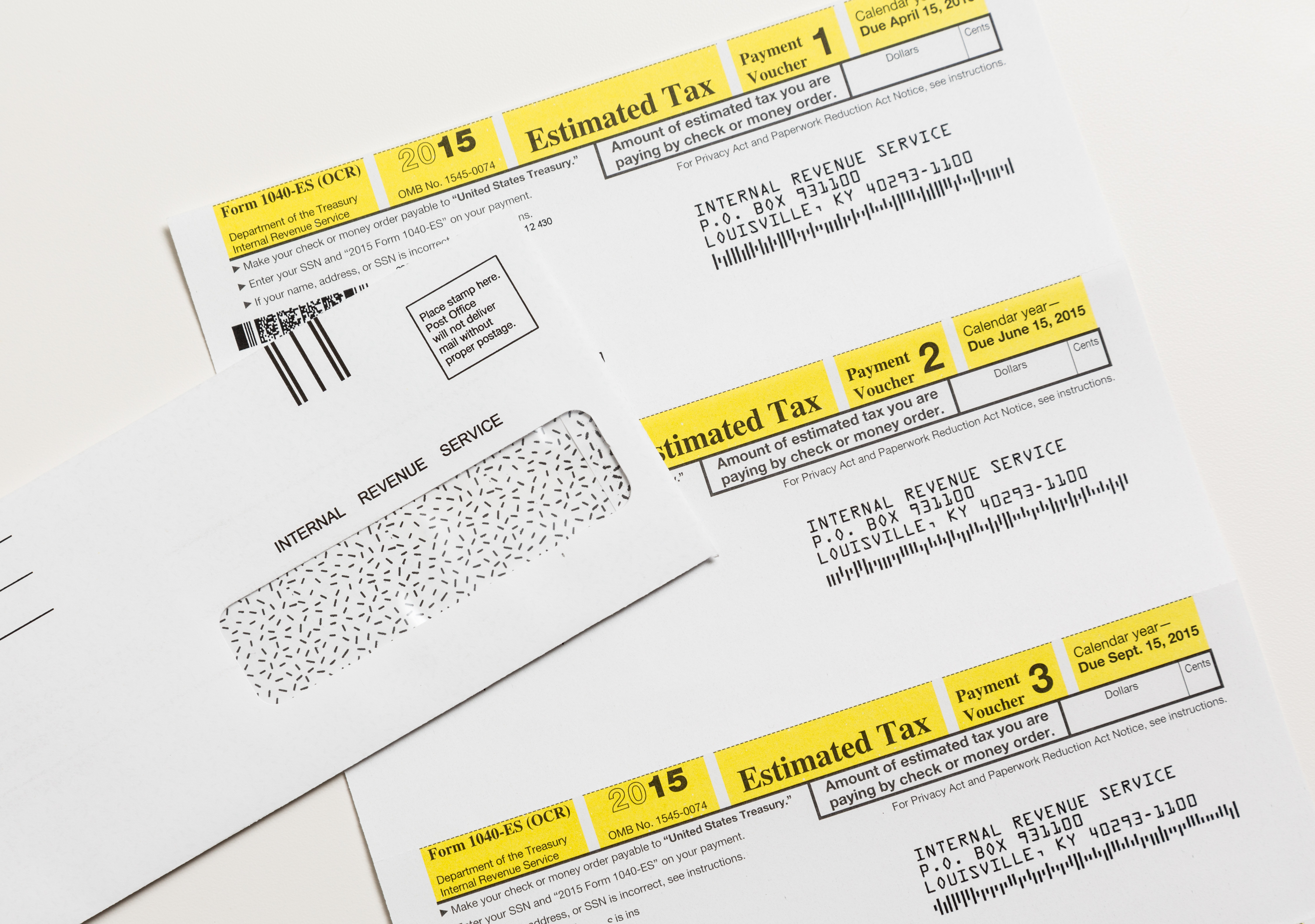
For most taxpayers, federal estimated tax payments are due four times per year, but they are not spaced as true calendar quarters. The typical due dates are:
- April 15
- June 15
- September 15
- January 15 of the following year
If a due date falls on a weekend or holiday, it usually shifts to the next business day.
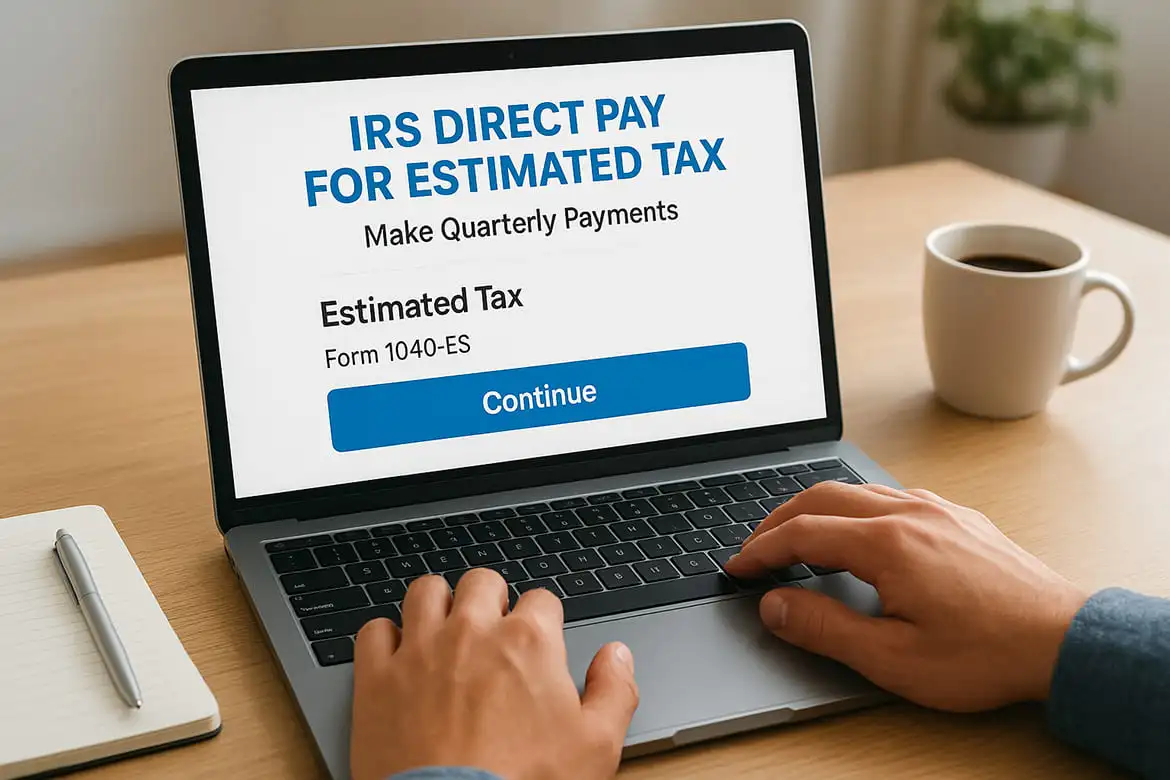
If you do go the estimated route, many people pay online through IRS Direct Pay or EFTPS rather than mailing vouchers. The key concept is the same: you are making periodic prepayments toward your annual tax bill.

Safe harbor rules
Most people are not trying to perfectly match their final tax bill. They are trying to avoid underpayment penalties and avoid a giant April surprise.
In general, you can often avoid an underpayment penalty if you prepay enough during the year through withholding and/or estimated payments to meet a “safe harbor.” A common federal safe harbor is based on paying:
- 90% of your current year total tax, or
- 100% of your prior year total tax
There is also a higher-income safe harbor where you may need to pay 110% of your prior year total tax if your prior-year AGI was above certain thresholds (commonly $150,000 for most filers, or $75,000 if married filing separately).
The planning principle is consistent: aim to hit safe harbor with the least friction.
When withholding is simpler
In my experience, extra withholding tends to win on simplicity when:
- You have a steady W-2 paycheck and your side income is modest or moderately predictable.
- You want the easiest set-it-and-forget-it system.
- You started a side gig midyear and want a clean catch-up strategy.
- You are prone to forgetting due dates. No shame here. Many busy founders are building a company, not a tax calendar.
- Your goal is penalty protection more than perfect precision.
Also, if you are late in the year and you suddenly realize you are short, increasing withholding is often the least messy way to get back into the safe-harbor zone because of the general “paid evenly” treatment.
When estimates are worth it
Estimated payments can be the better choice when:
- Your side income is large relative to your W-2 income and your paycheck cannot realistically carry the extra withholding without squeezing your cash flow.
- You have no W-2 job, or your W-2 job is new and withholding is uncertain.
- Your income is highly seasonal and you want payments to track actual income timing.
- You want clear separation between business cash and personal paycheck cash.
- You have significant capital gains events and prefer to make a targeted payment soon after a sale.
One more practical note: many states have their own estimated tax rules and underpayment penalties. Even if you solve the federal side with withholding, you may still need a state plan.
A simple decision path
If you like decision trees, here is a straightforward one.
Step 1: Do you have a W-2 job with regular paychecks?
- No: estimated payments are usually your primary tool.
- Yes: go to Step 2.
Step 2: Is your non-W-2 income fairly predictable?
- Yes: extra withholding is often simplest. Set a per-paycheck amount and revisit once or twice a year.
- No or it swings widely: go to Step 3.
Step 3: Can you comfortably increase withholding without cash-flow pain?
- Yes: use withholding as your base plan, then adjust midyear if needed.
- No: estimated payments may be a better fit, or a hybrid approach (Step 4).
Step 4: Consider a hybrid
A hybrid approach often works well: use some extra withholding for baseline coverage, then make an estimated payment after a strong period or a capital gains event.
Worked example
Let’s say you earn:
- $90,000 in W-2 wages (with normal withholding), and
- $30,000 net profit from consulting
Your consulting profit will likely generate both income tax and self-employment tax. If you do nothing, you may owe several thousand dollars in April, and you may also owe an underpayment penalty.
(And do not forget: state income taxes, and sometimes local taxes, can add their own surprise if you do not plan for them.)
Option A: Increase W-4 withholding
- Estimate your additional total tax for the year tied to consulting income.
- Divide by remaining pay periods.
- Add that amount to W-4 Step 4(c) as extra withholding.
Option B: Pay estimated taxes
- Make payments during the year based on projected annual tax or safe-harbor math.
- Adjust payments as your consulting income changes.
In real life, many people start with withholding, then switch to estimated payments once the side business grows and income becomes more uneven.
Common pitfalls
1) Forgetting that side income can push you into a higher bracket
Extra income stacks on top of your wages. That means the marginal tax rate on side income can be higher than you expect. If you set withholding too low because you assumed a low bracket, you can come up short.
2) Not accounting for self-employment tax
Freelance net income often comes with self-employment tax in addition to income tax. This is one reason new consultants are surprised by their first big tax bill.
3) Waiting until December to react
Withholding can be a strong catch-up strategy, but there is a limit to how much you can withhold from a few remaining paychecks without straining cash flow. Checking in around midyear is usually more comfortable.
4) Mixing up extension time with payment time
Filing an extension extends the paperwork deadline, not the deadline to pay. Whether you use withholding or estimates, the goal is to prepay enough during the year.

FAQ
Can extra withholding replace estimated payments?
Often, yes. If your withholding plus any estimated payments adds up to enough prepayment to meet safe harbor and cover your tax, you may not need separate estimated payments. Many W-2 plus 1099 earners use withholding as their primary method.
If I increase withholding late in the year, does it still help with penalties?
Withholding is generally treated as paid evenly throughout the year, which can help reduce or avoid underpayment penalties compared with making a late estimated payment. This is a major advantage of withholding for last-minute catch-up planning.
Is there a downside to over-withholding?
The IRS will refund the overpayment, but you gave the government an interest-free loan and reduced your monthly cash flow. For many people, a small refund is fine. For founders managing tight cash flow, it can be costly.
What if my spouse and I file jointly?
You can increase withholding on either spouse’s paycheck, and it still counts toward your joint tax bill. Couples often adjust the higher earner’s W-4 because it is simpler operationally.
The simplest plan
When you have mixed income, your best system is the one you will actually follow.
If you want low-maintenance and you have a reliable paycheck, extra W-4 withholding is often the easiest way to stay penalty-free, especially because of how withholding is generally treated across the year.
If your income is large, seasonal, or not tied to a paycheck, estimated payments may be the more accurate fit, even if they require more admin.
And if you are somewhere in the middle, a hybrid strategy can be the sweet spot: a baseline withholding increase plus occasional estimated payments when income spikes.