The first time I missed an estimated tax deadline, it was not because I did not care. It was because I was busy doing the thing that actually makes the money. That is the reality for a lot of freelancers and small business owners. You look up, a due date passed, and now you are wondering if you should panic, pay immediately, or wait until you file your return.
Here is the calm, practical answer: in most cases, you should make a catch-up payment as soon as you can, document which installment you intended it to cover, and then adjust the next quarter so you do not compound the underpayment.
Confirm what you missed
Estimated taxes are typically paid in four installments for the current tax year. The common federal due dates are often:
- Q1: April 15
- Q2: June 15
- Q3: September 15
- Q4: January 15 (of the following year)
If a date falls on a weekend or holiday, the deadline shifts to the next business day. Also, deadlines can vary slightly by year due to calendar quirks and occasional IRS-wide deadline shifts, so it is worth checking the IRS estimated tax calendar for the specific year you are paying.
Next, name what you missed:
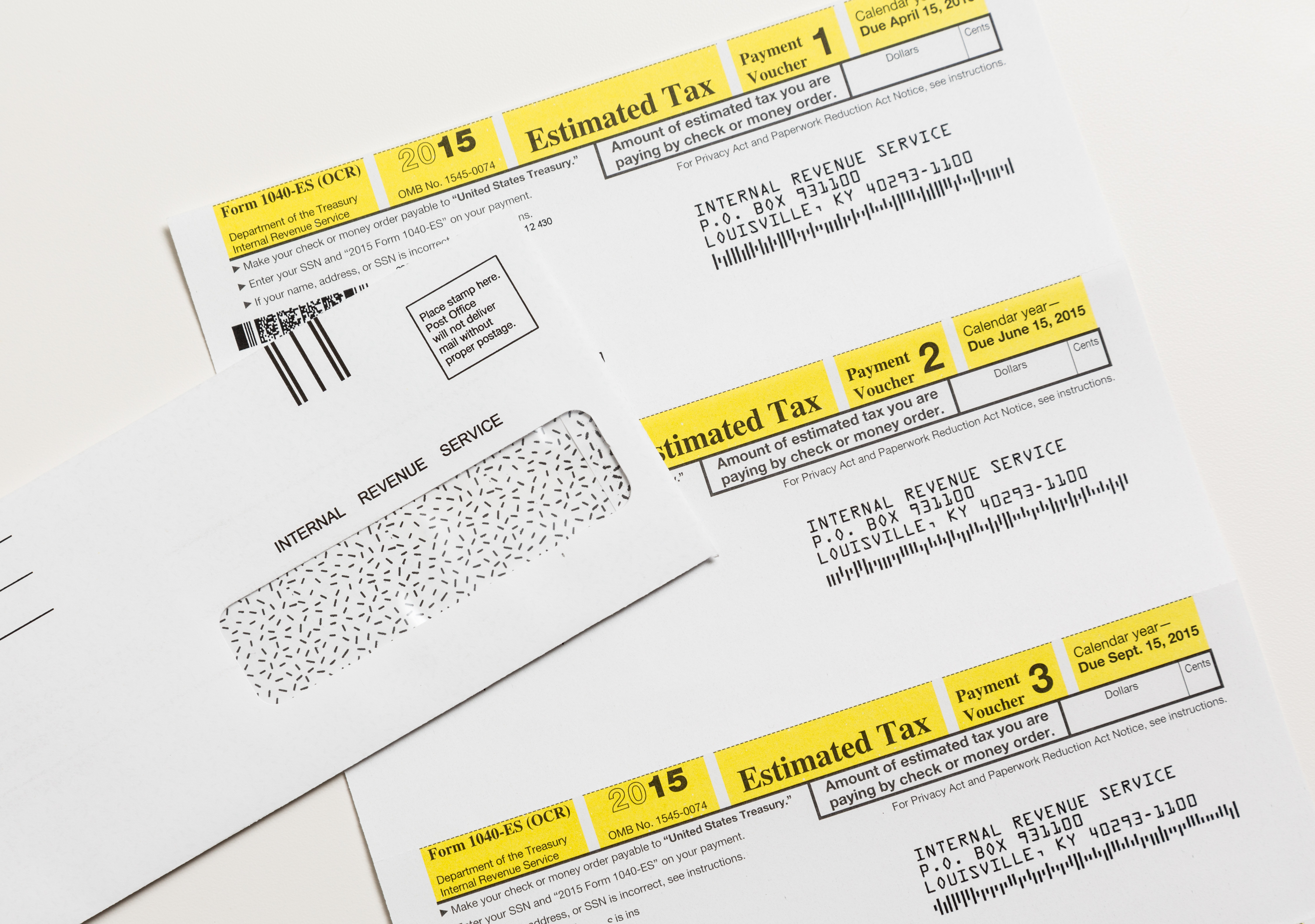
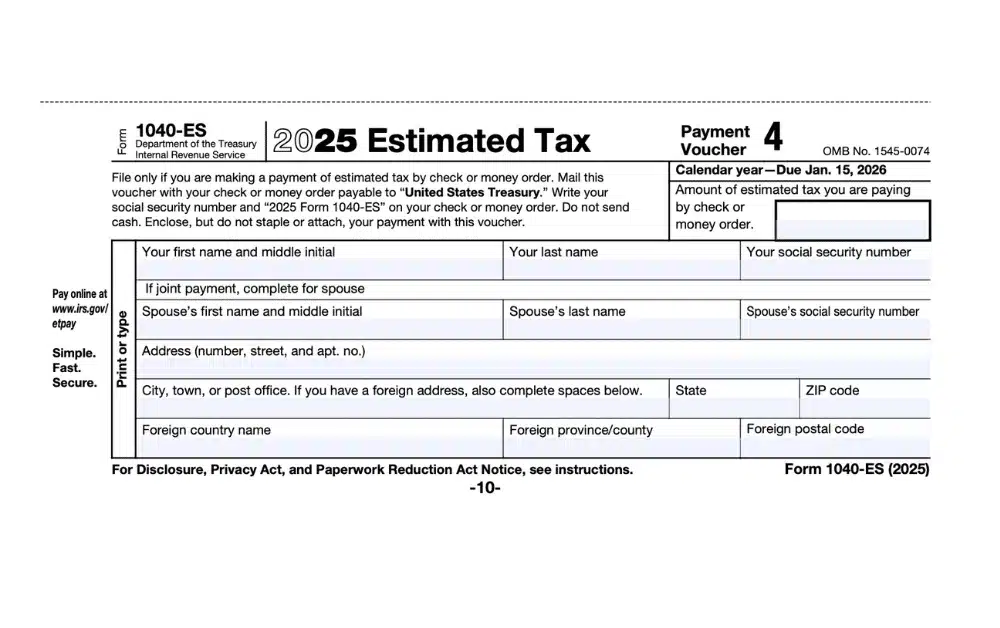
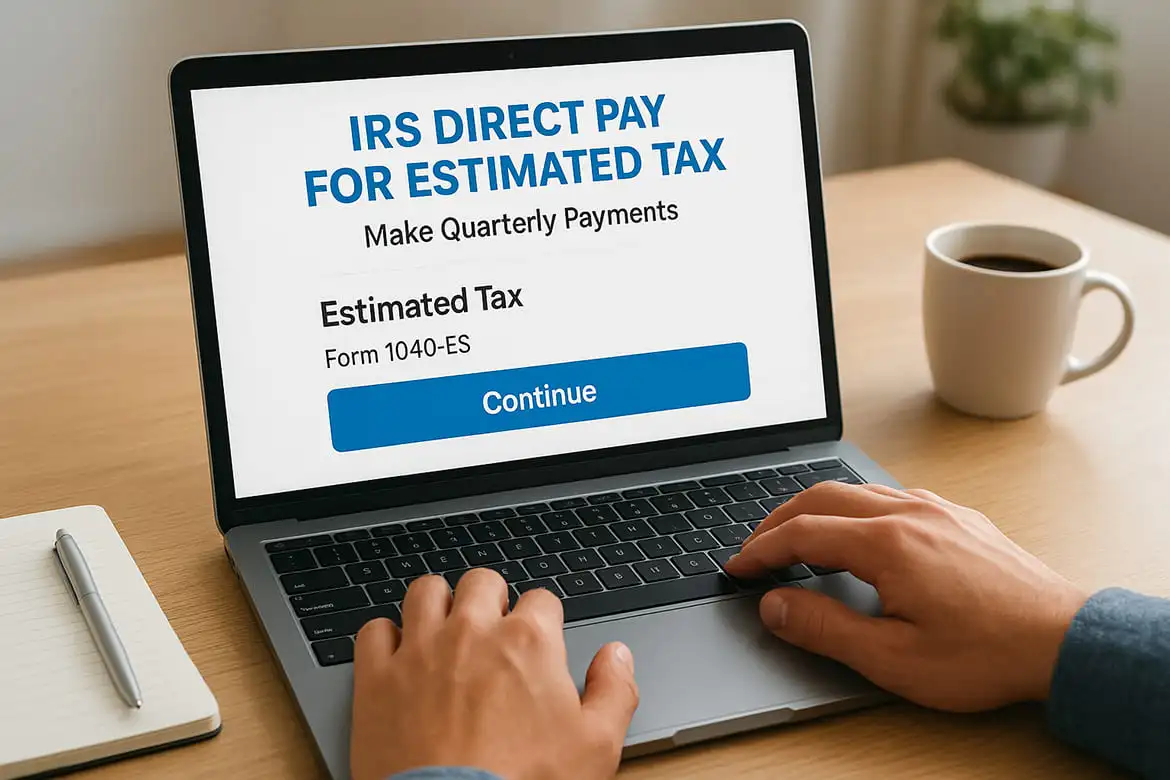
- Federal income tax and self-employment tax: paid to the IRS as estimated tax (often associated with Form 1040-ES), either online (IRS Direct Pay or EFTPS) or by mail using 1040-ES payment vouchers.
- State estimated tax: separate deadline, separate payment system, separate penalties.
This article focuses on federal estimated payments. If you live in a state with income tax, do a quick check there too. It is common to be on time for one and late for the other.
When penalties start
The IRS “penalty” most people worry about here is the underpayment of estimated tax penalty. Think of it less like a moral judgment and more like an interest-like charge for paying too little, too late.
Does the penalty start the day after the deadline?
In practice, the underpayment penalty is computed by installment periods. If you underpay an installment, the penalty is generally calculated based on:
- how much was underpaid for that period,
- how long that underpayment remained unpaid, and
- the applicable IRS interest rate for that period.
That is why paying sooner usually helps. You cannot retroactively make a late payment “on time” for a past quarter, but you can shorten the underpayment period going forward. One nuance: withholding is generally treated as paid evenly throughout the year for penalty purposes, which can change the math.
Will I definitely owe a penalty?
Not always. You may avoid the penalty if you meet a safe harbor for the year, even if you missed one quarter. Common safe harbors include paying enough during the year, through withholding and timely estimated tax payments, to cover either:
- At least 90% of your current-year total tax, or
- 100% of your prior-year total tax (or 110% if your prior-year adjusted gross income was above the IRS threshold for that rule).
Two clarifiers that matter if you are trying to stay penalty-free:
- “Total tax” refers to your total tax shown on the return, not just income tax in the abstract.
- Timing matters. A payment made in Q3 does not count as a timely Q1 payment for penalty calculations, even if it helps your year-end balance.
Also, you generally will not owe an underpayment penalty if you owe less than $1,000 in tax after subtracting withholding and refundable credits. (Edge cases exist, but this is the basic rule people mean when they talk about the $1,000 threshold.)
But if you are already sure you underpaid, the next step is still the same: reduce the time outstanding by paying now.
Should you pay now?
In most cases: yes. Here is why.
- It stops the meter from running. The sooner you pay, the fewer days an underpayment can remain outstanding for penalty purposes.
- It reduces stacking. Stacking is when you are behind for earlier periods even if later payments are bigger. The IRS penalty math looks at each period, so catching up late can still mean you were underpaid for months.
- It makes your year-end bill smaller. Especially important if your income is lumpy and you do not want April to become a cash flow crisis.
The main reason to not pay immediately is if paying now would cause a real hardship and you need to triage essentials. Even then, it is often worth sending a partial payment and making a plan for the rest.
How to make a catch-up payment
This is the part that trips people up. The IRS does not want you to simply “send money.” They want it credited correctly to the correct tax year and the correct payment type.
One important reality check: IRS systems usually do not let you pick a quarter. Payments are applied to your account based on tax year, payment type, and payment date. So your goal is to pay as soon as you can and keep clean records showing what installment you intended the payment to cover.
Option A: Pay online
If you pay through an IRS online method, you will typically be asked to specify:
- Reason for payment: Estimated Tax (often shown as 1040-ES)
- Tax year: the year you are making estimates for (not necessarily the year you are paying in)
IRS Direct Pay is a common choice for one-off payments. EFTPS is another common option, especially if you want a more “banking-style” system you can reuse.
Tip: Save the confirmation page or email and note in your own records what installment you intended it to cover, like “Q2 catch-up paid July 2.” That note becomes very helpful at filing time and if you need to fill out Form 2210.
Option B: Mail a 1040-ES voucher
If you mail a payment, use the appropriate Form 1040-ES voucher (many people grab the voucher for the quarter they missed for their own organization) and include:
- your name and address,
- Social Security Number (or ITIN),
- the tax year, and
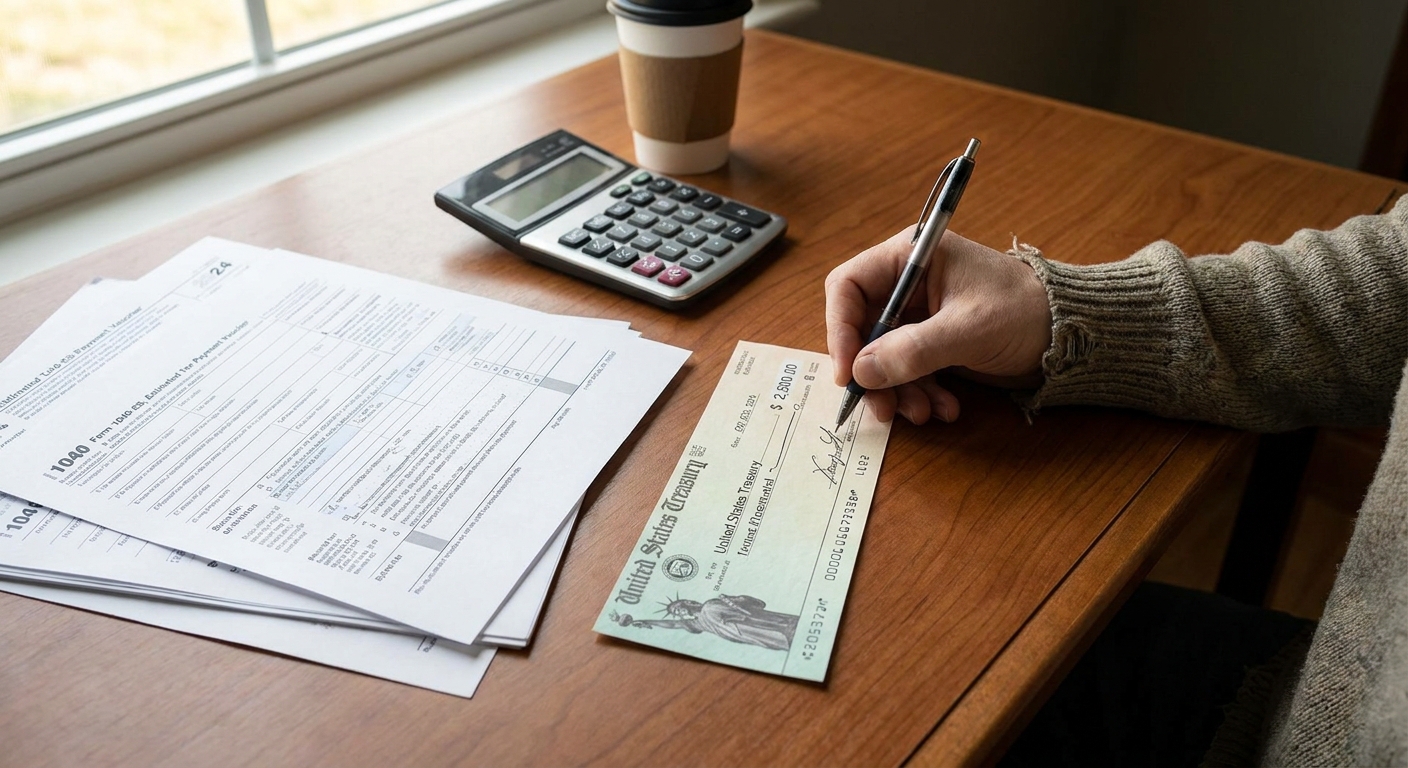
- a check with a clear memo line (for example: “2026 1040-ES estimate, Q2 catch-up”).
This is old-school, but it creates a paper trail that is easy to understand later.
What to do next quarter
After you miss a quarter, you are tempted to do one of two things:
- Ignore it and hope it sorts itself out in April, or
- Double the next payment without thinking through how the IRS calculates penalties by period.
A better approach is to make your next move intentionally.
Step 1: Catch up or recalculate
You have two clean paths:
- Catch up: Pay the missed amount as soon as possible, then pay your normal next-quarter amount on the next due date.
- Recalculate: If income changed materially, redo your estimate for the year and adjust future payments. This can be especially important if you had a slow start, then a big contract later, or the reverse.
Step 2: Use timing
If you missed Q2 and you are now close to the Q3 deadline, you can make two payments:
- one that you record as your catch-up payment for the missed deadline, and
- one for the current quarter.
Even if both are paid on the same day, treat them separately in your records. IRS penalty calculations are driven by payment dates, but your documentation is what keeps you sane at filing time.
Step 3: Increase withholding if you can
This is one of my favorite quiet fixes. If you or a spouse has W-2 income, you can increase withholding. Withholding is generally treated as paid evenly throughout the year for underpayment penalty purposes, which means it can reduce or even eliminate underpayment issues without relying entirely on quarterly discipline.
If you cannot pay it all
If cash flow is tight, do this in order:
- Pay something now. A partial payment can still reduce penalty exposure.
- Make the next quarter on time. Do not let one miss turn into a pattern.
- Adjust your system. Separate tax savings into a dedicated account, automate transfers per invoice, or set a monthly calendar reminder instead of relying on quarterly willpower. (After I missed my first one, I started doing a small monthly transfer. It was not perfect, but it stopped the problem from repeating.)
If the balance is large and you expect trouble paying your year-end tax bill, it may be time to discuss planning with a CPA or enrolled agent who works with self-employed clients.
What happens at filing time
When you file your Form 1040, the IRS compares what you paid and when you paid it against what you were expected to pay during the year.
If the IRS believes you underpaid during the year, you may see:
- an underpayment penalty calculated on Form 2210 (either done by you or computed by the IRS), and
- interest-like charges embedded in the final amount due.
If your income was uneven, you may be able to reduce the penalty by using the annualized income installment method on Form 2210. Translation: you show the IRS that you did not earn the money evenly throughout the year, so the “should have paid by Q1” assumption does not match how your year actually happened.
Do this today
- Identify the missed installment and estimate what you should have paid.
- Send a catch-up payment now (even partial), selecting Estimated Tax (1040-ES) and the correct tax year.
- Save proof of payment and label it in your records as “Q1 catch-up” or similar.
- Update your next payment amount based on whether you are catching up or recalculating for changed income.
- Check your state estimate deadlines and payments too.
FAQ
Will the IRS send me a letter immediately if I miss a quarterly payment?
Usually, no. Many people only learn about an underpayment penalty when they file their return, or if the IRS later sends a notice adjusting the calculation.
Can I wait and just pay everything when I file?
You can, but you may pay more in penalties because the underpayment lasts longer. Paying earlier usually reduces the cost of being late.
If I pay late, does the IRS apply it to the quarter I missed?
Not in the way most people mean it. You generally cannot make a late payment count as a timely payment for an earlier installment. The IRS tracks payments by date and type for the tax year. Your job is to choose Estimated Tax for the correct year and keep clean records of what you intended each payment to cover. If you need a quarter-by-quarter breakdown, that is where Form 2210 comes in.
What if I missed the January 15 payment?
There is a special rule tied to that last estimated payment. In some cases, you may be able to avoid a penalty for missing the January 15 installment if you file your return and pay the full balance by the end of January (instead of waiting until April). Whether it helps depends on your overall payments and safe harbor status, so treat it as a prompt to check the rule for your year, not a guarantee.
My best advice
If you only take one thing from this: do not let shame drive the decision. This is math and timing, not a character test.
Make the catch-up payment you can make, document it, then build a system that fits your real work life. Quarterly taxes are annoying, but they get much less scary once you stop treating them like a surprise.