When my parents sold a slice of their agricultural supply company years ago, the biggest surprise was not the negotiating or the paperwork. It was the tax timing. The buyer wired the money and nobody withheld federal income tax, so the IRS still expected its cut long before April.
What we did next was simple, but it was not obvious in the moment: we stopped thinking like “tax day is in April” and started thinking like “pay as you go.” That mindset shift is what keeps a great exit from turning into a cash-flow headache.
If you’re selling your business or you just closed, the key question is not only how much tax you owe. It is when you have to pay it. Depending on whether you have depreciation recapture, an installment note, or a lump-sum closing, you may owe estimated tax in the same year as the sale, sometimes as soon as the next estimated-tax deadline.

Estimated tax in plain English
The US tax system is pay as you go. Employees satisfy this through paycheck withholding. Business sellers usually do not have withholding at closing, which means the responsibility often shifts to estimated tax payments.
You generally consider an estimated payment when you will owe enough tax that withholding will not cover it. A business sale can create a one-time spike in taxable income that overwhelms your normal withholding.
Deadlines to know
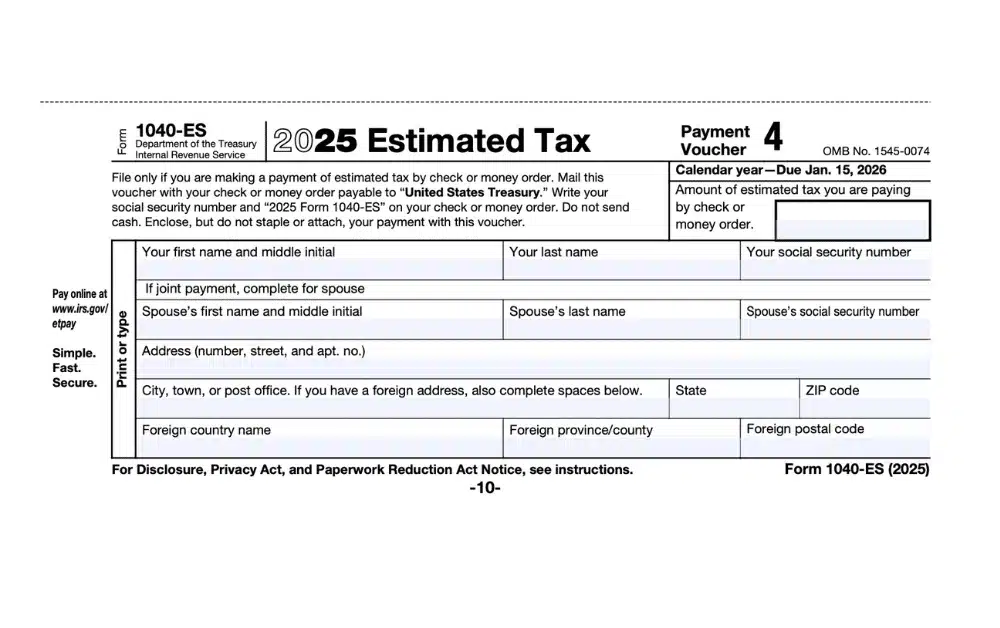
For individuals, estimated tax is typically due in four installments:
- April 15
- June 15
- September 15
- January 15 of the following year
If a due date falls on a weekend or holiday, it shifts to the next business day. Also, the IRS occasionally publishes calendar-specific adjustments, so it is smart to confirm the current year’s due dates on the IRS estimated tax page.
One important nuance
People often talk about estimated tax as if the IRS “matches” each payment to income received in a specific date range. That is not how it works for most filers under the default approach. In general, you are trying to pay in enough over the course of the year to avoid underpayment penalties. If your income is lumpy, you can sometimes use the annualized income method (covered later) to better match required payments to when the income actually happened.
When a business sale triggers estimates
You are most likely to need an estimated payment in the year you sell if the sale creates taxable income that is not covered by withholding or prior estimated payments. In real life, that often looks like this:
- Lump-sum closing with a large gain and no withholding.
- Depreciation recapture triggered by selling equipment, vehicles, furniture, or certain real estate.
- Installment sale where you receive a down payment now and principal payments later, but still owe tax each year on what you receive (and potentially interest income too).
- Noncompete or consulting payments that are treated as ordinary income, sometimes with little or no withholding.
Even if your sale is mostly capital gain, that gain is still taxable and still part of your pay-as-you-go obligation.
Asset sale vs equity sale
The legal form of the sale shapes what shows up on your return and how it is taxed.
Asset sale
In an asset sale, the buyer purchases assets like equipment, inventory, customer lists, and goodwill. For the seller, the purchase price is allocated across asset categories. Some pieces can be capital gain, but others can be ordinary income.
This is where depreciation recapture often enters the picture. Depreciation reduced your taxable income in prior years, and the IRS may require you to recapture some of that benefit when the asset is sold.
Stock sale or interest sale
In a corporate stock sale, the seller is typically selling equity rather than individual assets, and sellers often see more of the gain treated as capital gain.
If you are selling an LLC or partnership interest, the “all capital gain” assumption can break quickly. Partnership and LLC interest sales can include ordinary-income components (often described as “hot assets”) and other special rules that change the character of the gain.
This article focuses on the timing issues that most often blindside sellers: a big closing with no withholding, depreciation-related ordinary income, and installment receipts that create tax in more than one year.
Depreciation recapture basics
If you depreciated business property, selling it can trigger depreciation recapture. This matters for estimated tax because recapture can convert what you assumed was “capital gain” into ordinary income, which is often taxed at a higher rate.
Common assets that can trigger recapture include:
- Machinery and equipment
- Vehicles used in the business
- Furniture and fixtures
- Computers and certain technology
- Real estate that was depreciated (rules differ from equipment)
For most equipment and other personal property, recapture is commonly associated with Section 1245 and is generally treated as ordinary income up to the amount of depreciation taken. For depreciated real estate, recapture is often more nuanced (commonly discussed under Section 1250), and a portion can be taxed at special rates (often up to 25 percent for “unrecaptured Section 1250 gain”) rather than being taxed exactly like your wages.
The exact calculation depends on your depreciation history and the sale price allocated to each asset, which is why your closing allocation and your depreciation schedules matter so much.

Installment sales and timing
An installment sale means you receive at least one payment after the tax year of the sale. Many sellers like installment notes because they spread out cash flow and can spread out tax on the gain.
But there are a few timing details to keep straight:
- Gain is generally recognized as you receive principal, based on your gross profit percentage.
- Interest is separate and is usually taxed as ordinary interest income in the year you receive it (or it accrues, depending on the structure).
- Recapture is a common gotcha: depreciation recapture (often discussed under Sections 1245 and 1250) is generally recognized in the year of sale and usually cannot be deferred using the installment method. This is a big reason sellers still owe meaningful tax in the year of sale even when the cash is spread out.
Lump-sum closings and withholding
If you sold your business and the buyer wired the full amount at closing, you likely received the money with no federal income tax withheld. Unless you proactively increased withholding elsewhere or already made large estimates, you may need to make an estimated payment soon after the deal closes.
A caveat worth knowing: while most private business sales do not involve income tax withholding, there are exceptions. For example, if the deal involves certain US real property interests, FIRPTA withholding may apply. In limited situations, other withholding regimes can show up too. Your attorney and tax pro should flag these in diligence, but do not assume “always zero” without confirming your facts.
Two things make the timing tricky:
- Closing happens once, so you have no rhythm. It is easy to miss the next deadline.
- The tax character may be mixed. Part capital gain, part ordinary income, part depreciation recapture.
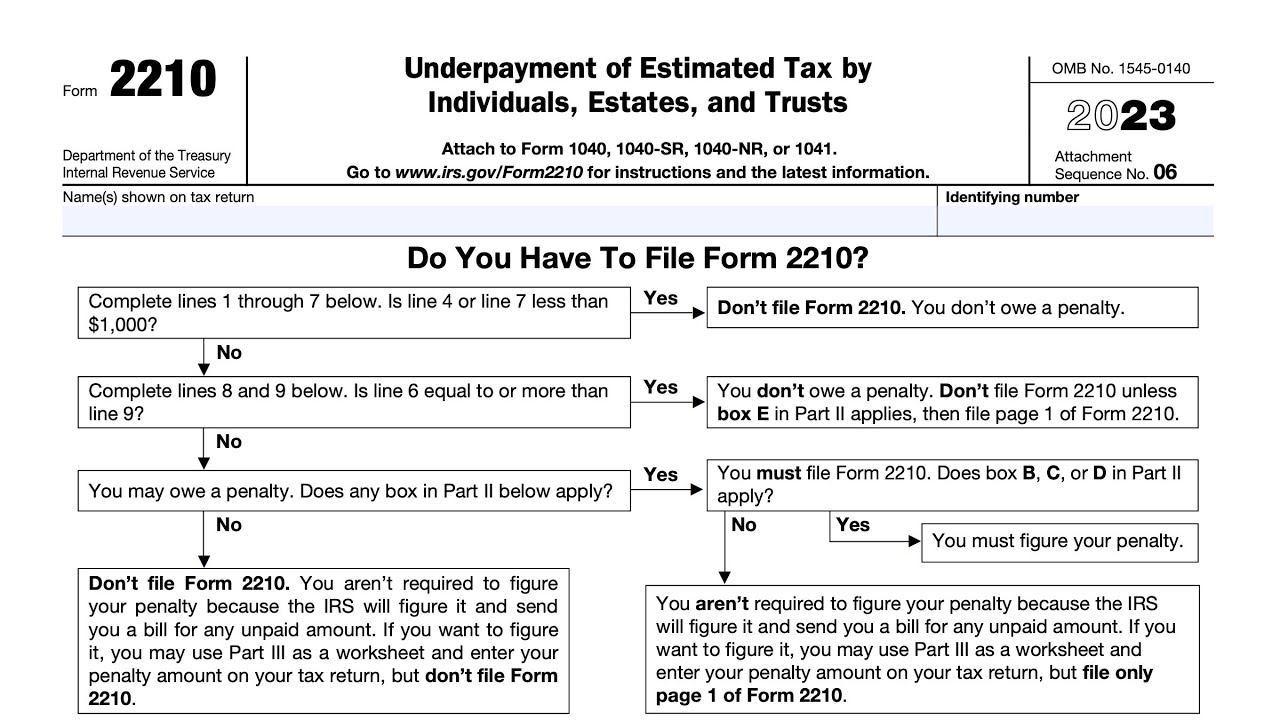
In other words, do not assume you can wait until you file Form 1040. You can, but you may be paying avoidable underpayment penalties.
Example: asset sale and what may be due
Let’s walk a simplified example so you can see how a single transaction can generate different “buckets” of income and potentially trigger an estimated payment.
The scenario
- You sell your small service business on August 10.
- It is an asset sale.
- Total purchase price: $600,000, paid in full at closing.
- Buyer withholds: $0 (a common outcome, but always confirm your facts).
Purchase price allocation (simplified)
- Inventory: $50,000
- Equipment: $150,000
- Goodwill and customer relationships: $400,000
Your tax basis and depreciation history (simplified)
- Inventory basis: $50,000
- Equipment original cost: $220,000
- Accumulated depreciation on equipment: $160,000
- Equipment adjusted basis: $60,000
- Goodwill basis (self-created): $0
Step 1: Inventory is usually ordinary
If inventory sells for $50,000 and your basis is $50,000, there is no gain. If inventory sells above basis, that difference is generally ordinary income.
In our example: $50,000 sale minus $50,000 basis equals $0 taxable gain from inventory.
Step 2: Equipment can create recapture
Equipment sells for $150,000. Adjusted basis is $60,000, so total gain is $90,000.
Because you claimed $160,000 of depreciation, much of the gain can be treated as depreciation recapture (commonly ordinary income for Section 1245 property like equipment).
- Equipment sale price: $150,000
- Adjusted basis: $60,000
- Total gain: $90,000
- Potential recapture portion: up to $90,000 (limited to the gain)
In our example: assume the full $90,000 is treated as recapture and taxed at ordinary income rates.
Step 3: Goodwill is often capital gain
Goodwill and customer relationships sell for $400,000. If it is self-created goodwill with $0 basis, the gain is $400,000 and is often treated as long-term capital gain if you held the business for more than one year and the facts support capital treatment.
In our example: $400,000 sale minus $0 basis equals $400,000 long-term capital gain.
Step 4: Total taxable income from the sale
- Ordinary income (recapture): $90,000
- Long-term capital gain: $400,000
- Total net gain from sale: $490,000
Step 5: What might be due before Form 1040?
Whether you must pay by the next deadline depends on your overall year: your other income, deductions, filing status, and how much you already paid in through withholding or estimates. But the shape of the problem is clear: you created a large chunk of ordinary income and capital gain with no withholding, and the IRS generally expects pay-as-you-go compliance.
If you want to be precise, ask your CPA or CFP to run a quick projection that includes:
- Your year-to-date withholding
- Your expected W-2 income or business income before sale
- The ordinary versus capital breakdown from the allocation
- Net investment income tax considerations (see below)
- State and local taxes (often due on a similar schedule)

How much to pay: practical methods
Sellers usually pick one of these methods to decide how much to send in during the year of sale.
1) Increase withholding
If you or a spouse has W-2 wages, increasing withholding late in the year can be powerful. Withholding is generally treated as paid evenly throughout the year for penalty purposes, even if it happens later. This is worth discussing with a tax pro because it can reduce or eliminate underpayment penalties.
2) Make a targeted estimated payment
If there is no W-2 lever to pull, a direct estimated payment is straightforward. Many sellers make a one-time catch-up payment soon after the deal closes so they do not spend money that actually belongs to the IRS.
3) Use the annualized income method
If most of your income happened late in the year, the annualized income method can sometimes reduce penalties because it aligns required payments with when the income was earned. This is more complex, but it is built for situations like business sales.
Penalty safe harbors to know
If you are trying to avoid underpayment penalties, it helps to know the basic safe-harbor concept: the IRS generally cares that you paid in “enough” during the year, not that you predicted your exact final tax bill.
- Prior-year safe harbor: Many taxpayers can avoid an underpayment penalty by paying in at least 100 percent of their prior-year total tax (and in some higher-income situations, 110 percent may apply).
- Current-year safe harbor: Another common benchmark is paying in at least 90 percent of the current-year total tax.
These rules have details and exceptions, but they give you a decision framework: if the sale means you will miss these thresholds, you likely need to adjust withholding, make an estimated payment, or both.
Also, “penalties and interest” gets thrown around as one phrase. Practically, underpayment penalties can apply when you do not pay enough during the year. Interest is more of a risk if you still have unpaid tax after the filing deadline.
Do not forget NIIT and Medicare add-ons
In larger exits, the tax surprise is not always just capital gains versus ordinary income. Two add-ons come up a lot:
- Net investment income tax (NIIT): a 3.8 percent tax that can apply to investment income, including many capital gains, once your income is high enough.
- Additional Medicare tax: may apply to certain wage or self-employment income above threshold amounts, which can matter if part of your deal is structured as compensation (like consulting).
You do not need to memorize the thresholds to get value here. The actionable takeaway is that your marginal rate in a sale year can be higher than you expected, so use real projections, not a rough capital gains rate from a headline.
K-1 timing and forms
Entity type changes both paperwork and timing. If your business is a partnership or an S corporation, you may be waiting on a final K-1 that arrives later than you want. That can complicate estimated tax planning, especially when the sale happens late in the year.
At a high level, sellers often see sale activity flow through forms like Form 4797 (for certain business property and depreciation-related items) and Schedule D (for capital gains). You do not need to prepare these yourself to plan estimates, but it helps to know why your CPA may ask for depreciation schedules, allocation schedules, and K-1 details before giving you a confident number.
State and local estimates
I am Chicago-based, so I will say this plainly: state tax timing can be just as unforgiving as federal. Many states expect estimated payments when you have a large gain and no withholding. Your state may also have different rules for how it treats the sale, apportionment, and local taxes.
If you are selling in one state while living in another, or if your business operated across state lines, get state guidance early. And do not forget local layers. Chicago is one example, but NYC and San Francisco sellers run into city tax issues too, depending on where they live and how the business is structured.
Situations that change the answer
You sold late in the year
If you closed in November or December, your next typical estimated due date is January 15. That is soon after the holidays and it sneaks up fast.
You have an installment note
You may owe less tax in year one than with a lump-sum sale, but you still might owe something, especially if there is recapture (often due in the year of sale), a down payment, or ordinary-income components like consulting arrangements.
You are also starting a new job
New income sources can either help (more withholding) or hurt (more total tax). Do a full-year projection, not a “sale only” estimate.
You are buying another business
Reinvesting the cash does not automatically defer tax. You can absolutely use proceeds to fund a new venture, but plan for taxes first so you do not accidentally create a liquidity crunch.
FAQ
Does the buyer withhold taxes when buying my business?
In many private business sales, buyers do not withhold federal income tax from the purchase price the way an employer would. That is why estimated payments become relevant. Still, confirm whether any special withholding applies to your transaction, including FIRPTA when real property interests are involved.
If my sale is capital gain, do I still need estimated tax?
Possibly, yes. Capital gains are still taxable, and if your withholding and prior estimates do not cover the total tax for the year, you may need an estimated payment to reduce penalties.
Why does depreciation recapture matter so much?
Because it can turn part of the sale into ordinary income or into other non-capital-gain buckets with higher rates than you budgeted for. Sellers often plan around capital gains tax rates and then get surprised by the depreciation-related portion tied to previously depreciated assets.
What if I already made quarterly estimates from operating the business?
That helps, but it may not be enough. The sale can dwarf your normal operating profit, so you often need a new calculation after closing.
Should I wait and pay when I file Form 1040?
You can, but you may owe underpayment penalties if you did not pay enough throughout the year. And if you still have unpaid tax after the filing deadline, interest can apply too. In a high-gain year, it is usually worth running the numbers soon after closing.
Checklist for the week after closing
- Get the signed purchase price allocation and keep it with your tax records.
- Pull your depreciation schedules so recapture can be estimated correctly.
- Estimate ordinary vs capital components, including any consulting or noncompete payments.
- Check year-to-date withholding for you and your spouse.
- Check safe-harbor targets (prior-year and current-year) so you know what you are aiming for.
- Decide your tactic: increase withholding, send an estimated payment, or use the annualized method.
- Mark the next deadline on your calendar immediately and confirm the current year’s IRS calendar dates.
If you want one guiding principle: treat taxes like part of the closing statement, even if they are not on the closing statement. That mental shift prevents the most common post-sale mistake, spending money that was never truly yours to keep.