I grew up around a family business where one “small” administrative miss could snowball. A missing tax form could delay a vendor payment. A mismatched ID could trigger holds. Backup withholding feels a lot like that: it is not a punishment, exactly, but it is a safeguard that kicks in when a payer cannot validate your taxpayer information, often because the IRS is flagging a name and TIN mismatch or you did not provide or properly certify your TIN.
If you have 1099 income and you notice a flat 24% was withheld, it is natural to ask: Does this replace quarterly estimated tax payments?
Sometimes it can, at least for federal income tax. Often, it does not. The difference comes down to what backup withholding is designed to cover, what it does not cover, and whether 24% happens to line up with your total tax picture.

What it is and when it applies
Backup withholding is a type of federal tax withholding that payers must take from certain reportable payments when IRS rules say they cannot pay you without withholding.
The most common triggers are:
- You did not provide a taxpayer identification number (TIN) when requested (usually your Social Security number or EIN, typically provided on Form W-9).
- Your TIN and name do not match IRS records (for example, a typo, using a nickname, a business name mismatch, or an old legal name). This is often handled through the IRS CP2100 or CP2100A mismatch notice process (commonly called a “B-notice” process).
- The IRS notifies the payer to start backup withholding (in some cases tied to underreporting issues, including certain interest and dividend reporting situations, sometimes referred to as a “C-notice” context).
- You certify incorrectly on Form W-9 (for example, saying you are exempt when you are not).
Backup withholding commonly shows up on Forms 1099, such as 1099-NEC (nonemployee compensation), 1099-MISC, 1099-INT, and 1099-DIV. It can also appear in some 1099-K situations depending on the payer’s process and IRS instructions.
The rate: usually 24%
The backup withholding rate is generally a flat 24% at the federal level (this is the current IRS rate as of recent tax years).
That means if a client pays you $10,000 but has to apply backup withholding, you may receive $7,600 and see $2,400 reported as federal income tax withheld.
Two important nuances:
- It is not “your tax rate.” It is a flat withholding rate that may be higher or lower than what you ultimately owe once everything is calculated.
- It is typically federal only. Some states have their own backup withholding or withholding-on-1099 rules in certain situations, but they are separate. Your 1099 and year-end statements will usually indicate what was withheld and for which jurisdiction.
Does it count as tax paid?
Yes. Backup withholding is treated as federal income tax withheld. When you file your federal return, it is credited the same way W-2 withholding is credited: it reduces what you owe, or increases your refund.
Where you will see it:
- On the 1099 you receive, it is often shown in a box labeled “Federal income tax withheld.”
- On your Form 1040, it flows into the section for payments and withholding.
So in the most basic sense, backup withholding can function like prepaying part of your tax bill.
Does it replace estimated payments?
Backup withholding can replace estimated payments only to the extent it covers your required prepayments for the year. The IRS does not care whether money was prepaid via estimated tax payments, W-2 withholding, or backup withholding. What matters is how much was paid in during the year and when.
But in real life, backup withholding often fails to fully replace estimated payments for three big reasons:
- It is only 24%. Your total federal liability can be higher when you add self-employment tax and, potentially, a higher marginal income tax bracket.
- It usually does not touch every dollar you earn. You may have multiple clients, some withholding and some not. Or only a portion of the year is affected.
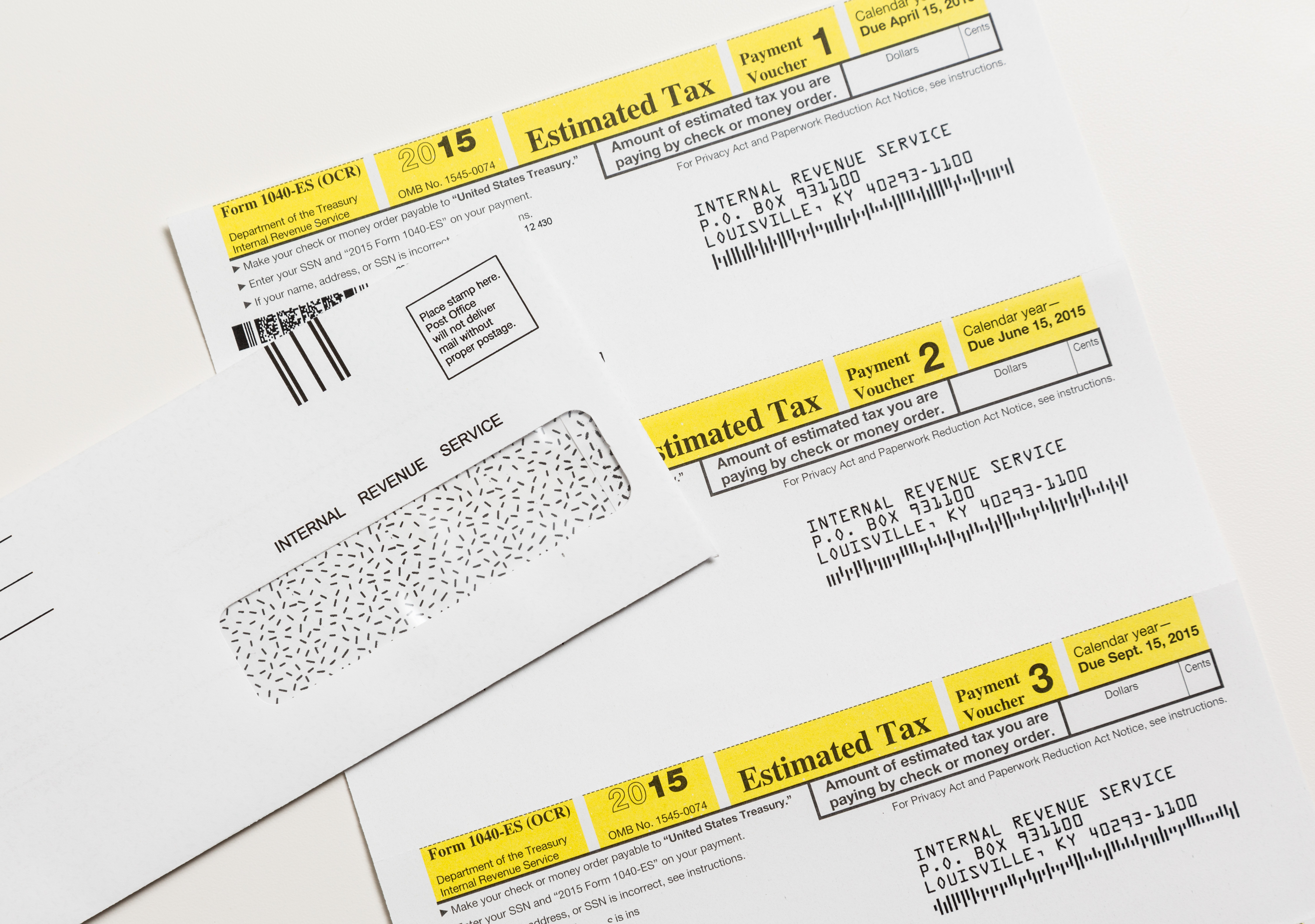
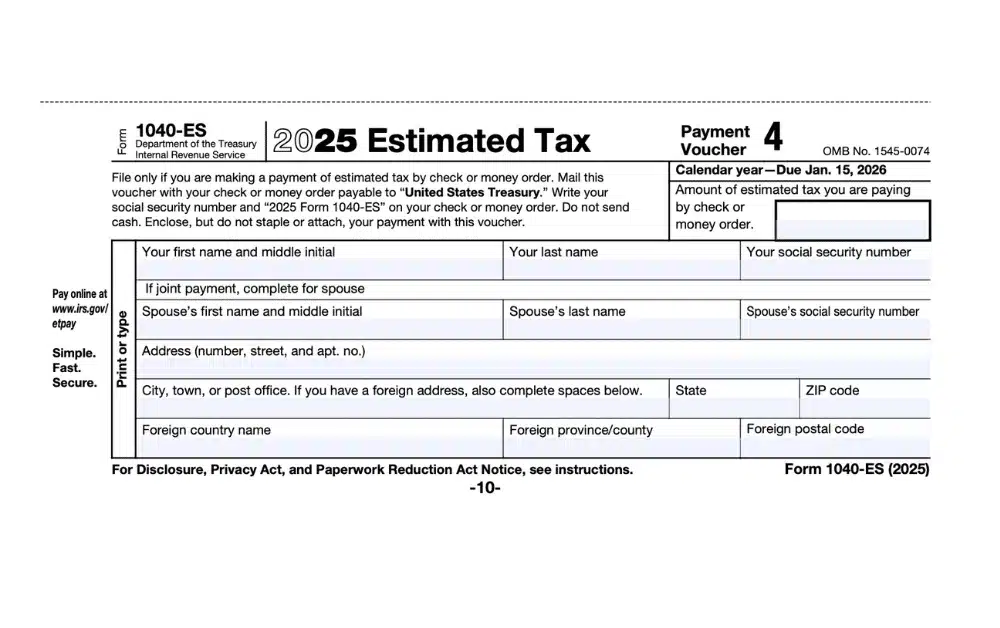
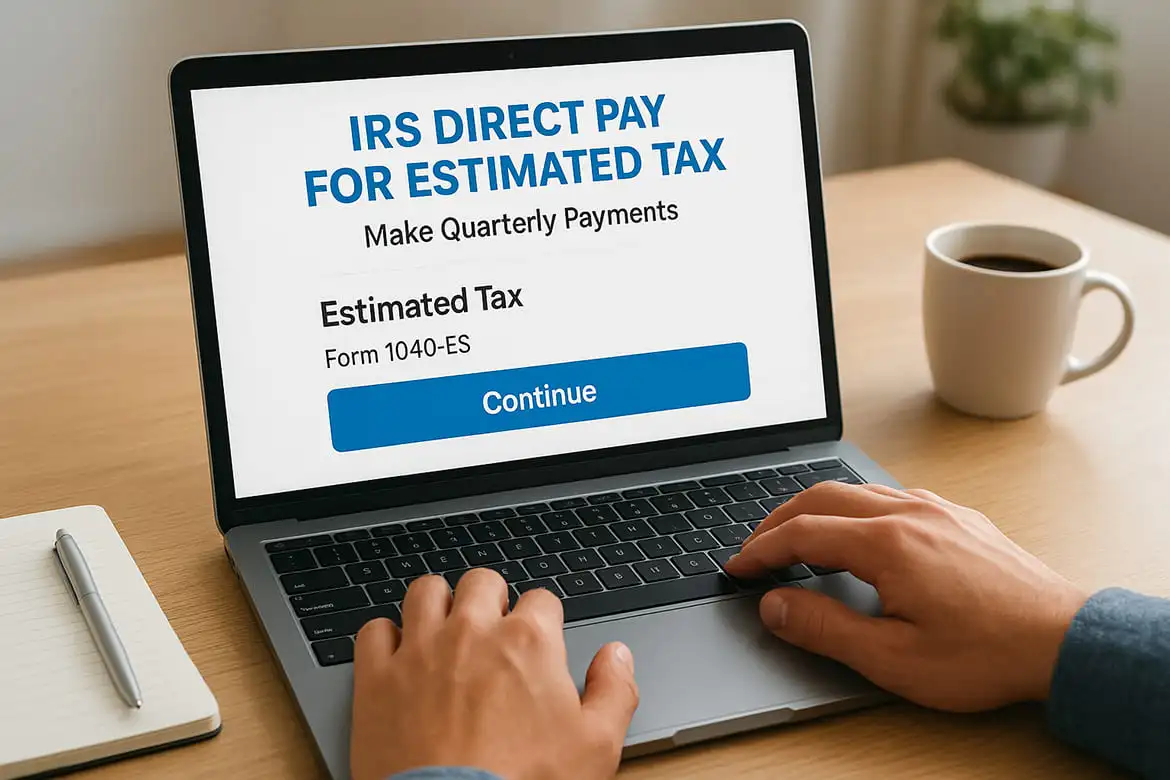
- Quarterly planning is about your total bill. When people say “estimated taxes,” they usually mean quarterly prepayments toward your overall federal liability, including income tax, self-employment tax, and any other applicable taxes.
Why 24% may not be enough
1) It is not tailored to your bracket
If your taxable income puts you above the range where 24% approximates your effective rate, you can still owe a meaningful amount even after backup withholding.
Example conceptually: a higher-income consultant might face a marginal federal bracket above 24%. Backup withholding will not scale up with that.
2) Self-employment tax can create a shortfall
If you receive 1099-NEC income as a sole proprietor, partner, or single-member LLC, you are often subject to self-employment (SE) tax in addition to income tax. SE tax covers Social Security and Medicare components that an employer would otherwise help pay.
Backup withholding is not calculated with SE tax in mind. It is a flat 24% withholding rule. If your net profit is strong, it is very common for your total federal liability (income tax plus SE tax) to exceed 24% of gross receipts.
3) Deductions can cut both ways
You might think deductions make 24% plenty. Sometimes they do. But deductions reduce income tax by lowering taxable income, while SE tax is computed on net earnings from self-employment. If your business expenses are low relative to revenue, the SE tax portion stays substantial.
Safe harbor rules to know
When people ask whether they “need” estimated payments, they are often really asking about avoiding an underpayment penalty. A common yardstick is the IRS safe harbor concept: if you pay in enough during the year, you can often avoid an underpayment penalty even if you still owe something at filing time.
In plain English, the safe harbor approach is usually based on paying in either a large share of your current-year tax or a benchmark amount tied to your prior-year tax. If you are close to the line, backup withholding might help you clear it, but it is still worth running the numbers because 24% is not designed around your situation.
When it can cover the bill
Backup withholding can be enough, or even more than enough, in situations like:
- Your overall income is modest and your effective federal income tax rate is below 24%.
- The payment is not subject to self-employment tax (for example, some interest and dividend income, or certain payments that are reportable but not earned income).
- You have large deductions or credits that reduce your income tax significantly (such as sizable retirement contributions, deductible business expenses, education credits, or child-related credits, depending on eligibility).
- You have other withholding elsewhere (like a W-2 job) and the backup withholding is just extra prepayment.
In those cases, the 24% withheld might eliminate the need for separate estimated payments, because you have already prepaid enough through withholding.
When you still likely need estimates
You should strongly consider estimated payments (or increasing another form of withholding) if:
- Only some clients are withholding and you still have plenty of 1099 income coming in without withholding.
- Your profit margins are high, meaning income tax and SE tax together will likely exceed what is being withheld.
- You have a history of owing at filing time and you want to avoid an underpayment penalty.
- You had backup withholding for only part of the year and it does not come close to matching your annual liability.

How to tell if it is enough
Here is a practical way to evaluate it without getting lost in the weeds.
Step 1: Estimate your total federal tax
Include:
- Federal income tax (based on your taxable income after deductions)
- Self-employment tax, if applicable
- Any additional taxes that apply in your situation (for example, certain high-income surtaxes)
If you already run quarterly numbers for your business, you likely have a working estimate.
Step 2: Add up your federal prepayments
Count everything that will show up as paid in:
- W-2 withholding (if any)
- Backup withholding shown on your 1099s
- Any estimated payments already made
Step 3: Cover any gap
If prepayments are tracking below what you expect to owe (or below what you need for penalty safety), you generally have three options:
- Make estimated tax payments for the remaining quarters.
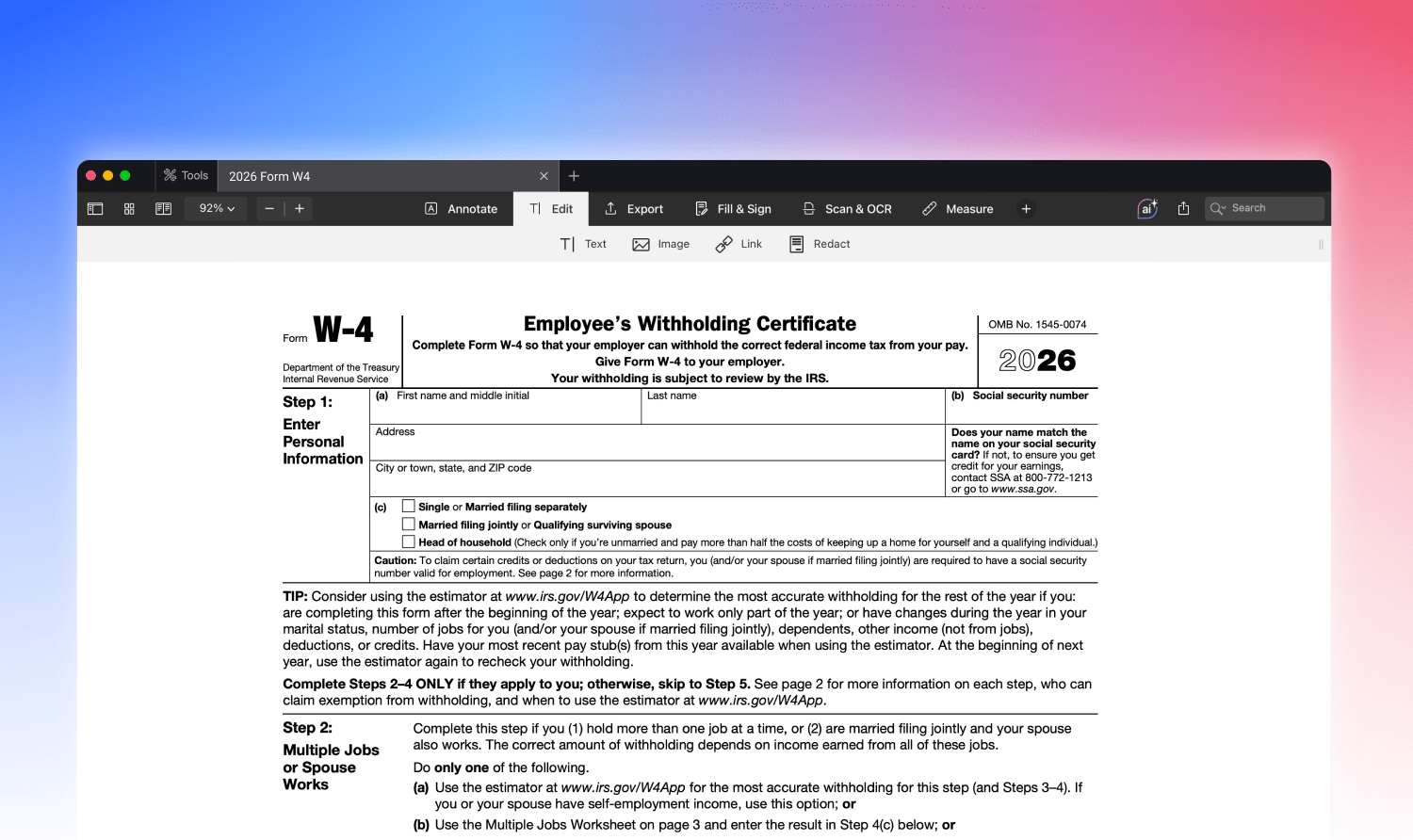
- Increase withholding elsewhere (for example, adjust W-4 withholding at a day job, if you have one).
- Fix the backup withholding issue so future payments are not reduced, then proactively set aside cash for estimates.
Fix the cause, not just the math
Even if the withheld 24% helps you cover taxes, backup withholding usually signals a paperwork problem that can disrupt your cash flow.
Common fixes include:
- Submit a corrected Form W-9 to the payer with the exact legal name and TIN that match IRS records.
- Verify the W-9 name lines. If you are a sole proprietor or a single-member LLC that is disregarded for federal tax purposes, the name line and TIN choice matter. Many backup withholding problems come from mixing a personal name, LLC name, and DBA in a way that does not match IRS records.
- Ask the payer when withholding will stop once the correction is processed, and keep the email trail. It is not about arguing. It is about getting a clean timeline for your cash flow.
- Address IRS notices promptly. If the IRS has instructed the payer to withhold, there may be a defined process for curing the issue.
From a planning standpoint, I would rather see you control your tax strategy with intentional estimated payments than have your receivables reduced by a compliance mechanism that is not customized to your real tax bill.
Timing and penalties
Withholding has a special planning advantage: for IRS purposes, withholding is generally treated as paid evenly throughout the year, even if it occurred later. Estimated payments, by contrast, are credited when you actually make them.
That means withholding, including backup withholding, can sometimes reduce the risk of an underpayment penalty compared with catching up via a large estimated payment late in the year. There are special-rule exceptions in certain niche situations, but for most freelancers, this “evenly throughout the year” treatment is the key takeaway.
However, you should not assume you are penalty-proof. If total prepayments are still too low relative to what the IRS expects you to have paid in, penalties can still apply.
Quick examples
Example 1: Helps, but not enough
A designer earns $60,000 of 1099 income with few expenses. One major platform withholds 24% on half of it due to a TIN mismatch. That is $7,200 withheld. But the designer’s combined federal income tax and self-employment tax may exceed that amount. Next step: fix the W-9 issue and consider estimates (or extra withholding elsewhere) for the non-withheld half.
Example 2: More than enough
An investor has $8,000 of interest and dividends and gets hit with backup withholding due to a name mismatch after a recent legal name change. The payer withholds $1,920. If the investor’s total tax on that income is lower due to deductions, credits, and bracket, they may get some or all of that back as a refund once the return is filed. Next step: correct the name and TIN so future payments are not reduced.
Example 3: Mixed income, clean fix
A founder has a W-2 job and some 1099 consulting. A client applies backup withholding. The founder corrects the W-9 and then increases W-2 withholding slightly to cover the rest of the year’s expected tax. Next step: monitor year-to-date withholding against the safe harbor target, and adjust once more if needed.
FAQ
Is backup withholding the same as estimated taxes?
No. Backup withholding is a payer-imposed withholding mechanism triggered by missing or mismatched taxpayer information or IRS instructions. Estimated taxes are payments you make to prepay your expected tax liability.
Where do I claim backup withholding?
It is typically reported on your 1099 in a box labeled “Federal income tax withheld.” When you file, it is included with your other withholding payments and reduces your balance due.
If 24% was withheld, does that mean I will not owe anything?
Not necessarily. Your final tax depends on your total income, deductions, credits, filing status, and whether self-employment tax applies. Many freelancers still owe because SE tax plus income tax can exceed 24% of gross payments.
Can I ask the client to withhold more than 24%?
Backup withholding is generally a fixed-rate requirement, not a customizable withholding arrangement. If you need more prepaid, it is usually better to make estimated payments or adjust withholding from other income sources.
How do I stop backup withholding?
Most often, you stop it by providing a correct Form W-9 with a name and TIN that match IRS records, and by resolving any mismatch notifications through the payer’s process.
The bottom line
Backup withholding does count as federal tax paid, and it can reduce or even eliminate what you owe at filing time. But it does not automatically replace quarterly estimated payments because it is a flat 24% and it is not designed to match your full federal liability, especially if you owe self-employment tax or have significant income outside the withheld payments.
If you are seeing backup withholding on your 1099s, treat it as two separate action items: fix the underlying name and TIN issue so your cash flow is not disrupted, and run the numbers (including a quick safe harbor check) to confirm whether your total prepayments are on track or whether you still need estimated payments for the year.