If you are freelancing, consulting, running a side business, or operating a single-member LLC, you are probably familiar with the moment: you realize nobody is withholding taxes from your checks, and April suddenly feels a little too close.
Quarterly estimated taxes are the IRS’s way of collecting tax throughout the year when you do not have an employer doing it for you. The good news is that once you understand the moving parts, it becomes a repeatable system you can run in under an hour each quarter.
Who needs to pay estimated taxes
You generally need to make estimated tax payments if both of these are true:
- You expect to owe at least $1,000 in federal tax for the year after subtracting withholding and refundable credits.
- Your withholding and refundable credits will be less than the smaller of: (a) 90% of the tax you will owe this year, or (b) 100% of last year’s total tax (110% if last year’s AGI was over $150,000, or over $75,000 if married filing separately).
This applies to most:
- Sole proprietors (Schedule C)
- Single-member LLCs taxed as sole proprietors
- Partners and S-corp owners for pass-through income (even if you also take W-2 wages)
- People with substantial income that is not withheld, like interest, dividends, capital gains, rental income, or gig work
If you also have a W-2 job, you can sometimes avoid quarterly payments by increasing paycheck withholding instead. The IRS treats withholding as if it happened evenly all year, which can be a very handy penalty-avoidance tool.
What you are paying each quarter
Most freelancers are paying a bundle of taxes, not just “income tax.” Your quarterly estimate often includes:
- Federal income tax (based on your tax bracket and deductions)
- Self-employment tax (Social Security and Medicare) if you have net earnings from self-employment
- Additional Medicare tax in higher-income situations (less common, but worth noting)
In practice, you usually make one combined estimated payment to cover all of the above.
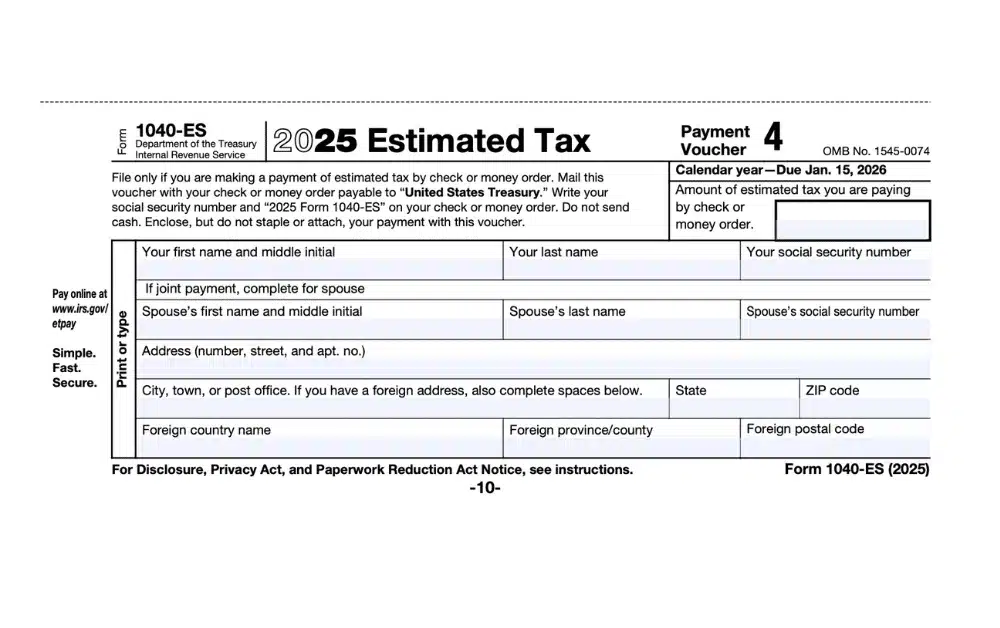
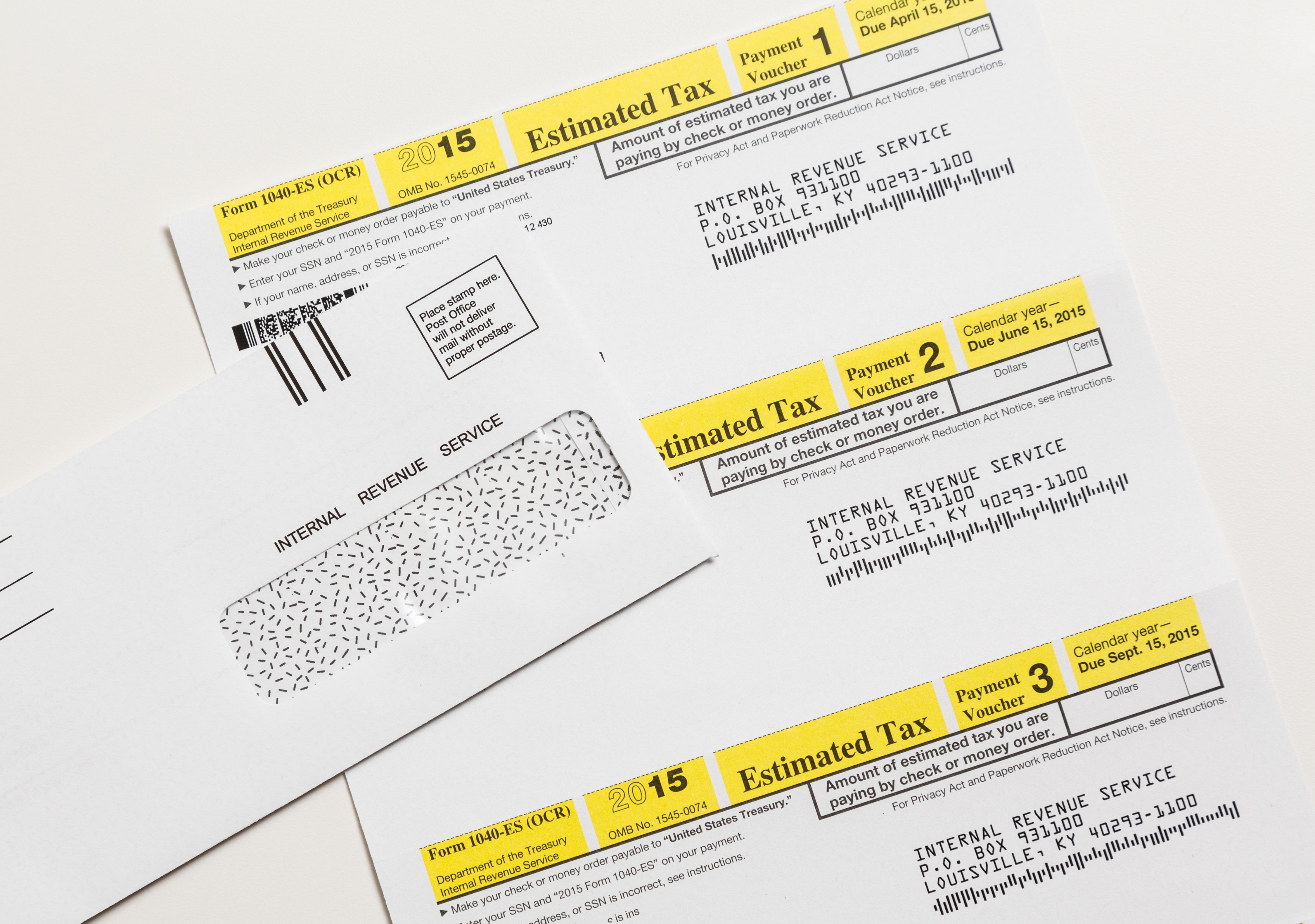
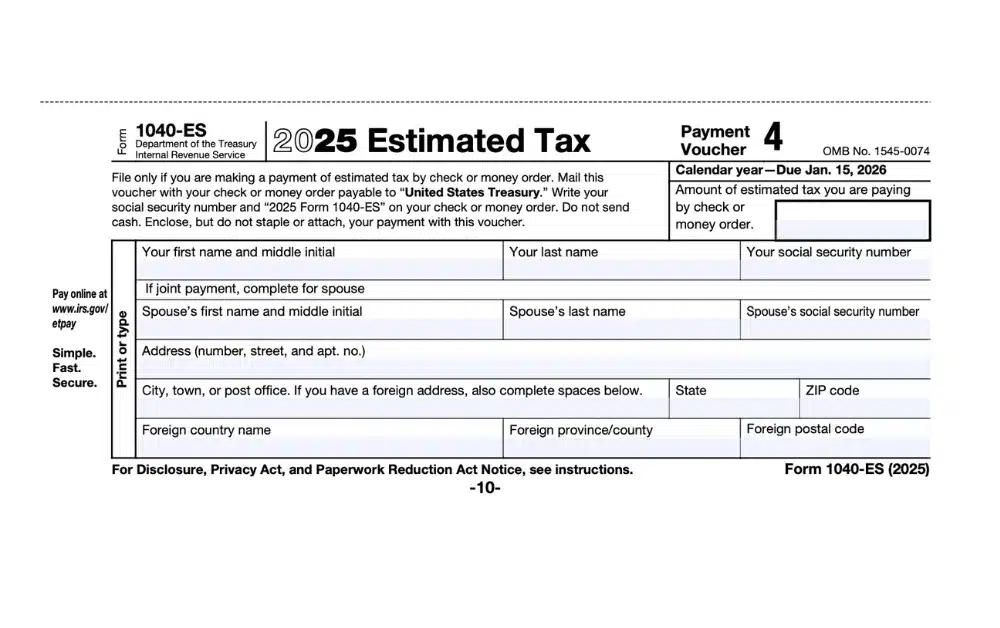
Quarterlies are typically sent to the IRS using Form 1040-ES (or paid electronically). States may have their own estimated tax requirements and dates, so consider this your reminder to check your state’s rules too. A good starting point is your state Department of Revenue website.
How to calculate your quarterly payment
There are two practical approaches. One is “safe and simple,” the other is “more accurate.” Many people start simple, then refine as their income becomes more predictable.
Step 1: Estimate net business income
Start with gross income you expect for the year, then subtract ordinary and necessary business expenses.
- Gross income: client payments, platform payouts, retainers, project fees
- Expenses: software, supplies, home office (if eligible), phone/internet business portion, travel, contractor help, professional fees, and more
Quick method: Take your year-to-date net profit and annualize it.
- If you are three months into the year and net profit is $18,000, an annualized estimate is $18,000 ÷ 3 × 12 = $72,000.
Step 2: Estimate self-employment tax
If you are a sole proprietor or single-member LLC taxed as a sole proprietor, self-employment (SE) tax is commonly the surprise. A practical shortcut:
- SE tax is roughly 14% to 15% of your net profit for many freelancers (it is calculated on 92.35% of net earnings, then multiplied by 15.3%).
One nuance for higher earners: the Social Security portion of SE tax caps out once you hit the annual wage base, but Medicare continues (and Additional Medicare may apply). If you are near that threshold, use the 1040-ES worksheet or a tax calculator for a tighter estimate.
This is a planning estimate, not a perfect tax return calculation, but it is close enough for quarterly budgeting in many cases.
Step 3: Estimate federal income tax
This depends on your filing status and other household income. For a planning-level approach:
- Start with your estimated net business income.
- Add other taxable income (W-2 wages, spouse income, interest, etc.).
- Subtract expected deductions (standard deduction is the most common).
- Estimate tax using your bracket(s), a tax calculator, or the 1040-ES worksheet. Your marginal bracket can be a rough shortcut, but do not apply it to all income.
Also note: many Schedule C filers may qualify for the 20% qualified business income (QBI) deduction , which can reduce taxable income. Eligibility and limits depend on your situation, so treat it as a potential reduction, not a guarantee.
If you want the cleanest “plug-and-play” option, IRS Form 1040-ES includes a worksheet that walks you through this.
Step 4: Subtract withholding and credits
If you or a spouse has W-2 withholding, subtract what you expect to be withheld for the year. Also subtract expected credits (child tax credit, education credits, and so on).
Step 5: Divide by four, then adjust for seasonality
Many businesses are not perfectly even throughout the year. You have two options:
- Even payments: Divide your estimated annual tax by 4. Simple and often good enough.
- Annualized income method: Pay more in strong quarters and less in slow quarters. This can reduce overpaying, but it is more paperwork. It uses Schedule AI (annualized income installment method) with Form 2210.
Step 6: Sanity-check with the safe harbor rule
If your income swings or you just want to minimize penalty risk, aim for one of the safe harbors:
- Pay at least 90% of this year’s total tax, or
- Pay 100% of last year’s total tax (110% if last year’s AGI was over $150,000, or over $75,000 if married filing separately).
In plain English: if you match last year’s total tax through a mix of withholdings and estimated payments, you usually avoid underpayment penalties even if you earn more this year.
Estimated tax due dates
Federal estimated taxes are due four times per year. They are not spaced evenly by months, so it helps to put reminders on your calendar.
| Payment covers | Due date (typical) |
|---|---|
| Jan 1 to Mar 31 | April 15 |
| Apr 1 to May 31 | June 15 |
| Jun 1 to Aug 31 | September 15 |
| Sep 1 to Dec 31 | January 15 (following year) |
If a due date falls on a weekend or federal holiday, it typically moves to the next business day. Also note: if you file your return and pay what you owe by January 31, you may be able to skip the January 15 payment (the fourth installment) in some situations. A tax pro can confirm based on your specifics.

How to pay estimated taxes
You have a few options. Electronic payments are usually the easiest to track and document.
- IRS Direct Pay from a bank account
- EFTPS (Electronic Federal Tax Payment System), useful if you like scheduling ahead
- Debit or credit card via IRS-approved processors (fees apply)
- Mail a check with a 1040-ES payment voucher (slower, but still valid)
When you pay online, double-check that you select the right payment type (usually 1040ES) and the correct tax year, so the payment gets applied properly.
Whatever method you choose, keep a simple record: date paid, amount, and confirmation number or bank transaction ID.
Avoiding underpayment penalties
Underpayment penalties are basically a charge for paying too little, too late. They are calculated like interest (the IRS rate changes periodically and is tied to the federal short-term rate plus a markup).
Use one of these strategies
- Safe harbor approach: Pay 100% of last year’s total tax (110% if last year’s AGI was over $150,000, or over $75,000 if married filing separately). This is my favorite for first-time freelancers because it is simple.
- Withholding approach: If you or a spouse has a W-2 job, increase W-2 withholding to cover the gap. Withholding is treated as if it was paid evenly throughout the year.
- Buffer approach: Add 5% to 10% on top of your quarterly estimate if your income is rising fast or you tend to underestimate.
Watch these common triggers
- A strong Q4 and a weak Q1, with equal payments all year
- Large one-time income events (a big project, a contract buyout, selling stock)
- Not accounting for self-employment tax
- Assuming deductions will be larger than they end up being
If your income is highly seasonal, the annualized income method can better match payments to your actual cash flow, but it is paperwork-heavy. Many freelancers choose “simple and slightly conservative” until they grow.
Examples
Example 1: New freelancer with steady income
Scenario: Mia is a freelance designer. She expects $90,000 in revenue and $20,000 in expenses this year.
- Estimated net profit: $90,000 − $20,000 = $70,000
- Rough SE tax: about 14.1% of net profit (planning estimate) = ~$9,900
- Federal income tax: highly dependent on filing status, other household income, deductions, and whether she qualifies for items like the QBI deduction. This is where the 1040-ES worksheet (or a calculator) gives the best estimate.
Planning takeaway: Mia can use the SE tax estimate as a baseline, then add income tax based on her actual household picture. As she gets closer to year-end, she should update numbers using actual year-to-date profit.
Example 2: Single-member LLC with uneven quarters
Scenario: Jordan runs a single-member LLC. He earns most of his income in the summer (event work). By May 31, his net profit is only $8,000, but by August 31 it jumps to $55,000.
What can go wrong: If Jordan pays tiny Q1 and Q2 amounts and then tries to “catch up” in Q3 and Q4, he could still face an underpayment penalty because the IRS evaluates timing across the year.
Two fixes:
- Annualized income method: Pay based on what you earned in each period (more accurate for seasonality).
- Safe harbor method: Base payments on last year’s total tax, split into four payments, so penalty risk stays low even if this year is lumpy.
Example 3: Freelancer with a W-2 spouse
Scenario: Priya freelances and expects to owe $9,000 in federal taxes from her business. Her spouse has a W-2 job.
Option A: Priya pays $2,250 per quarter as estimates.
Option B: Her spouse increases W-2 withholding by $750 per month for 12 months.
Why Option B can be appealing: It is automated, and withholding is treated as paid evenly throughout the year, which can reduce penalty risk if Priya’s income spikes late in the year.
Quarterly checklist
- Update your year-to-date P&L (income minus expenses).
- Annualize net profit if your income is fairly steady, or use actual-to-date to recalibrate if it is seasonal.
- Estimate total federal tax (income tax plus self-employment tax).
- Subtract withholding and credits.
- Compare to safe harbor (last year’s total tax) if you want penalty protection.
- Pay electronically and save confirmation.
- Set aside cash in a separate tax savings account so the next quarter does not feel like a surprise.
FAQ
What if I missed a quarterly payment?
You can make a catch-up payment as soon as possible. Earlier is better. Keep in mind that penalties can apply per installment, so catching up later does not always erase the penalty. If you missed because income was lower earlier and surged later, ask your tax preparer whether the annualized income method (Form 2210) could reduce the penalty.
Do I need to pay estimated taxes my first year in business?
Often, yes, because you may still owe more than $1,000. The safe harbor based on last year’s tax is less helpful if last year did not include self-employment income, so your first year is when a conservative estimate and consistent saving matter most.
Is my single-member LLC taxed differently?
By default, a single-member LLC is typically taxed like a sole proprietorship for federal purposes, meaning profits flow to your personal return and are subject to income tax and usually self-employment tax. If you elect S-corp status, the mechanics change significantly. That is a separate planning decision.
Should I overpay on purpose?
A small buffer can be smart if your income is volatile. Just remember that overpaying is an interest-free loan to the government. My preference is: use safe harbor to avoid penalties, then refine estimates as the year becomes clearer.
Important: This article is educational and not individualized tax advice. If you have multiple income streams, a recent move, a new baby, a business entity change, or large one-time income, it is worth running your numbers with a qualified tax pro.