I grew up watching my parents run a mid-sized agricultural supply company where cash flow decisions were never abstract. A tax payment was not just a number. It was a real check that competed with payroll, seed inventory, and the bank line of credit. So I have a lot of empathy for the confusion PTET creates for business owners today, especially when you are already juggling quarterly estimated taxes.
Here is the clean answer: a state pass-through entity tax (PTET) payment generally does not replace your federal 1040-ES estimated tax payments. PTET is a state tax mechanism at the entity level. Form 1040-ES is about paying federal income tax at the individual level. They can relate to the same underlying business profit, but they are not interchangeable.

PTET in plain English
A PTET election is a state-level option that lets a pass-through business, commonly an S-corp or partnership, pay state income tax at the entity level instead of having all of that tax show up only on the owners’ individual state returns.
One quick caveat: the exact structure varies by state. Some states make it feel like a clean swap. Others layer in addbacks, partial credits, different tax bases, or interactions with composite returns and withholding.
Mechanically, it often looks like this:
- The S-corp elects PTET (usually annually, by a state deadline).
- The S-corp pays a state tax on the pass-through income, using the state PTET forms and payment process (sometimes quarterly, sometimes on a different schedule).
- The shareholder receives a state credit (or similar benefit) on their individual state return to help prevent double taxation of the same income.
Important boundary for this page: whether a PTET payment is deductible somewhere is a separate question. Here we are staying focused on a different issue: does that entity-level state payment satisfy what you personally need to pay to the IRS using 1040-ES?
What 1040-ES is for
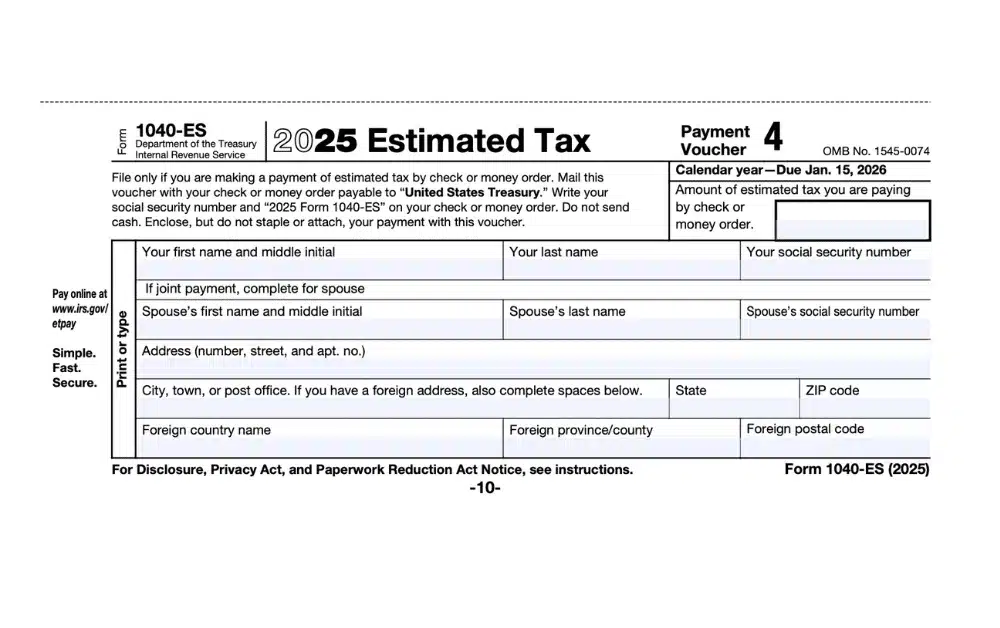
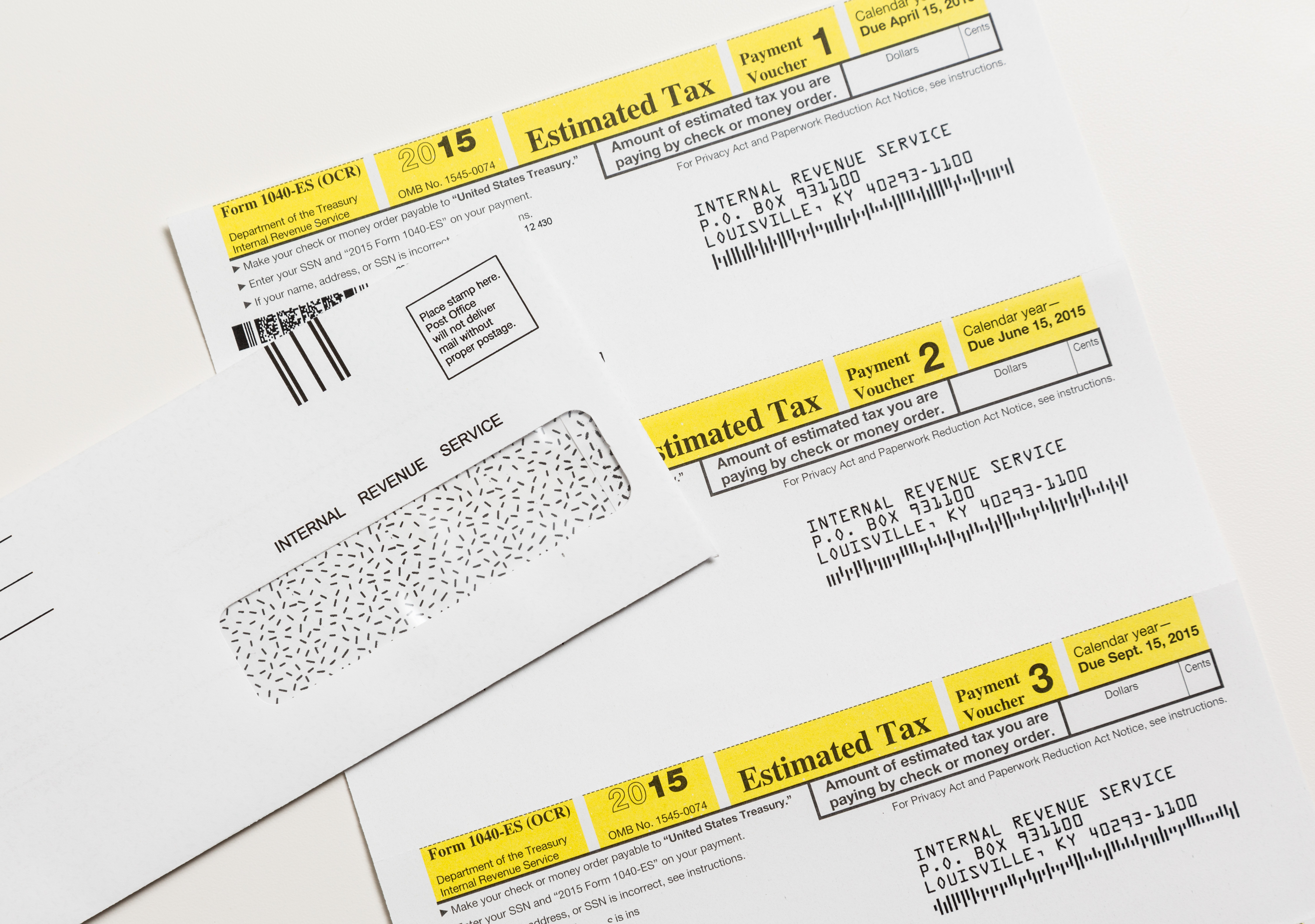
Form 1040-ES is the IRS system for paying federal income tax throughout the year when you do not have enough tax withheld from wages, pensions, or other sources.
If you are an S-corp owner, you can have federal tax exposure from multiple streams, including:
- K-1 pass-through profit (not subject to payroll withholding)
- W-2 wages from your S-corp (withholding can happen here)
- Investment income (interest, dividends, capital gains)
- Other household income if you file jointly
1040-ES payments are your way of prepaying federal tax so you avoid underpayment penalties and a surprise bill at filing time.
Does PTET replace 1040-ES?
In most cases, no. A PTET payment is made to a state revenue department. A 1040-ES payment is made to the U.S. Treasury for your individual federal income tax.
Even if the PTET payment is based on the same business income that shows up on your K-1, the payments live in separate lanes:
- PTET payment: state, entity-level
- 1040-ES payment: federal, individual-level
Think of it like paying your city water bill and asking whether it counts as your electric bill payment. Same household, different utility, different account.
One nuance worth naming: in many PTET setups, the entity-level state tax can be treated in a way that reduces the owner’s federal taxable income relative to a world without PTET. If your taxable income is lower, your federal tax may be lower, and that can reduce the amount you need to prepay. That still does not make PTET a substitute for 1040-ES. It just changes the math.
Example: one owner, two obligations
Let’s use a simple scenario with one shareholder.
The setup
- Maya owns 100% of an S-corp in Illinois.
- The S-corp will generate $200,000 of pass-through business profit this year (reported to Maya on a K-1).
- The S-corp elects into Illinois PTET and makes required payments through Illinois’ PTET process during the year (often aligned with estimated tax timing).
What the PTET payment does
The S-corp pays Illinois PTET based on its taxable base under Illinois rules. Maya will typically see the effect as a credit against her Illinois individual income tax tied to the PTET paid by the S-corp, subject to Illinois’ specific mechanics.
What the IRS still expects
The IRS still treats Maya as having federal taxable income that includes her S-corp pass-through profit. Unless Maya has enough withholding elsewhere (for example, from her W-2 wages or a spouse’s paycheck), she may still need to make federal estimated payments using 1040-ES to cover:
- Federal income tax on the K-1 profit
- Any other federal tax not covered by withholding
Bottom line: the state PTET check the S-corp wrote does not get credited to Maya’s federal 1040 account. The IRS does not treat it as a federal estimated payment.

Why the confusion happens
PTET feels like it should “count” toward estimates because it is a payment tied to pass-through income. But there are three practical reasons it usually does not replace 1040-ES.
1) Different agency
States and the IRS do not share one combined estimated tax ledger. A state payment is not automatically portable to your federal account.
2) Different taxpayer
PTET is typically paid by the entity. 1040-ES is paid by the individual. Even if you are the only owner, the state is treating the S-corp as the payer for that PTET obligation.
3) Different tax math
State taxable income computations and credits rarely mirror federal taxable income perfectly. So even conceptually, a PTET payment is not designed to match your federal liability dollar-for-dollar.
Could PTET change your estimates?
PTET can change your routine in two ways, neither of which turns it into a direct replacement for 1040-ES.
It may reduce state estimates
It can reduce or eliminate the need for state estimated payments at the individual level, depending on how your state administers credits, withholding rules, and underpayment penalty calculations.
It may change your federal projection
If the PTET structure reduces your federal taxable income, your total federal tax can come in lower than it otherwise would. In that case, you might make smaller federal estimates. You still make those payments through the IRS system, not through the state PTET system.
If your question is specifically, “Can I skip my federal estimates because my S-corp paid PTET?”, the answer is still: typically no.
How to stay penalty-free
If you are an S-corp owner trying to stay penalty-free, here’s the approach I recommend:
Step 1: Treat PTET like business compliance
- Confirm the election is filed correctly and on time.
- Make PTET payments using the state’s PTET process.
- Track PTET payments so your K-1 and state credit reporting can be reconciled at year-end.
Step 2: Build a separate IRS plan
- Estimate your total federal tax for the year, including K-1 profit.
- Decide whether to pay via quarterly 1040-ES, increased W-2 withholding, or a mix.
- Update your projection when profit swings or you add new income streams.
Step 3: Use safe harbors as guardrails
If you are trying to answer, “Do I truly need to send 1040-ES payments this quarter?”, the federal underpayment safe harbors are often the right framework. Many taxpayers aim to prepay at least 90% of the current-year tax, or 100% of the prior-year tax (often 110% for higher-income households, depending on AGI), through a combination of estimates and withholding.
Also worth remembering: withholding can be a powerful tool because it is generally treated as paid evenly throughout the year, even if it is increased later. For many S-corp owners, dialing up W-2 withholding is operationally easier than managing four estimated payments.
Common questions
If my S-corp pays PTET, do I still owe federal tax on the K-1?
PTET does not change the basic federal reality that S-corp profit passes through to you. You can still owe federal income tax tied to that K-1 amount, which is why 1040-ES can still be necessary.
Can I send my PTET payment to the IRS instead of the state?
No. PTET is a state election and must be paid through the state’s PTET payment channel. Federal estimates are paid to the IRS, generally under your Social Security number (or your spouse’s, if applicable), using 1040-ES, IRS Direct Pay, or EFTPS.
What if I increase my W-2 withholding from the S-corp instead of paying 1040-ES?
That can work for many owners. Withholding is often simpler operationally than quarterly estimates. The key is ensuring the total withholding is high enough for your situation and revisiting the plan when income changes. Your CPA or payroll provider can help you dial this in.
What if I pay 1040-ES but my spouse has withholding?
If you file jointly, you look at the household’s combined federal picture. Sometimes a spouse’s W-2 withholding reduces or eliminates the need for separate 1040-ES payments. The right answer depends on total income, credits, deductions, and how uneven income is during the year.
Any special cautions with PTET?
Yes. PTET rules are state-specific, and the details can get sharp quickly, especially for nonresident owners, multiple states, and situations where a state credit is limited or computed differently than you expected. It is worth confirming the mechanics with your tax pro before you rely on PTET to change your estimated payment strategy.
Rule of thumb
If you remember nothing else, remember this:
PTET is a state-level entity tax payment. 1040-ES is a federal individual tax payment. They are not substitutes.
If you are unsure whether you are on track, ask your tax pro for a quick quarterly projection. In my experience, one 20-minute projection mid-year can prevent months of stress later.