When I was growing up, my parents ran a mid-sized agricultural supply company, and tax time always felt like a second job. Not because they were careless, but because the paperwork had a way of multiplying the moment income changed, a new line of business popped up, or a “simple” year turned complicated.
The Qualified Business Income (QBI) deduction can feel the same way. You might understand the 20% concept, but then the IRS asks you to pick between Form 8995 and Form 8995-A. Choosing the right form matters because it determines how much detail you have to provide and which limitations you have to run.
The quick answer
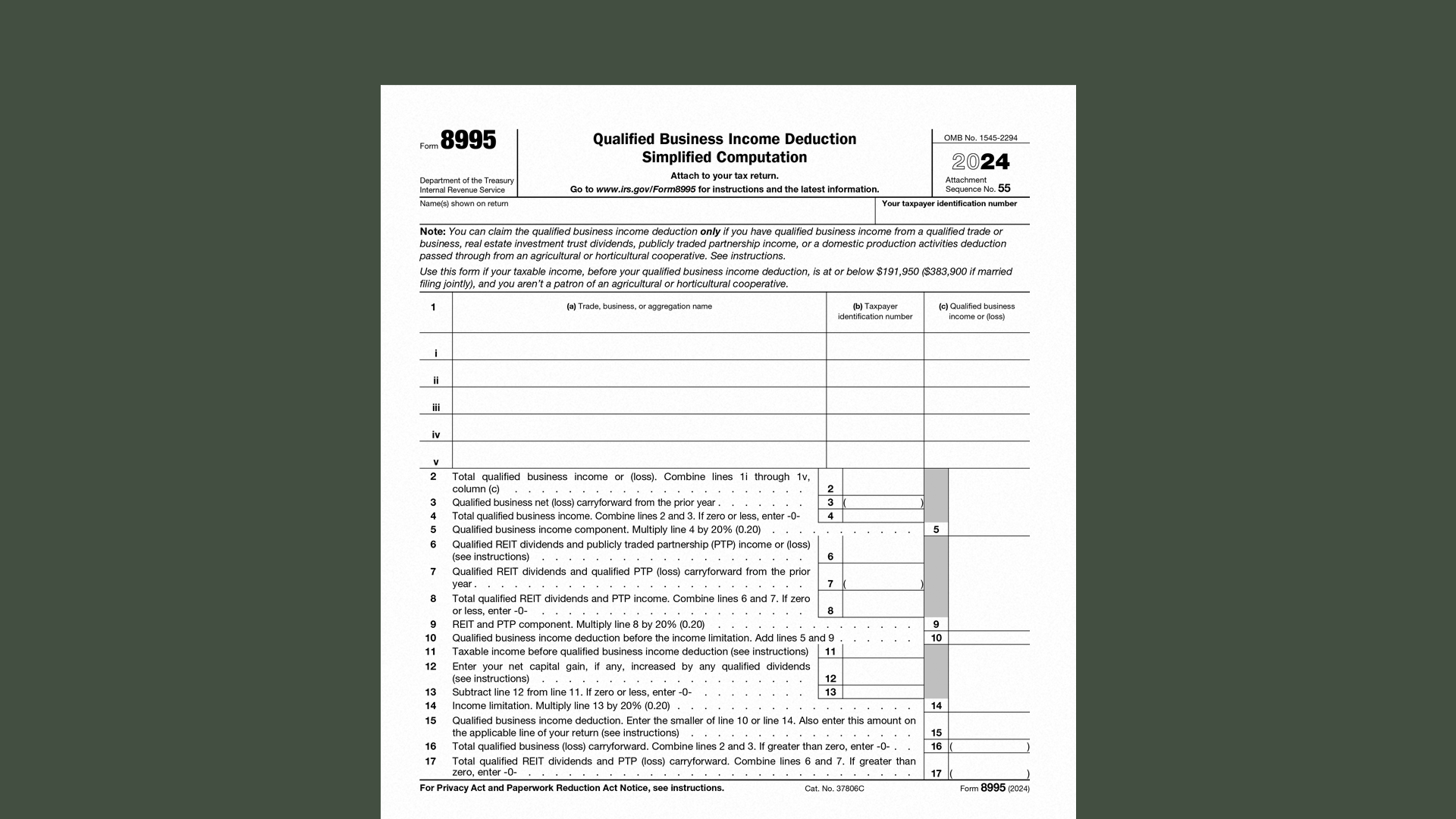
Most taxpayers may use Form 8995 if their taxable income is at or below the IRS “threshold amount” for their filing status for that tax year (as defined in that year’s Form 8995 instructions).
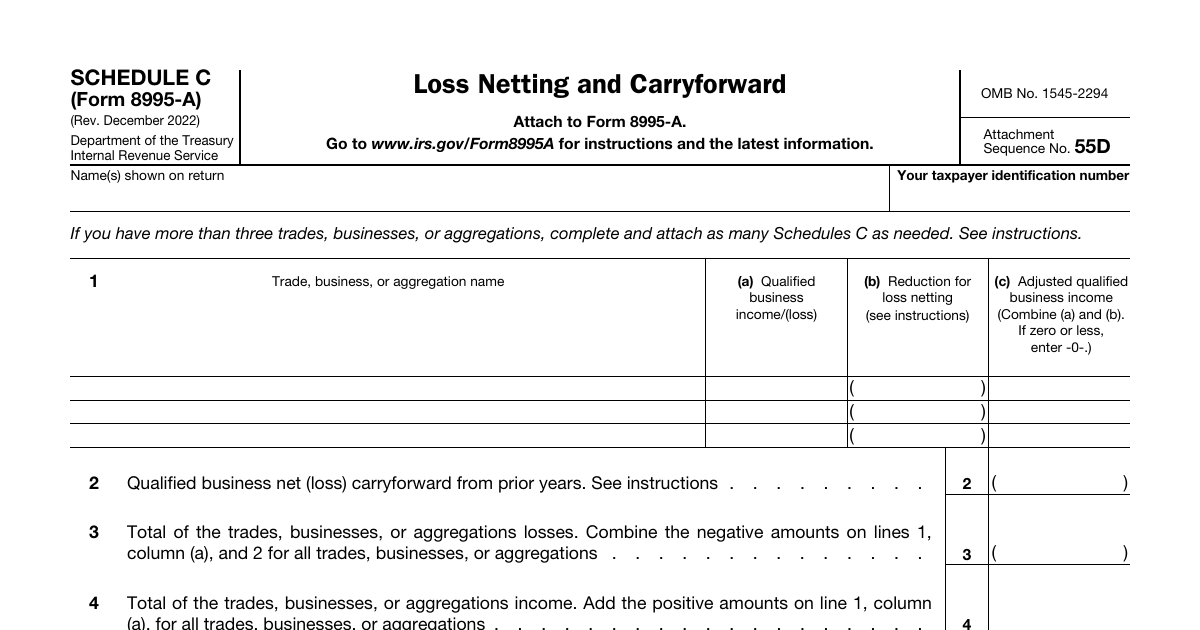
Most taxpayers will use Form 8995-A if their taxable income is above the threshold amount, because the QBI deduction calculation may require additional computations, including:
- the W-2 wage and qualified property (UBIA) limits
- the Specified Service Trade or Business (SSTB) reduction rules (including phase-in considerations)
- aggregation disclosures and related calculations (if you choose to aggregate multiple businesses)
One important nuance: the IRS instructions for the year control. A clean, instruction-aligned rule of thumb is this: Form 8995 is generally available at or below the threshold amount; above the threshold amount, Form 8995-A is the more common way to compute the deduction because additional limits can apply.
What these forms do
Form 8995: the simplified calculation
Form 8995 is designed for taxpayers whose taxable income is low enough that the complicated wage, property, and SSTB limitation calculations do not generally apply. In practice, it is the “calculate QBI and apply 20% (with a couple of checks)” version of the deduction.
You still need correct inputs, including QBI from each qualified trade or business, plus qualified REIT dividends and qualified publicly traded partnership (PTP) income if applicable. If you are under the threshold amount, those items do not automatically push you into Form 8995-A.
Form 8995-A: the full calculation
Form 8995-A is where the IRS provides the additional schedules and worksheets that are often needed when income is high enough that the QBI deduction may be limited.
Above the threshold amount, the deduction can be restricted by how much your business pays in W-2 wages and, in some cases, by the value of certain depreciable business property (often referred to as UBIA of qualified property). If your business is an SSTB, the deduction can be reduced as taxable income moves through the phase-in range.
The income number that matters
The dividing line is your taxable income, not your business profit.
Practically speaking, this is the number on the “Taxable income” line of your Form 1040 for the year. The QBI deduction is figured after taxable income is determined, so you are looking at taxable income before applying the QBI deduction itself.
The IRS sets a QBI threshold amount each year and it depends on filing status. If you are at or below that threshold amount, you are generally eligible to use Form 8995. If you are above it, you generally move into the more detailed calculations found on Form 8995-A.
If you are close to the line, do not guess. Taxable income can move with retirement contributions, Health Savings Account contributions, depreciation choices, and timing of income and expenses for pass-through businesses.
Threshold and phase-in range
Many people hear “threshold” and assume it is an on-off switch. In reality, there is often a phase-in range above the threshold amount where limitations start to apply and ramp up.
Here is the plain-English version of what changes when you cross the threshold: the wage and property limits start to come into play (phasing in), and SSTB benefits can begin to phase out across the range.
After the top of the range, the limitations are generally fully in effect. The exact dollar amounts change by year and filing status, so the cleanest way to confirm your numbers is to check the Form 8995 and Form 8995-A instructions for the tax year you are filing.
When 8995-A is common
1) Your taxable income is above the threshold
This is the main driver. Above the threshold, the QBI deduction calculation typically requires checking whether the deduction is limited by wage and property rules or, for SSTBs, reduced through the phase-in rules.
2) You have SSTB income and are above the threshold
SSTBs are certain service businesses defined in the Section 199A rules and regulations. Common examples include health, law, accounting, consulting, financial services, and performing arts, among other categories spelled out by the IRS.
Being an SSTB does not automatically eliminate the QBI deduction. The issue is that once you are above the threshold, the deduction may be reduced and can phase out depending on where you land in the phase-in range.
If you are unsure whether you are an SSTB, treat it as fact-specific. Your Schedule K-1 package often includes a Section 199A (QBI) statement indicating whether the activity is an SSTB, and a tax professional can help interpret gray areas.
3) You are aggregating businesses
Aggregation is an election that allows certain businesses to be treated as one combined unit for applying the wage and property limits. Not everyone can or should aggregate, but if you do, it often goes hand-in-hand with the Form 8995-A workflow and its schedules.
4) You have a QBI loss carryforward
If you had negative QBI in a prior year, it can carry forward and reduce QBI in future years. This can happen whether you are under or over the threshold.
A carryforward does not automatically force Form 8995-A by itself. Still, it often increases complexity, and if you are above the threshold, you are more likely to be in the long-form calculations anyway because the other limitations may apply at the same time.
Example 1: under the threshold
Scenario: Maya is single and owns a small ecommerce business reported on Schedule C. After adjustments and deductions, her taxable income is below the QBI threshold amount for the year.
- Schedule C net profit: $95,000
- Taxable income: below the year’s threshold amount for single filers
- Her business is not an SSTB
- No aggregation election
Which form? Maya may generally use Form 8995.
What happens on the form? She calculates her QBI amount, applies the 20% rate, and then checks the overall limitation (based on taxable income) before reporting the deduction on her Form 1040.
Practical takeaway: When taxable income is at or below the threshold amount, Form 8995 is typically the simpler path.
Example 2: above the threshold
Scenario: Andre and Simone are married filing jointly. Andre is a high-earning marketing consultant operating through an S corporation. Simone has W-2 income. Their combined taxable income pushes them above the QBI threshold amount for the tax year assumed in this example (and would be above the threshold for most recent tax years).
- S corporation ordinary business income allocated to Andre: $220,000
- Andre’s W-2 wages from his S corporation: $120,000
- Simone W-2 wages: $180,000
- Taxable income (after deductions): $480,000
- The business may or may not be treated as an SSTB depending on the facts and how the activity is classified under the rules
Which form? They will generally use Form 8995-A to compute the deduction.
What happens on the form? Form 8995-A walks them through whether the QBI deduction is:
- limited by the W-2 wage and qualified property rules, and
- reduced if the business is treated as an SSTB at their income level
Practical takeaway: Once you are above the threshold amount, the QBI deduction often stops feeling like a simple 20% computation and starts feeling like a deduction that requires more support.

How to decide in 5 minutes
- Step 1: Find your taxable income on the “Taxable income” line of your Form 1040 for the year.
- Step 2: Look up the threshold amount (and phase-in range, if you are close) in that year’s Form 8995 or 8995-A instructions.
- Step 3: If you are at or below the threshold amount, you may generally use Form 8995.
- Step 4: If you are above the threshold amount, you will generally need the more detailed computation on Form 8995-A, because wage, property, and SSTB rules may apply.
- Step 5: If you are right near the threshold amount, consider planning moves (retirement contributions, timing income, accelerating expenses where appropriate) before year-end.
Common mistakes I see
Mixing up taxable income and business profit
I cannot tell you how often someone says, “My business made under the threshold,” but their household taxable income is well above it because of a spouse’s salary, capital gains, or other income. The form choice is based on taxable income.
Assuming SSTB means “no deduction”
SSTB status is not an automatic disqualifier. It becomes a problem as income rises into and through the phase-in range. That is a major reason the long form exists.
Forgetting the wage issue for S corporation owners
If you are above the threshold and run an S corporation, W-2 wages paid by the business can directly affect the QBI deduction calculation. This is one reason “reasonable compensation” conversations are not only about payroll tax.
Overestimating the 20% deduction
The QBI deduction also has an overall limitation. In general terms, it cannot exceed 20% of your taxable income minus net capital gain. Even if your business QBI is high, this cap can reduce the final deduction.
FAQ
Do I file Form 8995 or 8995-A with my return?
Yes. The QBI deduction is reported on your individual return, and you attach the appropriate form showing the calculation.
Can tax software choose the right form for me?
Most reputable software will generate the correct form based on your inputs. The risk is not the software, it is incorrect classification (like SSTB status), missing K-1 details, or entering wage and UBIA information incorrectly.
If I have multiple K-1s, does that automatically mean 8995-A?
Not automatically. Multiple businesses can still be under the threshold amount and use Form 8995. Taxable income and whether the above-threshold limitations apply are what usually drive Form 8995-A.
If I am under the threshold this year but above next year, will the form change?
Absolutely. It is normal for the form to change year to year as income moves. This is especially common for founders with lumpy income, a big contract year, or a one-time capital gain.
Bottom line
If your taxable income is at or below the QBI threshold amount for your filing status, Form 8995 is generally the right, simpler path. If your taxable income is above that threshold amount, you will generally be pushed into the more detailed computation on Form 8995-A because wage and property limits, SSTB reductions, and other calculations may apply.
And if you are hovering near the threshold, treat it like a planning opportunity, not just a paperwork problem. A few smart moves during the year can change not only your deduction, but also how complicated your filing season feels.