Every December, I think back to my parents at the kitchen table, receipts spread out like confetti, trying to make sense of a year’s worth of business decisions after the fact. Year-end tax planning is the opposite of that feeling. It is proactive, calmer, and usually more profitable.
This checklist walks you through ten practical ways to potentially lower your tax bill by year-end (or the applicable deadline). Not every move applies to every household, but most people can benefit from at least a few of them.
Quick note: Tax rules change and your situation is unique. Use this as a planning guide, then confirm details with your CPA or tax pro, especially if you own a business, have large investment gains, or went through a major life change this year.
One important deadline distinction: Some moves truly must happen by December 31 (like most investment sales, many charitable gifts, and RMDs). Others often have a deadline of Tax Day (typically mid-April) for the prior year (like IRA contributions and many direct HSA contributions). I call this out in the relevant sections so you can prioritize without panic.

Before you start: gather your numbers
You will make better decisions when you can see the whole picture. Spend 20 minutes pulling:
- Most recent pay stub(s) showing year-to-date wages and withholding
- Investment account year-to-date realized gains and losses
- Estimated business profit and payroll totals if you are self-employed
- Projected itemized deductions: mortgage interest, property taxes, charitable gifts, medical expenses
- Prior-year tax return (to see what mattered last year)
If you can estimate your taxable income range, you will know whether the goal is to stay in a bracket, avoid an underpayment surprise, or position yourself for credits and deductions.
1) Max out workplace retirement contributions (401(k), 403(b), 457)
This is often the highest impact, lowest drama move. Contributions to traditional workplace plans typically reduce taxable income, dollar for dollar, in the year you make them.
Deadline: Usually 12/31 through payroll. Your last paycheck date matters.
What to do this week
- Log into your payroll portal and increase your contribution percentage for the final pay periods.
- Confirm whether your plan offers traditional and Roth contributions. Traditional usually helps your current-year tax bill. Roth does not, but can be great long-term.
- Ask HR whether you can add a one-time “bonus” deferral if you are paid a year-end bonus.
Watch-out: Some plans stop matching if you hit the annual limit early. If you are close to the cap and still have paychecks left, ask HR how your match is calculated.
Make it real: If you get two paychecks left, even moving from 6% to 15% for those final checks can make a meaningful dent without changing your whole year.
2) Fund an HSA (and treat it like a stealth retirement account)
If you have a high-deductible health plan and are eligible for an HSA, this is one of the best tax tools available. Many households get a “triple tax advantage” when used correctly: contributions are pre-tax (or deductible), growth is tax-deferred, and qualified medical withdrawals are tax-free.
Deadline reality check: Payroll HSA contributions generally need to run through your paycheck by 12/31. But direct contributions you make to your HSA provider are often allowed up to Tax Day for the prior year (typically mid-April). That means you can still finish funding last year’s HSA after New Year’s, as long as you were eligible.
Year-end moves
- Check how much you have already contributed through payroll.
- If you are under the limit, decide whether to (a) increase payroll contributions for the remaining checks, or (b) plan a direct contribution later (up to Tax Day, in many cases).
- Save receipts for eligible medical expenses. You can reimburse yourself later in many cases.
Eligibility note: HSA eligibility is month-by-month. If you were only HSA-eligible for part of the year, your contribution limit may be prorated unless you qualify for the “last-month rule,” which comes with a testing period. This is worth confirming before you top it off.
Practical tip: If cash flow allows, consider paying current medical expenses out-of-pocket and letting the HSA invest for the long run.
3) Use an FSA strategically (and do not leave money behind)
FSAs can reduce taxable income, but they come with a big catch: some funds may be “use-it-or-lose-it,” depending on your employer’s plan rules (carryover or grace period).
Deadline note: Some plans require expenses to be incurred by 12/31 but allow claims to be filed later. Others offer a grace period or carryover. Your plan documents matter here.
Checklist
- Log in and confirm your remaining balance.
- Ask HR if your plan has a carryover amount or a grace period.
- Schedule eligible spending now: eye exams, prescriptions, dental work, therapy copays, medical supplies.
Small win: Even a few hundred dollars left unspent is real money you could be using tax-free.
4) Harvest capital losses (without breaking the wash-sale rule)
Capital loss harvesting means selling investments that are down to realize a loss, which can offset capital gains and potentially reduce your taxable income.
Deadline: To count for this tax year, the trade must be executed by 12/31 (practically, earlier is cleaner).
How it helps
- Losses can offset capital gains.
- If losses exceed gains, you may be able to deduct a portion against ordinary income (subject to annual limits), with the remainder carried forward.
Do it carefully
- Identify positions with unrealized losses in taxable brokerage accounts.
- Sell to realize the loss.
- Avoid buying the same or “substantially identical” security during the wash-sale window (generally 30 days before and 30 days after the sale, a 61-day window total) or the loss may be disallowed.
- Remember wash sales can be triggered across accounts in some situations, including IRAs and even a spouse’s account. If you harvest losses, make sure your automatic investing and dividend reinvestment will not accidentally buy it back.
- If you want to stay invested, consider purchasing a similar, not identical, fund to maintain market exposure.

5) Review capital gains: time your sales and distributions
Tax planning is not just about deductions. It is also about controlling when income shows up. If you are sitting on large gains, the timing of selling can matter a lot.
What to review
- Short-term vs. long-term gains: Holding investments for more than one year can qualify for long-term capital gains rates.
- Mutual fund capital gain distributions: Mutual funds can distribute gains even if you did not sell. Check your fund’s estimated year-end distribution schedule.
- Concentrated positions: If one stock dominates your portfolio, year-end is a good time to create a measured exit plan rather than a panic sale later.
Helpful question to ask yourself: “If I sell this in December instead of January, what changes in my bracket, my credits, and my Medicare or NIIT exposure?”
6) Make charitable giving count (bunching, donor-advised funds, and appreciated assets)
Giving is personal. Taxes are just the bonus. But if you already donate, year-end is the time to align generosity with smart planning.
Deadline: Most charitable gifts need to be made by 12/31 to count for this tax year. (For mailed checks, the postmark generally matters. For cards and online gifts, the charge date generally matters.)
Three high-impact approaches
- Bunch contributions: If you are near the line between itemizing and taking the standard deduction, consider grouping multiple years of giving into one year to exceed the itemization threshold.
- Donor-advised fund (DAF): You can potentially take the deduction in the year you contribute to the DAF, then grant to charities over time.
- Donate appreciated investments: Giving long-term appreciated stock or ETFs can allow you to avoid capital gains taxes on the appreciation while still receiving a deduction (subject to AGI limits and other rules).
Keep records: For cash gifts, keep a bank record or receipt. For gifts of $250+, you typically need a contemporaneous written acknowledgment from the charity. For non-cash donations, additional forms may apply, and larger gifts can require qualified appraisals. If you plan to donate appreciated assets or a sizable non-cash item, do not wait until the last week of December.

7) Optimize your IRA move: traditional, Roth, or a conversion
IRAs are a planning staple, but the “right” move depends on your income, future earning trajectory, and whether you want a tax break now or tax-free growth later.
Key deadline distinction: IRA contributions for a tax year are generally allowed up to Tax Day (typically mid-April) for that prior year. Roth conversions, however, must be completed by 12/31 to count for the current year.
Options to consider
- Traditional IRA contribution: May be deductible depending on income and workplace plan coverage.
- Roth IRA contribution: No current deduction, but qualified withdrawals can be tax-free.
- Roth conversion: Paying tax now to shift money from traditional to Roth can make sense in lower-income years or when future tax rates are likely higher.
Important: Conversions increase taxable income in the year you convert. Do not do this blindly in late December. Run a projection first.
Also: If you are using a backdoor Roth strategy, be mindful of the pro-rata rule if you have other pre-tax IRA balances.
8) Small-business owners: accelerate deductions and check retirement options
If you own a business, the last few weeks of the year can be a chance to legally shift expenses into the current year and reduce taxable profit. Done carefully, it is one of the most powerful parts of tax planning.
Year-end business checklist
- Review profit: Update your bookkeeping so you are not planning off stale numbers.
- Consider purchasing needed equipment: Depending on the asset and rules, you may be able to expense some purchases rather than depreciate over years.
- Pay outstanding invoices and expenses: Timing rules vary by accounting method, so confirm with your tax pro. Also note that prepaying expenses is not always deductible, and some costs must be capitalized.
- Home office and vehicle logs: If you are claiming these, clean up documentation now.
- Retirement plans: SEP IRA, SIMPLE IRA, and Solo 401(k) options can create large deductions, but setup and contribution deadlines differ by plan type and can extend into the following year. If you want a plan for this year, ask your CPA now what must be established by 12/31 versus what can be done by filing time.
Reality check: Do not buy things you do not need just for a deduction. The IRS is not “paying for it.” You are still spending cash.

9) Check withholding and avoid an April surprise
Lowering your tax bill is great. Getting hit with penalties or a big balance due because withholding was too low is not.
What to do
- Compare your year-to-date withholding to last year’s total tax and this year’s projected tax.
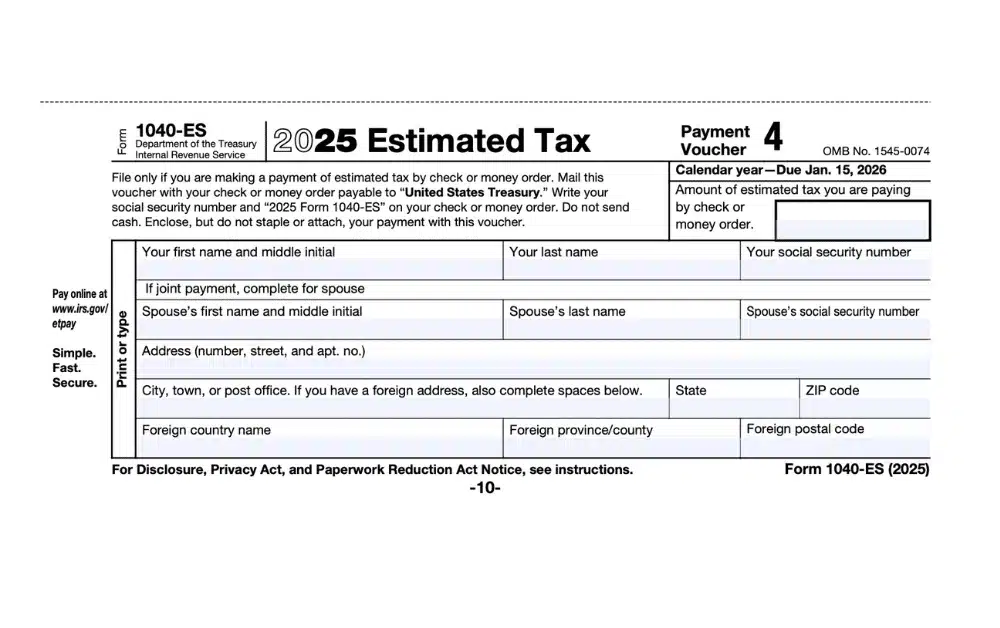
- If you are short, adjust withholding on your W-4 or make an estimated tax payment.
- If you had a big year, ask your tax pro about safe-harbor rules (which are often based on prior-year tax, with different thresholds for higher incomes) and how to meet them.
Common triggers for under-withholding: switching jobs, side income, RSUs, large bonuses, or a spouse changing income.
10) Claim credits and deductions you might be missing
Credits are especially valuable because they generally reduce your tax liability dollar for dollar. Deductions reduce taxable income. Both matter, and year-end is when you can still take action.
Quick scan list
- Education: tuition-related credits or student loan interest (depending on eligibility)
- Child and dependent care: confirm you have proper documentation and provider tax info
- Energy improvements: certain home efficiency upgrades may qualify for credits
- Medical expenses: if you are close to the threshold for deductibility, timing payments may help (especially with planned procedures)
- State and local taxes: review property tax payments and state estimates, but be mindful of caps and rules
- 529 contributions (state-dependent): some states offer a deduction or credit for contributions, and year-end is a common time to fund it
Tip: If your income changed significantly, re-check eligibility. Credits often phase out when income rises.
Not-to-miss if it applies
These do not fit neatly into the checklist above, but they are high impact for the right person.
Required Minimum Distributions (RMDs)
If you are subject to RMDs, they generally must be taken by 12/31 each year (some first-time RMD rules can differ). Missed RMDs can trigger painful penalties. If you have multiple retirement accounts, confirm where the distribution is coming from and that it is scheduled.
Qualified Charitable Distributions (QCDs)
If you are eligible, a QCD lets you donate directly from an IRA to a qualified charity. It can satisfy an RMD and reduce taxable income in a way that is often better than taking the distribution and then giving cash. These also generally need to be completed by 12/31, and the check needs to be issued correctly, so do not leave it to the final days.
A simple December timeline
This week
- Pull pay stubs, investment summaries, and a rough income estimate
- Increase 401(k) deferral if you can
- Check HSA and FSA balances
Next 1 to 2 weeks
- Evaluate loss harvesting opportunities (and turn off auto-reinvest if it risks a wash sale)
- Plan charitable gifts and gather receipts
- Business owners: update books and review equipment or expense needs
Final week of December
- Confirm trades are executed by 12/31 and you are respecting wash-sale timing
- Finish FSA spending based on your plan’s rules
- Complete Roth conversions, QCDs, and RMDs if applicable
- Run a final withholding check and make estimated payments if necessary
Into January through Tax Day: If you still want to fund last year’s IRA or make a direct HSA contribution (and you are eligible), you may still have time. Just make sure your contribution is coded for the correct tax year.
FAQ
Is year-end tax planning only for high earners?
No. Even small moves like increasing a retirement contribution, funding an HSA, or spending down an FSA can create real savings for everyday households.
Should I itemize deductions or take the standard deduction?
It depends on your total itemized deductions. A common strategy is “bunching” charitable contributions or timing medical expenses to push itemized deductions above the standard deduction threshold.
Can I do tax-loss harvesting in my IRA?
Generally, no. Tax-loss harvesting is a strategy for taxable investment accounts because losses inside IRAs are not typically deductible in the same way.
What is the biggest mistake people make in December?
Making irreversible moves without a projection. Roth conversions, large asset sales, and business purchases can all be smart, but only when you understand how they change your taxable income and credits.
Closing thought
Taxes are not the goal. They are the scoreboard. The goal is building a life and business that feels stable and well-funded, with fewer “surprise bills” along the way.
If you do only one thing after reading this, do this: pick two items from the checklist and put them on your calendar for this week. Momentum is the real tax strategy.