If you run your business through a sole proprietorship, an LLC, a partnership, or an S-corp , you have probably heard someone say: “Don’t forget your QBI deduction.” That advice is well-meaning, but Section 199A (the law behind QBI) has enough moving parts to make even organized owners feel unsure.
Let’s make it simple. The Qualified Business Income (QBI) deduction is a potential up to 20% deduction on certain business profits from “pass-through” businesses. It does not reduce your self-employment tax or payroll taxes, but it can reduce your taxable income on your personal return.

What QBI is
The QBI deduction, also called the Section 199A deduction, lets eligible business owners deduct up to 20% of their qualified business income on their personal tax return.
Key point: this is a deduction, not a credit. A $10,000 deduction does not mean $10,000 less tax. It means $10,000 less taxable income, which then gets multiplied by your marginal tax rate.
Where it shows up
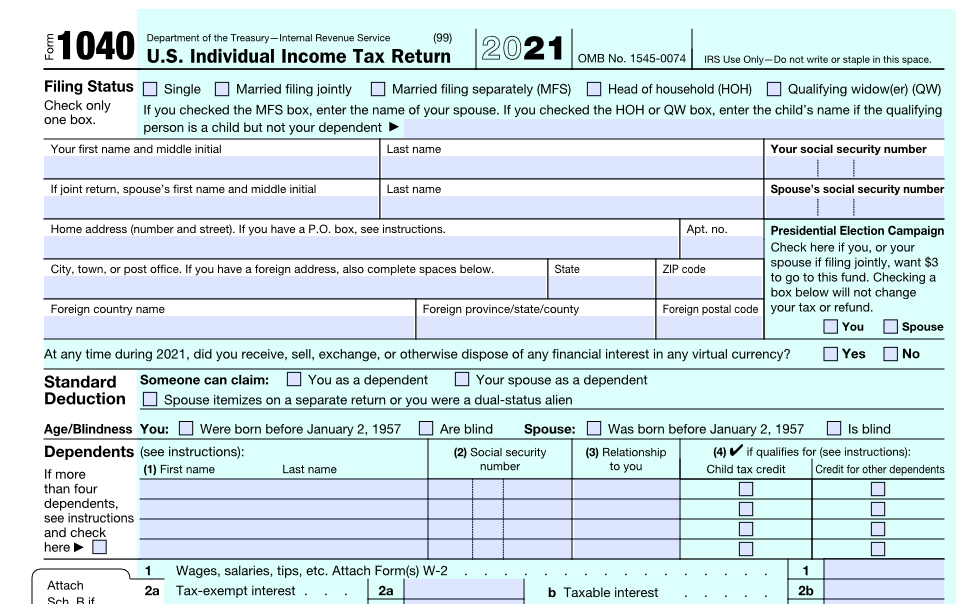
For most people, QBI is a below-the-line deduction that reduces taxable income on Form 1040, generally calculated on Form 8995 or Form 8995-A (depending on your situation). Your tax software handles the math, but you still need to understand the rules so you can plan and avoid surprises.
Who can qualify
Generally, you can qualify if you have income from a pass-through business, meaning the business income passes to your personal return.
- Sole proprietors (including single-member LLCs taxed as sole props) reporting on Schedule C
- Partners in partnerships (including multi-member LLCs taxed as partnerships)
- S-corp shareholders
- Some trusts and estates (outside the scope of this piece)
You do not get QBI on:
- W-2 wages you earn as an employee
- C-corp profits (C-corps have their own tax regime)
- Guaranteed payments to partners (these are more like compensation than profit). They still increase your taxable income, and that can matter for the income thresholds.
- Capital gains and dividends (generally not QBI)
Also, QBI is based on net business income, not your gross revenue. If your business has a loss, that loss can reduce QBI in the current year and carry forward as a Section 199A qualified business loss component to offset future QBI (not as a general NOL).
The big rule: “up to” 20%
The cleanest version of the rule looks like this:
QBI Deduction ≈ 20% × Qualified Business Income
But in real life, the final deduction can be smaller because of:
- Income thresholds (your total taxable income matters, not just your business profit)
- Specified Service Trade or Business rules (SSTBs are treated differently at higher incomes)
- W-2 wage and property limitations (for higher-income owners)
- The overall limit based on your taxable income (generally 20% of taxable income minus net capital gains). This cap can apply even when you are under the threshold.
Think of 20% as the “headline number,” then assume there are guardrails if your income is above certain levels.
Income thresholds
Section 199A is easiest when your taxable income is under the IRS threshold for the year. This is a taxable income threshold, not a QBI threshold.
For 2025, the thresholds are often cited as:
- $197,300 for single filers
- $394,600 for married filing jointly
Important: These thresholds are indexed for inflation and change over time. If you are using this article for real planning, confirm the numbers for the tax year you are filing using the IRS inflation adjustment guidance (the annual revenue procedure).
Above the threshold, the rules can start phasing in extra limitations. There is also a phase-in range of $50,000 (single) or $100,000 (married filing jointly), after which certain businesses may lose the deduction entirely.
SSTBs
One of the most misunderstood parts of QBI is the Specified Service Trade or Business category, often shortened to SSTB.
In plain terms, SSTBs include certain service fields where income is closely tied to people providing services. Common examples include:
- Health (doctors, dentists, therapists)
- Law
- Accounting
- Consulting
- Financial services
- Performing arts
- Athletics
- Brokerage services
You may also hear about the “reputation or skill” category. In the final rules, that piece is narrower and fact-specific than many people assume, so it is smart not to over-label your business based on a vague description.
Here is the practical takeaway:
- Below the income threshold: SSTBs can generally claim QBI like other businesses.
- Within the phase-in range: the deduction may be partially reduced.
- Above the phase-in range: SSTBs can lose the QBI deduction entirely.
If your work is “kind of consulting” but also includes product sales, software, or other non-service revenue, classification can get nuanced. This is one of the areas where paying for a solid CPA opinion is often worth it.
W-2 wages and property limits
Once your taxable income is above the threshold, QBI can be limited based on how much your business pays in W-2 wages and how much it owns in qualifying property (technically, qualified property is depreciable tangible property used in the business).
The limitation generally caps your deduction to the greater of:
- 50% of W-2 wages paid by the business, or
- 25% of W-2 wages + 2.5% of the unadjusted basis (original cost) of qualified property
Translation: if you are a higher-income owner and your business has little payroll (or you rely mostly on contractors), your QBI deduction might be smaller than you expected. If you are a real estate-heavy operation (lots of qualifying property), that 2.5% property add-on can help.
Note for S-corps
S-corp shareholders often hear, “Take a lower salary to save payroll taxes.” Be careful. Your salary needs to be reasonable compensation, and at higher incomes, W-2 wages can also help support a larger QBI deduction. The best answer is usually not “lowest possible salary,” it is “defensible salary that also supports the overall tax plan.”
How it is calculated
You do not need to memorize the forms, but it helps to know the sequence:
- Compute QBI for each qualified trade or business (usually net profit, with specific adjustments and exclusions).
- Apply the 20% rate to each business’s QBI.
- Check your taxable income against the threshold. If you are above it, apply SSTB rules and wage/property limitations as applicable (often phased in gradually across the phase-in range).
- Apply the overall limit: the total QBI deduction generally cannot exceed 20% of your taxable income (minus net capital gains).
If you have multiple businesses, you may end up with multiple QBI calculations. Some owners can benefit from aggregation elections, but that is a higher-level planning conversation.
Simple examples
Let’s walk through a few “real life” style scenarios. These are simplified examples to show the mechanics, not to replace tax advice.
Example 1: Sole proprietor under the threshold
Maria runs a small e-commerce shop as a sole proprietor.
- Net business profit (QBI): $80,000
- Taxable income: $120,000 (under the threshold)
Estimated QBI deduction: 20% × $80,000 = $16,000
Maria’s taxable income is reduced by about $16,000 (subject to the overall limit, which in this simplified case is not binding).
Example 2: Partnership with higher income and low payroll
DeShawn and Priya own an LLC taxed as a partnership that provides marketing services. Assume it is a non-SSTB for illustration (in real life, some marketing and strategy work can be treated as consulting depending on the facts).
- Combined QBI allocated to them: $400,000
- Taxable income (MFJ): $520,000 (above the threshold)
- W-2 wages paid by business: $60,000
- Qualified property: $0
Headline QBI deduction would be $80,000 (20% of $400,000). But at higher incomes, the wage and property limitation can reduce it. Also, right after you cross the threshold, this limitation is generally phased in, not always an immediate hard cap.
- 50% of W-2 wages = $30,000
Depending on where they fall in the phase-in range and the rest of their return, their deduction could be reduced substantially and, once fully phased in, could end up closer to $30,000 than $80,000.
Example 3: S-corp shareholder with reasonable wages
Chris owns an S-corp.
- S-corp ordinary business income (passes through): $180,000
- Chris’s W-2 wages from the S-corp: $90,000
- Taxable income: $250,000 (may be near or above threshold depending on filing status)
Potential QBI deduction (before limits): 20% × $180,000 = $36,000
If wage limits apply, Chris has a stronger position than an owner with zero W-2 wages because the business pays wages that can support the deduction.
Common misconceptions
- “It’s 20% off my revenue.” No. It is 20% of qualified net income, and then potentially limited.
- “It reduces self-employment tax.” No. QBI reduces income tax by lowering taxable income. Self-employment tax is calculated separately.
- “S-corp wages count as QBI.” Not exactly. Your W-2 wages are not QBI, but paying wages can help you qualify for a larger QBI deduction at higher incomes.
- “If I’m a service business, I never get QBI.” Not true. Many SSTBs still qualify when taxable income is below the threshold.
- “My side hustle loss doesn’t matter.” Losses can reduce your QBI and potentially reduce future deductions.
How to plan
QBI planning is really income and business-structure planning. A few owner-friendly levers to discuss with your tax pro:
- Taxable income management: retirement contributions , timing of income and expenses, and other deductions can sometimes keep you under a threshold or reduce phase-in impacts.
- Compensation strategy (S-corps): set reasonable wages that meet IRS expectations and consider how wage limits affect QBI.
- Payroll versus contractor mix: above the threshold, heavy contractor models can shrink QBI. This is not a reason to misclassify workers, but it is a reason to understand the tax ripple effects of your staffing model.
- Asset purchases: for qualifying businesses, owning qualified property can matter in the wage and property formula.
- Entity choice review: the “right” entity for QBI is not universal. What works for a solo designer may not work for a multi-owner firm with employees.
My gentle reminder from years of watching owners white-knuckle tax season: the best QBI strategy is the one you can explain and defend. If it feels like a loophole you cannot describe out loud, it is probably not the move.

QBI deduction FAQ
Do I need an LLC to take the QBI deduction?
No. Many sole proprietors qualify. QBI is about how your income is taxed (pass-through), not whether you have an LLC specifically.
If I have multiple businesses, do I get multiple QBI deductions?
You can have multiple QBI calculations. Whether they can be combined or aggregated depends on specific rules. Many tax software platforms handle this, but the planning decision is worth a conversation if you own more than one operating business.
Does rental real estate qualify for QBI?
Sometimes. It depends on whether the rental rises to the level of a trade or business and on specific IRS guidance and safe harbors (including the commonly referenced safe harbor in IRS Notice 2019-07). Some rentals, such as certain triple-net lease arrangements, are less likely to qualify.
Is the QBI deduction permanent?
As of current law, Section 199A is scheduled to expire after 2025 unless extended or changed by Congress. That makes long-range planning tricky, so focus on what you can control now: clean books, smart compensation, and quarterly estimates that reflect your real tax picture.
What to do next
If you are trying to figure out whether you qualify, start with these three questions:
- Is my business income pass-through? (Schedule C, partnership, or S-corp)
- Is my taxable income under the threshold this year? If yes, the deduction is often straightforward.
- If I’m above the threshold, do SSTB rules or wage/property limits apply? If yes, you are in “planning territory,” not just “filing territory.”
Before your next tax meeting, bring your filing status, your rough taxable income range, your entity type, whether you pay W-2 wages, and whether you have significant depreciable property. Those details usually determine which QBI rules actually matter for you.