If you are self-employed, it is completely normal to look at the Qualified Business Income (QBI) deduction and think, “Wait, if I get a 20% deduction, does that also shrink my self-employment tax?”
I have had this exact conversation with founders who are doing everything right, tracking expenses, paying quarterly taxes, and still feeling like the tax rules are written in a different language.
Here is the clean answer.
No, QBI does not reduce self-employment tax
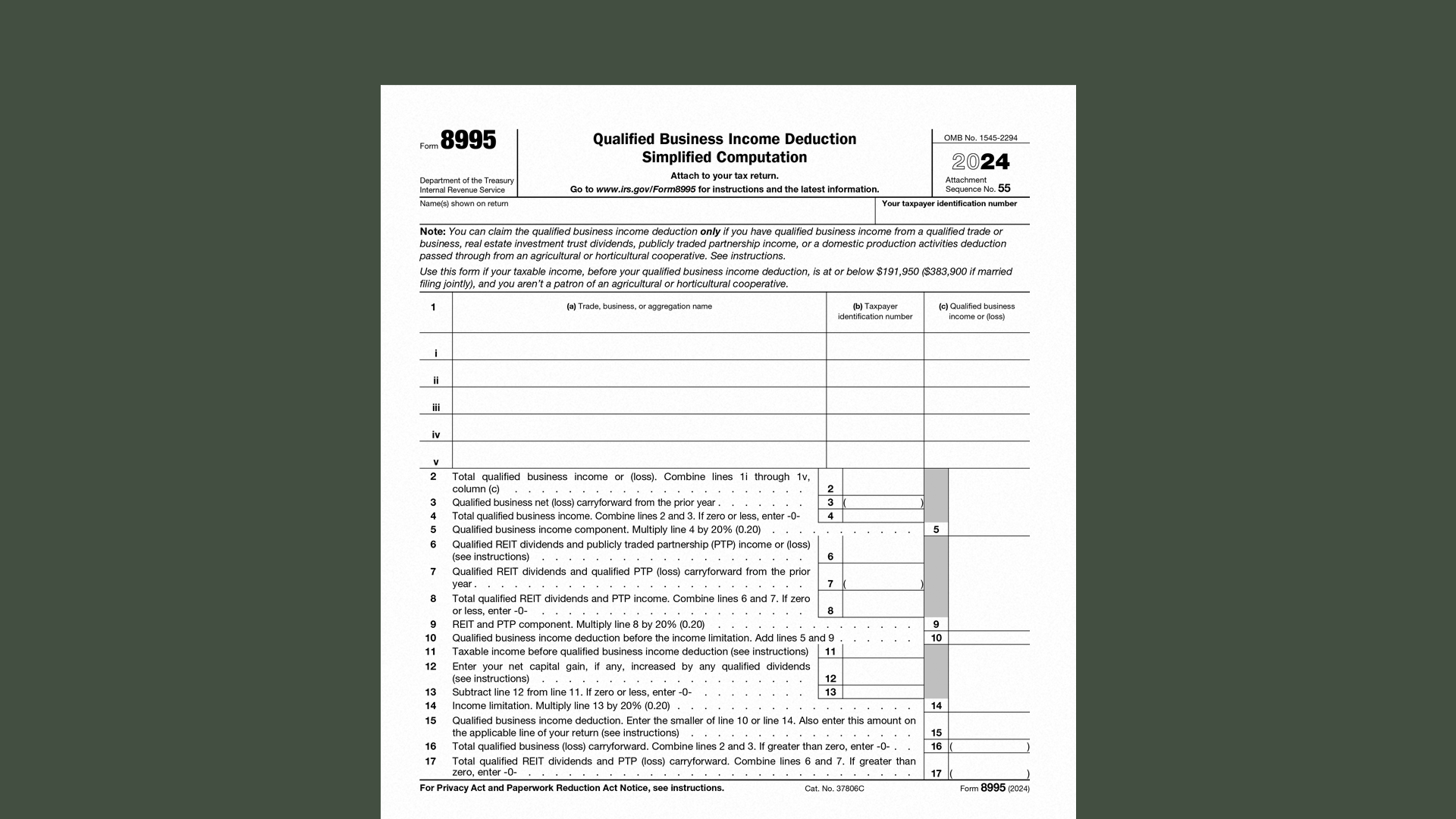
The QBI deduction is an income tax deduction. It can lower your taxable income for federal income tax purposes, but it does not reduce:
- Your net earnings from self-employment
- Your self-employment (SE) tax
Think of it like two separate buckets on your tax return:
- Bucket 1: Income tax (based on taxable income and tax brackets). QBI can help here.
- Bucket 2: Self-employment tax (your version of Social Security and Medicare payroll taxes). QBI does not affect this bucket.
Why QBI cannot lower SE tax
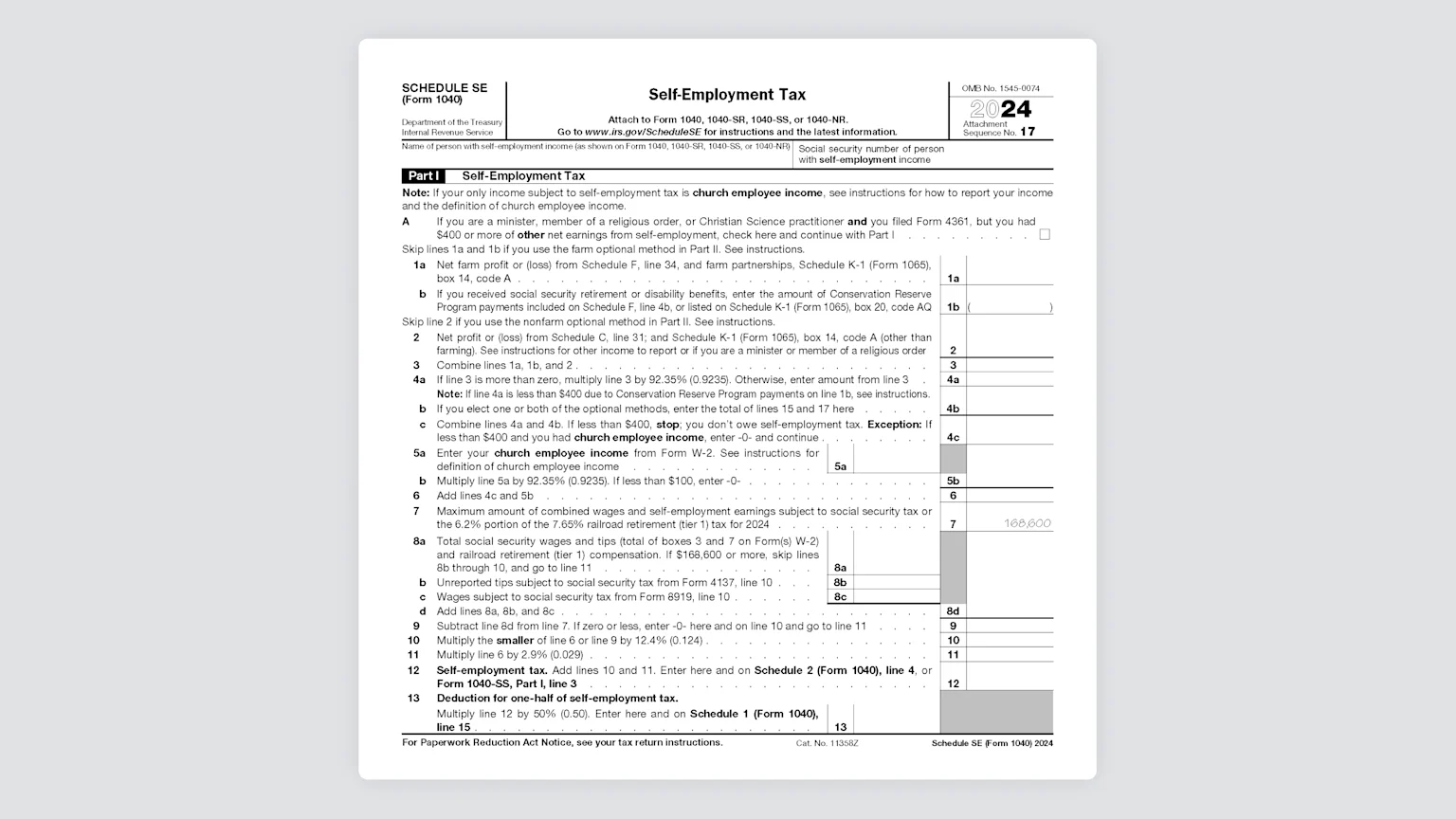
Mechanically, the QBI deduction is claimed on Form 1040 in computing taxable income (after AGI). It is based on qualified business income, but it does not change the figure used to compute self-employment tax on Schedule SE.
Self-employment tax is calculated from your business’s net profit (generally your Schedule C profit, with the Schedule SE adjustment). That earnings base does not get reduced just because you qualify for QBI.
If you want a deeper walkthrough of who qualifies and how the thresholds work, see our guide Qualified Business Income Deduction Explained.
A simple example
Let’s say Mia is a sole proprietor (single filer). Her Schedule C shows:
- Net profit: $100,000
- Potential QBI deduction: up to 20% of QBI (simplified example, assuming she qualifies and is not limited by wages, property, or income thresholds)
Important nuance: QBI is often lower than Schedule C net profit because certain items can reduce QBI, such as the deductible part of self-employment tax, self-employed health insurance, and retirement plan contributions.
What happens to self-employment tax
Mia’s self-employment tax is computed on Schedule SE. In broad strokes, it is based on her net earnings from self-employment, and the tax rate is commonly described as 15.3% (12.4% Social Security + 2.9% Medicare) up to the Social Security wage base, with additional Medicare tax potentially applying at higher incomes.
Notice what is missing from that calculation: the QBI deduction.
So even if Mia claims a QBI deduction, her self-employment tax is still computed from her business profit (with the standard Schedule SE adjustment).
- SE tax: based on business profit and Schedule SE rules, not reduced by QBI
- Income tax: taxable income can be reduced by QBI
You can see the full 15.3% breakdown and how the Schedule SE math works in Self-Employment Tax Explained: Rate, Deduction, and Who Owes It.
What happens to income tax
Now look at the income tax side. The QBI deduction can reduce the amount of income that is subject to federal income tax.
Very roughly, if Mia is in a 22% marginal bracket, a $20,000 deduction could reduce her federal income tax by about:
$20,000 × 22% = $4,400
That is real savings. Just keep in mind that your actual marginal rate can shift as taxable income changes, and QBI does not reduce AGI.

The common confusion
You are not imagining things. QBI is based on business income, and self-employment tax is also based on business income.
The difference is where each item is calculated and what it is allowed to reduce:
- SE tax is a payroll-tax equivalent. It is meant to fund Social Security and Medicare, and the rules do not allow QBI to reduce the earnings base.
- QBI is a deduction created to reduce income tax on pass-through business income. It reduces taxable income, not payroll-tax earnings.
As a planner, I often tell clients to treat these as two separate planning problems:
- Plan for SE tax with pricing, profit margins, and estimated payments.
- Plan for income tax with deductions, retirement contributions, and entity choice when appropriate.
What can reduce self-employment tax?
Some strategies can reduce self-employment tax, but they are not the same thing as taking QBI. Examples include:
- Lowering Schedule C net profit through legitimate business deductions (ordinary and necessary expenses).
- Entity structure changes in some cases (for example, certain S corporation setups can reduce the portion of income subject to payroll taxes, but you must run payroll, file payroll reports, and pay yourself reasonable compensation).
- Understanding the Schedule SE adjustment (net earnings from self-employment are not always identical to net profit, and there are specific rules involved).
Also, remember there is a separate break built into SE tax: you generally get an adjustment to income for one-half of your self-employment tax. That is different from QBI, but it is another reason “deduction” concepts get tangled.
If you are exploring whether an S corporation could make sense, you may also want to read QBI Deduction for S-Corp Owners to understand how wages interact with the deduction.
One more wrinkle: QBI is a federal deduction, and state treatment varies. Some states conform to the federal calculation, others do not, and some have their own pass-through rules.
Quick FAQ
Does the QBI deduction reduce net earnings from self-employment?
No. QBI reduces taxable income for income tax. It does not reduce the earnings base used on Schedule SE.
Why is my self-employment tax still high after taking QBI?
Because QBI does not apply to self-employment tax. SE tax is computed separately, generally using the 15.3% combined rate (subject to limits and additional Medicare tax rules at higher incomes). See Self-Employment Tax Explained: Rate, Deduction, and Who Owes It for the full calculation.
If QBI does not reduce SE tax, is it still worth it?
Usually, yes. It can materially lower federal income tax, especially for profitable sole proprietors, partnerships, and S corporation owners who qualify.
The takeaway
The QBI deduction is powerful, but it is often misunderstood. It is designed to reduce income tax, not the self-employment tax that funds Social Security and Medicare.
If you are estimating quarterly payments, plan as if your self-employment tax will be calculated the usual way, and treat QBI as a potential reduction on your income tax side.
One last planning note: the QBI deduction has been subject to sunset rules and legislative changes in the past. If you are reading this for a future tax year, confirm that QBI is still available under current law for that year.