When you are self-employed, health insurance can feel like a second rent payment. And when you finally discover the self-employed health insurance deduction, it is a relief. The next question is the one that always comes right after in my inbox: Does that deduction reduce QBI for the Section 199A (QBI) deduction?
In many common situations, yes. If you are a sole proprietor (Schedule C) or a partner in a partnership, the self-employed health insurance deduction is often treated as attributable to the trade or business and reduces the qualified business income base used to compute your Section 199A deduction. The key is attribution and allocation: the deduction is limited by earned income from a business, and when it is tied to that business, it typically reduces that business’s QBI.

The short answer
Yes, the self-employed health insurance deduction typically reduces QBI.
Even though the self-employed health insurance deduction is claimed on Schedule 1 (as an adjustment to income), the IRS rules for Section 199A generally treat certain deductions tied to your trade or business as reducing the income that counts as QBI.
So even though it shows up on Schedule 1, it is commonly treated as connected to the business when computing QBI.
That means you can absolutely benefit from the health insurance write-off, but you may see a slightly smaller 199A deduction than you would if you did not have that health insurance deduction.
Why it reduces QBI
Think of QBI as your business profit that is eligible for the 20% deduction, after subtracting certain business-related deductions.
For a sole proprietor, you might start with your Schedule C net profit, but QBI is not always identical to that number. In general, QBI is your net amount of qualified items of income, gain, deduction, and loss connected to the business.
The self-employed health insurance deduction is based on your earned income from the business. Since it is directly tied to business activity and limited by that business income, it is commonly allocated to that business and reduces the pool of income treated as qualified business income for Section 199A purposes.
Example: QBI before and after
Let’s keep the business profit the same in both cases, and only change the self-employed health insurance deduction.
Assumptions (simplified on purpose):
- Sole proprietor with Schedule C net profit: $100,000
- No W-2 wage limits or property limits apply (common when income is below the phase-in thresholds, but thresholds change by year)
- No other QBI adjustments (like deductible half of self-employment tax) shown, so we can isolate the impact of the health insurance deduction
- QBI deduction is 20% of QBI
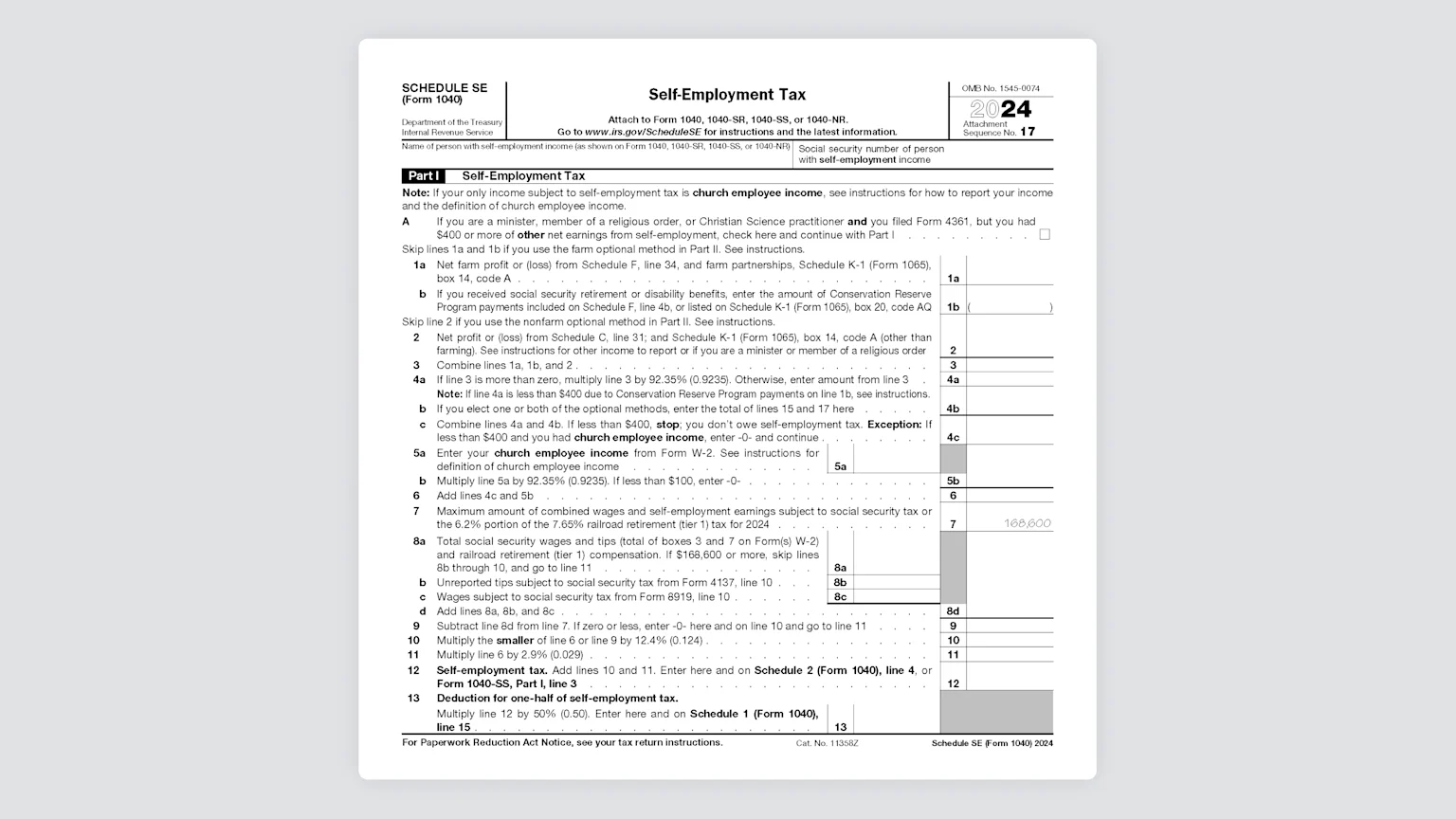
In real life, many taxpayers have multiple above-the-line items that can reduce QBI, including 1/2 self-employment tax, self-employed retirement plan contributions, and other deductions that are attributable to the business.
Case A: No health insurance deduction
- Schedule C net profit: $100,000
- Self-employed health insurance deduction: $0
- QBI base (simplified): $100,000
- Section 199A deduction: 20% × $100,000 = $20,000
Case B: $12,000 health insurance deduction
- Schedule C net profit: $100,000
- Self-employed health insurance deduction: $12,000
- QBI base (simplified): $88,000
- Section 199A deduction: 20% × $88,000 = $17,600
What changed? Your business profit did not change. But adding the $12,000 self-employed health insurance deduction reduced QBI by $12,000, which reduced the Section 199A deduction by $2,400 (20% of $12,000).

Is it still worth it?
Yes. It is still usually a win.
You are trading:
- A full deduction for health insurance premiums (subject to the rules), which reduces adjusted gross income (AGI), for
- A slightly smaller QBI deduction because QBI is lower
In other words, you might lose 20 cents of QBI deduction for each $1 of health insurance deduction, but you are still getting the main deduction. Your net tax benefit depends on your bracket, your total taxable income, and whether any 199A limits apply.
Common trip-ups
You are an S corporation owner
S corporation treatment is different. For a more-than-2% S corp shareholder, the health insurance premiums are typically deducted by the S corp (which can reduce pass-through ordinary income and QBI), and then the shareholder may be able to take the self-employed health insurance deduction on Form 1040 if the premiums are properly included in the shareholder’s W-2 wages (commonly in Box 1, but not in Boxes 3 and 5). This is a place to slow down and either run the numbers carefully or ask your CPA, because payroll setup matters.
Your income is high enough for limits
If your taxable income is in the range where Section 199A limitations apply, your QBI deduction may be constrained by W-2 wages, qualified property, or specified service trade or business rules. In those cases, the effect of reducing QBI can be more or less noticeable depending on which limitation is actually binding.
You have more than one business
If you have multiple qualified trades or businesses, the self-employed health insurance deduction may need to be allocated to the right activity when you compute QBI. This is another situation where it is easy to accidentally overstate QBI for one business if the deduction is sitting somewhere else on the return.
You are trying to deduct premiums you are not eligible to deduct
The self-employed health insurance deduction generally requires that neither you nor your spouse is eligible to participate in an employer-subsidized health plan for that month, even if you choose not to enroll. There are additional rules for months of eligibility and for how the deduction is capped based on business income.
Quick FAQ
Is QBI the same as Schedule C net profit?
Not always. Schedule C net profit is often the starting point, but QBI can be reduced by certain deductions tied to the business, including the self-employed health insurance deduction in many common sole proprietor scenarios.
What if I am a partner?
In many partnership situations, a partner’s self-employed health insurance deduction is tied to earned income from the partnership, often through guaranteed payments or other self-employment earnings. When the deduction is attributable to that partnership activity, it commonly reduces the QBI you treat as coming from that business.
Where do I see this on the tax forms?
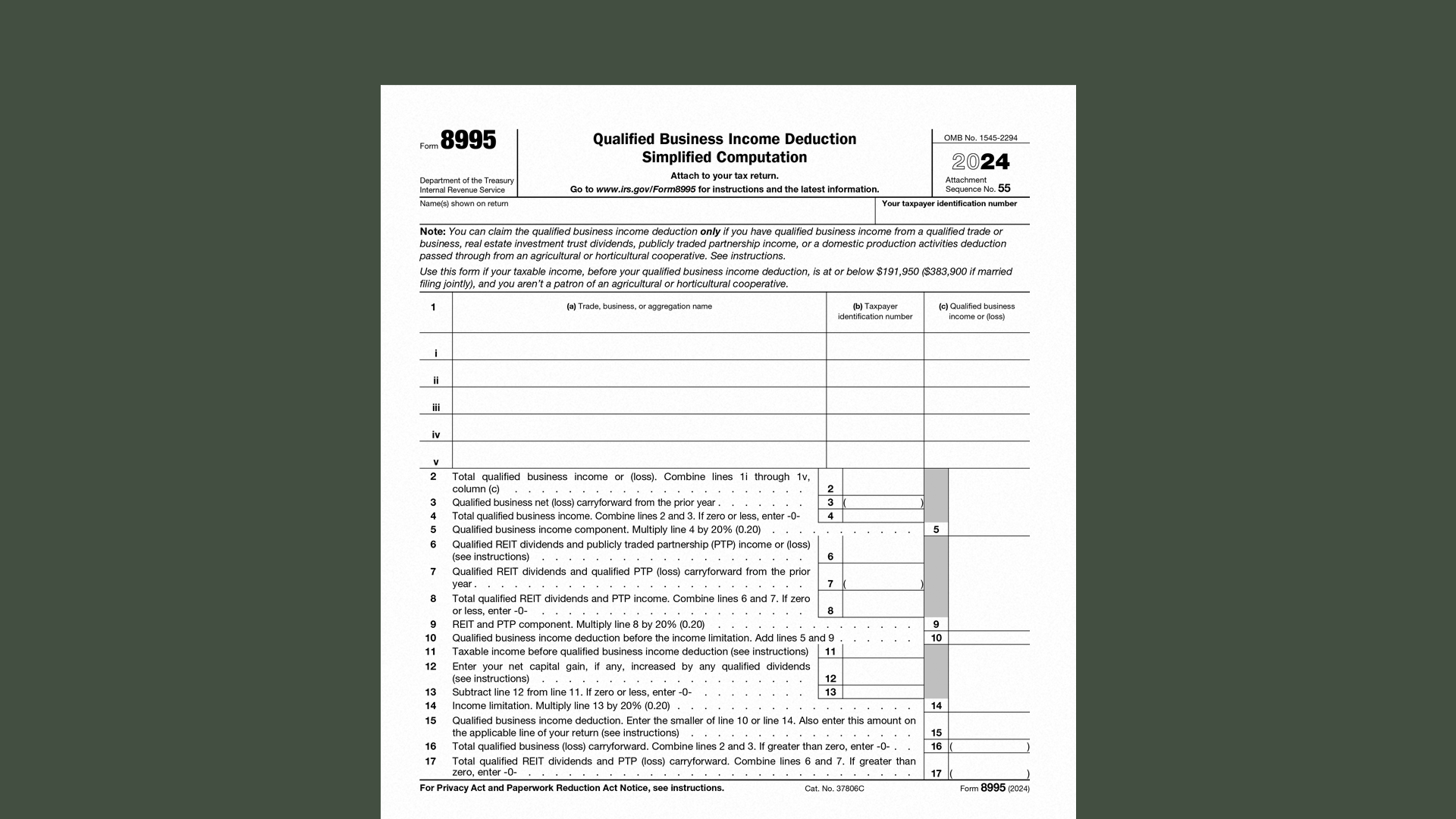
You usually see the self-employed health insurance deduction on Schedule 1, and the QBI deduction calculation on Form 8995 or Form 8995-A (depending on your situation). The key point is that the QBI figure used on those forms reflects adjustments required by the 199A rules, not just whatever shows on Schedule C.
If my QBI deduction goes down, can my overall taxes still go down?
Yes. Reducing AGI can help in other places too, depending on your return, while the smaller QBI deduction is just one moving piece.
My takeaway
If you are self-employed and eligible for the self-employed health insurance deduction, plan on it lowering your QBI base for the Section 199A deduction in many standard sole proprietor and partnership situations, because it is often treated as attributable to the business.
When I help clients estimate quarterly taxes, I model both deductions together for exactly this reason. They are connected. The math is not scary, but it is easy to overestimate the QBI deduction if you forget that health insurance premiums can shrink QBI.
If you want to sanity-check your own numbers, compute it two ways like we did above: keep profit constant, then subtract the health insurance deduction from your QBI base and apply the 20% factor. It is a fast way to see the impact before you file.