If you have ever looked up in December and realized you are short on estimated tax payments, you are not alone. I grew up watching my parents run a mid-sized agricultural supply company where cash flow came in waves and taxes never waited politely. That same end-of-year scramble shows up today for retirees and IRA owners too, especially when income is uneven.
Here is the good news: federal income tax withheld from an IRA distribution is generally treated as paid evenly throughout the year, even if you take the distribution in December. That timing rule can make IRA withholding a powerful tool for avoiding underpayment penalties when you did not pay enough through quarterly estimated taxes.

But there are a few important caveats. The withholding has to be enough, and you still may owe a balance by April if your total tax bill is higher than what you paid in.
The key rule
For underpayment penalty purposes, the IRS generally treats withholding as if it was paid in equal installments throughout the year. This is different from estimated tax payments, which are credited based on the actual date you made each payment.
Practically, that means a large IRA distribution in December with meaningful federal withholding can sometimes stand in for missed quarterly estimated payments earlier in the year. You cannot backdate estimated payments. But withholding is effectively spread across all four quarters when the IRS calculates whether you paid enough during the year.
Quick clarity: this helps with penalty timing. It does not guarantee you will not have a balance due when you file.
Withholding sources that usually get this timing treatment
- IRA distributions (traditional IRA, and taxable amounts from other retirement accounts)
- Pensions and annuities
- Paycheck withholding from a job
- Some other withholding reported on Forms W-2 or 1099-R
Important: This paid evenly concept is about penalties and timing, not about whether you owe additional tax overall.
W-4R vs 1040-ES
People often mix these up because both are ways to prepay tax. They work differently.
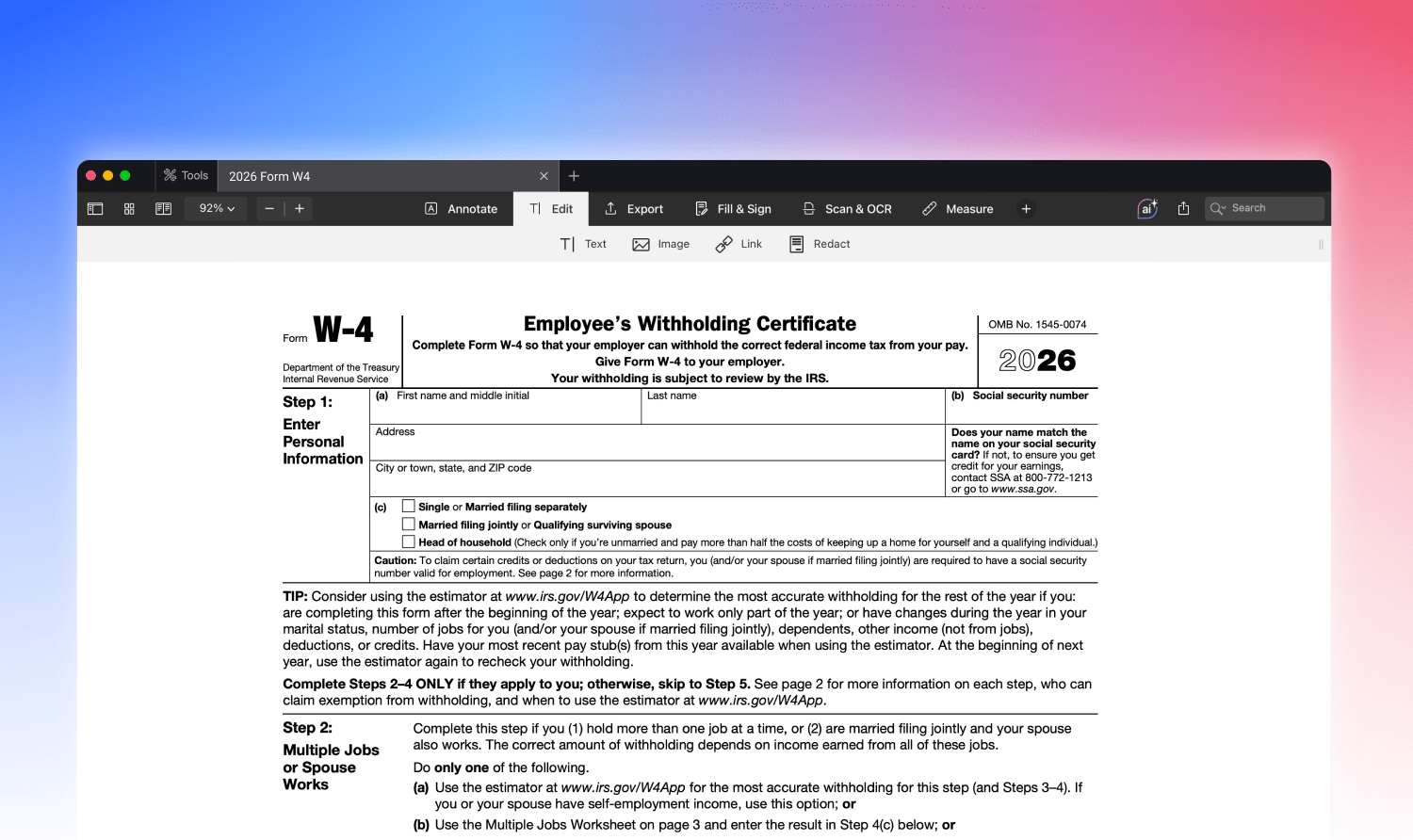
Form W-4R
Form W-4R is what you use to tell an IRA custodian or retirement plan administrator how much federal income tax to withhold from distributions.
- The official IRS Form W-4R is set up for a percentage election.
- Some custodians may also let you choose a specific dollar amount through their internal distribution form or online workflow, even though the IRS form itself is percentage-based.
- The withheld tax is reported on Form 1099-R (Box 4 for federal withholding).
- For penalty timing, withholding is generally treated as paid evenly across the year.

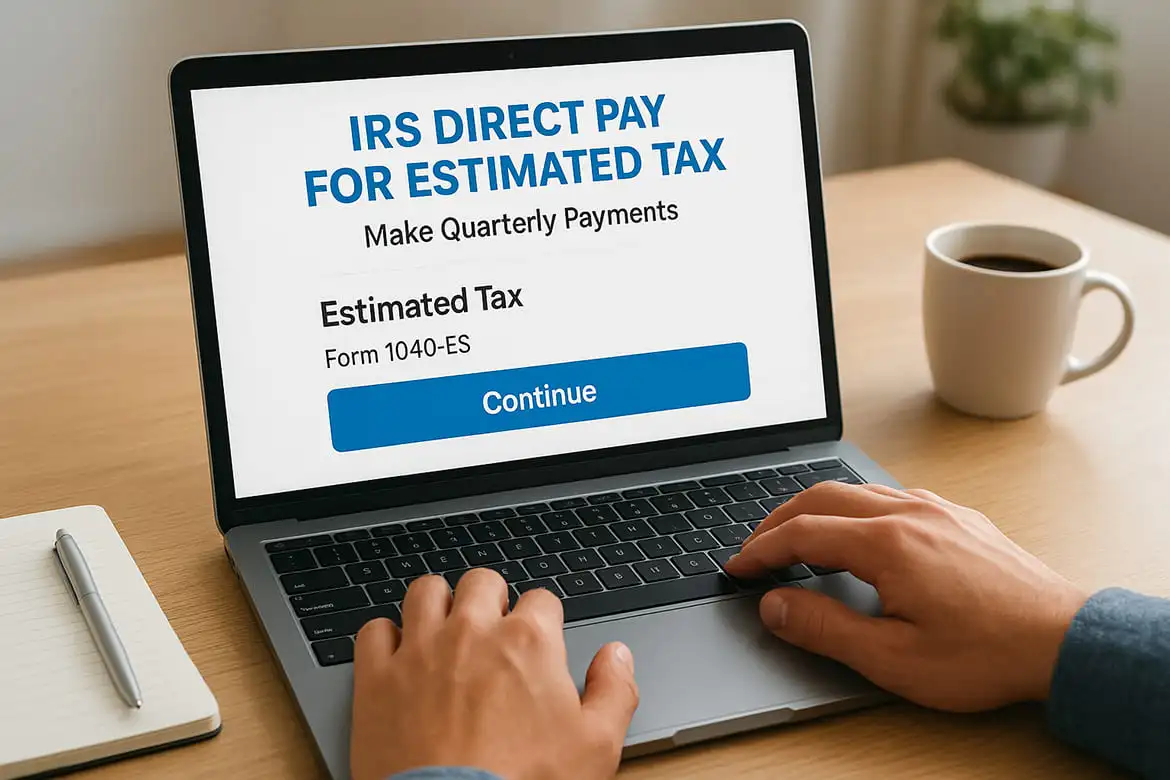
Form 1040-ES
1040-ES is used to make quarterly estimated tax payments, usually when you have income without withholding.
- Payments are due in four periods during the year (with IRS-set due dates).
- They count when you pay them, not evenly throughout the year.
- Missing early payments can trigger underpayment penalties even if you catch up later, unless you qualify for an exception or use annualized income calculations.
So, if you are trying to solve a timing problem in December, increasing withholding is often more flexible than sending a late estimated payment.
Example 1
Let’s use a simple IRA-only scenario.
Scenario
- Maria is 67 and retired.
- She lives mostly on savings and a traditional IRA.
- She realizes in December that she has made no estimated tax payments this year.
- Her total federal tax for the year will be about $8,000.
What she does
In mid-December, Maria takes a $40,000 traditional IRA distribution and asks her custodian to withhold $8,000 for federal taxes using the withholding election process (often driven by a W-4R-style percentage election or the custodian’s distribution workflow).
Why this can help
Even though the withholding happened in December, the IRS generally treats that $8,000 as if it was paid ratably across the year when evaluating underpayment penalties. In many cases, that means Maria can avoid an underpayment penalty even though she did not make quarterly estimated payments earlier.
One reminder: withholding is not free money. That extra traditional IRA distribution can increase her taxable income. If she had not already included it in her $8,000 estimate, pulling more money out to create withholding can raise the very tax bill she is trying to cover. The strategy can still work, but the projection has to reflect the added distribution.
Example 2
Now let’s look at a more common reality: an IRA owner with other income.
Scenario
- David is 62 and semi-retired.
- He earns $90,000 from consulting (no withholding).
- He takes a $30,000 taxable traditional IRA distribution in December.
- He sends in only $2,000 of quarterly estimated payments all year.
What he does in December
David increases withholding on his IRA distribution and withholds $10,000 federal.
What happens next
The $10,000 withholding is generally treated as paid evenly across the year for penalty timing. That can reduce or eliminate an underpayment penalty.
But David may still owe money by April because:
- His consulting income created a large tax bill.
- $2,000 of estimated payments plus $10,000 of withholding might not be enough to cover his total year tax.
- If he is subject to self-employment tax from consulting, that adds to the total.
In other words, withholding can fix a timing problem, but it does not automatically fix a not enough paid in overall problem.
When this can backfire
Year-end withholding is a useful lever, but it is not magic. Here are common watch-outs.
- You are under 59½: taking an extra traditional IRA distribution just to create withholding can trigger a 10 percent early-withdrawal penalty on the taxable amount, unless an exception applies.
- You are thinking about employer plans: some distributions from employer plans (like a 401(k)) have different withholding rules, including a mandatory 20 percent withholding on certain eligible rollover distributions if not directly rolled over. Do not assume the IRA rule automatically applies to every retirement account.
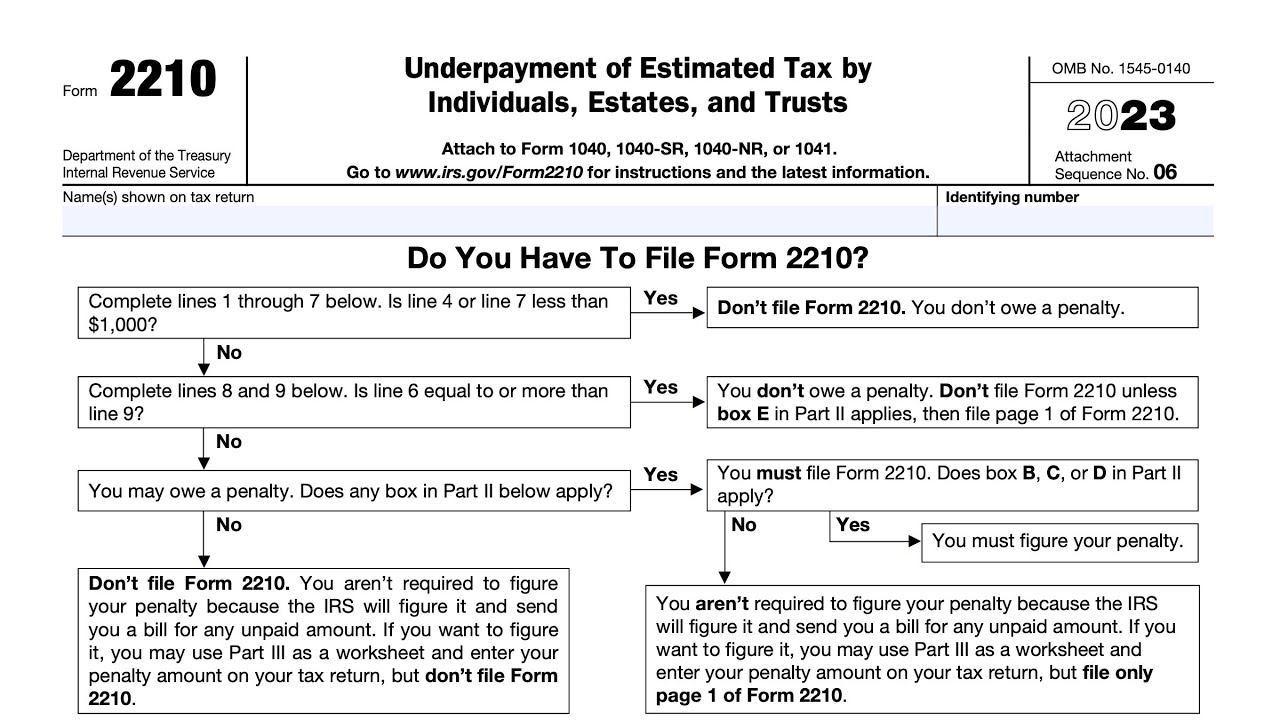
- Your income was seasonal: if your income came in late in the year, Form 2210 and the annualized income method may reduce or eliminate penalties by matching payments to when you actually earned the income. This can be an alternative or a complement to increasing withholding.
Why you can still owe
Even if you handle the underpayment penalty angle, you can still owe at filing time. Here are the most common reasons I see:
Your total tax is higher than you thought
Capital gains, Roth conversions, a big IRA distribution, or selling a business stake can push your income higher than expected. If your withholding was based on an earlier estimate, you may come up short.
You did not hit a safe harbor
Many taxpayers aim for an IRS safe harbor to avoid underpayment penalties. The most common thresholds are based on paying enough through withholding and estimated payments to cover either:
- A large portion of your current-year tax, or
- Enough of your prior-year tax (often 100 percent, or 110 percent if your prior-year AGI was above the higher-income threshold, commonly $150,000, or $75,000 if married filing separately)
Even if your December withholding is treated as paid across the year, you still have to hit the safe harbor amount or otherwise qualify for an exception to fully avoid penalties.
State taxes are separate
Federal withholding rules do not automatically solve state underpayment issues. Some states follow similar logic, some differ, and the paperwork can be separate. If you live in a state with income tax, verify the state’s underpayment rules before assuming you are covered.
RMD timing is real
If you are subject to RMDs, you can often adjust withholding on your RMD distributions, but you cannot always undo timing if you wait too long and your custodian cannot process the transaction by year-end.
How to set withholding
If you want to use IRA withholding as part of your estimated tax strategy, here is a clean way to approach it.
Step 1: Estimate your total tax
Use last year’s return as a baseline and update for changes: income, deductions, credits, capital gains, Roth conversions, and filing status.
Step 2: Add up what you already paid
- W-2 withholding (if still working)
- Withholding from pensions, Social Security, or prior IRA distributions
- Quarterly estimated payments already made
Step 3: Decide what you still need to pay
If you are short and it is late in the year, increasing withholding on an IRA distribution can be a practical way to smooth payments across quarters for penalty calculations.
Step 4: Confirm processing cutoffs
In December, timing matters. Custodians can have cutoffs. If you want withholding to count for the year, the distribution must be processed as a current-year distribution.

Tip: If you are trying to avoid an underpayment penalty, do not wait until the last business day of the year. Build in a buffer for processing.
Common questions
Does IRA withholding count like payroll withholding?
For timing and underpayment penalty calculations, it is generally similar in that withholding is typically treated as paid evenly throughout the year. The difference is practical: payroll withholding happens automatically, while IRA withholding is something you have to choose and set up.
Do IRA distributions default to no withholding?
Usually, no. For nonperiodic distributions from a traditional IRA, the default federal income tax withholding rate is generally 10 percent, unless you elect a different rate or opt out. This is based on IRS withholding rules for nonperiodic payments. If you want a different rate, including 0 percent, you typically have to make an active election through your custodian’s process (often using a W-4R-style election or a custodian form).
That said, custodians have different interfaces and categories of payments can be treated differently, so it is worth confirming what your specific distribution screen or paperwork shows before you submit it.
What about Roth IRA distributions?
Qualified Roth IRA distributions are generally tax-free, so withholding is often unnecessary. Nonqualified distributions or Roth conversions can be taxable. In those cases, withholding may be relevant, but be careful: withholding reduces the amount that actually lands in the Roth in a conversion, and if you are under 59½, the amount withheld can be treated like a distribution that may trigger the 10 percent early-withdrawal penalty unless an exception applies. Many people instead pay the tax from a nonretirement account so the full conversion amount ends up in the Roth.
Will withholding from an IRA cover self-employment tax?
Withholding is applied to your total federal tax liability when you file, which includes income tax and self-employment tax. The main issue is whether the total withholding and payments are enough.
Bottom line
Yes, federal income tax withheld from an IRA distribution is generally treated as paid evenly throughout the year, even if the distribution happens in December. That makes IRA withholding a useful lever when you are behind on estimated taxes and want to reduce the risk of an underpayment penalty.
Just remember the second half of the equation: the IRS can treat it as paid throughout the year for penalty timing, but you still need to pay enough overall to cover your total tax bill. If your income spiked this year, a year-end withholding increase may help with penalties, yet you can still owe a balance when you file.
If you are unsure, run a quick projection using last year’s return and this year’s income, then decide whether you need more withholding, an estimated payment, or both.