I grew up watching my parents run a mid-sized agricultural supply business, and one of the most stressful surprises was never the “big” expense. It was the timing. A bill could be manageable on paper and still painful in real life if it landed before cash came in.
Roth conversions can feel like that. You do something smart for long-term tax planning, then realize there is a very real short-term issue: the conversion is taxable income, but there is usually no automatic withholding unless you elect it. That can mean you owe tax this year, and you may need to have paid enough by the next estimated-tax deadline after the conversion (or through withholding), not simply when you file your return.

Why a Roth conversion can trigger estimated tax
When you convert money from a pre-tax retirement account (like a traditional IRA) to a Roth IRA, the amount converted is generally added to your taxable income for that year. In plain English, the IRS treats it as if you took a distribution, even if the money never touches your checking account.
One important exception: if you have after-tax basis in your traditional IRA, part of the conversion can be tax-free. The IRS applies the pro-rata rule across your IRAs, so it is not as simple as converting “only the after-tax dollars” from one account.
The catch is that conversions do not come with automatic federal income tax withholding the way a paycheck does. Many custodians offer optional withholding, but if you do nothing, it is often set to zero. So your tax bill can rise sharply, while your “tax already paid in” does not.
The basic idea
You may need to make an estimated tax payment (or increase withholding elsewhere) if the conversion causes you to be underpaid on taxes during the year.
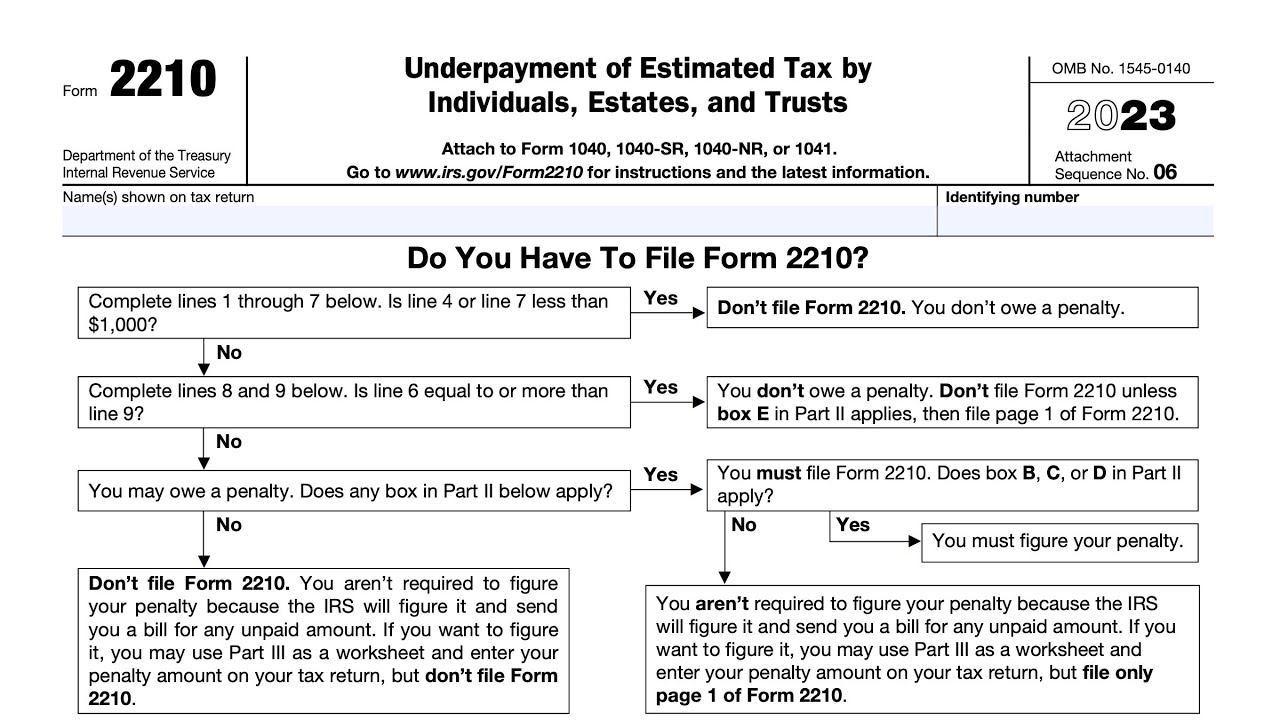
Whether you are required to pay estimated tax depends on your overall underpayment and the safe harbor rules. You can also sometimes avoid a penalty by using the annualized income method (Form 2210, Schedule AI) when income is uneven.
Estimated tax is about timing
Many people hear “estimated tax” and think it only applies to freelancers or business owners. But the estimated tax system is really about something else: the IRS expects taxes to be paid as income is earned.
A Roth conversion creates taxable income in the year it happens. If that conversion is large enough, you can wind up short on taxes paid in for one or more required payment periods, which can lead to an underpayment penalty even if you pay the full bill when you file.
How penalties are assessed
Underpayment penalties are generally based on “required installments” for each period. If your income spikes late, the cleanest match is sometimes to annualize income on Form 2210 so the required installments reflect that uneven pattern, rather than assuming income arrived evenly all year.
Typical estimated tax due dates
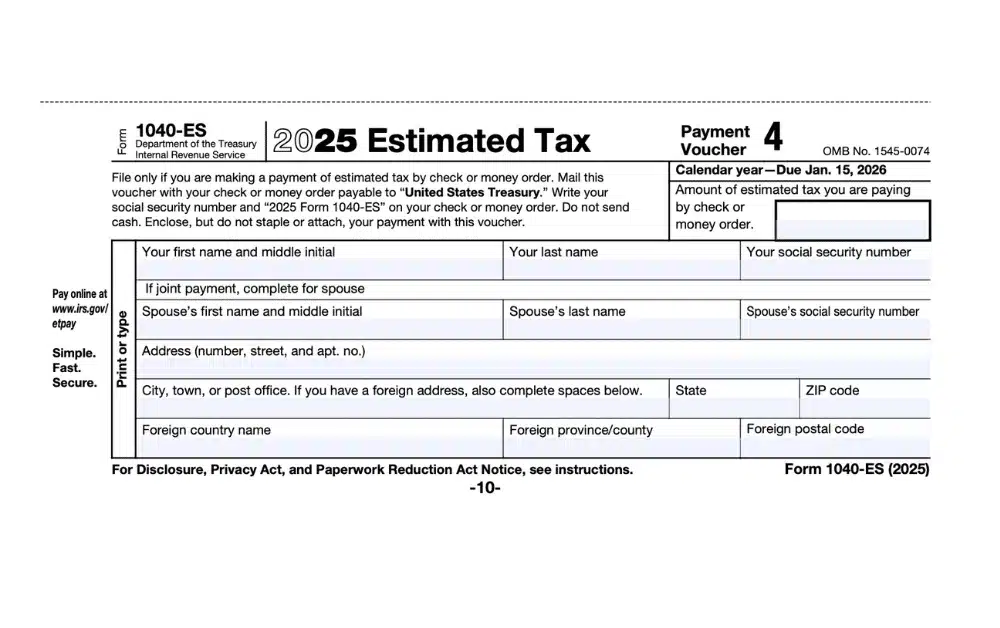
Estimated tax due dates are typically in April, June, September, and January (often around April 15, June 15, September 15, and January 15). The exact deadlines can shift for weekends, holidays, or IRS relief, so confirm the dates for the current tax year.
What matters for a Roth conversion is when you did the conversion and how much additional tax it creates compared to what you have already paid in through withholding and any earlier estimated payments.
If you do a conversion in the first half of the year, you have time to adjust. If you do it late in the year, you may have very little runway to catch up unless you use withholding strategically.

Safe harbors in plain English
The safe harbor rules are the reason a Roth conversion does not automatically mean you must send estimated payments. In broad terms, many taxpayers avoid an underpayment penalty if they have paid in enough during the year through withholding and timely estimated payments, such as:
- 90% of the current-year tax, or
- 100% of the prior-year tax (often 110% for higher-income taxpayers, based on prior-year AGI).
Details and thresholds matter here, so treat this as a map, not the final answer. If your conversion is large or your income is complex, Form 2210 (and a tax pro) can be worth it.
A late-year example
Let’s make this concrete with a simplified example. Numbers are rounded to keep the focus on timing rather than tax-bracket math.
Scenario
- You have a W-2 job and normally break even at tax time because your paycheck withholding is set up well.
- In November, you do an $80,000 Roth conversion from a traditional IRA.
- The conversion increases your federal tax for the year by about $18,000 (your real number depends on your marginal rate, deductions, state taxes, and other income).
- No taxes were withheld from the conversion.
What many people do (and why it can be flawed)
A common instinct is: “I owe about $18,000, so I will pay $4,500 per quarter.”
But with a November conversion, there is not much time left in the year. And the penalty system is based on required installments for each period. If you just start paying equal vouchers after the fact, you may still show as underpaid for earlier periods under the default rules, unless you qualify for a safe harbor or you annualize income using Form 2210.
What to do next
If you convert in November, your main levers are:
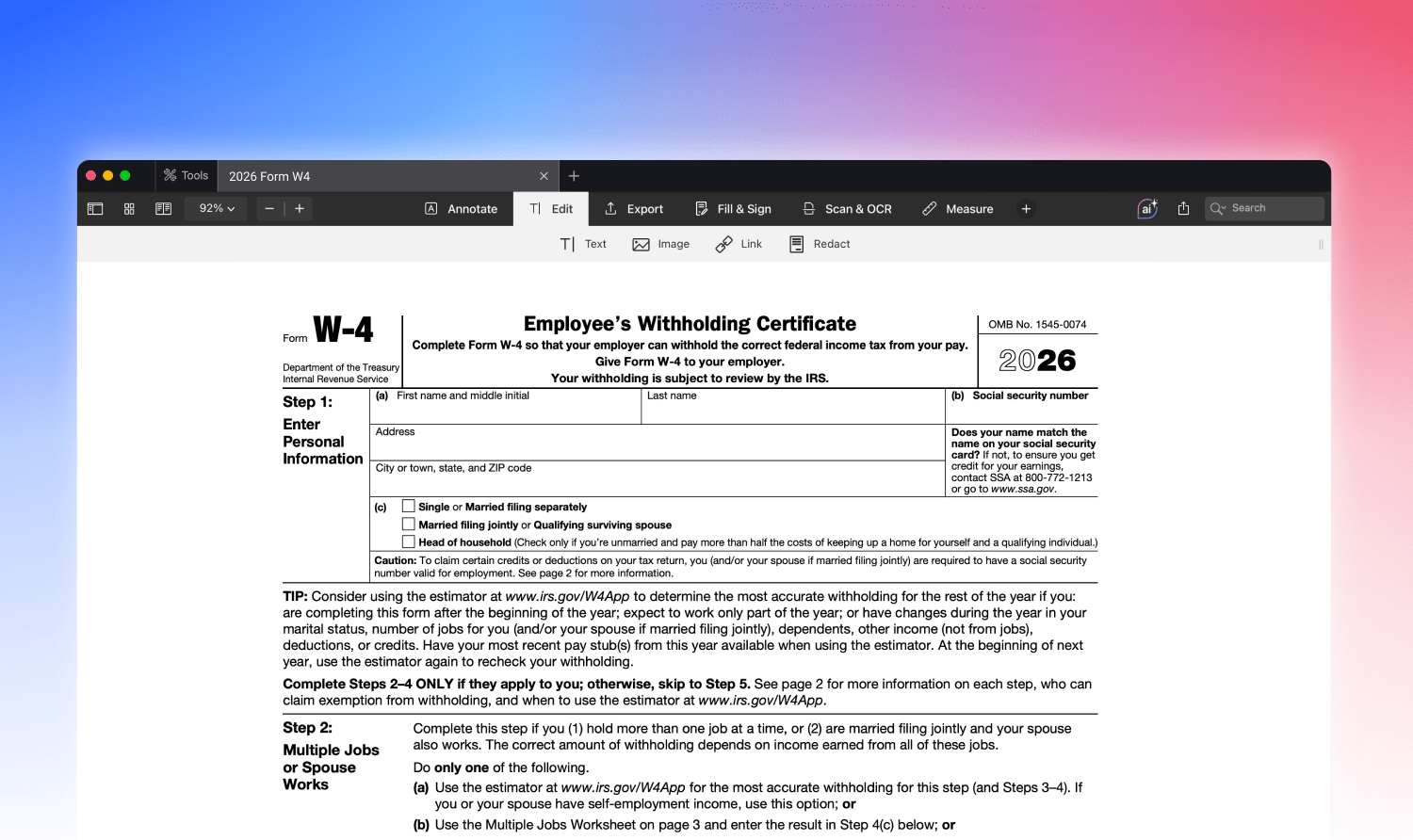
- Increase withholding before December 31 (often the cleanest fix if you have wages or another withholding source).
- Make an estimated payment by the next deadline after the conversion (often the January deadline) if withholding is not practical.
- Consider annualizing income (Form 2210, Schedule AI) if the conversion is the reason your income is lumpy.
Withholding from the conversion
Sometimes, yes. It depends on how the conversion is executed and what your custodian allows.
The tradeoff
If you withhold taxes from the distribution that is being converted, you are using part of the IRA money to pay taxes instead of moving it into the Roth. For example, if you request 20% withholding on an $80,000 conversion, only $64,000 lands in the Roth and $16,000 goes to the IRS.
That is not automatically “bad,” but it is a planning choice. Many higher-income households prefer to pay the tax from cash savings so the full amount can be converted. On the other hand, paying from savings is not always comfortable or even possible, and that matters too.
If you are under 59 1/2
If you are not yet 59 1/2 and you withhold from the IRA distribution, the withheld amount can be treated like an early distribution. That can potentially trigger a 10% early distribution penalty on the portion that did not get converted, unless an exception applies.
Also, if you intended a full conversion but taxes were withheld, you may have effectively converted less than you thought. The mechanics matter, so confirm the details with your custodian and your tax preparer before you submit the paperwork.
Withholding elsewhere
Often, this is the cleanest fix.
If you have wages, a spouse with wages, a pension, or other income with withholding, you may be able to increase withholding late in the year to cover the additional tax from the conversion.
Why it helps for late-year conversions
Withholding is generally treated as if it was paid evenly throughout the year for underpayment-penalty purposes, even if it was withheld in November or December (unless you use Form 2210 to treat it differently). That timing treatment can help you avoid underpayment penalties when income spikes late.
Estimated payments are not treated that way. They are credited as of the date you actually pay them.
Quick checkpoints
Here are the practical questions I walk through with clients and readers before we decide between an estimated payment and a withholding adjustment:
- How big was the conversion relative to your normal taxable income?
- How much have you already paid in through withholding and earlier estimates?
- When did the conversion happen? Early-year and late-year conversions create very different timing issues.
- Do you have a source of withholding you can adjust quickly?
- Are you trying to avoid reducing the amount converted? If yes, paying tax from cash or withholding elsewhere may be preferable to withholding from the IRA distribution.
- Do not forget state taxes. A conversion can trigger state estimated tax requirements too, depending on where you live.
Common mistakes
Assuming the tax is not due until you file
If the conversion is large enough, waiting until April can expose you to an underpayment penalty, even if you can write the check then.
Using equal vouchers after a late conversion
Equal vouchers are designed for people whose income is relatively steady throughout the year. A single Q4 conversion is the definition of “not steady.” If you go this route, you may need Form 2210 to properly match payments to the income pattern, or you may need withholding to smooth the timing.
Withholding from the IRA without thinking it through
Withholding can be convenient, but it reduces the amount converted and can create issues for those under 59 1/2. It is a planning lever, not just a box to check.
Ignoring ripple effects
Large conversions can push income into ranges that affect other items, like Medicare IRMAA brackets and Affordable Care Act subsidy eligibility. It is another reason to run the numbers before you convert.
FAQ
If I do a Roth conversion, am I required to pay estimated taxes?
Not automatically. A conversion increases taxable income, and you may need an estimated payment if it causes you to be underpaid for the year and you do not meet a safe harbor through withholding and other payments. If the conversion made your income uneven, annualizing income on Form 2210 can also change how the required installments are calculated.
What period do I pay estimated tax for a Roth conversion?
Generally, you focus on being paid up enough for the required installment periods, taking into account when the conversion happened. Practically, that often means making sure enough is paid in by the next estimated-tax deadline after the conversion, unless withholding and safe harbors already cover you.
Is it better to make an estimated payment or increase withholding?
It depends. For late-year conversions, increasing withholding can be especially effective because of how withholding is treated for timing. Estimated payments can work well too, especially if you convert earlier in the year or you do not have a practical withholding source to adjust.
The bottom line
A Roth conversion can absolutely create a same-year tax bill, and because there is often no automatic withholding, you may need to cover that bill with an estimated payment or additional withholding. Timing matters, and safe harbors and annualizing can change whether a penalty applies. A November conversion is usually not a “four equal vouchers” situation.
If you are planning a conversion late in the year, consider running the numbers before you press submit so you can decide, calmly, whether to send an estimated payment, adjust withholding, annualize income on Form 2210, or do a mix.