When I was growing up, I watched my parents run a mid-sized agricultural supply company where cash flow was never just “money in, money out.” Timing mattered. A lot. Estimated taxes were one of those line items that could sneak up and create stress fast if you did not plan for it.
Fiduciary taxes have that same timing problem. Trusts and estates can absolutely owe quarterly estimated taxes, but the rules look different than your personal (Form 1040) world. If you are a trustee, executor, or beneficiary trying to understand who pays what and when, this is the roadmap.

The short answer
Yes, trusts and estates may need to make quarterly estimated tax payments when they expect to owe enough federal income tax for the year and withholding will not cover it.
For fiduciaries, those quarterly payments are generally planned with Form 1041-ES (Estimated Income Tax for Estates and Trusts).
Two quick clarifiers that prevent a lot of mix-ups:
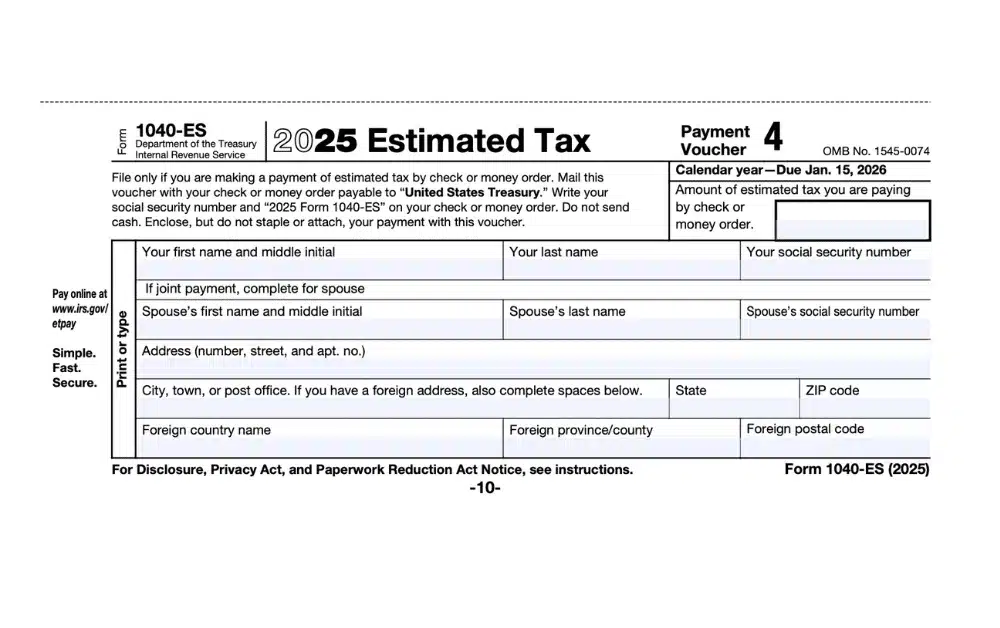
- Individuals typically use Form 1040-ES, not 1041-ES.
- C corporations generally use Form 1120-W to calculate estimated taxes (and pay electronically or through their normal corporate payment process).
What Form 1041-ES is for
Form 1041-ES is the fiduciary equivalent of “set aside money as you go so you are not hit with a large bill later.” It provides:
- Worksheets to estimate the trust or estate’s taxable income and expected tax for the year
- Payment vouchers (though many fiduciaries pay electronically)
- Quarterly due date guidance
The key concept is that a trust or estate is its own taxpayer and can owe income tax at the entity level if income is retained rather than passed out to beneficiaries.
When estimates apply
A trust or estate is commonly in estimated tax territory when both of these are true:
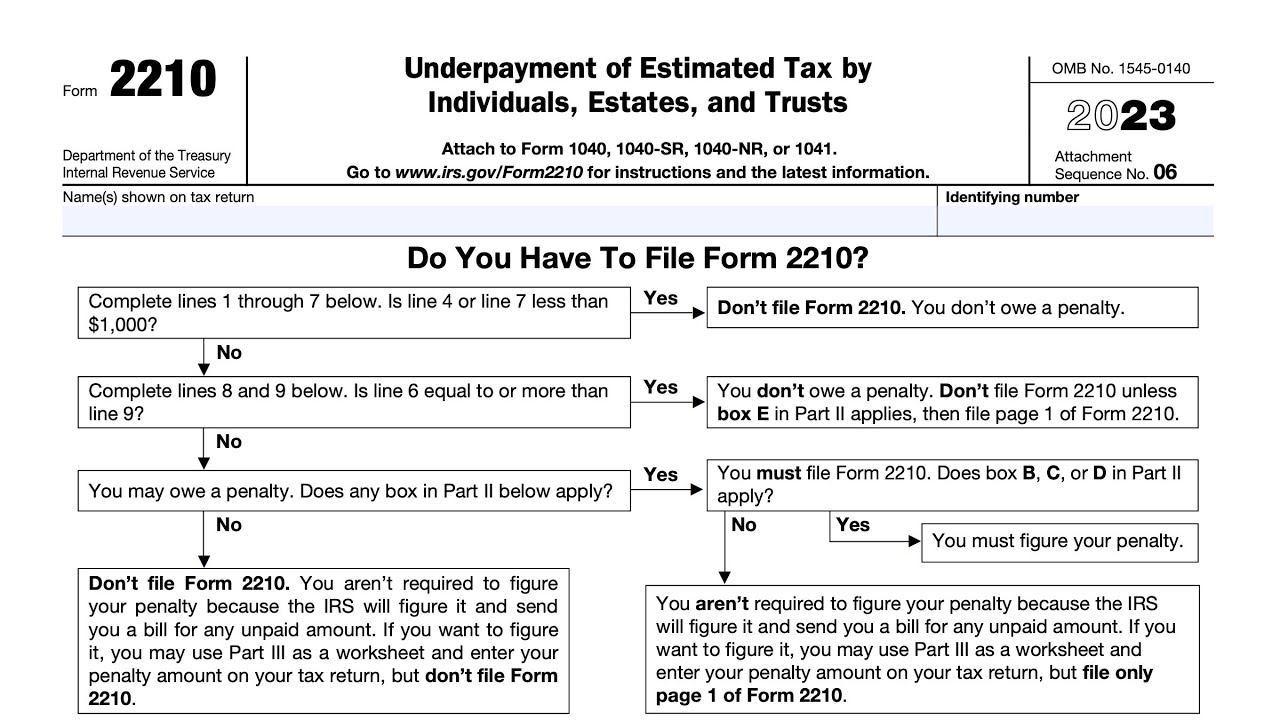
- It expects to owe $1,000 or more in federal income tax for the year (after credits).
- It expects its withholding and refundable credits to be less than the amount needed to avoid an underpayment penalty (often called the required annual payment).
In plain English: if the fiduciary return is likely to show a balance due and nothing is being withheld along the way, you plan for estimates.
One important nuance: owing $1,000 is a practical warning sign, not the whole penalty story. Whether an underpayment penalty applies depends on the required annual payment rules (which can be based on current-year tax or, in many situations, prior-year tax), and fiduciary returns have their own wrinkles.
Why this comes up so often
Many trusts and estates receive income that does not have withholding, such as:
- Interest and dividends
- Capital gain distributions
- Rental income
- Business or partnership income reported on K-1s
And because trust tax brackets compress quickly, retained income can become expensive faster than many people expect. That is why trustees and executors often end up dealing with estimates even when the dollar amounts do not feel huge.
Quarterly due dates
For most calendar-year trusts, the estimated tax due dates follow the familiar quarterly rhythm:
- April 15
- June 15
- September 15
- January 15 of the following year
If the due date falls on a weekend or legal holiday, the deadline typically shifts to the next business day.
Fiscal-year trusts and estates
Some estates (and some trusts) use a fiscal year. In that case, estimated tax deadlines are tied to the entity’s tax year, not the calendar. In general, installments are due the 15th day of the 4th, 6th, and 9th months of the tax year, and then the 15th day of the 1st month after the tax year ends. Because fiscal-year administration gets technical quickly, I treat the Form 1041-ES instructions (and your preparer’s guidance) as the final word on the schedule.

How distributions shift the tax
This is the part that trips people up, especially families. With many trusts and estates, income that is distributed to beneficiaries is often taxed to the beneficiaries, not the trust or estate, via a Schedule K-1.
Very broadly:
- Retained income can be taxed at the trust or estate level.
- Distributed income is generally carried out to beneficiaries, who then report it on their own returns.
Why this matters for estimates
If the fiduciary plans to distribute most or all income, the trust or estate might owe little tax itself, reducing or eliminating the need for 1041-ES payments.
But if income will be retained, or if distributions are uneven or uncertain, the trust or estate may need to make estimated payments to reduce the risk of underpayment penalties.
Also, even if the trust does not owe the tax because it distributed income, the beneficiaries may need to make their own estimated payments if the K-1 income is significant and their wage withholding is not enough.
A simple example
Let’s say the Navarro Family Trust (a non-grantor trust) expects the following for the year:
- $30,000 of dividend and interest income
- No tax withholding
- The trustee plans to distribute $10,000 to the beneficiary and retain $20,000 in the trust
What happens tax-wise?
- The $10,000 distributed is generally reported to the beneficiary on a Schedule K-1 (assuming it is distributable net income and carried out). The beneficiary reports it on their personal return and may need to adjust their own estimated taxes.
- The $20,000 retained is generally taxed on the trust’s Form 1041.
Does the trust owe quarterly estimates? If the trust’s expected tax on that retained $20,000 is $1,000 or more, and nothing is being withheld, the trust should usually plan on Form 1041-ES payments during the year. The trustee can pay in four installments, timed to the quarterly due dates.
The planning takeaway is simple: distributions change who owes the tax, but they do not make the tax disappear. They just move it.
How much to pay
Most fiduciaries aim for one of two approaches:
- Pay based on expected current-year tax: Estimate the year’s taxable income, deductions, and credits, then pay in four roughly equal installments.
- Use a safe harbor approach: Pay enough through timely estimates to reduce the odds of an underpayment penalty, even if income ends up higher than expected.
A helpful anchor, without getting lost in the weeds: many safe harbor calculations look to a percentage of the prior-year tax or the current-year tax, but fiduciary rules can limit or modify how those tests apply. If income is lumpy or hard to predict, talk to the preparer early so payments can be timed correctly.
Timing traps
1) Capital gains inside the trust
If assets are sold inside a trust or estate, the gain may be taxed at the fiduciary level unless it is properly carried out to beneficiaries under the governing document and tax rules. One practical reality: capital gains are often allocated to principal, and in many common trust setups they stay taxed at the trust or estate level unless specific conditions are met. Capital gains are a frequent reason a trust unexpectedly needs estimated payments.
2) Late-year distributions
If a trust waits until late in the year to distribute income, you can end up with a situation where the trust owed estimates earlier in the year based on income it was retaining at the time. Distributions can help, but timing still matters for penalty purposes.
3) Beneficiaries surprised by K-1 income
Even if the trust itself does everything right, beneficiaries may get a K-1 and realize their personal withholding is not enough. That is not a fiduciary estimate problem, but it becomes a family cash flow problem quickly.

How to pay
- Keep the entity separate: Payments should be tied to the trust or estate’s name and taxpayer identification number (EIN). Mixing payments under a personal Social Security number is a common administrative mess.
- Match the tax year: Make sure the payment is designated for the correct year and type of return (fiduciary).
- Pay the way the IRS can track: Many fiduciaries pay electronically through EFTPS. Depending on the situation, some may be able to use IRS Direct Pay. If you mail a voucher, keep proof of mailing and a clean paper trail.
- Coordinate with the preparer: If a CPA is preparing Form 1041, ask for an estimated tax plan early, especially if the trust holds a brokerage account with meaningful taxable activity.
Also, do not forget state estimated taxes. Many states have their own thresholds, due dates, and payment portals, and they do not always mirror the federal rules.
FAQ
Do grantor trusts pay quarterly estimated taxes using Form 1041-ES?
Often, no. Many grantor trusts are treated as owned by the grantor for income tax purposes, meaning the income is reported on the grantor’s personal return. In that case, the individual’s estimated tax process (typically Form 1040-ES planning) is the relevant one. Grantor trust reporting can vary based on how the trust is structured, so confirm with the preparer.
If an estate is in its first two years, does it have to make estimated payments?
Often, no. A decedent’s estate is generally exempt from the federal estimated tax payment requirement for tax years ending before the date that is two years after the decedent’s death. In other words, many estates will not be required to make quarterly estimated payments during that initial administration window even if the estate expects to owe tax.
Two important practical points:
- This exemption is about the requirement to pay estimates (and the related underpayment penalty rules), not about whether the estate ultimately owes income tax on Form 1041.
- Estates can still choose to make voluntary payments to avoid a large balance due at filing time, especially when income is lumpy.
Is Form 1041-ES the same as Form 1040-ES?
No. Form 1041-ES is for trusts and estates. Individuals generally use Form 1040-ES. If you are paying electronically, the practical difference shows up in the payment labels you select. Choose the fiduciary income tax option tied to the trust or estate EIN, not your personal SSN.
The bottom line
Trusts and estates can owe quarterly estimated taxes, and when they do, Form 1041-ES is the tool fiduciaries use to plan and pay. The two levers that matter most are:
- How much income is retained versus distributed
- Whether the trust or estate is on track to owe a meaningful amount without enough withholding or timely payments
If you are administering a trust or estate with investment income, partnership K-1s, or a planned sale of assets, get ahead of the estimates early. In my experience, the stress is rarely about the math. It is about the surprise.