If you’re a landlord, your rental income can feel a little unfair at tax time: you collect rent all year, but nobody withholds taxes for you like an employer does. Then April arrives and suddenly you’re staring at a big balance due.
The key point is this: rental profit is generally not subject to self-employment tax, but it still increases your regular income tax. And if enough tax is due during the year, the IRS expects you to pay it as you go through quarterly estimated taxes.

When rental income creates a quarterly tax obligation
Landlords don’t pay estimated taxes just because they collected rent. They pay estimated taxes when their total withholding and timely estimated payments are not enough to cover their total tax liability for the year.
In plain English, you may need quarterly estimated payments if:
- Your rental activity produces net taxable income (profit after deductible expenses and depreciation), and
- You do not have enough tax withheld from wages, retirement distributions, Social Security, or other sources to cover what you’ll owe.
This is why rental income surprises people. Even though it usually is not self-employment income, it’s still income that can increase your federal income tax, and often state income tax too.
Rental income: usually no SE tax, still taxable
Most rental income reported on Schedule E is not subject to self-employment tax. That’s a helpful distinction because self-employment tax can be a major extra layer on top of income tax.
But “not self-employment income” does not mean “not taxable.” Net rental profit generally flows through to your Form 1040 and is taxed at your marginal income tax rate.
One more surprise for higher earners: net rental income can also be subject to the 3.8% Net Investment Income Tax (NIIT) when your income is above the NIIT thresholds. Whether NIIT applies can depend on your overall income and whether your rental activity is treated as passive or nonpassive under the tax rules.
There are exceptions where rental activity can be treated more like a business. For example:
- Short-term rentals (common when the average guest stay is very short, or when you provide substantial services to guests). Depending on the facts, income may be treated differently for passive loss purposes and can sometimes fall into self-employment tax territory.
- Providing substantial services beyond what is typical for long-term rentals (more hotel-like than landlord-like).
- Dealer or trader situations where you are effectively in the business of selling real estate rather than holding it for rental.
- Self-rentals (renting property to your own business). This usually affects whether income is passive or nonpassive, not whether it is subject to self-employment tax, but it is a frequent point of confusion.
For the typical long-term residential landlord, though, the issue is usually straightforward: income tax, no withholding.
Start with the penalty trigger
Here’s the rule of thumb I use with clients: quarterly estimated taxes are mainly about avoiding an underpayment penalty.
You are generally in the danger zone if both are true:
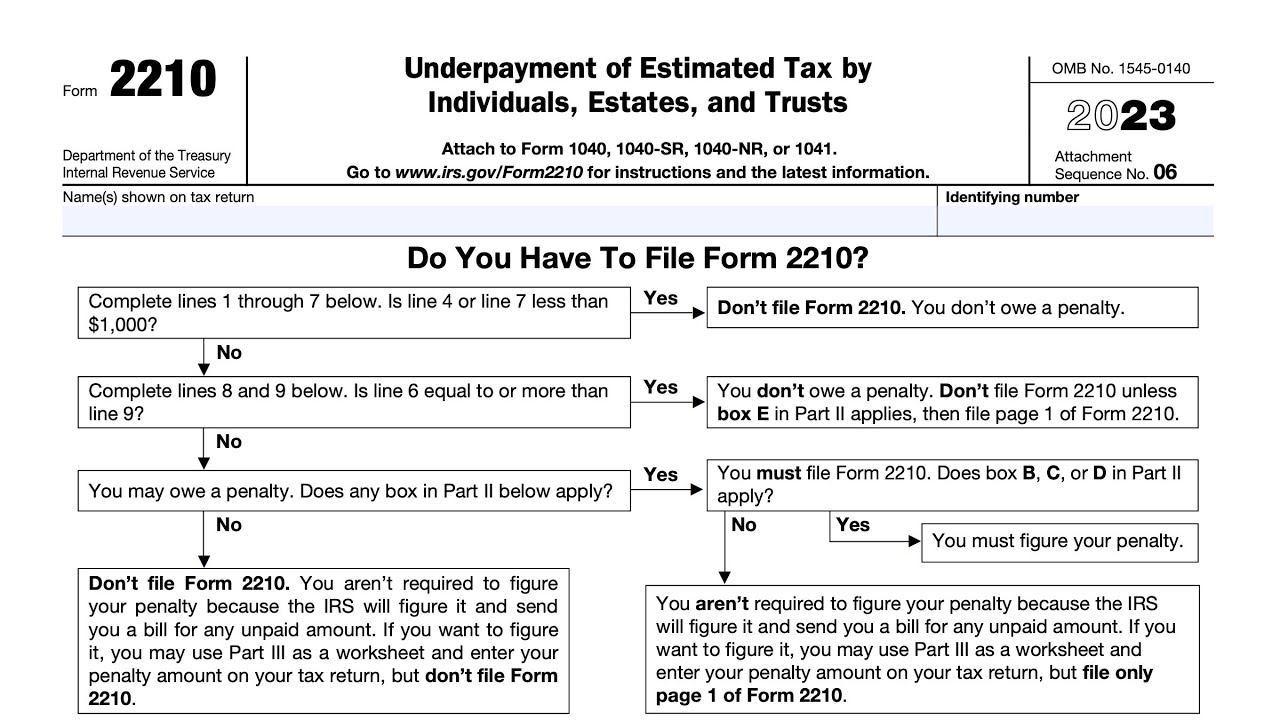
- You expect to owe $1,000 or more in tax for the year after subtracting withholding and credits, and
- Your withholding and timely estimated payments will be less than the required threshold (more on safe harbors below).
So the question is not “Did my rental make money?” It’s “Will my overall tax paid in during the year be enough?”
A full-year rental example (with depreciation)
Let’s walk through a simple, realistic year. Imagine you own a single-family rental.
Facts
- Monthly rent collected: $2,000
- Annual rent collected: $24,000
- Operating expenses (repairs, insurance, HOA, utilities you pay, advertising): $6,500
- Property taxes: $3,200
- Mortgage interest: $7,800
- Depreciation deduction for the year: $8,000
Step 1: Estimate net rental income
$24,000 rent
- $6,500 operating expenses
- $3,200 property taxes
- $7,800 mortgage interest
- $8,000 depreciation
= - $1,500 net rental loss
Even though you collected $24,000 in cash rent, your tax return may show a loss thanks largely to depreciation (which is a non-cash expense).
What this means for estimated taxes: in this example, the rental likely does not increase your tax bill for the year. In fact, it might reduce it depending on your situation and whether the loss is currently deductible.

When a rental loss means no quarterly payment
If your rental shows a taxable loss, you typically do not need to make estimated payments because of that rental.
Two important caveats:
- Loss deductibility can be limited. Many landlords fall under passive activity loss rules, and the loss may be suspended rather than used this year. A suspended loss generally means the rental is not reducing your current-year tax bill, but it also means the rental is not creating current-year taxable profit that would drive an estimated tax payment by itself.
- Your total tax picture still matters. If you have a high-income W-2 job with insufficient withholding or other untaxed income, you might still need estimated payments. The rental loss just is not the reason.
Now flip it: a profitable rental
Same property, different year. Suppose you raise rent and have fewer repairs.
Facts
- Annual rent collected: $28,800
- Operating expenses: $4,500
- Property taxes: $3,200
- Mortgage interest: $7,300
- Depreciation: $8,000
Net rental income
$28,800
- $4,500
- $3,200
- $7,300
- $8,000
= $5,800 net rental profit
That $5,800 will generally flow into your taxable income. If nothing else changes, you might owe additional federal income tax on it, plus state tax where applicable.
A quick “so what” number: if you are in the 22% federal bracket, that profit could add roughly $1,276 to your federal income tax (5,800 x 0.22), before considering other moving pieces like credits, phaseouts, or NIIT.
What triggers quarterly payments: if you don’t have enough withholding elsewhere to cover the additional tax from that profit, you may need estimated payments.
Safe harbors: when you can skip quarterly payments
Here’s where many landlords can simplify their lives. The IRS has safe harbors that, if met, generally protect you from underpayment penalties.
Safe harbor #1: Pay 90% of this year’s tax
You can generally avoid the underpayment penalty if your withholding and timely estimated payments add up to at least 90% of your current-year total tax.
Safe harbor #2: Pay enough based on last year
Many taxpayers can avoid the penalty by paying in (through withholding and estimated payments) at least:
- 100% of last year’s total tax, or
- 110% of last year’s total tax if your prior-year adjusted gross income was above the IRS threshold (commonly $150,000, or $75,000 if married filing separately).
If you meet this safe harbor through withholding alone, then even if your rental is profitable this year, you might not need to send quarterly payments.
Safe harbor #3: Owe under $1,000 at filing
If after withholding and credits you’ll owe under $1,000, you are generally not required to make estimated payments.
Practical landlord takeaway: if your rental profit is modest, and your W-2 withholding is already solid, you may fall into the “no quarterly payment needed” camp.
How to handle estimated taxes with rental income
Most landlords choose one of two routes:
Option A: Increase withholding (often the easiest)
If you have a job or receive retirement income, you can usually increase withholding and let that cover the extra tax from rental profit. The IRS treats withholding as paid evenly throughout the year, which can be helpful even if you adjust it later.
Option B: Pay estimates directly
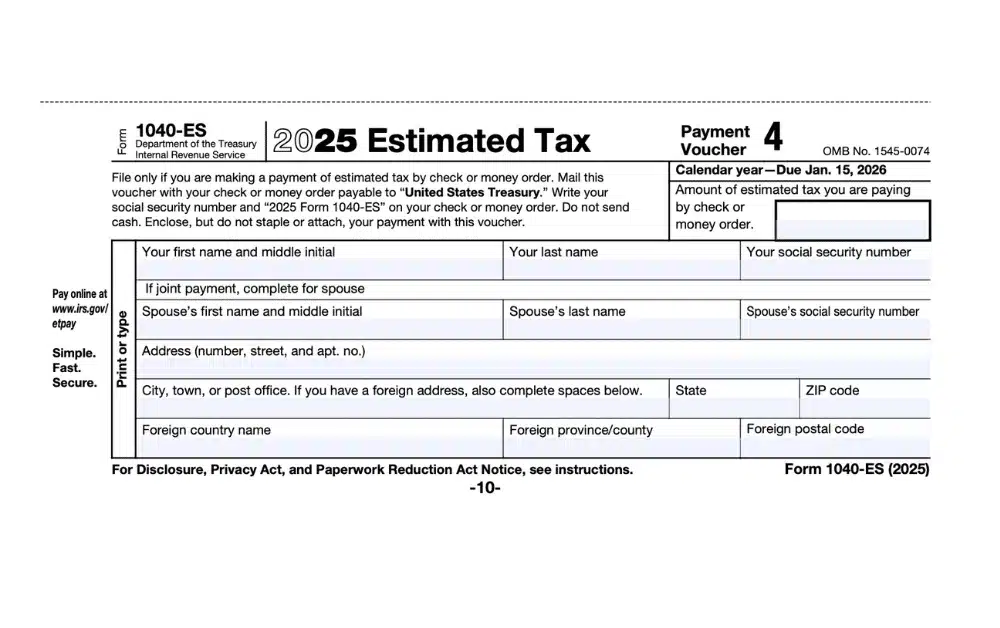
If you do not have withholding, or you prefer to keep things separate, you can pay estimated taxes on Form 1040-ES.
Typical due dates (they shift for weekends and holidays, and they are not true calendar quarters):
- April 15 for January 1 through March 31
- June 15 for April 1 through May 31
- September 15 for June 1 through August 31
- January 15 for September 1 through December 31
If you are a “set it and forget it” person, you can base the payments on a conservative estimate or on last year’s safe harbor amount and then true up at year-end.
State note: many states have their own estimated tax rules, thresholds, and due dates, so make sure you check your state requirements too.
A simple way to ballpark what to set aside
If your rental is profitable and you expect to owe extra tax, a quick planning approach is:
- Estimate your net rental profit for the year.
- Multiply by your approximate marginal federal tax rate (and add your state rate if applicable).
- Divide by 4 to get a rough quarterly amount.
This is not a perfect calculation, because your total income, deductions, credits, and filing status all interact. But it gets many landlords close enough to avoid unpleasant surprises.
Common situations that change the answer
You bought the property mid-year
Your first year of renting is often messy: startup repairs, leasing costs, and partial-year depreciation can swing the result from profit to loss. If your year ends close to breakeven, safe harbors or the under-$1,000 rule may apply.
You had a big repair year
Large repairs and turnover costs can wipe out taxable profit. Cash flow might feel tight, but the tax return may show little to no profit.
You have strong W-2 withholding
This is the quiet superpower for many accidental landlords. If your wage withholding is already high enough, you might not need quarterly payments even with rental profit.
You sold a property
A sale can create capital gains and depreciation recapture. That tax is often not withheld, so it can create a strong estimated tax need in that year.
You do short-term rentals
Short-term rentals can change both the passive activity analysis and, in some cases, how the IRS views the activity overall. If you are operating something that looks more like a hospitality business than a traditional rental, get specific guidance before assuming “Schedule E, no self-employment tax” applies.
FAQ
Do landlords pay quarterly taxes automatically?
No. Quarterly estimated taxes are not automatic. They are required when your withholding and timely estimated payments are not sufficient to cover your tax liability under the underpayment rules.
If rental income is passive, does that mean no estimated taxes?
Not necessarily. Passive activity status affects things like loss limitations. It does not prevent rental profit from increasing your income tax, and it does not create withholding. If profit pushes your total tax paid in too low, you may owe estimated payments.
Does depreciation reduce my estimated tax requirement?
Often, yes. Depreciation reduces taxable income, which can reduce the tax you need to pay in during the year. It does not change your cash flow, which is why landlords can feel “profitable” but still show low taxable income, or the reverse when depreciation is small.
What if I can’t predict my rental profit accurately?
You can use a safe harbor based on last year’s tax, or you can increase withholding elsewhere. Those approaches are usually more forgiving than trying to perfectly estimate net income from a property with unpredictable repairs.
The bottom line
Landlords often do owe quarterly estimated taxes on rental income, but not because rental income is self-employment income. They owe estimates because rental profit can increase income tax and there is usually no withholding.
If your rental shows a loss, your overall balance due is under $1,000, or you meet an IRS safe harbor through withholding or prior-year payments, you may not need to make quarterly payments at all. The cleanest next step is to run a quick projection of your net rental income including depreciation and compare it to what is already being withheld on your behalf. If you have short-term rental facts, high income that could trigger NIIT, or anything that feels like a gray area, it’s worth running the numbers with a qualified tax pro.