I grew up watching my parents run a mid-sized agricultural supply company, and one of the most stressful rhythms of the year was not harvest season. It was cash flow season. The weeks when big invoices landed, loan payments hit, and taxes seemed to come due at the exact wrong moment. If you run a C corporation today, quarterly estimated taxes can feel like that same kind of pressure. The good news is that once you understand the rules and the calendar, you can turn it into a predictable system.

So, do C corporations owe quarterly estimated taxes? Often, yes. And the mechanics are different from the quarterly payments most founders learn first through individual estimated tax vouchers.
Yes, many C corporations must pay quarterly estimated income tax
A C corporation is its own taxpayer. That means the corporation can owe federal corporate income tax during the year, and the IRS generally expects that tax to be paid as the income is earned, not all at once when the return is filed.
For most C corporations, the rule is straightforward:
- If the corporation expects to owe $500 or more in federal income tax for the year, it generally must make quarterly estimated tax payments.
- Those payments are calculated using Form 1120-W, then paid electronically (often through EFTPS).
These are estimates of corporate income tax. They are not payroll deposits, not sales tax, and not state franchise taxes, which all have their own systems.
Who has to pay and who might not
C corporations that commonly must pay
You are in the estimated tax world if your C corp is profitable or trending profitable and will likely owe at least $500 in federal income tax after credits.
This includes many:
- Consulting firms that incorporated and retained earnings in the company
- Product businesses with steady gross profit
- Software and agency businesses that have moved past break-even
- Investment or holding companies taxed as C corps
Common reasons a C corporation might not owe quarterly estimates
- Operating losses or little to no taxable income
- Enough credits to bring expected tax below $500
- Short tax year situations where the required installments differ, depending on facts
If you are new, pre-revenue, or intentionally reinvesting and still at a loss, you may not have required installments. Still, I like seeing founders run a quick 1120-W early in the year. It clarifies whether you are truly “no estimates required” or just “hoping we owe nothing.”
The 1120-W calendar: the four due dates
This is where people get tripped up because they assume the corporate deadlines mirror the individual 1040-ES schedule.
For a C corporation on a calendar year (tax year ending December 31), the four required installment due dates are generally:
- April 15
- June 15
- September 15
- December 15
If a due date falls on a weekend or legal holiday, the deadline typically moves to the next business day.
For a fiscal-year C corporation, the schedule is based on the corporation’s year end. Installments are generally due by the 15th day of the 4th, 6th, 9th, and 12th months of the tax year.
Two practical implications:
- Corporations have a December installment that individuals do not.
- The corporate “quarterly” cadence is not evenly spaced (April to June is two months, then three, then three).
How Form 1120-W works
Form 1120-W is the IRS worksheet C corporations use to calculate required estimated tax installments.
At a high level, it asks you to estimate:
- Expected taxable income for the year
- Expected corporate tax (applying the corporate tax rate and any credits)
- How much must be paid in each installment period
Some corporations can also use an annualized income method when income is seasonal or lumpy. That can reduce underpayment risk when profits arrive late in the year, but it requires more careful calculations and documentation.
Most small and midsize C corps I see do best with one of two approaches:
- Forecast-based payments: you project the year and pay installments to match reality as it evolves.
- Safe harbor payments: you pay enough under IRS safe harbor rules to reduce penalty risk, then true up when you file the return. Safe harbors can help you avoid underpayment penalties, but they do not guarantee you will not owe a balance at filing.
Safe harbor rules for C corporations
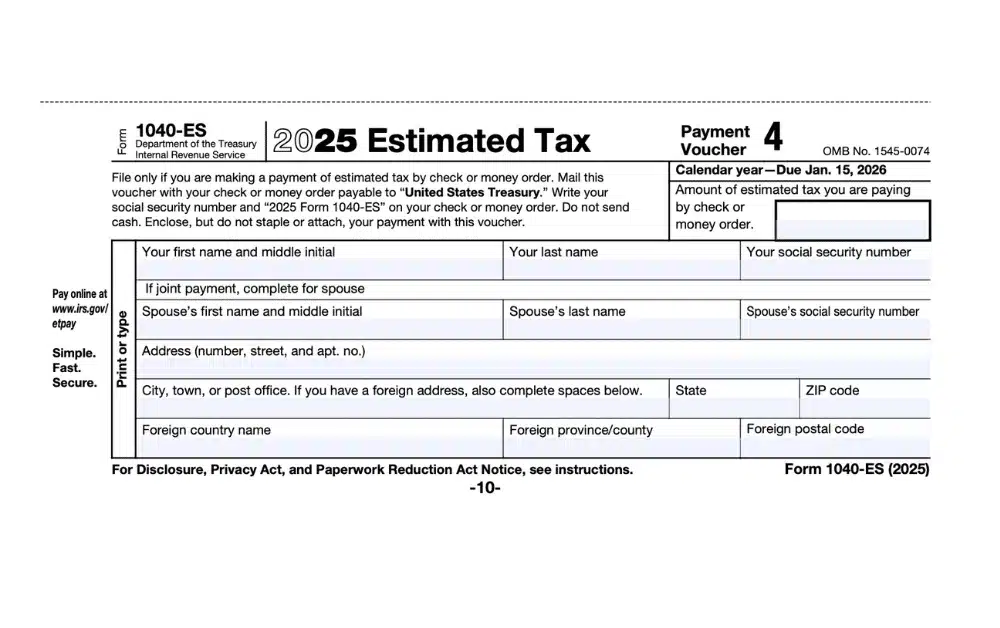
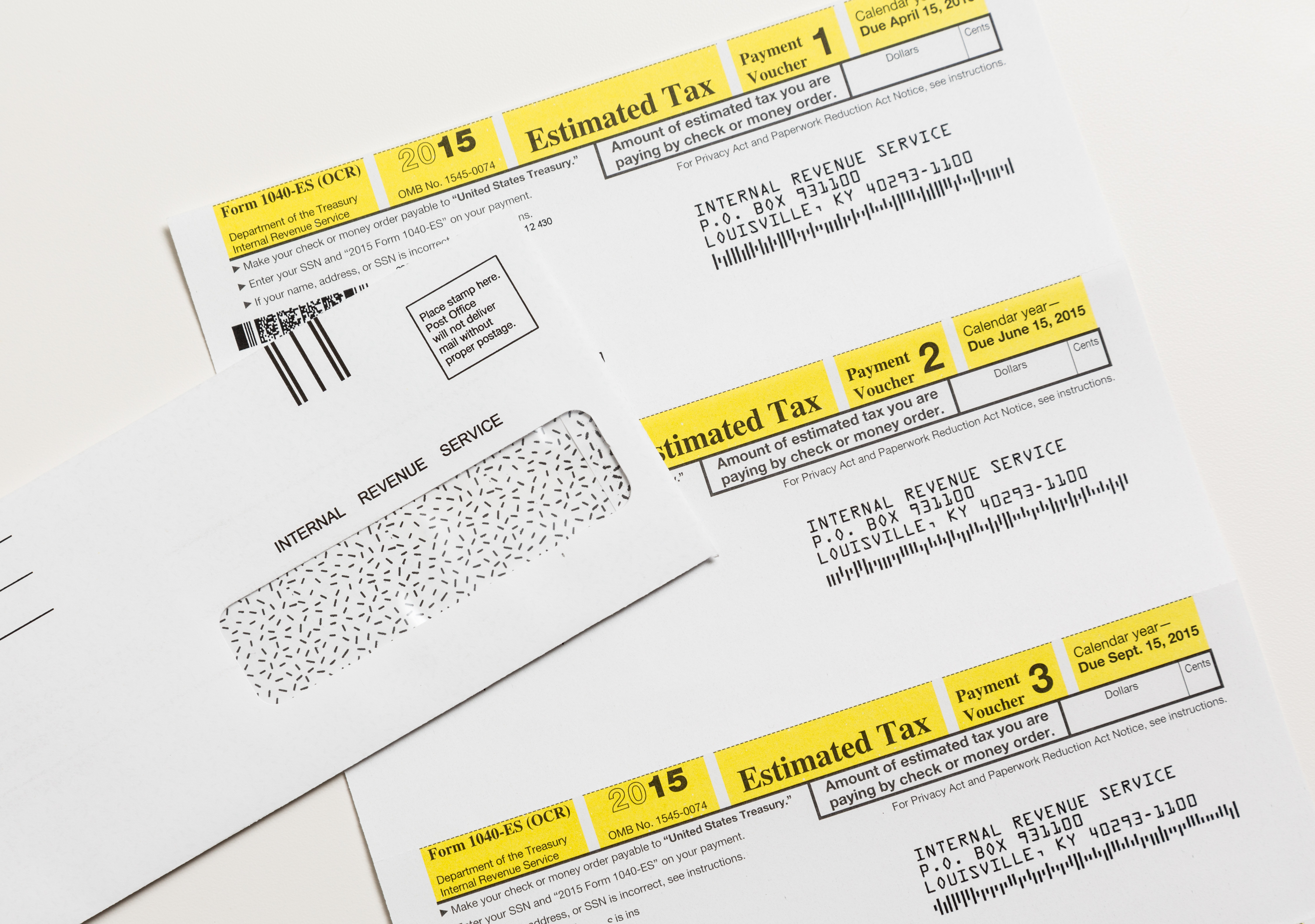
Many owners first learn estimated taxes through individual rules: pay at least 90% of current-year tax, or 100% (110% for higher-income taxpayers) of prior-year tax, using 1040-ES vouchers.
Corporate safe harbors are similar in spirit, but the details and the traps are different.
Two core safe harbors
In general, a C corporation can reduce underpayment penalty risk by paying, in timely installments, at least one of the following:
- Current-year method: 100% of the corporation’s current-year tax (your required annual payment based on this year’s actual tax, as estimated during the year).
- Prior-year method: at least 100% of the tax shown on the corporation’s prior-year return, if the corporation qualifies to use it.
Key difference: the prior-year safe harbor has limits
This is the part that gets repeated incorrectly online, so I want it clean and practical.
- If your corporation had a positive prior-year tax liability, many small and midsize C corporations can often use the 100% prior-year tax approach as a safe harbor.
- If the prior-year return showed zero tax liability, the prior-year safe harbor does not help you. Also, the prior-year method generally requires a full 12-month prior tax year. New corporations and short-year returns are where people accidentally assume they qualify when they do not.
- The big restriction applies to Large Corporations (as defined for estimated tax purposes, generally tied to $1 million or more of taxable income in any of the three preceding tax years, with special rules and exceptions that can apply). A Large Corporation generally cannot use the prior-year method for all four installments. In practice, they may be able to use it only for the first installment, then they must switch to a current-year based approach for the rest of the year.
Translation: if your C corp was profitable last year, “last year divided by four” might be reasonable, but only if you are not a Large Corporation and you are still paying on time. If you are growing fast, seasonal, or you are crossing into Large Corporation territory, you need to be more intentional.
Another difference: the due-date pattern
Individuals pay estimated taxes on 1040-ES in April, June, September, and January. C corporations typically pay in April, June, September, and December. Same idea, different cadence.
A simple C-corp example
Let’s say you run a small marketing studio taxed as a C corporation.
- The corporation expects $120,000 of taxable income this year.
- At a 21% corporate tax rate, expected federal corporate income tax is about $25,200 (before any credits).
If the corporation pays using a straightforward approach (often equal installments when income is relatively steady), it would plan to send:
- Installment 1 (April 15): $6,300
- Installment 2 (June 15): $6,300
- Installment 3 (September 15): $6,300
- Installment 4 (December 15): $6,300
If the business is seasonal or profits come in late, installments may not be equal under the annualized income method. That is the point: you are trying to match payments to when the income actually shows up.
Now reality happens. Suppose by early September you win a contract and your forecast rises. If the updated expected tax is now $35,000, the corporation can increase remaining installments so it is not playing catch-up at filing time, and so it reduces the odds of underpayment penalties.
If you realize you underpaid earlier in the year, the most practical fix is usually to increase the next one or two installments. If you overpay, the overage is typically handled on the return, either as a refund or applied to next year’s tax, depending on what you choose when you file.
The key is that the corporation is making these payments for its own tax bill, separate from anything you owe personally.
Not covered: pass-through taxes and payroll
I want to draw a bright line here, because this is where founders get double surprised.
Pass-through businesses use individual estimated tax rules
If your business is a:
- sole proprietorship
- single-member LLC (default tax treatment)
- partnership or multi-member LLC taxed as a partnership
- S corporation (for most owners, most of the time)
then the business generally does not pay federal income tax itself. The owners pay on their individual returns, typically using Form 1040-ES estimated tax payments. That is a different system than corporate 1120-W calculations.
Payroll tax deposits are separate
Payroll withholdings and employer payroll taxes follow deposit schedules (monthly or semiweekly), and they do not replace corporate income tax estimates. It is common for a growing C corp to have both: payroll deposits throughout the year and quarterly estimated corporate income tax payments.
Avoid penalties without overpaying
If you want a simple operating rhythm, this is what I recommend to most small C-corp owners:
- After Q1 closes: update your year forecast (revenue, expenses, bonuses, depreciation) and run 1120-W math.
- Before each due date: sanity-check whether the business is tracking ahead or behind the forecast, then adjust the next payment.
- Keep a tax cash buffer: avoid using the tax set-aside account for operating surprises. This single habit prevents most of the “we missed the installment” stress.
If your income is highly seasonal or you have a big Q4, ask your CPA about annualized income calculations. They can be a lifesaver, but only if done correctly.
FAQ
Is Form 1120-W filed with the IRS?
Typically, no. Form 1120-W is a worksheet used to calculate estimated payments. You generally keep it with your records and use it to determine payment amounts. Payments themselves are made electronically (often via EFTPS) or through other IRS-approved payment methods.
Do C corporations pay estimated taxes to states too?
Many do. State corporate income tax systems often have their own estimated tax requirements and schedules. Check the rules for the states where the corporation is taxable.
What happens if a C corporation misses an installment?
The IRS may assess an underpayment penalty, even if the corporation pays the full balance when it files Form 1120. The penalty is essentially an interest charge for paying late throughout the year.
If I am a shareholder-employee, do I still pay personal estimated taxes?
Possibly. Your W-2 withholding might cover your personal tax, but if you have investment income, spousal income, or other income not covered by withholding, you may still need individual estimated payments. Separately, the C corporation still handles its own estimated corporate income tax.
Bottom line
A C corporation often does owe quarterly estimated taxes, and it handles them at the corporate level using Form 1120-W calculations and the corporate installment calendar (often April 15, June 15, September 15, and December 15 for calendar-year filers). That is a different lane than individual 1040-ES payments used by pass-through owners.
If you are unsure whether your corporation will cross the $500 threshold, whether the prior-year method applies to you (including the 12-month prior-year requirement), or whether you might be treated as a Large Corporation for estimated tax purposes, it is worth running the numbers early. A little forecasting up front is almost always cheaper than penalties, stress, and cash crunches later.