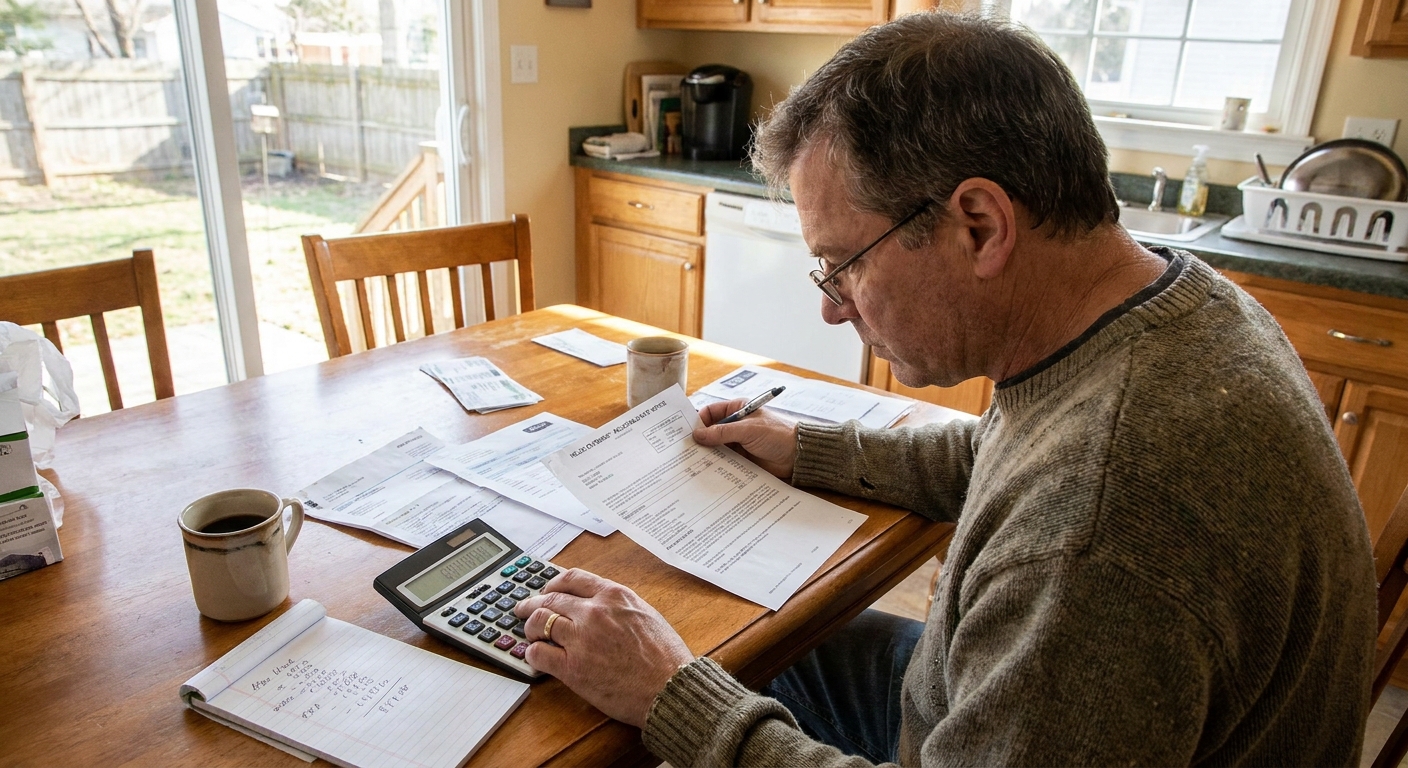
I grew up watching my parents juggle inventory orders, seasonal cash flow, and a revolving line of credit that sometimes felt like a lifeline and sometimes felt like a trap. That memory pops up every time a client asks me if they can tap their home equity to buy a rental property, because a HELOC can be a smart bridge to an investment. It can also magnify risk fast if you do not respect the timing and the payment math.
So, can you use a primary-home HELOC to buy a rental property? In many cases, yes. But whether it is wise depends on how the HELOC payment is underwritten, how volatile your interest rate could be, and whether you can safely access the funds before you close on the rental.
What it means to use a HELOC for a rental
A HELOC is a revolving line of credit secured by your primary residence. If approved, you can draw from it, repay, and draw again during the draw period, much like a credit card but with a rate that is often lower, and with your home as collateral.
When people say they want to use a HELOC to buy a rental, they usually mean one of these moves:
- Down payment funding: Use HELOC proceeds for the down payment and closing costs on the rental mortgage.
- Cash purchase: Use HELOC proceeds to buy the rental with cash, then potentially refinance the rental later.
- Liquidity buffer: Keep the HELOC as a reserve for repairs, vacancies, or initial operating costs after purchase.
This article focuses on using a primary-home HELOC as the funding source for the rental purchase. It does not cover using the rental property itself as the collateral for a HELOC.
Will lenders allow HELOC funds?
Often, yes, but with conditions. The rental property lender will generally want to verify:
- Where the funds came from: A clean paper trail showing the HELOC draw into your account.
- That the funds are acceptable under the program: Most lenders care about sourcing and documentation. Some programs or lenders may also want the funds in your account for a certain period, or may have additional rules about how recently the money was borrowed.
- Your ability to carry the new debt: The HELOC introduces a new monthly obligation that can affect approval.
One practical note: some loan programs allow certain types of borrowed funds for a down payment, and some do not. Program guidelines vary across conventional, FHA, portfolio, and DSCR style loans, and lender overlays can be stricter than the baseline rules. Ask early, because you do not want to discover a “no borrowed down payment” policy a week before closing.
Also, do not assume every closing party treats every dollar the same. Some sellers, agents, lenders, or title companies have rules around earnest money or require funds to be verified in your account by a certain point in the process. It is worth confirming the mechanics before you send a deposit.
How HELOC payments affect approval
Here is the part that surprises people: even if you plan to pay the HELOC off quickly, the lender underwriting your rental mortgage usually has to count a monthly payment for it once it exists, based on program rules and underwriter or AUS guidance.
DTI can shift fast
Your debt-to-income ratio (DTI) compares your monthly debt obligations to your gross monthly income. Adding a HELOC balance can increase your monthly debt load, which can reduce the mortgage amount you qualify for, or block approval entirely if you were already near the limit.
How the HELOC payment is counted
Different lenders and programs can use different methods, and it is not always intuitive:
- If the HELOC is already being paid: They often use the payment showing on your credit report or statement.
- If the HELOC is new or the payment is not clearly documented: They may calculate a payment using a percentage of the outstanding balance, or they may use a fully amortizing payment assumption even if your HELOC is interest-only during the draw period.
- If you have an unused HELOC: Usually, an undrawn line does not create a payment. The issue typically begins when you draw, though edge cases can pop up if statements are unclear or there are existing minimum payment requirements.
Translation: the moment you pull funds from the HELOC to use as a down payment, you may also be shrinking your borrowing capacity for the rental loan.
A quick example to make this real: say you draw $80,000 on a HELOC at 9%. If it is interest-only, that is about $600 per month in interest. But if your lender applies a more conservative amortizing calculation for qualifying, the counted payment could be higher. That difference alone can move your DTI enough to change your approval.
If you are trying to qualify at the edge, it can be worth asking your loan officer, in plain language: “How will you count the HELOC payment if I draw $X before closing?” Get the answer in writing if you can.
Variable rates and stress testing
Most HELOCs have variable interest rates. That means your payment can rise, sometimes quickly, depending on your index and margin and any rate caps in the agreement.
When you use a HELOC to help buy a rental, you are layering risk in three common ways:
- Payment shock risk: If rates rise, your HELOC payment rises, and your rental may not produce enough cash flow to cover it.
- Two-property exposure: A vacancy or major repair at the rental can coincide with a higher HELOC rate on your primary home.
- Refinance risk: Some strategies assume you can refinance the rental later to pay off the HELOC. That plan depends on future rates, property value, and your income staying strong.
A simple stress test I like: run your numbers at today’s HELOC rate, then again at 2 to 3 percentage points higher. If that higher payment makes you pause, take the message seriously.

Timing and access risk
In a perfect world, you draw the HELOC, the funds land in your account cleanly, and the rental closing happens on schedule. In real life, timing is where deals get messy.
Why drawing early can hurt
- Your credit profile can change: A new HELOC balance can change your credit utilization and score, sometimes enough to impact pricing or approval.
- Your DTI can jump before final underwriting: If your rental lender does a final credit refresh right before closing, the new HELOC payment may appear and force a re-approval.
- Delays can get expensive: If the rental closing is delayed, you might be paying HELOC interest longer than expected while the money sits.
Why waiting too long can also hurt
- HELOC funding can take time: Some banks fund quickly, others take days. If you need cashier’s checks or wires, add more time.
- Re-verifications happen: Lenders can require updated documentation, signatures, or additional conditions before allowing a draw, especially for large amounts.
- Lines can be reduced or frozen: Banks can tighten lines based on the HELOC agreement, internal risk policies, and adverse-change provisions. It is not an everyday event, but it is a real risk in tighter credit environments.
The practical approach: coordinate the HELOC draw plan with your rental lender and your closing timeline. Do not assume “I have a line” means “I can access the cash exactly when I want.”
Down payment vs. bridge
Not all HELOC-to-rental strategies are created equal. Here are two common patterns and what to watch.
1) HELOC as the down payment
This is the straightforward approach, but it creates a second payment right away. Your rental mortgage payment and your HELOC payment now need to coexist. If the rental is not immediately occupied, you are carrying both with no offsetting rent.
2) HELOC as a short-term bridge
Some buyers use the HELOC to buy quickly, then plan to refinance the rental or repay the HELOC from another liquidity event (sale of another asset, bonus, business distribution).
This can work, but the weakest point is the assumption that a refinance will be available on your schedule. I have seen great deals turn into stressful ones because rates moved, appraisals came in low, or a lender required more reserves than expected.
Tax note to know
HELOC interest can be a tax wrinkle. In the U.S., the mortgage interest deduction rules are generally tied to using the loan to buy, build, or substantially improve the home that secures the loan, and using HELOC proceeds to buy a rental can change how, or whether, the interest is deductible. Some situations may allow it to be treated differently (for example, as investment interest), but the details matter. If you are counting on a deduction to make the math work, run it by a qualified tax pro.
Questions to ask first
If you are considering using a primary-home HELOC to buy a rental, these are the questions I want you to answer on paper, not just in your head:
- What will my HELOC payment be at today’s rate, and at a higher rate?
- How will the rental mortgage lender count the HELOC payment for DTI?
- How many months of total housing payments can I cover in cash reserves? Include primary mortgage, HELOC, rental mortgage, taxes, insurance, and HOA if any.
- What happens if the rental is vacant for 2 to 3 months?
- Do I have a payoff plan for the HELOC? “The rent will cover it” is not a payoff plan unless the cash flow is truly resilient.
- Am I comfortable putting my primary home at additional risk to fund this investment?
How to reduce risk
- Borrow less than the maximum: Just because your HELOC limit is high does not mean your comfort limit should be.
- Keep reserves: A rental is a business. Businesses need working capital, especially in year one.
- Lock down documentation early: Understand the draw process, wiring rules, and any minimum draw amounts.
- Model conservative rent: Underwrite using realistic rent and realistic expenses, including maintenance and vacancy.
- Plan for variable rates: If your HELOC has an option to convert part of the balance to a fixed rate, ask what it costs and when it is available.

When it can work
- Strong income and low existing debt: Your DTI can absorb the HELOC payment without shrinking your approval amount.
- Large equity cushion and conservative leverage: You are not stretching your primary home to the edge.
- High-conviction deal with quick occupancy: The rental is likely to be leased quickly at a rent that supports the full debt stack.
- Clear, short payoff path: You have a reliable plan to reduce or eliminate the HELOC balance within a defined period.
When I get cautious
- You are light on cash reserves: A HELOC is not a reserve fund if you are already using it up front.
- Your business income is variable: Many entrepreneurs have uneven cash flow, which makes variable-rate debt harder to manage.
- The deal only works with perfect rent and no repairs: Rentals have a way of delivering surprises right after closing.
- You would be devastated to risk your primary home: That emotional reality matters. Risk tolerance is part math and part life.
FAQ
Can I use a HELOC as proof of funds?
Sometimes, yes. Sellers or lenders may accept a HELOC statement showing available credit, but others want liquid cash already in an account. Confirm the specific requirement with your agent and lender.
Will drawing on my HELOC hurt my mortgage odds?
It can. Once you draw, the lender may count a HELOC payment in your DTI per program and underwriting guidance. It can also affect your credit score depending on utilization and other factors. The impact varies by borrower and by lender rules.
Should I draw the HELOC the day before closing?
Not automatically. Too early can disrupt underwriting, too late can cause funding delays. The safest approach is to coordinate timing with your loan officer and closing agent, then follow the exact funding instructions.
Is using a HELOC for a rental down payment bad debt?
Debt is a tool. This can be strategic if the rental’s long-term returns and cash flow justify the risk and you can carry the payments during rough patches. It is risky if you are relying on best-case scenarios or do not have liquidity.
The bottom line
Using a HELOC on your primary residence to help buy a rental property is often allowed, and it can be an efficient way to mobilize equity. The decision usually comes down to three things: how the HELOC payment is counted in your mortgage approval, how much variable-rate risk you can comfortably absorb, and whether you can access the funds reliably without derailing your closing.
If you want to do this calmly, run the numbers like an underwriter, keep a real cash reserve, and treat the HELOC like what it is: a loan secured by the roof over your head.