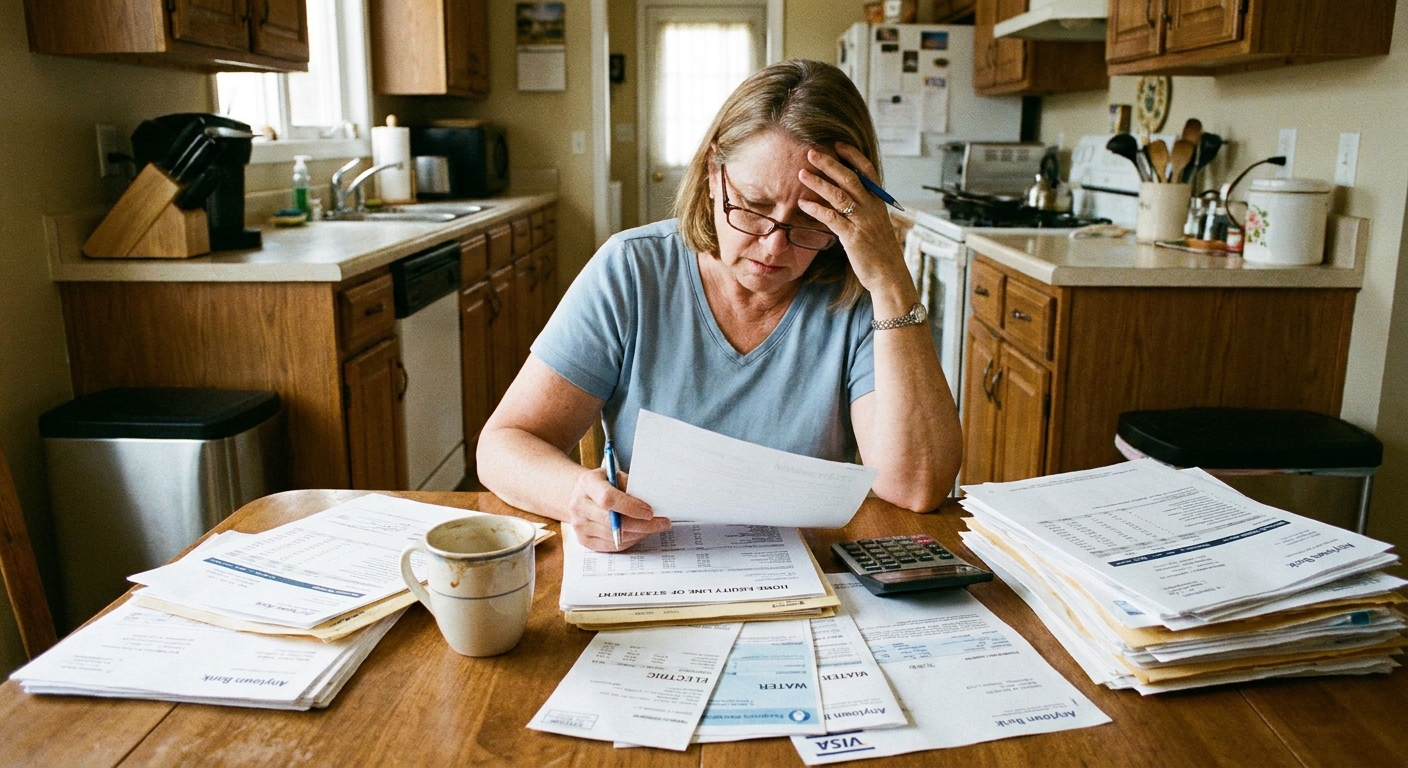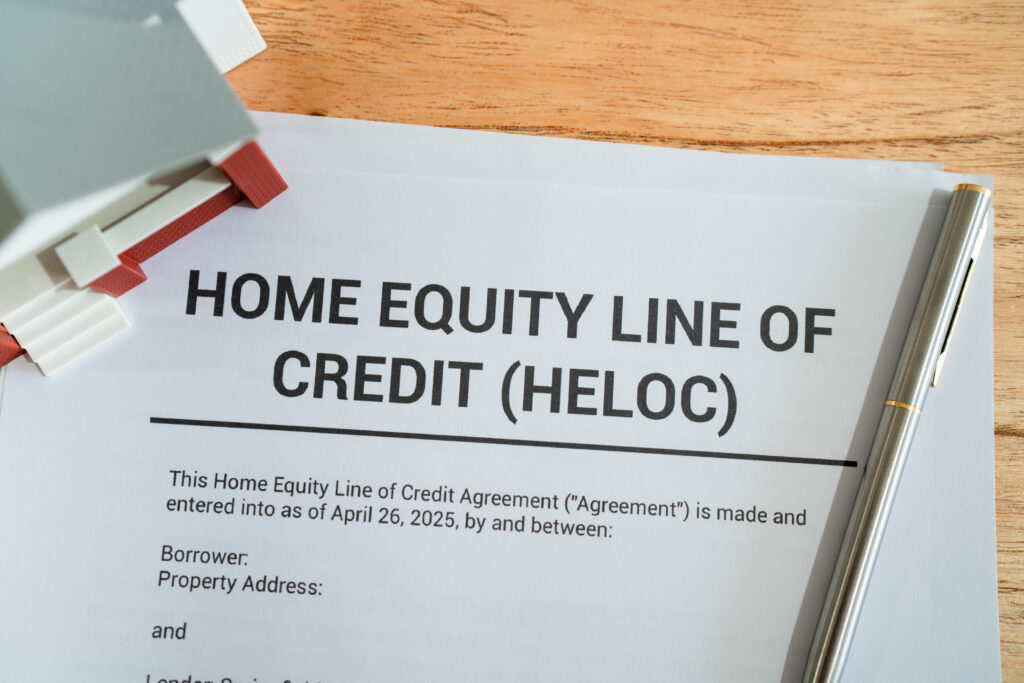
When I was a kid, I watched my parents run an agricultural supply business where interest rates felt like weather. You could ignore the forecast, but you still got drenched. A HELOC works the same way. If your home equity line of credit has a variable rate, your payment can change even if you never borrow another dollar, as long as you have a balance outstanding.
Here’s what actually happens to a HELOC payment when rates rise, why it happens, and how to estimate the hit to your monthly budget during the draw period.
Many HELOC rates are index plus margin
A variable-rate HELOC is typically priced as:
HELOC interest rate = index + margin
- Index: A market-based reference rate that moves up and down over time. Many HELOCs are tied to the prime rate, but some use SOFR-based indexes or other short-term benchmarks depending on the lender and when you opened the line.
- Margin: A fixed percentage your lender adds on top of the index. The margin is usually set in your note when you open the HELOC and does not change unless your contract explicitly allows it (most standard consumer HELOCs keep the margin fixed).
If the index rises, your rate usually rises by the same amount, subject to any caps, floors, and the lender’s rounding rules (some round to the nearest 0.125% or 0.25%). That is the core reason your payment changes.
How often rates and payments reset
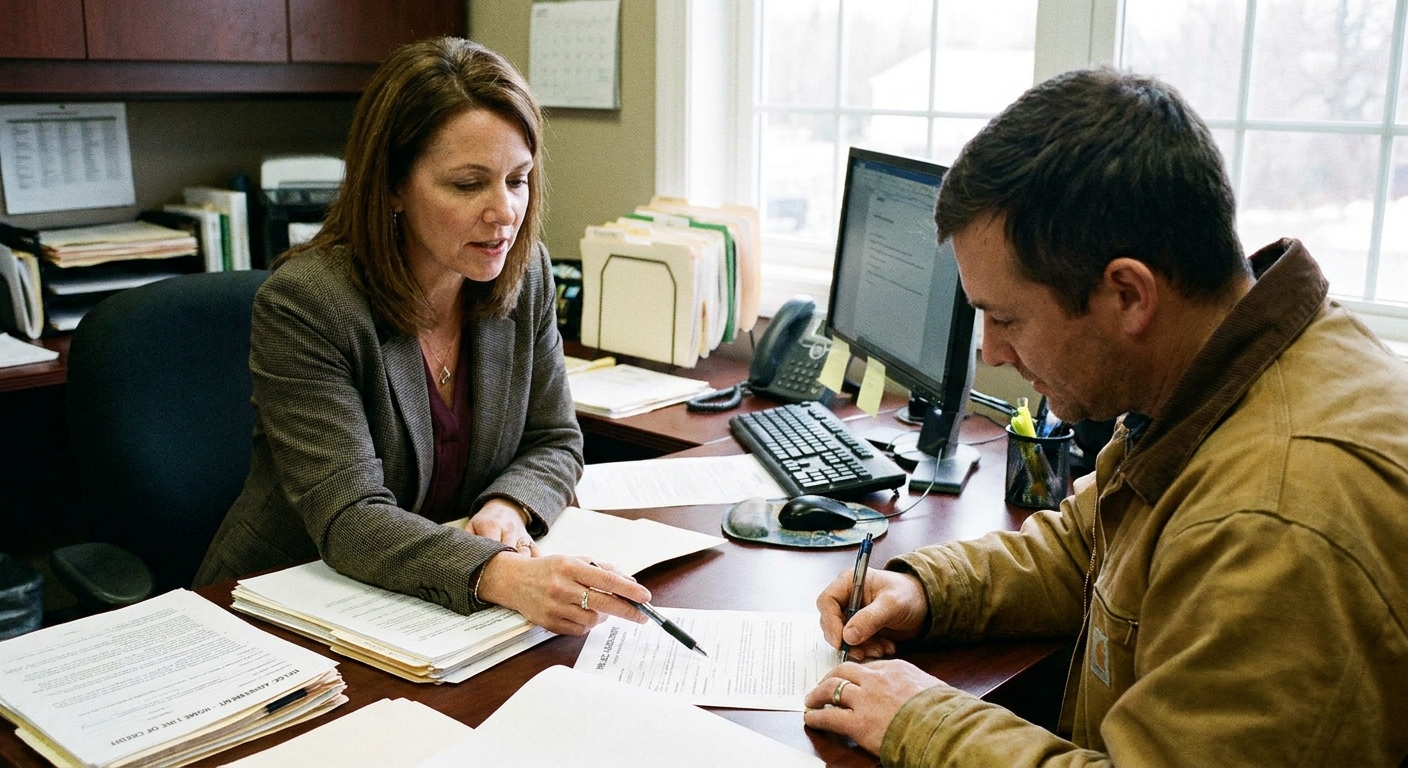
Your HELOC agreement specifies a rate change frequency, sometimes called a reset period or adjustment period. Common reset schedules include:
- Monthly (very common)
- Quarterly
- Semiannually
- Annually
Two practical details matter:
- The index observation date: the day the lender checks the index to set your new rate.
- When the payment reflects the change: some lenders update the payment immediately; others apply it on the next statement cycle.
If you feel like your HELOC payment is changing “randomly,” it is usually just following the calendar in your note.
What a rate hike does in draw
During the draw period, many HELOCs allow interest-only payments. If yours is interest-only, your required payment is typically calculated like this:
Monthly interest-only payment ≈ (outstanding balance × annual interest rate) ÷ 12
So when rates rise, two things stay the same and one thing changes:
- Your balance stays the same (assuming you do not borrow more).
- Your payment type stays interest-only (you are not paying principal down yet unless you choose to).
- Your interest rate rises, which increases the interest portion, which increases the payment.
This is why HELOCs can feel manageable for a while and then suddenly tight. It is not always the balance that is the problem. It is the cost of carrying that balance.
Estimate your new payment
Before you do any math, grab four details from your latest statement and your HELOC agreement or disclosures:
- Your current balance
- Your index (prime, SOFR-based index, or something else)
- Your margin
- Your adjustment frequency and whether caps or a minimum rate apply
Then you can estimate the payment change using the interest-only formula above. Treat it as an estimate because the lender may use a daily balance method, a specific day-count convention (like 365/360), and a statement cycle length that is not exactly 30 days.
Example: payment impact of a hike
Let’s say you have:
- HELOC balance: $60,000
- Rate structure: Index (prime) + 1.00% margin
- Old index: 8.50%
- New index after an increase: 9.50%
- Payment during draw: interest-only
Step 1: Old HELOC rate
Old rate = 8.50% + 1.00% = 9.50%
Old interest-only payment ≈ ($60,000 × 0.095) ÷ 12 = $475.00 per month
Step 2: New HELOC rate
New rate = 9.50% + 1.00% = 10.50%
New interest-only payment ≈ ($60,000 × 0.105) ÷ 12 = $525.00 per month
What changed?
- Rate increase: 1.00 percentage point
- Payment increase: $50 per month (approximately)
- Balance: unchanged
If your reset is monthly, that jump can show up on the next statement cycle after the index moves and your adjustment date hits.
Caps and floors
Some HELOCs include limits on how high the rate can go or how fast it can rise:
- Periodic (or annual) cap: may limit how much the rate can increase during a single adjustment period or within a year. Example: “no more than 2% increase in any 12-month period.”
- Lifetime cap: often limits how high the rate can go over the entire life of the HELOC. Example: “rate can never exceed 18%.”
- Minimum rate (floor): some agreements include a minimum interest rate, which can matter in low-rate environments. A floor does not cause increases when rates rise, but it can explain why your rate does not fall as much when rates drop.
Cap rules can be more nuanced than they sound. Some agreements cap the rate, others cap the change in rate per period, and some do both.
The best place to look is your HELOC note and program disclosures or any variable-rate feature language that lists caps, floors, and rounding. If you cannot find it quickly, call the servicer and ask: “Do I have a periodic cap, a lifetime cap, or both, and do I have a minimum rate? What are the exact numbers?”
Why your payment can jump
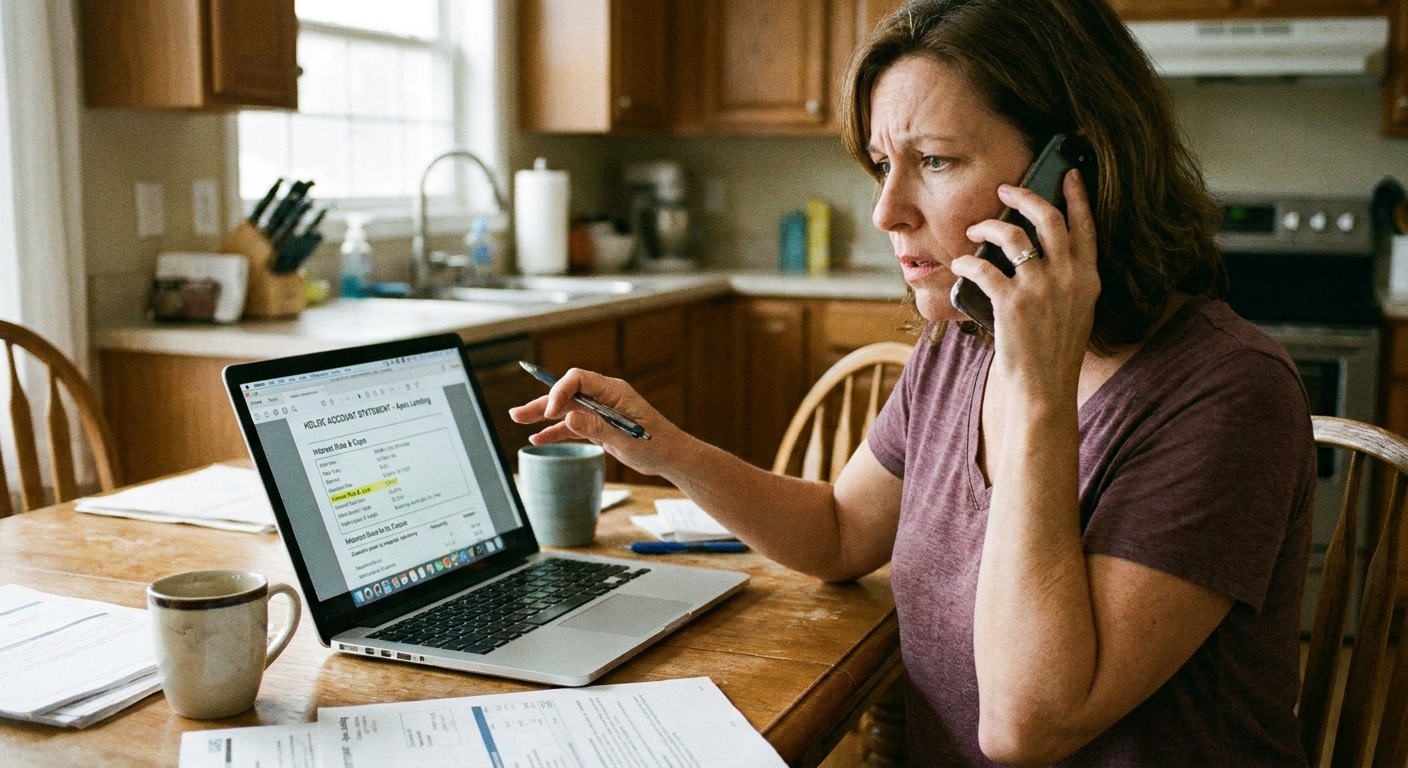
If you are seeing a larger-than-expected change, a few common explanations are worth checking:
- You borrowed more recently, so the balance is higher than you think. Even small draws add up.
- Fees are included in the minimum payment (some HELOCs can add certain charges to the payment due).
- Interest calculation method: HELOC interest is often calculated using a daily balance method (such as average daily balance or daily simple interest), depending on the agreement. Timing of draws and payments within the month can affect interest.
- Statement cycle length: even at the same rate, a 31-day cycle can accrue more interest than a 28-day cycle.
- Minimum payment rules: some HELOCs have a payment floor or minimum payment amount. For example, your agreement might say the minimum payment is $100 even if the month’s interest comes out to $62.
- Your draw period rules: a few HELOCs require small principal payments even during draw.
If your statement breaks out “interest,” “principal,” and “fees,” that breakdown is your best clue as to what is driving the change.
What happens after draw ends
The draw period is only half the story. When the draw period ends, many HELOCs switch from interest-only to principal-and-interest payments over a fixed repayment term (often 10 to 20 years). Even if rates stay flat, that structural switch can raise your payment because you are now paying the loan down on a schedule.
Using the same $60,000 balance at 10.50%, an interest-only payment is about $525 per month. If the HELOC converts to a 15-year repayment period at the same rate, the required principal-and-interest payment would be much higher because you are amortizing the balance instead of just carrying it.
How to protect your budget
When your HELOC payment climbs, you usually have three levers: balance, rate structure, and repayment approach.
1) Reduce the balance faster
If your contract allows principal payments during draw, paying even an extra $100 to $300 per month can reduce the balance that future interest is calculated on. It is the simplest way to lower sensitivity to the next reset.
2) Ask about fixed-rate options
Some lenders let you convert part of a HELOC balance into a fixed-rate segment. Terms vary widely, and there may be fees or minimums. But if rate volatility is the stressor, it is worth asking what programs exist on your specific line.
3) Refinance carefully
Depending on your credit, equity, and goals, you might refinance into a fixed-rate home equity loan or refinance your first mortgage and roll the HELOC in. This is not always the best move, especially if your first mortgage rate is low, but for some households it converts payment uncertainty into something you can plan around.
Quick FAQs
Will my HELOC payment always go up when rates rise?
If your HELOC is variable and you carry a balance, a higher index generally means higher interest cost, which usually means a higher payment. The exception is if caps, floors, rounding rules, or minimum payment features change how the increase is applied at that reset.
Do HELOC rates change daily?
The index may move frequently, but your HELOC rate usually adjusts on a schedule set in your agreement, commonly monthly. You feel the change when your adjustment date hits, not every time the index ticks.
If I am in the draw period, can my payment jump a lot?
Yes. Interest-only payments are very sensitive to rate changes because you are paying only the cost of borrowing, not principal. A higher rate quickly translates into a higher required payment on the same balance.
Is this the same as what happens when the draw period ends?
No. A rate reset is about the index changing your rate. The end of the draw period is a structural change where many HELOCs switch from interest-only to principal-and-interest repayment. Both can raise payments, but they are different triggers.
The bottom line
When interest rates rise, a variable-rate HELOC typically becomes more expensive because your rate is built from an index plus a margin. If you are making interest-only payments during the draw period, your minimum payment often rises almost dollar-for-dollar with the rate increase because the balance is not shrinking on its own.
If you take one action after reading this, make it this: pull up your HELOC note and disclosures and find (1) your index, (2) your margin, (3) how often the rate adjusts, and (4) whether caps or a minimum rate apply. Those details tell you how exposed your monthly payment is to the next rate move.