I grew up watching my parents run a mid-sized agricultural supply company, and the hardest moments were rarely about profitability on paper. They were about timing. A shipment arrived before a customer paid. A tax bill hit before receivables cleared. Real estate transitions feel like that too: you can be “wealthy” in home equity and still feel cash-poor for a few critical weeks.
If you want to buy your next home before you sell your current one, two common tools can bridge the gap: a bridge loan or a HELOC (home equity line of credit) on your current home. They solve the same problem, but they behave very differently when it comes to rates, fees, approvals, and what happens if your sale takes longer than expected.

The core difference in plain English
A bridge loan is a short-term loan designed specifically for a buy-before-sell move. It is usually used to help with your down payment, closing costs, or paying off an existing mortgage temporarily so you can qualify for the new mortgage.
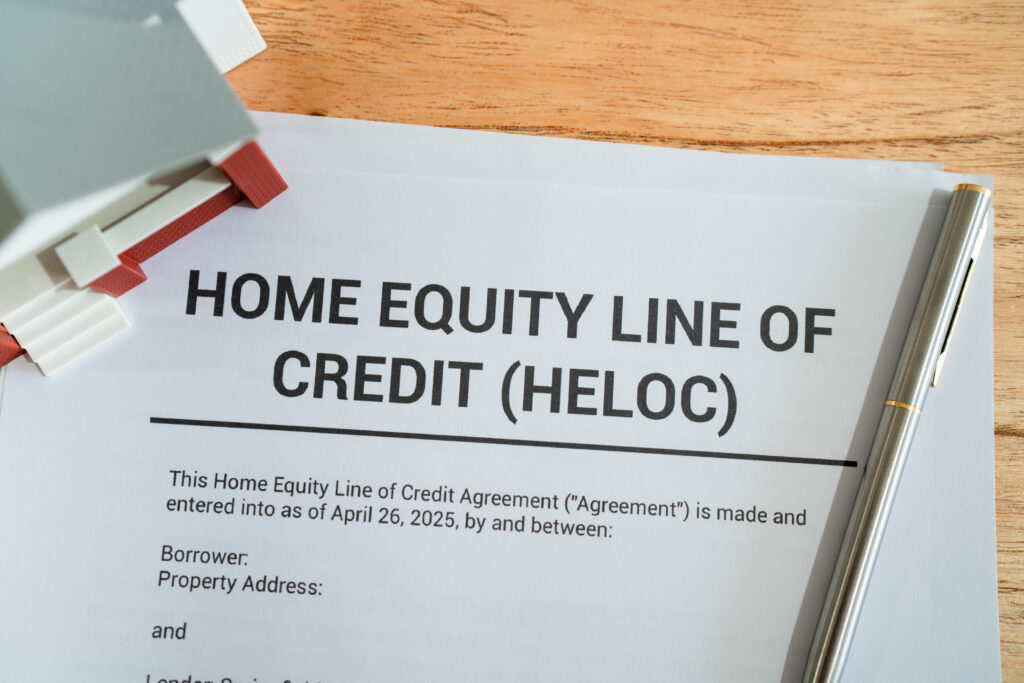
A HELOC is a revolving credit line secured by your current home. You can draw what you need (up to the limit), repay, and borrow again during the draw period. People use it for renovations, debt consolidation, and yes, bridging a move.
- Bridge loan: purpose-built, short runway, typically higher cost, and it can be faster for this specific use case, but timelines vary by lender and whether appraisal, title, and payoff work are required.
- HELOC: flexible and reusable, often, but not always, cheaper than a bridge loan. Pricing depends on the prime rate environment, lender margins, and any promotional offers.
How repayment usually works at the sale
Bridge loan repayment at sale
Bridge loans are commonly structured so you pay interest during the term and then pay the principal in a lump sum when your old home sells. Some lenders offer options where payments are deferred or interest is “rolled in,” but that depends on the lender and your credit profile.
What it feels like in practice: you sell your old house, the closing agent pays off the bridge loan (and any old mortgage being paid through it), and you walk away with what is left as proceeds.
HELOC repayment at sale
A HELOC is not automatically tied to the sale of your home in the same way, but it is a lien on the property. In most cases, the HELOC is paid off at closing from sale proceeds so the lender can release the lien, and the line is then closed. If you want to pay it off with other funds before closing, that can also work, but the lien still must be released for the sale to go through.
What it feels like in practice: you used the HELOC for the down payment or cash needs, and when your old home closes, the HELOC gets paid off along with any primary mortgage.
Rate type: what you are really signing up for
Bridge loan rates
Bridge loans commonly come with higher interest rates than first mortgages and often higher than HELOCs too. Many are variable rate, though fixed-rate bridge loans exist.
Because terms are short, people sometimes underestimate the impact of a higher rate. A couple of percentage points matter when the balance is large, even for a few months.
HELOC rates
Most HELOCs are variable rate, often tied to the prime rate plus a margin. Some lenders offer introductory rates or allow fixed-rate “locks” on portions of the balance, but the default expectation is variable.
Reality check: a HELOC can feel “cheaper,” but variable rate risk is real if your timeline stretches and rates rise during the months you carry the balance. In some rate environments, a HELOC can also end up costing more than a competitively priced bridge loan, especially if the bridge has a fixed rate.
Fees and closing costs: where the math hides
Bridge loan fees
Bridge loans often carry more upfront cost. Depending on lender and structure, you may see items like:
- Origination fee
- Appraisal (sometimes required, sometimes waived if there is a recent appraisal)
- Title and escrow fees
- Administrative and underwriting fees
Because a bridge loan is meant to be temporary, lenders price it like specialized short-term financing.
HELOC fees
HELOCs can be relatively low-cost to open, and some lenders advertise “no closing costs.” Still, watch for:
- Appraisal or valuation fee
- Annual fee (common at some banks)
- Early closure fee (if you close the line soon after opening)
- Minimum draw requirements (less common, but it happens)
The good news is that a HELOC can be opened well before you list your home, which gives you time to shop and avoid rush decisions.

Qualifying: debt-to-income is the hidden gatekeeper
When you buy before you sell, the hard part is often not the rate. It is qualifying for the new mortgage while you still own the old home.
Bridge loan qualification
Many bridge lenders underwrite the whole picture, including your equity, credit, and the marketability of your current home. Some bridge products are designed to reduce the “double mortgage” problem by paying off your existing mortgage temporarily, which can help your debt-to-income ratio for the new purchase.
Important nuance: whether this helps you qualify depends on how the bridge is structured, when the payoff happens, and how the new first-mortgage underwriter documents and treats the obligation.
HELOC qualification
A HELOC is underwritten like a credit line. If you already have one open, you can often move faster. If you need to open it during the crunch, timing can be tight.
Also, the lender may count the HELOC in your debt-to-income ratio in different ways. Some lenders count the payment based on the actual drawn balance. Others may impute a payment based on the line limit or expected draw amount if they know you will use it for the transaction. Policies vary, so ask early.
Planning tip: if you think you might need a HELOC, it is often easier to open it while you are still employed, before you list, and before your finances are in “moving chaos” mode.
What happens if your sale is delayed
This is the question I want people to take seriously, because a delayed sale turns a short-term bridge into a longer cash-flow problem.
If you used a bridge loan
- Term pressure: Bridge loans are designed to be short. If your home does not sell in time, you may need an extension, a refinance, or another source of funds to pay it off.
- Payment shock risk: If your bridge loan has interest-only payments, your monthly outlay may be manageable. If payments are deferred or rolled in, the balance can grow, and the payoff amount can surprise you.
- Leverage risk: You are typically carrying multiple obligations at once: the new mortgage, plus the bridge loan, and possibly expenses on the old home.
If you used a HELOC
- More runway: A HELOC usually has a longer draw period, so you are not facing a forced payoff date in the same way.
- Variable rate exposure: If the sale drags on, you are exposed to changes in the HELOC rate.
- Liquidity discipline: The flexibility is a double-edged sword. It is easier to keep borrowing “just a bit more” to cover overlapping costs.
Either way: if a delayed sale would put you in a position where you cannot comfortably carry two homes for a few months, you need a Plan B before you sign a purchase contract.
An overlapping-closing example
Let’s say you are buying your next home before selling your current one.
- Your current home is worth $650,000
- You owe $350,000 on the current mortgage
- You are buying a new home for $750,000
- You want to put 20% down on the new home, which is $150,000
- You expect your current home to sell in 60 days, but you want to close on the new home in 30 days
Quick caveat: this is a simplified example. Real net proceeds are reduced by selling costs like agent commissions, transfer taxes, and repairs or concessions. In many markets, total selling costs can easily run 6% to 10% of the sale price, sometimes more depending on local taxes and deal terms.
Option A: HELOC on the current home
You open a HELOC with a limit of, say, $200,000 (exact limit depends on your lender’s combined loan-to-value rules). You draw $150,000 to fund the down payment on the new home.
When your old home sells, the closing agent typically pays off the $350,000 mortgage and the $150,000 HELOC balance from sale proceeds so the liens can be released. Whatever equity remains comes to you.
Where HELOCs shine: If the home takes 90 days instead of 60, you are typically not forced to refinance or scramble. You just carry the balance longer, paying more interest.
Option B: Bridge loan
You take a bridge loan for $150,000 (or in some structures, enough to also pay off the existing mortgage). You use it to make the down payment and then plan to pay it off when your old home sells.
Where bridge loans shine: If the bridge lender’s structure helps you qualify for the new mortgage by reducing the impact of the old mortgage payment on your debt-to-income ratio, the bridge can be the difference between “approved” and “come back after you sell.” Whether it works that way depends on the lender, the exact payoff mechanics, and how the new mortgage underwriter treats the bridge.
The key takeaway: both tools can be paid off from sale proceeds, but the stress test is different. A bridge loan can come with tighter time pressure and higher fees. A HELOC can give you more flexibility, but it might complicate mortgage qualification and leaves you exposed to variable rates for longer if the sale drags.
Common constraints to know
CLTV limits
Both HELOCs and bridge loans are limited by how much total debt your lenders will allow against your current home. This is usually described as combined loan-to-value (CLTV). If your current mortgage balance is high relative to your home value, the line or bridge amount you can access may be smaller than you expect.
HELOC freezes and line reductions
HELOCs are flexible, but that flexibility cuts both ways. Some lenders reserve the right to freeze draws or reduce limits if credit profiles change or property values decline. It is not guaranteed, and it is not the norm day-to-day, but it is a real constraint to understand if you are counting on a HELOC as your timing tool.
When a bridge loan is usually a better fit
- You need to qualify for the new mortgage and the bridge product is structured in a way that can reduce the “two payments” problem, depending on underwriting.
- You have strong equity but you do not have a HELOC in place and you are on a tight closing timeline.
- Your market is competitive and you want to make a cleaner offer with fewer contingencies.
- You are comfortable with the fees and confident your current home will sell quickly at a realistic price.
When a HELOC is usually a better fit
- You planned ahead and can open the HELOC well before you list your home.
- You want flexibility in how much you borrow, when you repay, and whether you need to borrow again for moving, repairs, or carrying costs.
- You expect a longer overlap and want a tool that is not built around a hard short-term payoff date.
- You are fee-sensitive and can find a HELOC with manageable costs and no painful early-closure terms.
Other options to consider
If neither a bridge loan nor a HELOC feels like a good fit, you may still have workable alternatives:
- Sale contingency: makes the purchase dependent on selling your current home, which can reduce risk but can weaken your offer.
- Rent-back: sell your home first, then rent it back from the buyer for a short period so you can close on the purchase with less overlap.
- Delayed closing: negotiate a later closing date on the purchase to give your sale more time to happen first.
- Cash reserves or portfolio line of credit: some buyers use savings or borrowing against investments, with risks and tax considerations to discuss with a professional.
- Cash-out refinance: occasionally useful if done far in advance, but it can reset your mortgage rate and timeline, and it often does not help if you are already in the middle of moving.
Smart guardrails before you choose
1) Run a two-to-six-month carry test
Before committing, do a simple stress test: could you comfortably cover the new mortgage plus the old mortgage plus utilities and insurance for 2 to 6 months if the sale stalls? If not, you need a more conservative plan.
2) Ask how the new mortgage underwriter will treat the debt
Do not assume. Ask your mortgage lender how they will count:
- your existing mortgage payment
- the HELOC payment (drawn, undrawn, or expected to be drawn)
- any bridge loan payment
This is often the decision-maker, more than the headline interest rate.
3) Confirm lien logistics
Both HELOCs and bridge loans are secured by your current home. Make sure you understand:
- Whether the lender requires the home to be listed
- How quickly they can release the lien at sale
- Whether there are prepayment penalties or early closure fees
4) Price your current home like you mean it
Overpricing the home “to leave room” can turn a manageable bridge into a prolonged cash drain. If you are using equity as a timing tool, speed matters.
FAQ
Can I use a HELOC for a down payment?
Often, yes. The bigger question is whether your new mortgage lender will allow it and how it affects your debt-to-income ratio and reserves. Always disclose the source of funds early.
Is a bridge loan the same as a home equity loan?
No. A home equity loan is typically a closed-end second mortgage with a set amount and fixed payment schedule. A bridge loan is short-term financing designed specifically for a transitional period between buying and selling.
What if my home does not sell?
That is the true risk scenario. With a bridge loan, you may face a term deadline that forces a refinance or payoff plan. With a HELOC, you may have more time, but you still have debt secured by the home and variable interest costs. If “not selling” is even a plausible outcome, talk to a lender and consider alternatives like a sale contingency, a larger cash reserve, or delaying the purchase.
Do I need an appraisal for a HELOC or bridge loan?
Many lenders require a valuation, which might be a full appraisal or a less formal valuation method depending on the lender and property. Build time for this into your timeline.
My bottom line
If you want the cleanest, most purpose-built solution for a buy-before-sell transition and you are confident the sale will happen quickly, a bridge loan can be the right tool, especially if it helps you qualify for the next mortgage based on your lender and underwriting rules.
If you want flexibility and a longer runway, and you can plan ahead to open it before the moving scramble, a HELOC often wins on practicality and potential cost, as long as you are comfortable with variable-rate risk and lender constraints.
Either choice can work beautifully when the timeline goes as planned. The best choice is the one you can still live with if the timeline does not go as planned.