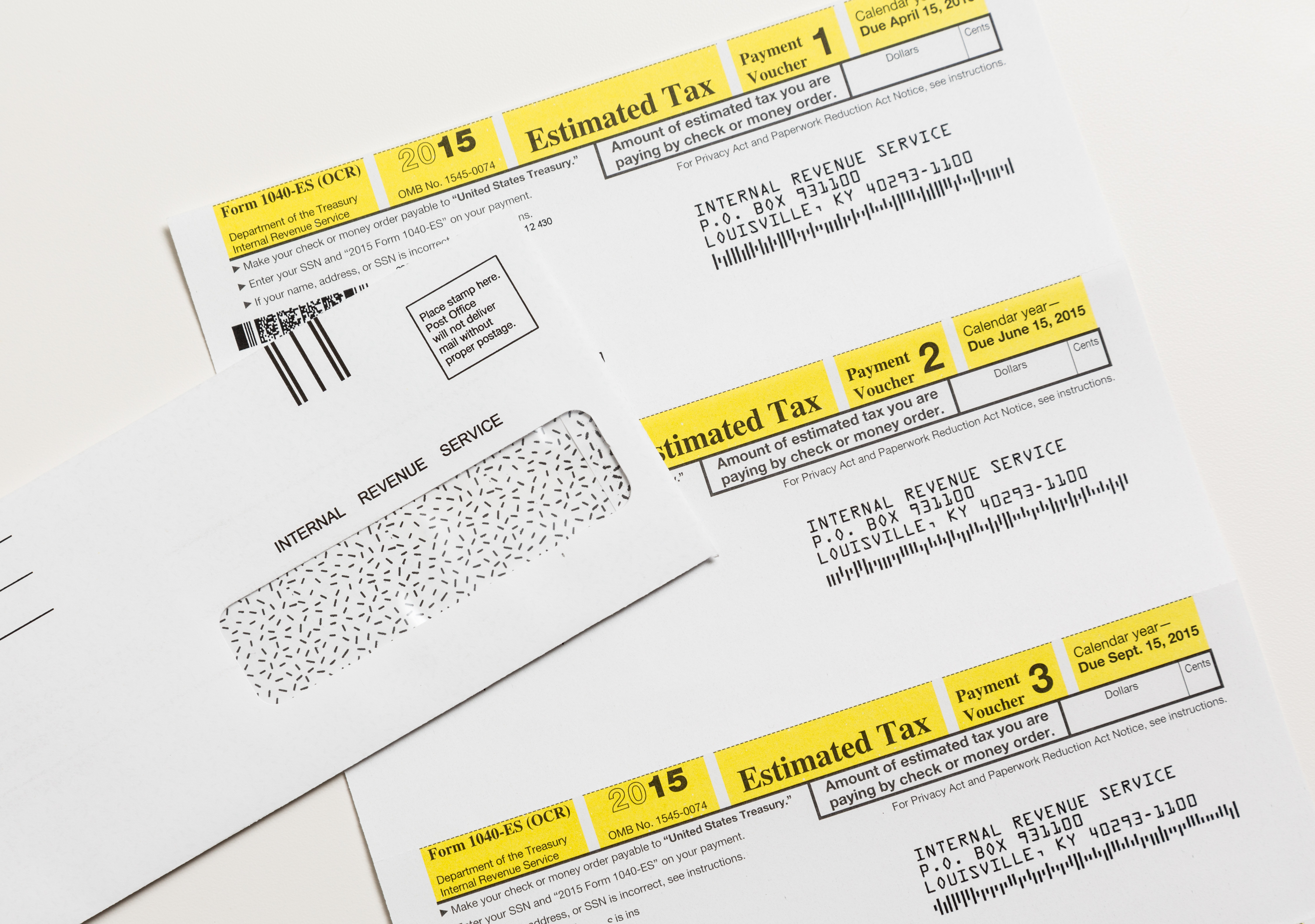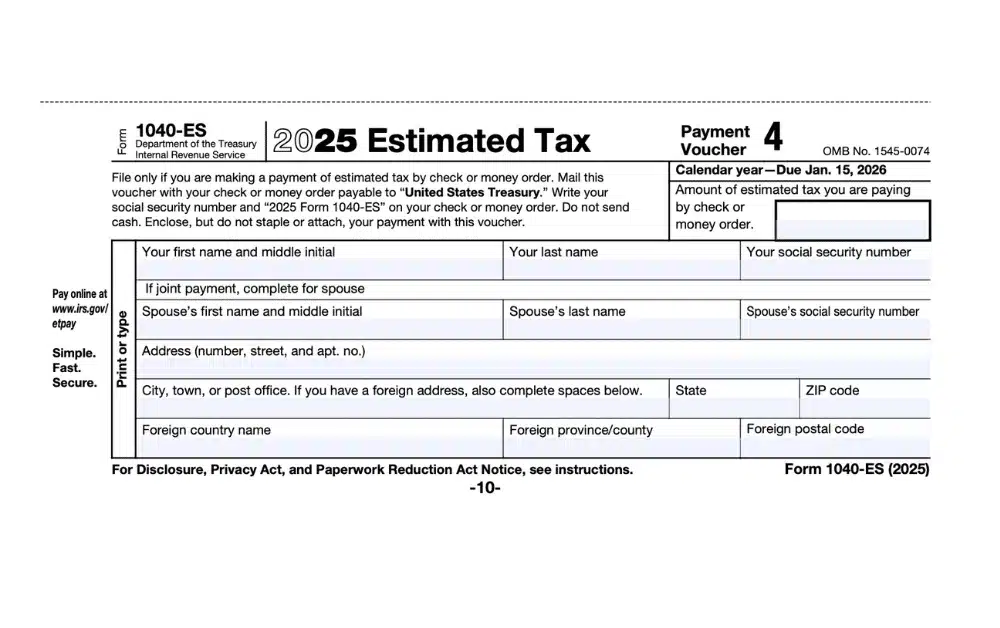
If you have ever sent a chunky estimated tax payment and thought, at least I can deduct that, I get it. Growing up, I watched my parents run an agricultural supply company where cash flow could swing wildly. Writing a big check to the government felt like a business expense because it definitely felt like a business pain.
But on your tax return, the IRS draws a bright line between a tax payment (money you send in) and a tax deduction (something that reduces taxable income). Estimated payments almost always stay on the “payment” side of that line.

Short answer
Federal estimated income tax payments are not a deductible business expense. They are treated as prepayments toward your eventual federal income tax bill.
That means:
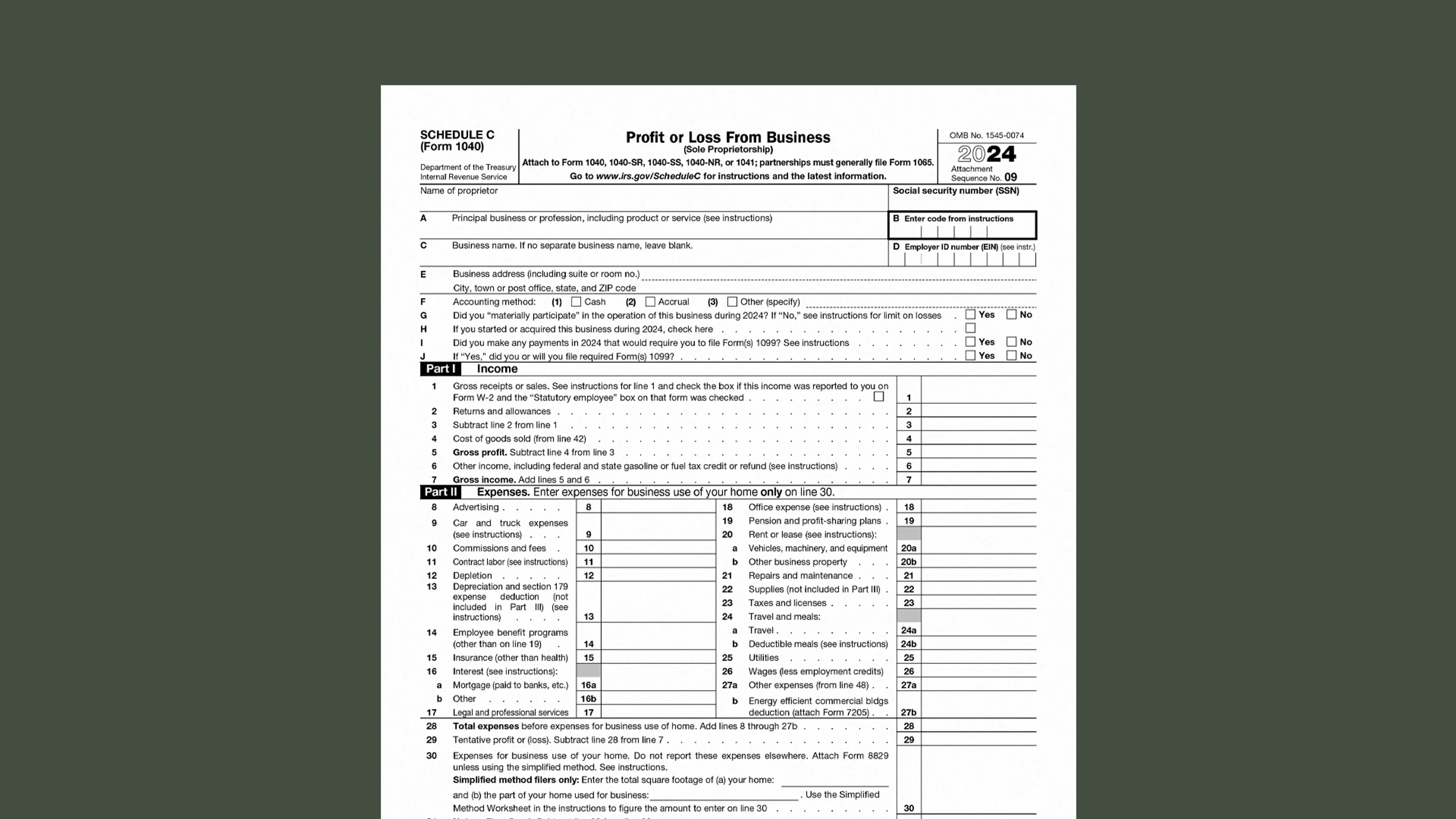
- They do not reduce your Schedule C net profit (the profit that flows to your Form 1040).
- They do not reduce the income used to calculate self-employment tax.
- They show up as payments/credits on your individual return, not as expenses on Schedule C.
Why they are not deductible
For most small business owners, your business is not paying “a business tax” when you send in federal estimates. You are paying your personal federal income tax in advance.
Here is the key concept:
- Deductible expense: lowers taxable income because it is an ordinary and necessary cost of running the business (think software, rent, contractor payments).
- Estimated tax payment: does not change taxable income. It is money applied to the tax you owe after taxable income is calculated.
Even though your estimates are based on business profits, the payment itself is not a “cost of producing income.” It is a personal tax obligation being paid early.
Example: cash sent vs taxable income
Let’s separate what feels deductible from what actually is.
Scenario
Cam runs a one-person design studio as a sole proprietor.
- Cam invoices $120,000 for the year.
- Cam has $40,000 of legitimate business expenses (software, subcontractors, home office portion, etc.).
- Cam sends $20,000 to the IRS during the year as federal estimated tax payments.
What reduces taxable income
Cam’s Schedule C net profit is:
- $120,000 revenue
- minus $40,000 expenses
- equals $80,000 net profit
That $40,000 reduced taxable income because those expenses are part of running the business. The $80,000 net profit then flows to Cam’s Form 1040 and is used (along with other items) to calculate income tax and self-employment tax.
What does not reduce taxable income
The $20,000 sent to the IRS does not make Cam’s net profit $60,000. Cam’s taxable income is still calculated from the $80,000 business profit (then adjusted by other items on the personal return).
Instead, that $20,000 is treated as a payment credit toward the final tax bill. If Cam’s final federal tax due is $22,000, Cam pays $2,000 more at filing time. If the final tax due is $18,000, Cam typically gets a $2,000 refund or applies it forward, depending on the election on the return.
Where it shows up on Form 1040
Estimated tax payments are reconciled on your individual return in the Payments area of Form 1040. They are treated like withholding in the sense that they reduce what you still owe (or increase your refund), but they are not business write-offs.
Federal taxes people confuse with estimates
A quick sorting trick: income taxes are usually not deductible for individuals, but plenty of other business-related taxes can be.
- Employer payroll taxes you pay for employees (Social Security and Medicare match, FUTA, state unemployment) are generally deductible business expenses.
- Penalties are generally not deductible. (Interest rules can vary by context, so if you have interest tied to a tax balance, ask your tax pro how it is treated.)
- The deduction for one-half of self-employment tax is a separate adjustment on your individual return. It is not created by making estimated payments.
State estimated taxes
State estimated income tax payments can be trickier, because “deductible” depends on which tax it is and where you are deducting it.
Common case: personal itemized deduction
For many taxpayers, state estimated income tax payments are treated as part of the state and local tax (SALT) deduction on Schedule A.
A few important limits and timing notes:
- You generally only benefit if you itemize deductions (instead of taking the standard deduction).
- Under current law, the SALT deduction is capped at $10,000 total ($5,000 if married filing separately) for the combined total of state and local income, sales, and property taxes.
- For most individuals, deductibility follows the date paid (cash basis). If you later receive a refund or credit, that can affect what you truly got to deduct.
In plain English: state estimates might help you on your personal itemized deductions, but they typically still are not a business expense on Schedule C.
When a state payment can be a business deduction
Sometimes a payment to a state is not an “income tax on you personally.” It can be a tax on the business or on the privilege of doing business, and those are often deductible as business expenses.
Examples that are often business-level taxes include:
- State gross receipts taxes imposed on the business.
- State franchise taxes or similar entity-level taxes (rules vary a lot by state and entity type).
- Excise taxes tied to certain products or activities.
- Employer payroll taxes (state unemployment taxes, etc.), which are not “estimated income tax,” but are commonly confused with estimates.
If your payment is truly an entity-level tax, it may be deductible on the business return or business schedule. If it is simply an advance payment of your state income tax, it usually belongs with personal taxes (and may or may not benefit you depending on itemizing and caps). When in doubt, confirm with your state’s rules or a qualified tax pro.
S corps, partnerships, and PTET
If you operate as an S corporation or partnership, there is one more wrinkle worth knowing about: many states now offer a pass-through entity tax (PTET) option.
With PTET, the entity (your partnership or S corp) can elect to pay certain state income taxes at the business level. In many cases, that entity-level payment may be deductible on the federal business return, and owners receive a state credit on their personal returns. The details and eligibility vary by state, and the election mechanics matter, so it is worth asking your CPA specifically whether PTET applies to your business.
How to tell what you paid
When I have helped business owners sort this out, I start with one question:
Is the tax calculated on business activity itself, or on the owner’s income?
- Owner income tax: most federal and state estimated income tax payments fall here. Typically not a business deduction.
- Business-level tax: calculated on the entity or the privilege of doing business. Often a business deduction (assuming it is ordinary, necessary, and not otherwise disallowed).
If you are unsure, look at the payment voucher or your state’s online payment portal language. If it says “individual estimated income tax,” treat it as personal. If it references “franchise,” “gross receipts,” “excise,” PTET, or your entity account, it may be business-level.
Common misconceptions
“I paid it from my business account, so it’s a business expense.”
Which bank account you used does not control deductibility. It might affect bookkeeping and owner draw tracking, but it does not turn a personal income tax payment into a deductible expense.
“My CPA told me to set aside 30%, so the payment must be deductible.”
Setting aside cash for taxes is good planning. But planning for a bill is not the same thing as creating a deduction.
“If it’s not deductible, where does it go on my return?”
Federal estimated payments show up as payments on your Form 1040 and are credited against your total tax due. They are not listed as business expenses on Schedule C.
What to do next
If you are a sole proprietor or single-member LLC, the most practical move is to keep your books clean:
- Record federal and state estimated income tax payments as owner draws (or a similar equity account) in your bookkeeping system, not as an expense category.
- Keep taxes that are truly business-level (payroll taxes, certain state entity taxes, PTET if elected and applicable) in expense categories where they belong.
- If you itemize, track state and local taxes paid (including state income tax estimates) for potential SALT deductibility on Schedule A, subject to caps and refund rules.
And if you are operating as an S corporation or partnership, confirm whether any state-level payments you are making are entity-level taxes (including a possible PTET election) versus owner-level estimates, because the reporting can differ.

FAQ
Are quarterly estimated tax payments deductible?
Federal quarterly estimated income tax payments are not deductible. They are prepayments of your federal income tax.
Can I deduct federal estimated tax payments on Schedule C?
Typically, no. Schedule C deductions are for ordinary and necessary business expenses, not for the owner’s federal income tax payments.
Are state estimated tax payments deductible?
Often, state estimated income tax payments may be deductible as part of the SALT deduction on Schedule A if you itemize, subject to the SALT cap and other rules. In limited situations, a state payment may be a business-level tax, or it may be paid at the entity level through a PTET election, depending on the state and the entity.
What if I overpay my estimates?
An overpayment is generally handled as a refund or applied as a credit, depending on elections made on your tax return. The payment itself still is not a business deduction.