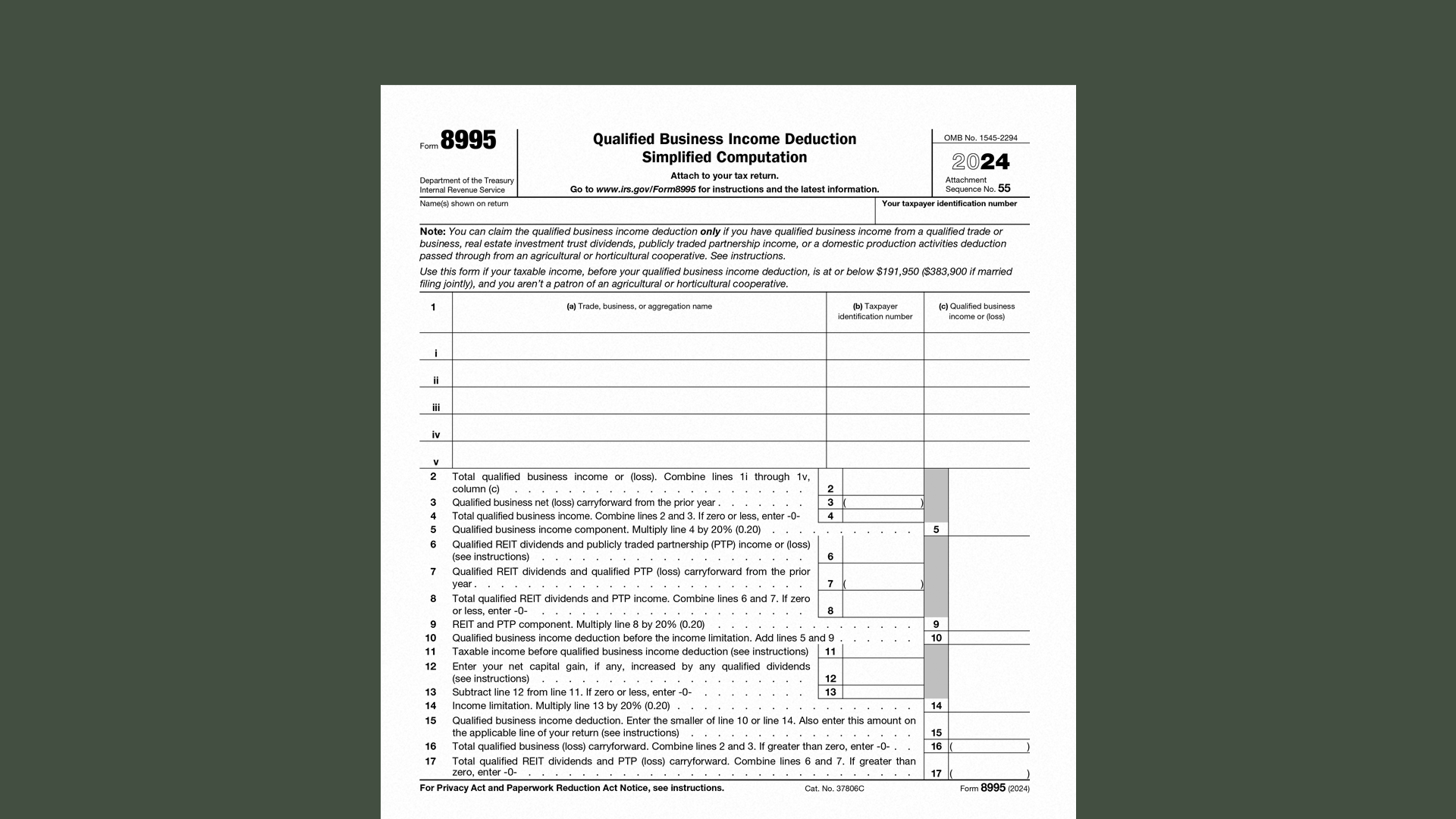
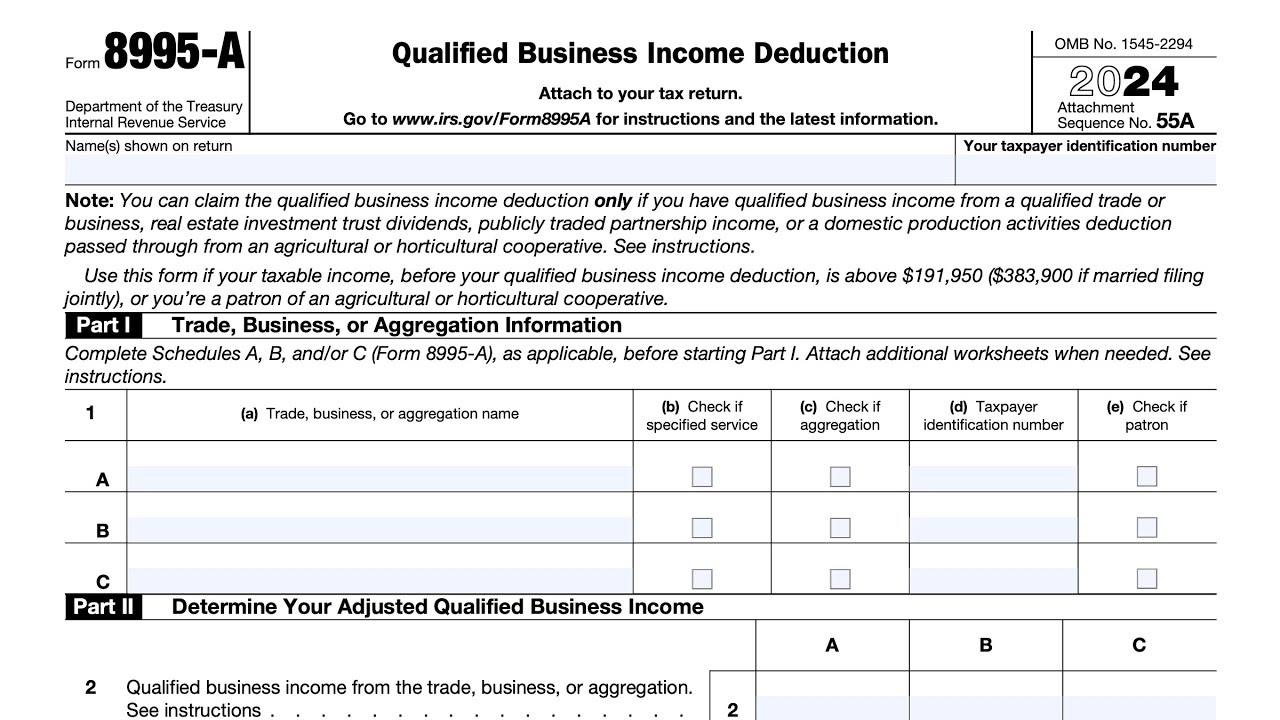
When I work with founders on tax planning, the QBI deduction almost always comes up. It can be worth a lot. Then we hit the question that changes everything: Is your business a Specified Service Trade or Business (SSTB)?
If you are an SSTB, the QBI deduction can start phasing out once your taxable income is above certain IRS thresholds, and it can disappear entirely at higher income levels. If you are not an SSTB, you may still qualify even at higher incomes, subject to the wage and property limits.
One quick but important reminder before we dive in: the phaseout is driven by taxable income (not your QBI), and the thresholds change by filing status and year (they are inflation-adjusted).
This guide walks through the IRS categories that count as SSTBs, explains the reputation or skill rule (the one that snags people unexpectedly), and covers the important exceptions for engineering and architecture. I will also give you borderline examples that mirror what I see in real businesses.

Quick definition: what is an SSTB?
For purposes of the Qualified Business Income (QBI) deduction under IRC Section 199A, an SSTB is a trade or business that fits into one of the IRS listed service categories (health, law, accounting, consulting, and others below), or it falls into the special reputation or skill category as defined in the regulations.
That reputation or skill category is narrower than most people assume. It is not a broad “principal asset” test for any business that depends on talented people. It is focused on specific revenue models such as endorsements, licensing a person’s identity, and paid appearances (more on that below).
Practically, the IRS is drawing a line between:
- Income tied heavily to certain types of services (common SSTBs), and
- Income tied more to products, systems, equipment, or scalable operations (often not SSTBs).
There is also an important nuance: a business can have SSTB activities and non-SSTB activities. Whether you can separate them depends on facts, accounting separation, and how integrated the operations are.
The IRS SSTB categories
The Treasury Regulations under Section 199A spell out SSTB categories. Here is the list most business owners care about, with plain-English descriptions and common examples.
Health
Services performed by physicians, nurses, dentists, pharmacists, therapists, psychologists, and similar professionals providing medical services directly to patients.
- Examples: a dental practice, a physical therapy clinic, a psychiatry practice, a chiropractor.
- Close call: a business that sells medical devices without providing patient care is typically not “health” just because the product is medical.
Law
Legal services performed by attorneys and others who provide legal services under attorney supervision, including activities like arbitration, mediation, and similar legal services.
- Examples: a personal injury firm, an immigration practice, a contract law boutique.
- Close call: a software company selling legal tech is generally not an SSTB under “law” if it is selling a product, not providing legal advice.
Accounting
Accounting services, including auditing, bookkeeping, tax return preparation, and similar work.
- Examples: CPA firms, bookkeeping services, tax prep practices.
- Close call: a firm that sells bookkeeping software is not providing accounting services just by enabling them.
Actuarial science
Actuarial services related to measuring risk, often for insurance and retirement plans.
- Examples: an independent actuary practice, actuarial consulting for insurers.
Consulting
This one is broad. In IRS terms, consulting generally means providing professional advice and counsel to clients to assist in achieving goals and solving problems.
- Examples: management consulting, strategy consulting, HR advisory services, operations consulting.
- Close call: implementation-heavy firms (for example, installing systems) can drift away from “consulting” if they are primarily selling a non-customized product or doing non-advisory work. The mix matters.
Athletics
Services performed by athletes, coaches, and similar professionals.
- Examples: professional athletes, paid coaching businesses where the value is the coach’s personal skill.
Financial services
Providing financial advice, investing and investment management services, wealth management, certain brokerage services, and similar offerings.
- Examples: registered investment advisory businesses, wealth managers, certain broker-dealer services.
- Close call: a payroll company or payment processor is not automatically “financial services” for SSTB purposes. Payments and processing can be something else entirely when the business is operational and technology-driven rather than advisory.
Brokerage services
Bringing buyers and sellers together to complete transactions, often earning commissions or fees.
- Examples: traditional securities brokerage services can fit here.
- Important nuance: the 199A regulations’ definition of “brokerage services” explicitly excludes real estate agents and brokers. In other words, real estate brokerage is not an SSTB just because it is “brokerage.”
Investing and investment management
Investing and investment management, trading, or dealing in securities, partnership interests, or commodities. This covers managers, traders, and dealers where the business is managing or trading financial assets.
- Examples: hedge fund management companies, proprietary trading firms, certain commodity dealers.
Reputation or skill (special category)
This is the catch-all category people misinterpret. The IRS does not mean “my business has a good reputation.” It means you are monetizing an individual’s identity in specific ways, which I will break down next.
The reputation or skill rule
In normal conversation, almost every business owner says, “My business is built on my reputation.” The IRS version is narrower.
Under the regulations, a business falls under the reputation or skill SSTB category if it earns income from one or more of these:
- Endorsements (being paid to promote products or services).
- Licensing or receiving fees for the use of an individual’s name, image, voice, trademark, or other symbols associated with that person.
- Appearances (paid speaking, paid attendance, media appearances where compensation is tied to the individual).
Examples that often qualify
- A social media creator who earns sponsorship income for endorsing products.
- A celebrity chef licensing their name to cookware lines and restaurants.
- A keynote speaker who is paid for conference appearances and personal speaking engagements.
Examples that usually do not qualify
- A local HVAC company with great reviews and strong word-of-mouth. That is business reputation, but not the IRS endorsement, licensing, or appearance revenue model.
- An e-commerce brand where customers trust the brand, not the owner’s personal name.
If your revenue is tied to you as a marketable identity, slow down and analyze this carefully. It is one of the most common surprises for high-earning creators and founder-led media brands.

Exceptions: engineering and architecture
Here is a detail I wish more owners knew earlier: engineering and architecture are explicitly excluded from SSTB treatment as categories in the Section 199A rules, even though they can feel like classic “personal service” professions.
That said, do not take this to mean every engineering or architecture firm is automatically non-SSTB. If the business is really providing another SSTB service in substance (for example, it is primarily “consulting” as defined in the regulations), the exception does not magically override the facts.
Architecture
Architecture services are not SSTBs solely because they are architecture. A firm providing building design and related architectural services can be non-SSTB for QBI purposes, subject to the general QBI limits.
Engineering
Engineering services are also not SSTBs solely because they are engineering. This generally includes traditional engineering disciplines and firms providing engineering design, analysis, and related services.
Why it matters
In real terms, this means two founders with similar income can have very different QBI outcomes if one runs a consulting practice (often SSTB) and the other runs an engineering firm (often not SSTB). The activities, contracts, and how the firm actually delivers value matter.

Borderline businesses
Most businesses are not “mysteries.” A dental practice is health. A CPA firm is accounting. But modern businesses blend services, software, content, and product sales, and that is where owners get stuck.
1) Coaching, courses, and online education
Often depends on what you sell. If you are selling access to your personal expertise via live coaching, paid appearances, or a brand built on your name, the SSTB risk rises. If you sell a scalable product like a course platform subscription, standardized curriculum sold broadly, or tools not dependent on you personally, the analysis can shift.
- Example: A leadership coach who earns most revenue from 1:1 advisory retainers often looks like consulting.
- Example: A company selling a standardized training library to HR departments may look less like consulting if it is primarily a product and not tailored advisory services.
2) Marketing agencies and creative studios
Many agencies provide a mix of strategy (consulting-like) and execution (creative production). If your primary value proposition is advising and strategizing, you may drift toward consulting. If your business is primarily producing assets and running campaigns with measurable deliverables, you may have a stronger non-SSTB argument, depending on facts.
- Example: “We advise executives on go-to-market strategy” sounds like consulting.
- Example: “We produce and deliver video ads and manage placements under a fixed scope” may be more operational than advisory.
3) IT services and software implementation
This is a common gray zone. Pure advice can resemble consulting, but implementation-heavy work can look more like a non-SSTB trade, especially when tied to standardized offerings, recurring managed services, and tools.
- Example: A firm paid primarily for “technology strategy and selection” looks like consulting.
- Example: A firm paid primarily for “managed network monitoring and incident response” may be closer to a non-SSTB service business.
4) Real estate professionals
Real estate often raises SSTB anxiety because of the word “brokerage.” As noted above, real estate agents and brokers are excluded from the SSTB “brokerage services” definition in the 199A regulations.
That does not make all real estate automatically eligible for QBI at high income. Rental real estate activities may be eligible for QBI depending on whether they rise to the level of a trade or business and other factors. Real estate agent commissions and property management fees each have their own analysis.
If you are in real estate, do not assume you are an SSTB or not an SSTB based on a single label. Map your revenue streams and services.
5) Medical-adjacent businesses
Businesses around healthcare can be non-SSTB when they are not providing medical services to patients.
- Example: A company manufacturing braces or selling dental supplies is not automatically “health.”
- Example: A med spa may be “health” if it is providing medical services. State law mostly influences how the services must be provided and structured (who can perform what), while SSTB treatment itself is a federal tax analysis based on the activities.

Mixed SSTB and non-SSTB
Yes, sometimes you can have both. Many modern firms have mixed activities. The IRS also has rules aimed at preventing “cracking” an SSTB into pieces just to qualify for QBI.
Two concepts to know at a high level:
- De minimis rules: if a business has only a small amount of SSTB activity, it may still be treated as a non-SSTB. The thresholds depend on the size of the business (often discussed as an 80 and 50 rule).
- Anti-abuse rules: if there is common ownership and operations are intertwined, the IRS can recharacterize income when a non-SSTB line exists mainly to serve or support an SSTB.
Common mixed-activity scenarios:
- A dental practice that also sells branded dental products online.
- A wealth management firm that also sells a software tool on a subscription basis.
- An attorney who sells paid legal templates as digital products.
If you are thinking about separating activities, this is where you want a tax pro involved early. Ownership, shared employees, shared expenses, and even how you present the offerings to the market can change the answer.
Quick self-check
When you are unsure, I start with three questions:
- What is the customer really paying for? Advice and judgment, or a deliverable, product, or system?
- Is the business scalable without a specific person’s personal brand? If removing the founder name breaks demand, the SSTB risk rises, especially under the reputation or skill rules.
- Which bucket does your revenue fit into? Health, law, accounting, consulting, financial services, investing management, and the reputation or skill category are the most common triggers.
This does not replace a formal analysis, but it gets you pointed in the right direction quickly.
FAQ
If my business is an SSTB, does that mean I cannot take the QBI deduction?
No. SSTB status matters most once your taxable income rises above the IRS threshold range for the year (which varies by filing status and is adjusted over time). Below that range, SSTBs can still qualify. Above it, the deduction phases out and can be eliminated.
Is an LLC or S corp automatically an SSTB?
No. Entity type does not determine SSTB status. SSTB is about what the business does and how it earns money. That said, entity choice can affect planning, payroll, and how other QBI limits apply.
My company provides “advisory” services. Does that automatically mean consulting?
Not automatically, but the word “advisory” is a yellow flag. The IRS looks at the substance: are you being paid mainly to give advice and recommendations, or to produce and deliver measurable non-advisory work?
Does reputation or skill mean any business with good reviews?
No. The IRS uses that phrase in a specific way, focused on endorsements, licensing a personal name or brand, and paid appearances. Being known locally for great service is not, by itself, the rule.
What should I do if I am not sure?
Pull your last 12 months of invoices and categorize revenue by service type. Then compare those categories to the SSTB list above. If you are mixed or borderline, ask your CPA or enrolled agent to evaluate your facts under the Section 199A regulations. The cost of getting it wrong can be a lost deduction, penalties, or messy amended returns later.
Bottom line
SSTB classification is one of those tax details that feels academic until it costs real money. If you are clearly in health, law, accounting, consulting, financial services, investment management, or monetizing a personal brand through endorsements, licensing, or appearances, treat SSTB status as likely. If you are in engineering or architecture, you have an important exception that can keep you out of SSTB treatment as a category, but you still need to sanity-check what you actually do.
And if you are in the gray zone, do not guess. The QBI deduction is too valuable to leave to vibes.