If you have qualified business income (QBI) high enough that you are above the QBI threshold, the QBI deduction can stop feeling like a simple 20% math problem and start feeling like a payroll and fixed-asset scavenger hunt.
This limitation is where I see a lot of smart business owners get tripped up: they focus on net income and miss that, once the wage and UBIA limits start phasing in, W-2 wages (and, in some cases, UBIA) can cap how much deduction you are actually allowed to claim.
Where the wage and UBIA limit fits
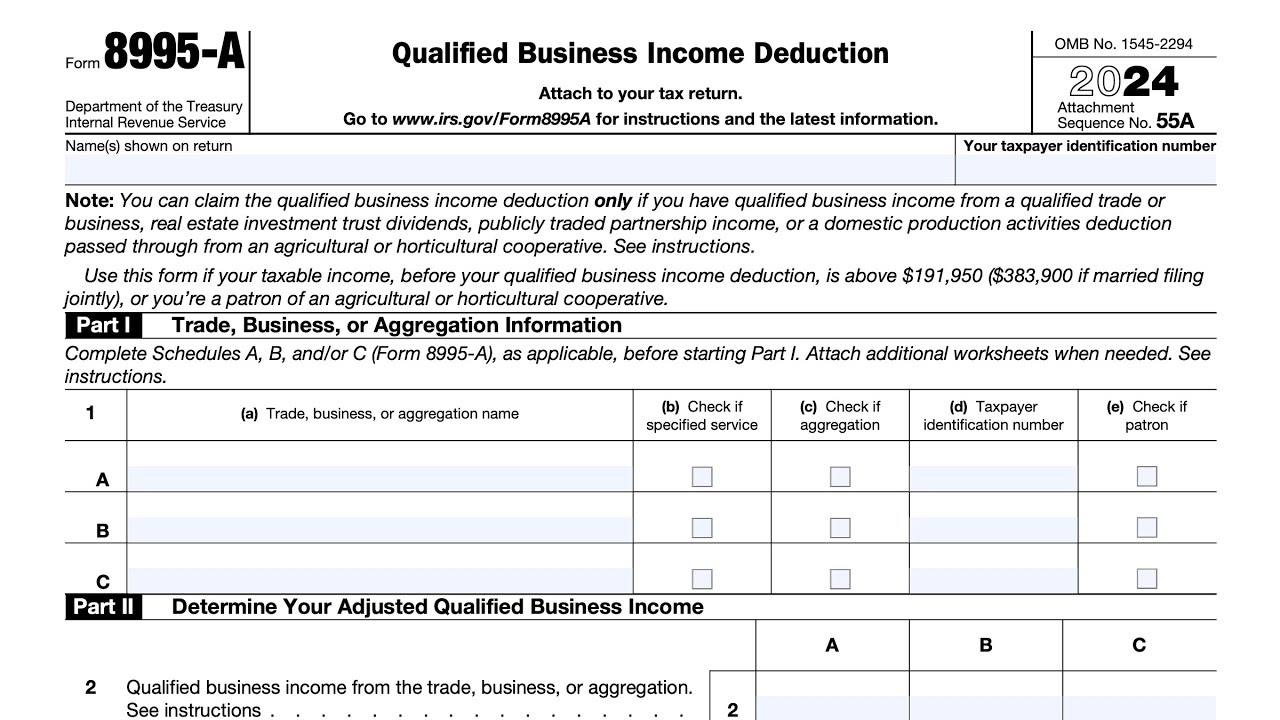
Once you are far enough above the taxable-income threshold for Section 199A, your QBI deduction for each qualified trade or business is generally the smaller of:
- 20% of QBI (for that business), or
- The wage and UBIA limit (for that business).
This page is only about calculating the wage and UBIA limit. Whether you are below the threshold, in the phase-in range, or fully subject to the limit depends on your filing status and taxable income for the year.
One key nuance: the wage and UBIA limit is not a hard cliff at the threshold. It generally phases in across the phase-in range and you are only fully subject to it once you are above the top of that range.
The two tests
The wage and UBIA limitation is the greater of these two amounts, calculated per business:
- Test 1: 50% of the business’s W-2 wages
- Test 2: 25% of the business’s W-2 wages plus 2.5% of the business’s UBIA of qualified property
Then you compare that limitation number to 20% of QBI. The allowed deduction is the smaller of those two.
Step 1: Gather the inputs
1) QBI for the business
QBI is generally the net amount of qualified items of income, gain, deduction, and loss from the qualified trade or business. Practically speaking, most owners start with the business profit from the return (Schedule C, K-1, etc.) and then adjust for items that do not count as QBI.
For this wage and UBIA limit walkthrough, you do not need to perfectly master every QBI adjustment, but you do need the final QBI number per business because the final step compares the limitation to 20% of QBI.
2) W-2 wages for the business
For this limitation, you are using W-2 wages paid by the business, not contractor payments (1099-NEC) and not owner draws. This is one reason S corporations and partnerships often plan owner compensation and payroll differently than sole proprietors.
Also, Section 199A uses a specific definition of W-2 wages (generally wages subject to withholding, with rule-based inclusions and exclusions). In real life, your best source is payroll reporting that ties back to Forms W-2 and quarterly filings, then gets reconciled to what the return is using for the QBI wage limitation.
3) UBIA of qualified property
UBIA stands for unadjusted basis immediately after acquisition. Think of it as the property’s basis right after you bought it, generally before depreciation is taken.
UBIA only counts for qualified property, which is generally tangible, depreciable property that is:
- Held by, and available for use in, the qualified trade or business at the close of the tax year
- Used in the production of QBI
- Still within its applicable period for UBIA purposes (often described as generally the later of 10 years or the asset’s regular depreciable life)
This often includes things like equipment, machinery, computers, furniture, and certain buildings used in the business. Land is not depreciable, so it generally is not qualified property for UBIA purposes.

What makes UBIA tricky
UBIA is not the same as:
- Book value on your financial statements
- Tax basis after depreciation (adjusted basis)
- Fair market value
UBIA is closer to: “What did we put on the depreciation schedule as cost basis when we acquired this property?”
That is why, in many small businesses, your best practical source is your fixed asset or depreciation schedule prepared for tax filing. You are looking for the original cost basis for qualified assets that still count.
Step 2: Run both tests
Test 1: 50% of W-2 wages
Formula: 0.50 × W-2 wages
Test 2: 25% of W-2 wages + 2.5% of UBIA
Formula: (0.25 × W-2 wages) + (0.025 × UBIA)
Pick the greater number
Wage and UBIA limit = the greater of Test 1 or Test 2
Worked example
To make this concrete, we will compute both tests, choose the larger limitation amount, and then compare it to 20% of QBI.
Assume you are above the threshold and fully subject to the wage and UBIA limitation. Your business has:
- QBI: $400,000
- W-2 wages: $120,000
- UBIA of qualified property: $1,600,000
Step A: Compute 20% of QBI
20% of QBI = 0.20 × $400,000 = $80,000
Step B: Compute Test 1 (50% of wages)
Test 1 = 0.50 × $120,000 = $60,000
Step C: Compute Test 2 (25% of wages + 2.5% of UBIA)
25% of wages = 0.25 × $120,000 = $30,000
2.5% of UBIA = 0.025 × $1,600,000 = $40,000
Test 2 total = $30,000 + $40,000 = $70,000
Step D: Determine the wage and UBIA limit
Greater of Test 1 ($60,000) and Test 2 ($70,000) is $70,000.
So the wage and UBIA limit is $70,000.
Step E: Your allowed deduction for this business
Your QBI deduction for this business is the smaller of:
- 20% of QBI: $80,000
- Wage and UBIA limit: $70,000
Allowed QBI deduction (for this business) = $70,000.

What the example shows
In the example, the business is profitable, so 20% of QBI would have been $80,000. But wages were relatively low compared to profit, so the deduction got capped by the wage and UBIA limit.
Also notice how large UBIA can rescue some deduction when wages are modest. That is the whole point of Test 2: capital-intensive businesses often have significant qualified property, even if staffing is lean.
The overall cap you still have to pass
Even if the wage and UBIA math supports a larger deduction, the QBI deduction on the return is also subject to an overall limitation. In plain English, your total QBI deduction is generally capped at 20% of taxable income minus net capital gain.
This is one reason owners can do everything “right” at the business level and still see a smaller final deduction once the return-level limit is applied.
SSTB note
If you are in a specified service trade or business (SSTB), there are additional limitations once you are above the threshold, and the deduction can phase out entirely at higher income levels. The wage and UBIA limit is still part of the landscape, but SSTB status can be the bigger driver of the outcome.
Common pitfalls I see
- Using 1099 contractor payments as wages. They do not count as W-2 wages for this limitation.
- Pulling “net payroll” from bank statements. The limitation is based on W-2 wage concepts, not cash out the door.
- Confusing UBIA with adjusted basis. UBIA starts with cost basis immediately after acquisition, not after years of depreciation.
- Including land in UBIA. Land is generally not depreciable and typically is not qualified property for UBIA.
- Forgetting it is calculated per business. The limitation is applied at the trade or business level and then rolled into the return. Losses, suspended amounts, and aggregation choices can change what ultimately shows up on the final QBI deduction line.
FAQ
Is the wage and UBIA limit always applied?
No. This limitation generally becomes relevant once you are above the income threshold, and it phases in over the phase-in range. If you are below the threshold, the wage and UBIA limit may not restrict your deduction.
If my business has no W-2 wages, can I still get a QBI deduction above the threshold?
Sometimes. If W-2 wages are zero, Test 1 is zero, and the 25% wage component of Test 2 is also zero. The only remaining potential limitation amount would be 2.5% of UBIA, assuming you have qualified property with UBIA. If you have neither wages nor UBIA, the limitation can effectively reduce your deduction to zero above the threshold.
Where do I find UBIA in my records?
Most owners find it in the business’s tax depreciation schedule or fixed asset listing. You are usually looking for the original cost basis of qualified, depreciable property that is still within the applicable period, held at year-end, and used in the business.
Does buying more equipment automatically increase my QBI deduction?
Not automatically. UBIA only matters to the extent you are limited by wages, and you still cannot exceed 20% of QBI for the business or the overall taxable-income limit on the return. Equipment purchases should be made because they support operations, with the QBI impact treated as a planning consideration, not the reason to buy.
A planning note
If you are consistently above the threshold and your QBI deduction is being capped, the conversation usually turns to:
- Whether payroll levels and payroll structure match the reality of the business
- Whether assets are properly tracked and classified so UBIA is not understated
- Whether entity structure is still doing what you want it to do (tax-wise and operationally)
This is a situation where clean bookkeeping and good payroll reporting are not just “nice to have.” They can directly affect your after-tax outcome.