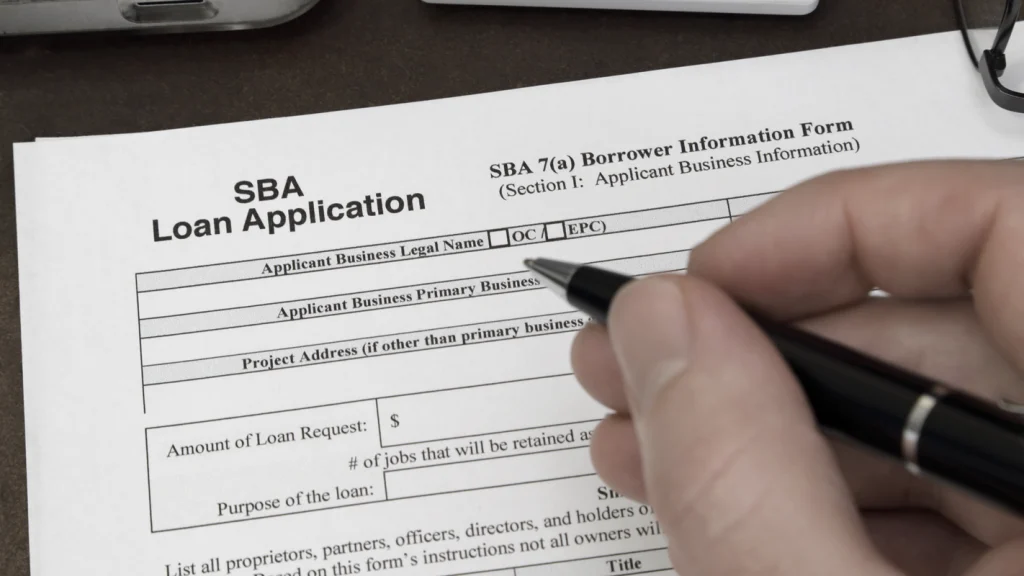
When people hear “SBA loan,” they usually think the SBA itself is approving them. In real life, the SBA sets eligibility and program rules and provides a guaranty, while a bank or other approved lender typically underwrites and makes the credit decision. And lenders love fast ways to sort applications before spending hours in a full file review.
That is where the SBA SBSS score comes in. SBSS stands for FICO Small Business Scoring Service, and it is a blended score some lenders use to quickly gauge risk on certain smaller SBA 7(a) and SBA Express requests.

What SBSS is
The SBSS score is a FICO model designed for small business lending. Instead of looking only at your company’s business credit profile or only at your personal credit, SBSS blends multiple data sources into one number lenders can use as an initial screen.
It is commonly described as a 0 to 300 score range, but how it is used and what score is “good” depends on the lender and the specific SBA workflow.
Think of it like a bouncer at the door. It does not make the final decision by itself, but it helps decide whether the application moves forward to deeper underwriting.
What feeds the SBSS score
SBSS is built to evaluate a small business that might not have a long track record of formal borrowing. In practice, it can pull from several buckets of information:
- Personal credit for the principal owners, such as payment history, utilization, inquiries, and major derogatory marks (the same kinds of factors that drive consumer credit scoring).
- Business credit bureau data from commercial reporting agencies, which may include trade lines (vendor accounts), payment experiences, liens or UCC filings, and public record items tied to the business.
- Application and firmographic details that often show up on a loan application, like time in business, industry, ownership structure, and other basic business identifiers. Not every lender feeds the model the same way, but the concept is consistent: SBSS is meant to reflect the total credit picture.
One important mindset shift for founders is this: your business credit and personal credit are not separate worlds when you apply for SBA financing, especially on smaller requests. SBSS formalizes that reality.

How lenders use SBSS
Some lenders use SBSS as an early screening tool on higher-volume, smaller-dollar SBA workflows. Others do not use it at all. When it is used, it is often applied early in the process, before a file gets a deeper manual review.
What a cutoff is
A cutoff is a minimum SBSS score a lender wants to see before the file moves forward. If the score comes in below that internal threshold, the lender may:
- Decline quickly with limited additional review
- Ask for more information or more collateral support
- Steer you to a different product or a smaller request
Cutoffs vary by lender and program, and they can change over time with risk appetite and policy. The key takeaway is that SBSS is often used early, sometimes before a human has read your narrative about the business.
SBSS is not the whole story
Even if you clear the SBSS bar, lenders typically still underwrite the fundamentals: cash flow, debt service coverage, liquidity, collateral (if applicable), management experience, and the specific use of proceeds. Passing SBSS just means you earned a closer look.
A realistic example
Let me introduce you to a hypothetical applicant I see all the time in my work with entrepreneurs: Maya.
Maya owns a two-year-old home services business in Chicago. She wants an SBA Express line of credit to smooth cash flow and cover upfront material costs during a busy season. She has:
- A decent personal credit history overall, but one late payment from last year
- Thin business credit, because she has mostly used a debit card and vendor terms that do not always report
- A few recent credit inquiries from shopping for financing
When Maya applies, the lender pulls information that can feed SBSS. If her blended profile lands below the lender’s SBSS cutoff, her application may be declined before a full financial review, like a detailed look at bank statements.
If she clears that screening step, the lender is more likely to request the full package and evaluate cash flow, existing debt payments, and whether the line size makes sense for her revenue.
The practical lesson: SBSS tends to favor profiles with strength on both sides of the credit house, personal and business, and with fewer negative marks leading up to an application.
What can pull SBSS down
Because SBSS blends consumer and commercial credit signals, the usual suspects show up again and again:
- Late payments on personal accounts or business trade lines
- High personal utilization on revolving credit, especially if balances are near limits
- Thin or unreported business credit, where the business has few reporting trade experiences
- Derogatory public records tied to the business or owner
- Too many recent inquiries, which can signal financial stress or rapid credit seeking
- Inconsistent business identity data (for example, mismatched addresses, entity names, or EIN details across vendors and bureaus), which can make a business file harder to match and score cleanly
Improve SBSS readiness
You usually cannot game SBSS, but you can strengthen the inputs it relies on. If you are within a few months of applying for an SBA loan product that uses screening, these moves tend to help the most.
1) Clean up personal credit first
For many small businesses, the owner’s personal credit is still the strongest and most established dataset in the mix. Prioritize:
- On-time payments, no exceptions
- Paying down revolving balances, ideally before statement closing dates
- Avoiding unnecessary new accounts and hard pulls right before applying
2) Build business credit that reports
A common frustration is that an owner thinks they have vendor accounts, but nothing shows up on a commercial report. Focus on trade lines that report, keep terms current, and make sure your business info is consistent everywhere.
3) Tighten your business identity
From my consulting days, I can tell you this is the unglamorous work that prevents real headaches. Use one consistent version of:
- Legal business name and DBA (if applicable)
- Address and phone number
- EIN and entity type
Inconsistencies can lead to fragmented reporting, which can weaken the profile a scoring model sees.
4) Apply with clean numbers
SBSS might be a gatekeeper, but underwriting still matters. Before you apply, make sure your financials and documentation are organized and defensible:
- Year-to-date P&L and balance sheet that reconcile to bank activity
- A clear use of proceeds tied to business needs
- A realistic requested amount that fits your revenue and margins
What SBSS is not
- Not your personal FICO score. SBSS is a blended small business lending score, even though it can incorporate personal credit factors.
- Not an SBA eligibility pass. You can have a strong score and still fail on cash flow, time in business, documentation, or other lender policy requirements.
- Not universal. Some lenders and products rely more heavily on manual underwriting, while others use automated prescreens where SBSS is more likely to appear.
Can you check SBSS yourself?
Most owners can easily access their personal credit scores and can purchase business credit reports, but the SBSS score itself is not always presented to borrowers in a simple, standardized way.
If you are working with a lender, you can ask directly whether they use SBSS for initial screening on the product you want, and whether there are steps you should take before they run scoring and underwriting. Some lenders will give high-level guidance even if they do not disclose the exact number.
In the meantime, you can still do meaningful prep by monitoring your personal reports for errors, reviewing your business bureau files for mismatches (name, address, EIN), and making sure your trade lines are reporting as expected.
SBSS vs. personal credit rules
SBSS is a blended small business scoring model. Separately, many lenders also apply their own personal credit overlays when deciding whether to approve and on what terms.
Those are related but not identical concepts. SBSS is about quick risk screening using blended data. A personal credit overlay is a lender policy about borrower eligibility and risk tolerance. In real underwriting, both can matter.
Quick FAQ
Is SBSS only for SBA loans?
SBSS is commonly discussed in the SBA context because it is used as a screening tool on certain SBA 7(a) and Express workflows. The broader concept, using blended scoring for small business lending, exists outside SBA too.
If my business is new, can I still have an SBSS score?
Often, yes. SBSS was designed for situations where the business file may be thin, which is why personal credit signals can carry meaningful weight in the blend.
If I get declined, does that automatically mean SBSS was the issue?
Not automatically. Declines can be driven by cash flow, time in business, industry risk, documentation gaps, or lender policy. But on smaller, high-volume requests, SBSS can be a common early filter, so it is worth treating it as part of your pre-application checklist.
The bottom line
The SBA SBSS score is essentially a fast, blended snapshot of borrower risk. It can pull from both business and personal credit signals, and some lenders use it as a cutoff before committing staff resources to a full underwriting review.
If you are planning a smaller SBA request where screening is likely, the best strategy is to prepare like SBSS will be checked early: keep personal credit spotless, build reporting business credit, and make your business identity and financials easy to verify. That combination gives you the best chance of getting past the first gate and in front of a real underwriter who can evaluate the full story of your business.