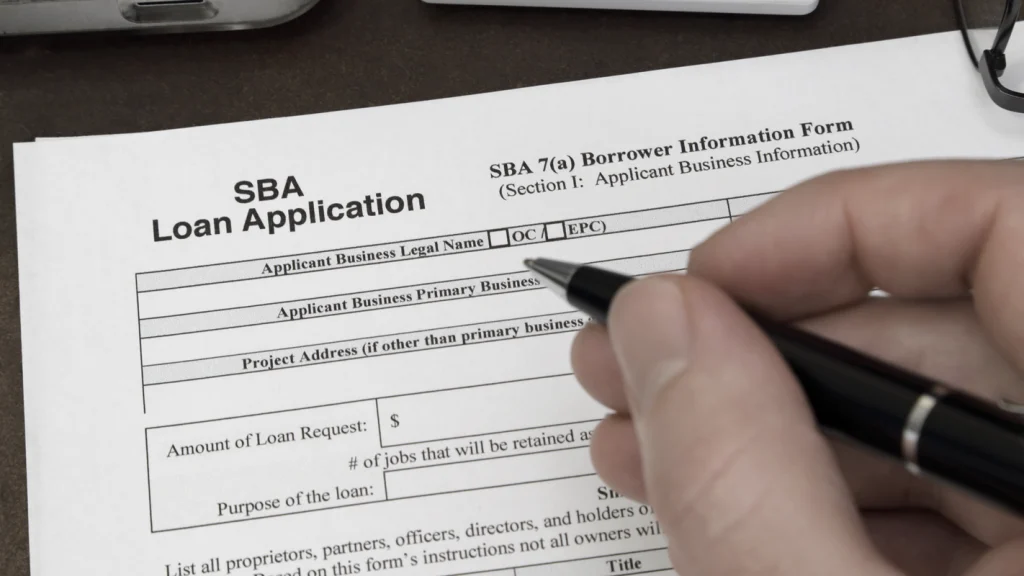
I grew up watching my parents run an agricultural supply company where cash flow could swing wildly with planting seasons, inventory deliveries, and customer payment cycles. When money was tight, the biggest stress was never the long-term plan. It was whether there was enough working capital to make payroll, place the next inventory order, and keep the lights on.
That is exactly the lane the SBA 7(a) program often plays in. But once you know you want a 7(a), there is still a practical question borrowers miss until the last minute: do you go standard 7(a), or do you use the SBA Express lane?
They are both 7(a) loans. The difference is how much decision authority the lender has, how fast the process tends to move, and how much you can borrow. Here is how to decide, without getting lost in jargon.

Express vs standard 7(a) in plain English
Standard SBA 7(a) is the flagship option. It is built to handle larger requests and more complex deals, with more documentation, more steps, and often a longer path to closing.
SBA Express is a streamlined version inside the 7(a) umbrella. The SBA gives the lender more authority to approve and process the loan, with the tradeoff that the loan size is capped lower and the SBA guarantee is typically smaller.
Think of it like the same airport, same destination, but different security lines. You still need a boarding pass and a bag that meets the rules. The Express line can move faster because it is designed to.
Quick comparison
| Feature | SBA Express | Standard SBA 7(a) |
|---|---|---|
| Maximum loan amount | Up to $500,000 | Up to $5,000,000 |
| Lender decision authority | More delegated authority to the lender | More SBA involvement depending on lender status and structure |
| Turnaround time | Often faster for straightforward working-capital requests | Often slower, especially for larger or more complex deals |
| SBA guarantee | Typically lower than standard 7(a) | Typically higher than Express |
| Collateral expectations | May be lighter for smaller requests, but collateral can still be required | Collateral commonly expected when available, especially as amounts rise |
| Pricing | Often higher in-market, though still subject to SBA maximums | Often more competitive, especially for strong borrowers and larger loans |
Now let us unpack each of these like a lender would, because the nuance is where you either save time or waste a month.
Maximum amount
The cleanest dividing line is the cap.
- SBA Express: up to $500,000.
- Standard 7(a): up to $5,000,000.
If you are financing a business acquisition, buying equipment plus working capital, or refinancing expensive debt with a meaningful cash-out component, Express often runs out of runway.
Express shines when the need is real but contained, like a working-capital infusion, a smaller tenant improvement buildout, or a modest expansion that does not require a seven-figure loan.
Quick caveat: program caps and subprogram rules can change over time. Always confirm current limits with your lender or the SBA before you build a deal around a number.
Decision authority
In SBA lending, speed is often less about your urgency and more about how many touchpoints the file needs. SBA Express was created to give lenders more delegated authority to make decisions and move the loan along.
If you want to be precise, the SBA may be able to turn an Express response faster, but your total timeline still depends on lender underwriting, documentation quality, and closing requirements.
That delegated authority is one reason Express can be attractive when:
- You have a time-sensitive inventory buy.
- You are bridging a slow receivables cycle.
- You want to consolidate a few high-interest balances quickly.
That said, delegated authority does not mean no underwriting. You still need a lender that likes your cash flow, your credit profile, and your story.

Guarantee and why it matters
One reason Express can feel different behind the scenes is the SBA guarantee percentage. Express typically carries a lower SBA guarantee than standard 7(a). That can influence how a lender views risk, how aggressively it prices the loan, and how picky it is about structure.
You do not need to memorize the exact percentages to make a good decision, but it is worth asking a simple question early: What SBA guarantee percentage applies to this structure, and how does that affect terms?
Collateral
Many borrowers hear “Express is easier” and assume “Express is unsecured.” That is not a safe assumption.
Here is the more accurate way to think about it:
- Both Express and standard 7(a) can require collateral.
- SBA collateral policy is not purely discretionary. Lenders are generally expected to take available collateral when it is reasonable to do so, and a loan is not necessarily declined just because collateral does not fully cover the request if cash flow supports repayment.
- For working-capital loans, lenders often look first at business assets (like receivables and inventory) and may also consider personal assets depending on the overall credit picture.
The borrower-friendly takeaway: collateral is one lever, not the only lever. Cash flow, DSCR, credit history, time in business, and how clean your documentation is can matter as much or more for approval and terms.
Turnaround time
Borrowers understandably ask, “Which one is faster?” My honest answer is: Express is typically faster for simple requests, but either path can slow down if the file is messy.
Very rough ballpark, with a big disclaimer that lender and complexity dominate:
- Express: often days to weeks for a straightforward working-capital request with clean documentation.
- Standard 7(a): often weeks to months for larger loans, acquisitions, real estate, or anything with multiple moving parts.
The biggest causes of delays I see are not the SBA program choice. They are:
- Incomplete financial statements or outdated year-end numbers.
- Tax returns that do not match the story you are telling in the application.
- Unexplained deposits, owner draws, or one-time expenses that are not clearly documented.
- A business plan that does not connect the use of funds to a credible repayment path.
If you want speed, choose the option that fits your size, then act like a closer: deliver clean documents quickly and answer underwriting questions directly.
Pricing and fees
Pricing varies lender to lender, and your rate is shaped by your risk profile and structure. But as a general pattern, Express loans often price higher than a standard 7(a) loan, partly because the convenience and smaller balance can come with a higher margin.
One important nuance: SBA 7(a) and Express pricing is not a free-for-all. The SBA sets maximum allowable interest rate spreads (the cap depends on factors like loan size and maturity). Many lenders still price Express near the max, but not all do.
Fees matter too. SBA-guaranteed loans can include SBA guaranty fees and lender or third-party closing costs. The fee schedule can change, and the fee impact can differ by loan size and structure.
If you are comparing offers, ask for a simple worksheet that shows:
- Rate and expected monthly payment.
- Upfront SBA guaranty fee, if applicable.
- Lender fees, packaging fees, and estimated third-party costs.
- Total cash needed at closing.
Then compare total cost over a realistic holding period, not just the rate on day one.
Working-capital example
Let us use a simple, realistic working-capital scenario.
The situation
A five-year-old specialty food distributor has a chance to lock in favorable pricing on a large inventory purchase. The distributor also wants a small cushion for payroll and delivery expenses during the selling season.
- Inventory buy and freight: $260,000
- Seasonal payroll buffer: $90,000
- Marketing and trade promos: $50,000
- Extra cushion for slow-paying accounts: $75,000
Total need: $475,000
How Express might fit
At $475,000, this request is inside the Express cap. If the borrower has solid historical cash flow and clean books, Express can be a strong match because it aligns with a contained, time-sensitive working-capital use.
The upside: you may get to a yes faster and fund before the inventory window closes.
The downside: pricing might be a bit higher, and the lender may still require collateral and guarantees depending on the risk.
When standard 7(a) is the better move
Now imagine the same borrower also wants to refinance $400,000 of short-term debt that is squeezing cash flow. The total request becomes $875,000. Express is no longer an option because of the cap, and standard 7(a) becomes the path by default.
Even if the total is under $500,000, standard 7(a) can still be smarter when you are not truly time constrained and you want to optimize long-term cost and structure.
How to choose
- Choose SBA Express if: you need $500,000 or less, timing matters, and your request is straightforward working capital or a small expansion with clear repayment.
- Choose standard 7(a) if: you need more than $500,000, your deal is complex (acquisition, partner buyout, multi-part refinance), or you can wait a bit longer for potentially better economics.
If you are on the fence, I like this question: What is the cost of waiting? Not emotionally. In dollars. Lost margin, lost contracts, missed inventory pricing, delayed hiring. Put a number on it, then compare that cost to the likely pricing difference between Express and standard 7(a).

What lenders look for
Regardless of Express or standard 7(a), you will usually have a smoother process if you can clearly show:
- Repayment ability: consistent cash flow and a reasonable debt service cushion.
- Good documentation: recent financials, tax returns, debt schedules, and an explained use of funds.
- Ownership stability: clear ownership structure and any partner agreements ready to review.
- Credit profile: no surprises, and an explanation for any past issues.
- Guarantees: expect personal guarantees from owners at or above key ownership thresholds, which is common in SBA lending.
The SBA typically guarantees loans made by banks and other approved lenders. It usually does not lend directly under 7(a). Your lender is still making a credit decision, and your job is to make that decision easy to defend.
One more nuance that saves time: not every refinance qualifies automatically. SBA refinance eligibility can be rule-driven, and change-of-ownership and acquisition deals have their own requirements. If refinance is part of your plan, raise it early so the lender can confirm it fits SBA rules before you burn a few weeks on packaging.
FAQ
Is SBA Express easier to get than a standard 7(a)?
Not automatically. Express is often faster and can be simpler at smaller amounts, but lenders still underwrite the loan. A weak cash flow story is a weak cash flow story in any lane.
Do I need collateral for an SBA Express loan?
You might. Some borrowers are approved with limited collateral depending on the request size and strength of the file, but it is not accurate to assume Express equals unsecured.
Can I use SBA Express for working capital?
Yes. Working capital is one of the most common uses, especially when the amount is within the $500,000 cap and the use is well-defined.
If I qualify for standard 7(a), should I still consider Express?
Yes, if speed matters and your total need is under $500,000. If you are comfortably under the cap and the request is straightforward, Express can be a practical fit.
The bottom line
If you already know you want an SBA 7(a) loan, your next decision is not about the program. It is about the delivery lane.
Express is best when the amount is modest and speed has real business value. Standard 7(a) is best when you need more dollars, more flexibility, or you want to optimize long-term cost and structure.
If you can answer three questions clearly, you will usually know which lane fits before you ever talk about interest rates: how much you need, what the funds will do for the business in the next 90 days, and what it costs you if you wait.