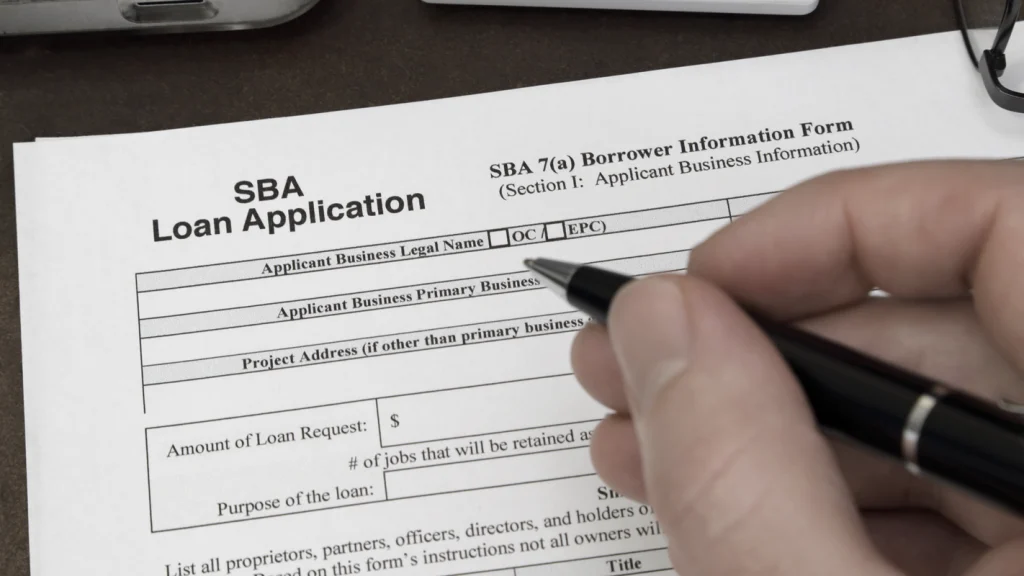
If you are building a startup, the SBA 7(a) loan program can look like the holy grail: long terms, competitive rates, and funding that can cover a lot more than just equipment. The catch is that many founders hear “SBA” and assume it is either (1) only for established companies or (2) essentially guaranteed if you have a good idea.
Reality is in the middle. A startup can get an SBA 7(a) loan, because SBA rules do not set one universal minimum time in business. But many lenders do set their own minimums, and the underwriting for a pre-revenue startup is simply tougher than for a company that already has sales.

Growing up, I watched my parents run an agricultural supply company where one delayed shipment could ripple into payroll stress and tough talks with the bank. That experience is why I am so blunt with founders now: lenders do not finance ideas. They finance repayment plans. Your job, as a startup borrower, is to make repayment feel boring and inevitable.
The short answer
Yes, a startup can qualify for an SBA 7(a) loan, but it is often challenging for a true pre-revenue business unless the owners bring strong outside income, relevant experience, meaningful cash into the deal, and a plan that is realistic down to the month-by-month cash flow. Results vary widely by lender, industry, and how the deal is structured.
Many founders also mix up two different scenarios:
- Starting something brand-new (often pre-revenue): underwriting leans heavily on you, your cash injection, your experience, and conservative projections.
- Buying an existing business or franchise: there is operating history to analyze, which often makes approval easier, even if the buyer is “new.”
Basic eligibility
Before you get deep into projections and packaging, make sure the deal fits the program. In broad terms, SBA 7(a) loans are for for-profit U.S. small businesses that meet SBA size standards and can show a legitimate business purpose and a reasonable ability to repay. Some industries and uses are ineligible or heavily restricted, and lenders may have their own “no-go” categories on top of SBA rules.
If you want the cleanest source for the fine print, ask your lender what version of the SBA Standard Operating Procedure (SOP) they are using for 7(a) eligibility and underwriting. That SOP drives a lot of what lenders will and will not do.
SBA rules vs lender rules
The SBA 7(a) program is delivered through banks and non-bank lenders. The SBA provides a guaranty to the lender on a portion of the loan, but the lender is still the one deciding whether you are a good credit risk.
No universal time minimum
You may see broad statements online like “you need two years in business.” In practice, that is usually a lender preference or a credit policy, not an across-the-board SBA rule.
Lenders often require it anyway
Plenty of SBA lenders are optimized for lower-risk files. A simple way to reduce risk is to require:
- 12 to 24 months of operating history
- Tax returns showing revenue stability
- Cash flow that already supports debt service
If your business is pre-revenue, you are not “unqualified” by the SBA program. You are just outside what many lenders want to approve quickly.
Practical takeaway: if one lender says no because you are too new, that is not always the end of the road. It often means you need a different lender, a stronger structure, or both.
Terms and rates
Founders hear “long term” and “competitive rate” and assume that means one simple thing. It does not. SBA 7(a) terms depend on what you are financing. Working capital and many equipment loans are often structured up to 10 years, while owner-occupied real estate can go up to 25 years. Rates are commonly variable and tied to Prime plus a lender spread within SBA maximums. Your exact pricing still comes down to the lender, the structure, and the risk profile.
How underwriting works for pre-revenue
When there is no revenue yet, underwriting shifts from “prove it with history” to “prove it with structure.” Here is what typically matters most.
1) Use of proceeds and repayment
7(a) loans can be used for many purposes, including working capital, equipment, leasehold improvements, and business acquisition, which is one of the most common uses. For a startup, the lender wants to see that each dollar directly supports a path to cash flow.
Examples that underwriters can get comfortable with:
- Equipment that is essential to deliver a contracted service
- Build-out for a location with a signed lease in a proven market
- Working capital sized to a documented ramp-up period
Red flags include vague “marketing and growth” line items with no unit economics behind them.
2) Realistic projections
Startups do need projections, but not the “hockey stick” kind.
Strong SBA-style projections usually include:
- Monthly projections for at least year one (many lenders want 24 months)
- Assumptions tied to capacity, pricing, and conversion rates
- Seasonality and ramp time acknowledged
- A break-even analysis you can explain without squirming
Here is the test I use with clients: if you had to cut revenue assumptions by 25% tomorrow, would the business still be able to make the loan payment? If the answer is no, the lender will likely have the same concern.
3) Equity injection
For startups, lenders commonly look for a meaningful equity injection from the owners. There is no single number that fits every file, but a lot of lenders treat 10%+ as a starting point for many startup or change-of-ownership transactions, and higher-risk profiles can push that number higher.
- More risk equals more equity.
- Pre-revenue usually means a higher injection than an established business purchase.
Equity injection is not only about lowering the loan amount. It is also about showing commitment and giving the business more cushion if the ramp takes longer than expected.
4) Relevant experience
If you have never operated in the industry, lenders may still consider the loan, but they will look for offsets such as:
- A partner or hired manager with direct experience
- Documented training from a franchise or vendor
- Advisory support that is real, specific, and ongoing
5) Personal credit and global cash flow
In a startup file, the lender often underwrites the owners almost like co-borrowers on a mortgage. They may evaluate:
- Personal credit history and recent delinquencies
- Cash reserves after closing
- Outside income that can support payments during ramp-up
This is one reason startups with a strong W-2 household income sometimes fare better than founders who have already quit their jobs with minimal savings.
6) Personal guarantees
Most SBA 7(a) lenders require personal guarantees from owners at or above common SBA ownership thresholds (often 20% and up). In practical terms, that means your personal credit and personal cash flow matter. It also means the lender is looking at the full household balance sheet and the full set of obligations, not just your pitch deck.
Pre-revenue vs new owner
Two businesses can both be “new” in a casual sense, but lenders view them very differently.
Pre-revenue startup
The lender is making a bet that:
- The market demand exists
- You can execute
- The ramp-up timeline is accurate
- The business will reach stable cash flow before reserves run thin
Because none of that is proven in your books yet, the structure has to carry the risk.
Business acquisition
If you are buying an existing company, underwriting can rely on:
- Historical financial statements and tax returns
- Customer concentration and retention patterns
- Margin stability
- Debt service coverage based on prior cash flow
Even if you are a first-time owner, the business has a track record. That is why acquisitions are often a smoother fit for SBA 7(a) than true startups.
A realistic example
Let us say Maya wants to open a boutique physical therapy studio in a dense Chicago neighborhood. She is pre-revenue, but she is not starting from zero experience.
Maya’s basics
- Licensed physical therapist with 10 years of experience, including management
- Signed lease for a small space with reasonable build-out needs
- Target customers: runners and active adults within a 2-mile radius
- Requested SBA 7(a) loan: $250,000 for build-out, equipment, initial payroll, and working capital
What strengthens the story
- Equity injection: She brings $75,000 in cash, reducing loan size and signaling commitment.
- Conservative ramp: Her projections start with a low visit count and scale based on capacity and realistic marketing conversion.
- Documented demand: She has referral conversations documented with two local sports medicine practices and a running club partnership.
- Cash cushion: She keeps personal reserves after closing, plus her spouse’s stable income covers household bills.
How the lender thinks
The lender is not expecting perfection. They are looking for:
- Enough working capital to survive a slower ramp
- A credible path to break-even
- Owners who can manage the business and the money
Maya’s file is still “startup risk,” but it is the kind of risk a lender can model and mitigate.
What to prepare
If you want a lender to take a pre-revenue 7(a) request seriously, these items are the basics.
Business materials
- Sources and uses table (exactly where funds go)
- Two-year monthly cash flow projection (at least year one monthly)
- Profit and loss projection and assumptions
- Break-even analysis
- Pricing model and capacity constraints
Personal financial package
- Personal financial statement (assets, liabilities, liquidity)
- Two to three years of personal tax returns
- Resume showing industry and leadership experience
- Explanations for any credit issues, concise and factual
Evidence your revenue plan is real
- Signed contracts or letters of intent where possible
- Market research tied to your specific location or niche
- Vendor quotes for equipment and build-out
- Lease terms, including rent escalations and tenant improvement clauses
How long it takes
SBA loans are not usually “fast money,” and startups are rarely the fastest files in the stack. Timelines vary by lender, responsiveness, and deal complexity. Expect substantial documentation, follow-up questions, and a process that can stretch out if appraisals, leases, build-out bids, or ownership structure details are still moving targets.
My advice: treat speed as a byproduct of preparation. Clean numbers and clear assumptions do more for timing than “checking in” every two days.
Common denial reasons
- Under-capitalization: not enough cash injected, and not enough reserves to survive a slower ramp.
- Optimistic projections: revenue ramps too fast without a believable acquisition plan.
- Weak global cash flow: owners do not have outside income or savings to support early months.
- Credit red flags: recent late payments, high utilization, or unresolved collections.
- Industry risk: certain concepts can be harder due to volatility, thin margins, or regulatory issues.
- Collateral issues: SBA policy generally expects lenders to take available collateral, and a collateral shortfall is not automatically a decline. In the real world, though, a weak collateral position can still lead to a no depending on lender policy and overall strength of the file.
If you are too early
A “not now” from a lender is often a timing and packaging issue, not a permanent no.
Build proof points
- Start with signed customer commitments, even small ones
- Run a pilot program to prove unit economics
- Track metrics that matter (CAC, conversion, retention, gross margin)
Reduce the loan amount
- Phase the build-out
- Delay non-essential hires
- Negotiate vendor terms or used equipment
Consider acquisition
If your goal is ownership and cash flow, buying an existing operation can sometimes be easier to finance under 7(a) than launching a concept from scratch.
FAQ
Do startups need two years in business for an SBA 7(a) loan?
Not as a universal SBA rule. Many lenders prefer two years of operating history, but that is typically a lender credit policy.
How much down payment does a startup need?
Many lenders look for 10%+ as a starting point in a lot of startup situations, with higher percentages for higher-risk profiles. The exact amount varies by lender, industry risk, and overall borrower strength.
Can I get a 7(a) loan with no revenue?
It is possible, but you will be underwritten as a higher-uncertainty case. Lenders lean heavily on experience, cash injection, liquidity reserves, global cash flow, and conservative projections.
Is it easier for a purchase than a startup?
Often, yes. A business purchase usually comes with historical financials and demonstrated cash flow, which can be easier to underwrite than a pre-revenue launch.
The bottom line
An SBA 7(a) loan is not reserved only for long-established businesses. But startups have to earn lender confidence in other ways: strong owner credentials, credible projections, enough cash in the deal, and enough reserves to make the early months survivable.
If you are pre-revenue, the goal is to make your loan request feel less like a leap of faith and more like a well-structured, well-capitalized plan with realistic timing. That is when “startup” becomes financeable.