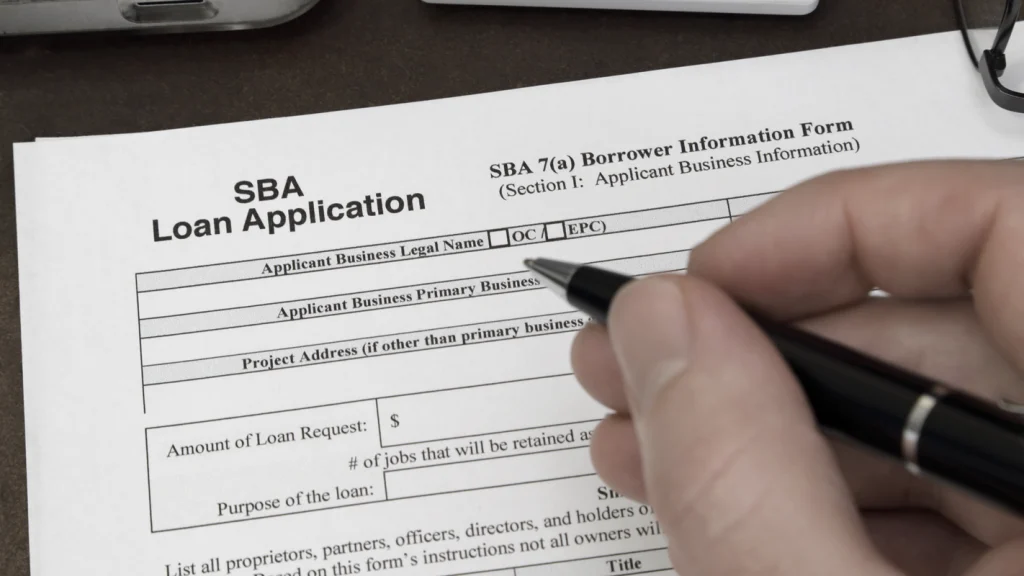
I grew up watching my parents run a mid-sized agricultural supply business, and I can still remember the particular kind of stress that comes from waiting on a lender. Not just waiting for a yes or no, but waiting to see what strings come with the yes. When you are choosing between an SBA-guaranteed loan and a conventional bank term loan, that is really what you are weighing: access and flexibility versus speed and simplicity.

This guide compares SBA-guaranteed loans (in general terms, without getting into program-by-program choices) with conventional bank term loans across the exact areas that tend to surprise owners: down payment, rate, term length, guarantee fees, personal guarantees, paperwork, covenants, prepayment penalties, and closing timeline.
The core difference
Conventional bank loans are funded based on the bank’s own underwriting rules and appetite for risk.
SBA-guaranteed loans are still made by banks and other SBA-approved lenders, under SBA rules. The SBA guarantee is made to the lender, not to you. In plain English: if the loan goes bad, the guarantee can help reduce the lender’s loss, which often helps the lender get comfortable saying yes.
The tradeoff is that SBA financing usually comes with more documentation, more required steps, and often a slower closing.
Quick comparison
| Feature | SBA-guaranteed loan | Conventional bank term loan |
|---|---|---|
| Equity injection | Common, often more manageable for acquisitions and expansion deals, but still deal-dependent | Varies widely; can be low for very strong borrowers, higher for riskier deals |
| Interest rate | Often competitive; many structures are variable-rate with SBA limits on spreads | Can be lower for top-tier borrowers; structure may be fixed or variable based on the bank |
| Total fees | Often higher due to SBA guarantee fee and SBA-style closing steps (fee is often financeable) | No SBA guarantee fee; still may have bank origination, appraisal, legal, and other closing costs |
| Term length | Often longer, which can reduce monthly payment | Often shorter, which can increase monthly payment |
| Personal guarantee | Common, especially for owners with significant ownership | Common in small business lending; sometimes negotiable for very strong borrowers |
| Paperwork | Heavier documentation and eligibility checks | Generally lighter and more bank-specific |
| Covenants | Can apply, but terms are often more standardized and less custom-negotiated | Common; can include DSCR and reporting requirements, and may be more negotiable bank to bank |
| Prepayment | May include prepayment rules or penalties depending on structure and term | May include prepayment penalties, especially on longer fixed-rate loans |
| Speed to close | Often slower | Often faster |
Equity injection
Owners often start with one question: “How much do I need to put down?” The honest answer is “it depends,” but the pattern is clear. Also, “down payment” means different things depending on the use of funds. Buying a business usually means an equity injection. Buying equipment can look like a down payment. Working capital loans may not have a “down payment” at all, but they can come with liquidity expectations or additional collateral asks.
SBA-guaranteed loans
SBA financing is frequently used when a borrower wants to preserve cash, is buying an established business, or is financing a project where the bank would otherwise want a larger equity injection. For many business acquisition deals, an equity injection around 10 percent is a common starting point, but it can move up or down based on the specific risk and structure.
Conventional bank term loans
Conventional lenders typically price and structure based on risk. If you are a strong borrower with a long track record, plenty of liquidity, and solid collateral coverage, you may see attractive equity requirements that rival SBA. If not, conventional underwriting can quickly turn into “bring more cash” or “no.”
Practical takeaway: If a large equity injection would starve your working capital, SBA financing can be worth the extra steps because it may let you keep more cash inside the business.
Rates and total cost
Rate shopping matters, but with business loans you want to compare the total cost, not just the advertised interest rate. Two loans can have similar rates and still produce very different all-in costs because of fees, required reserves, and term length.
SBA-guaranteed loans
SBA loans are often competitively priced, and the guarantee can make a lender comfortable offering terms that would not exist otherwise. Many SBA structures are variable-rate (often tied to a base rate plus a spread), and the SBA sets caps on allowable spreads. That means your rate can move over time, even if the deal is priced fairly.
On top of interest, SBA financing can include an SBA guarantee fee and other closing costs. The guarantee fee often can be financed into the loan, but not every lender handles it the same way, so confirm whether it is financed or due at closing.
Conventional bank term loans
For borrowers with excellent credit, strong cash flow, and strong collateral, conventional loans can be the cheapest option. For borrowers who are newer, have uneven cash flow, or operate in a bank’s gray-area industries, a conventional offer may come with a higher rate, tighter covenants, or both.
How I tell owners to compare: Ask each lender for (1) whether the rate is fixed or variable and what it is tied to, (2) an estimate of total closing costs and fees, and (3) your expected monthly payment under the proposed terms. That trio will tell you far more than rate alone.
Term length
When owners tell me, “I can handle the payment,” I usually ask, “Can you handle it during your slow season?”
SBA-guaranteed loans
SBA financing often allows longer amortization periods for certain uses. At a high level, loans tied to real estate can support longer terms, equipment often lands in a middle range, and pure working capital is typically shorter. Longer terms usually mean lower monthly payments, which can reduce cash flow pressure and leave room for inventory, payroll, or marketing.
Conventional bank term loans
Conventional bank terms are often shorter, especially if the loan is not strongly collateralized or if the bank prefers faster paydown. A shorter term raises the monthly payment, which may be fine for high-margin businesses, but it can be uncomfortable for seasonal or growth-stage companies.

Practical takeaway: If your business is stable but cash flow is tight month to month, a longer term can be more valuable than a slightly lower interest rate.
Guarantee fees
This is the part many owners do not hear about until late in the process.
SBA-guaranteed loans
Because the SBA backs a portion of the loan, there is typically an SBA guarantee fee. The amount varies based on factors like loan size and the guaranteed portion. It often can be financed into the loan rather than paid out of pocket all at once, but some lenders may require it at closing.
That fee is not inherently “bad.” It is the cost of accessing a structure the bank may not offer without the guarantee. But it is real money, and you should account for it when comparing all-in cost.
Conventional bank term loans
Conventional loans do not include an SBA guarantee fee. You may still see bank origination fees, appraisal fees, legal fees, or other lender and market-dependent closing costs.
Practical takeaway: If you qualify for a strong conventional offer, avoiding the SBA guarantee fee can be meaningful savings. If the SBA structure is what makes the deal possible, the fee may be a reasonable price for access.
Personal guarantees
Most small business owners are surprised by how common personal guarantees are in business lending. Banks want a second way to get repaid if the business hits trouble.
SBA-guaranteed loans
Personal guarantees are common in SBA lending, particularly for owners with significant ownership. Expect the lender to evaluate your personal credit, personal financial statement, and sometimes your global cash flow (business plus personal obligations).
Conventional bank term loans
Personal guarantees are also common on conventional small business loans, especially for closely held companies. In some cases, highly bankable borrowers can negotiate limitations, but that is the exception, not the rule.
Practical takeaway: If you are trying to avoid a personal guarantee entirely, you may need to focus on building the business to a point where it can stand on its own balance sheet, or look at other financing structures. For many owner-operated businesses, a personal guarantee is simply part of the package, SBA or conventional.
Paperwork and rules
One reason SBA loans can feel exhausting is that you are satisfying two sets of rules: the lender’s credit box and the SBA’s eligibility and documentation requirements.
SBA-guaranteed loans
Expect more documentation and more back-and-forth. Common requests include detailed financial statements, business tax returns, personal tax returns, a personal financial statement, debt schedules, ownership documentation, and a clear explanation of how funds will be used. If you are buying a business, add purchase agreements, valuations, and historical financials.
Eligibility can also be a friction point. Without getting into the weeds, owners can get tripped up by issues like business type restrictions, ownership and control requirements, and background related questions that lenders must document.
Conventional bank term loans
Conventional underwriting can still be rigorous, but the process is usually more streamlined because you are dealing with the bank’s internal requirements only. Fewer parties and fewer compliance checkpoints often translates into less friction.
Practical takeaway: If your bookkeeping is messy or your documentation is scattered across inboxes and shoeboxes, SBA will expose that quickly. Conventional can be more forgiving in process, but often less forgiving in approval if the numbers do not tie out.
Covenants
Covenants are the fine print that can matter just as much as rate. They are the rules you agree to live under after the loan closes, and they can dictate how much flexibility you have when business gets choppy.
SBA-guaranteed loans
SBA loans can include covenants and reporting requirements, but many lenders treat SBA credit as more standardized, with less room for custom tailoring. The bigger surprise for owners is usually not one specific covenant, but the overall level of ongoing documentation and monitoring.
Conventional bank term loans
Conventional term loans commonly include financial covenants like a debt service coverage ratio (DSCR), leverage limits, or minimum liquidity, plus reporting requirements. The upside is that depending on your relationship and strength, some conventional banks will negotiate covenant levels or waive testing in strong periods.
Practical takeaway: Ask for the covenant list early. Do not wait until closing to learn what you are promising to maintain quarter after quarter.
Prepayment terms
Prepayment is one of those “I wish I knew that sooner” items. If you plan to refinance, sell, or pay down aggressively, you want to know whether doing the responsible thing costs extra.
SBA-guaranteed loans
Some SBA structures can include prepayment rules or penalties, especially on longer-term financing. The exact details depend on how the loan is set up. The important part is to ask up front, not after you have emotionally committed to the deal.
Conventional bank term loans
Conventional loans can also include prepayment penalties, particularly on longer fixed-rate loans where the bank is protecting its expected yield. Some loans are more flexible. Some are not.
Practical takeaway: If your plan is “refinance in two years when revenue doubles,” make sure the loan does not punish you for executing that plan.
Closing timeline
Timing is not just a convenience issue. In real deals, speed can be the difference between getting the lease, buying the business, or losing it.
SBA-guaranteed loans
SBA loans can take longer to close due to additional steps, documentation, and coordination among parties. If the deal is clean and your file is organized, it may still move in a matter of weeks. If there are third parties, complex ownership, or messy financials, plan for longer.
Conventional bank term loans
Conventional loans often close faster, especially for existing bank customers or borrowers with straightforward financials and strong collateral. A straightforward conventional deal can sometimes move in a few weeks, while more complex credits take longer.
Practical takeaway: If you need to close quickly, talk timeline on day one. Ask the lender what typically slows deals down and what you can deliver upfront to keep things moving.
When SBA is worth it
In my experience, SBA financing is most worth the slower close when it meaningfully improves one or more of these:
- You need a lower payment. Longer terms can relieve cash flow pressure.
- You need to preserve working capital. A structure that requires less cash up front can keep the business healthier.
- The deal is solid but the bank wants extra comfort. The guarantee helps bridge the gap between “good business” and “perfect file.”
- You are buying a business or expanding in a way that is hard to underwrite conventionally. SBA is often designed for these real-world scenarios.
Conventional financing tends to win when:
- You qualify cleanly. Strong cash flow, strong credit, strong collateral, and strong liquidity.
- Speed matters. Tight deadlines, competitive acquisitions, lease start dates.
- You want fewer layers of fees and process. Less documentation and no SBA guarantee fee.
Decision checklist
If you are stuck between the two, walk through these questions:
- What breaks first if the payment is higher? Payroll, inventory, marketing, or your own stress level?
- How much cash must stay in the business? Equity injection is not just a number, it is oxygen.
- Is the timeline flexible? If not, prioritize lenders known for speed.
- Are your financials lender-ready? Clean books help both options, but SBA is less tolerant of missing pieces.
- What is the real all-in cost? Compare payment, fees, term, and prepayment terms, not rate alone.
- What rules come after closing? Review covenants and reporting requirements early.
FAQs
Is an SBA loan easier to get than a conventional bank loan?
It can be, in the sense that the SBA guarantee often helps lenders approve borrowers who fall just outside conventional criteria. But “easier” does not mean “less work.” SBA loans usually require more documentation and can take longer.
Do SBA loans always require collateral?
Lenders commonly look for available collateral in both SBA and conventional lending. With SBA financing, lenders are generally expected to take available collateral when it exists, but a strong deal is not necessarily declined solely because collateral is insufficient if cash flow supports repayment. Either way, expect a full collateral discussion.
Will I need a personal guarantee either way?
Often, yes. Personal guarantees are common across small business lending. The exact expectation depends on ownership structure, the lender, and the strength of the deal.
Can a conventional loan be cheaper than an SBA loan?
Yes, especially for top-tier borrowers. Conventional loans may offer lower all-in cost because there is no SBA guarantee fee and the process can be simpler. For borrowers who do not qualify for the best conventional terms, SBA pricing can be competitive relative to the alternatives, even after fees.
What should I do first if I am considering either option?
Get your financial house in order before you apply: up-to-date bookkeeping, recent interim financial statements, a clear use of funds, and a realistic cash flow projection. The cleaner your file, the more leverage you will have whether you go SBA or conventional.