I grew up watching my parents run a mid-sized agricultural supply company where “debt” was not an abstract concept. It was a line item that could tighten overnight when rates moved, or loosen when a big customer paid late. That perspective comes in handy with home borrowing, too, especially when you have two loans tied to the same house: a first mortgage and a HELOC.
If you already have both and you have a fixed amount of extra cash each month, the core question is simple: Which balance should you pay down first to reduce risk and total cost?
The answer usually comes down to three variables:
- Interest rate: fixed vs variable, and which one is higher today
- Tax treatment: whether the interest is deductible for you, and on which loan
- Payment structure: whether your HELOC is interest-only right now
Quick baseline: what you are choosing
When you make an “extra” payment, you are buying one (or more) of these outcomes:
- Lower interest cost over time
- Lower monthly required payments sooner (mainly if you eliminate a loan payment entirely)
- Lower risk from future rate increases (mainly HELOC risk)
- More flexibility (some people value keeping the HELOC available, others want it gone)
A fixed-rate first mortgage is usually a slow, predictable march. A variable-rate HELOC can feel fine for a year, and then get expensive fast.
The most common best move: pay the higher effective rate
If you want the cleanest rule of thumb, it is this:
Direct extra payments to the loan with the higher after-tax interest rate, as long as you are not sacrificing critical flexibility (like emergency reserves).
That said, “after-tax” and “effective” matter.
Step 1: Compare today’s rates, but do not ignore what can change
- First mortgage: typically fixed. What you see is what you pay.
- HELOC: typically variable. HELOC rates often adjust monthly (sometimes quarterly or on another schedule), depending on your contract.
If the HELOC rate is higher today, paying it down first often reduces total interest cost. Even if the rates are similar today, many households still prioritize the HELOC because it carries rate shock risk.
Step 2: Adjust for whether interest is deductible for you
Mortgage interest deductions are not automatic. Many households take the standard deduction, and then the interest effectively is not deductible. Even if you itemize, HELOC interest is only deductible in specific cases.
In general (for U.S. federal taxes):
- First mortgage interest may be deductible if you itemize and the loan meets IRS rules and limits.
- HELOC interest is generally deductible only if the HELOC funds were used to buy, build, or substantially improve the home that secures the loan, and you itemize. Using the HELOC for credit cards, tuition, or a car generally does not qualify for the deduction.
One more nuance that matters in the real world: even “qualified” interest is still subject to IRS rules and overall limits on acquisition indebtedness, and that limit is based on your combined eligible mortgage debt, not just one loan.
Practical takeaway: if your HELOC interest is not deductible and your mortgage interest is, your HELOC’s after-tax cost is often higher than it looks, which strengthens the case for paying down the HELOC first.
Note: Tax rules are fact-specific. If you are unsure whether your HELOC interest qualifies, ask a CPA or review how the HELOC proceeds were used and whether you itemize.
Interest-only HELOCs: why they change the math
Many HELOCs have a draw period (often 5 to 10 years) where payments may be interest-only (or set as a minimum payment that is mostly interest). That structure can quietly keep you in place: you are paying the cost of borrowing, but not shrinking the balance much.
When your HELOC payment is interest-only (or close to it):
- Extra payments directly reduce principal, which immediately reduces future interest charges.
- You are also reducing the risk of a painful jump when the HELOC transitions into the repayment period (when principal payments kick in and the required payment can rise sharply).
If your first mortgage is amortizing normally (principal and interest), you are already paying it down every month. An interest-only HELOC is the one that can stall unless you push it.
A real-world example: one household, one extra payment
Let’s use a concrete household, because this decision feels different when you see it in numbers.
The Hernandez household
- First mortgage: $320,000 remaining, 30-year fixed at 3.25%, 26 years left
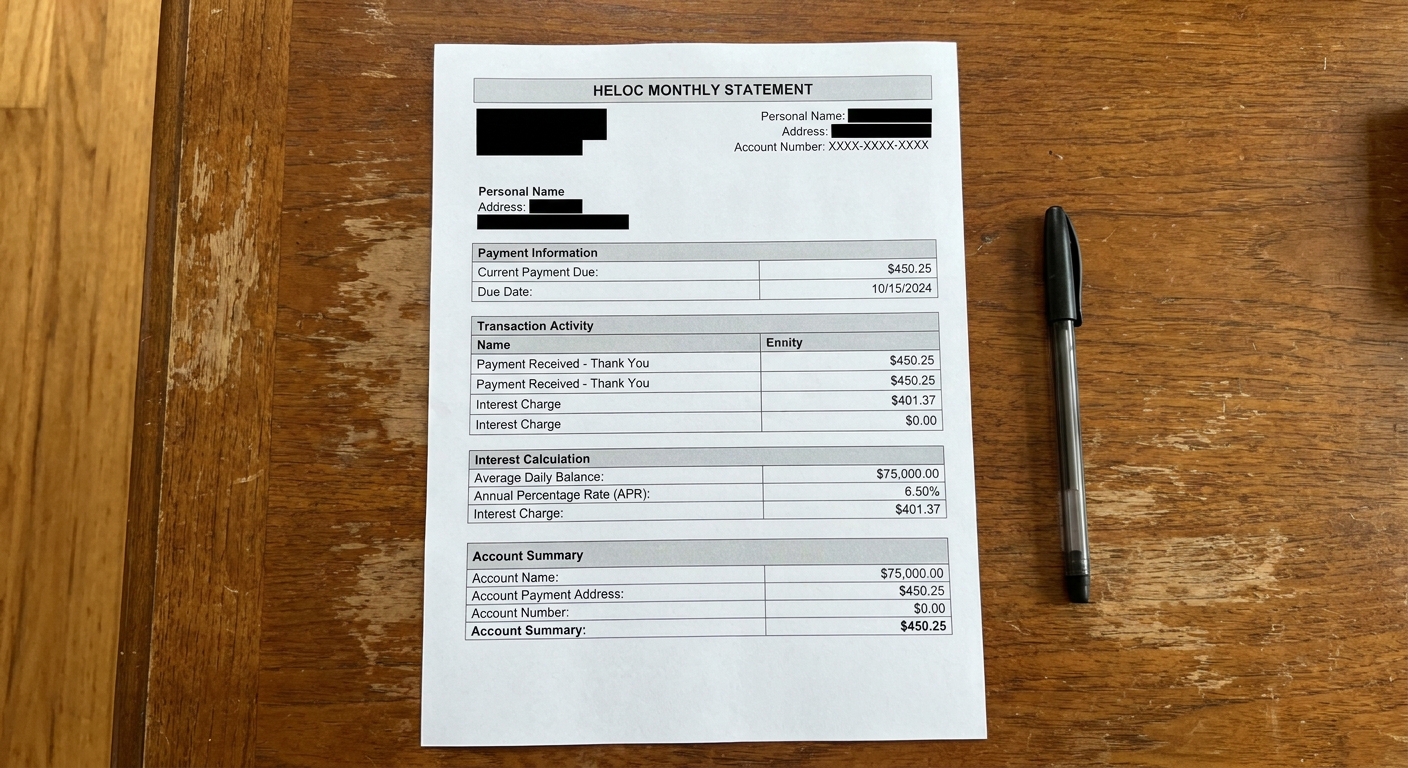
- HELOC: $55,000 remaining, variable at 8.50% today, interest-only during draw period
- Extra cash available: $400/month (consistent, every month)
- Tax situation (typical): they take the standard deduction, so neither loan provides a current tax benefit
Option A: Put the $400/month toward the first mortgage
This will absolutely help over time. They will reduce principal faster and save interest over the life of the loan. But the mortgage rate is low and fixed. Their required payment does not change unless they refinance or recast, and the interest savings per extra dollar are relatively modest at 3.25%.
For a rough anchor, $400 directed at a 3.25% balance is like earning about 3.25% in guaranteed interest savings on that extra payment.
Option B: Put the $400/month toward the HELOC
This targets the balance costing them 8.50% and the one that can move higher. Here is the part many people miss: at 8.50%, a $55,000 HELOC costs about $390 per month in interest if it is interest-only (55,000 × 0.085 ÷ 12).
So if they add $400/month to the HELOC payment, they are not just “paying a little extra.” They are effectively wiping out almost the entire monthly interest charge and forcing the balance to start shrinking quickly. In round numbers, after that first month, the HELOC balance drops by about $400, and next month’s interest is calculated on a slightly smaller number. That snowball is small at first, then meaningful.
In this scenario, paying the HELOC first is usually the better move because:
- The HELOC rate is materially higher (8.50% vs 3.25%).
- The HELOC is variable, so risk is higher.
- The HELOC is interest-only, so extra payments create principal paydown that might not happen otherwise.
Once the HELOC is paid off, they can redirect the same $400/month to the mortgage principal as a second phase of the plan.
When paying the first mortgage first can make sense
Even though HELOC-first is common, there are situations where the first mortgage deserves the extra dollars.
Your mortgage rate is higher than the HELOC’s current rate
This is less common today because many first mortgages are older and fixed at lower rates, but it happens, especially if your mortgage is newer or adjustable.
Your HELOC has a low rate and you are using it strategically
If your HELOC is serving as a short-term tool (for example, planned renovations that will be completed soon) and you have a clear payoff timeline, you might prioritize the mortgage if it is the more expensive debt.
You are close to removing conventional PMI
If your loan has conventional private mortgage insurance (PMI), additional principal payments that help you reach key loan-to-value thresholds can create an outsized benefit. Many conventional loans require PMI to drop at 78% LTV (based on the original value) and allow borrower-requested removal at 80% LTV if other conditions are met.
This is not the same as FHA mortgage insurance, which often cannot be removed without refinancing, depending on when the loan was originated and the original down payment.
Taxes change the effective rate comparison
Ironically, if your mortgage interest is deductible and your HELOC interest is not, that often pushes you toward paying the HELOC first because it is more expensive after-tax. But in edge cases where deductibility and limits affect one loan more than the other, the comparison can flip. The point is not that taxes dictate everything, but that they can move the effective rate enough to change the priority.
A quick checklist
- Which rate is higher today? If HELOC is higher, lean HELOC.
- Is the HELOC variable? If yes, prioritize reducing exposure unless the rate is meaningfully lower than the mortgage.
- Is the HELOC interest-only right now? If yes, extra payments are often more impactful there.
- Do you itemize deductions? If no, ignore tax deductibility and compare stated rates.
- If you itemize, is the HELOC interest actually qualified? If not, treat HELOC interest as fully non-deductible.
- Do you have an emergency fund? If not, build that first. Paying down debt is great. Losing flexibility is not.
Two ways to split the difference
1) Avalanche with guardrails
Send 100% of your extra payment to the higher-rate loan (often the HELOC), but set a simple rule: if the HELOC rate drops below your mortgage rate for a sustained period, revisit.
2) Minimums plus targeted principal
Pay both minimums, then put all extra toward the HELOC until it is gone. After that, redirect all extra toward the mortgage. This keeps your system simple, and simplicity is a real financial advantage because it increases follow-through.

Common mistakes I see
Ignoring the HELOC because the required payment looks small
Interest-only payments can look deceptively manageable. But the balance may not be shrinking much, and the rate can climb.
Assuming the interest deduction will save you
For many households, the standard deduction means there is no practical benefit. And for HELOCs, the use-of-funds rule and the overall IRS limits matter.
Throwing extra money at the mortgage while carrying high HELOC interest
Not every HELOC is expensive, but when it is, it can behave like high-interest debt secured by your home. That is not a moral judgment, it is just a risk profile worth respecting.
Mechanics that matter
Make sure extra payments hit principal
For mortgages, confirm your servicer applies extra funds to principal, not toward future payments. For HELOCs, extra payments usually reduce principal automatically, but it is still worth verifying how your lender credits payments.
Watch for fees and penalties
Prepayment penalties are uncommon on many modern first mortgages, but they still exist in some cases. HELOCs may also have early closure fees, annual fees, or minimum draw requirements. A quick read of the closing disclosure and HELOC agreement can prevent expensive surprises.
Remember that HELOC access is not guaranteed
Some people keep a HELOC “for emergencies,” but lenders can freeze or reduce HELOCs in downturns or if your financial profile changes. A HELOC can be a useful tool, but it is not a substitute for cash reserves.
Ask about fixed-rate options
Some lenders let you lock part of a HELOC balance into a fixed-rate segment. If you can reduce variable-rate exposure without refinancing your first mortgage, it may change how aggressively you prioritize paydown.
FAQ
Is it always better to pay off a HELOC first?
No. It is often better when the HELOC rate is higher, the HELOC is variable, or the HELOC is interest-only. But if your first mortgage rate is higher (or the HELOC rate is unusually low and stable), the mortgage can be the better target.
Should I pay off my HELOC before retirement?
Many people prefer entering retirement with fewer variable-rate obligations. A paid-off HELOC can reduce stress and reduce the risk of payment increases when your income is fixed. The best choice depends on cash reserves and overall debt structure.
What if I want to keep the HELOC open for emergencies?
That is a valid preference. You can still prioritize paying down the HELOC balance. Keeping the line open is separate from owing a balance on it. Just confirm whether your lender has inactivity rules or fees, and remember that access to credit is not the same as cash in the bank.
Does an extra payment on my mortgage lower next month’s mortgage payment?
Usually, no. It typically reduces principal and future interest, and it can shorten the loan term. Your scheduled payment usually stays the same unless you refinance or request a recast (if available and eligible). That said, some servicers may show you as “paid ahead,” which can reduce the amount due displayed for a month even though the contractual payment has not changed. If your goal is faster payoff, ask your servicer how to apply extra payments without advancing the due date.
The bottom line
If you already have both a first mortgage and a HELOC and you have a fixed extra amount to put toward debt each month, the decision is usually about cost and risk.
- If your HELOC rate is higher, it is variable, and especially if it is interest-only, paying down the HELOC first is often the most efficient and risk-reducing move.
- If your mortgage rate is higher, or you are targeting a specific milestone like removing conventional PMI, directing extra payments to the first mortgage can be the better play.
If you want a simple plan that works for most households: pay minimums on both, send all extra to the HELOC until it is gone, then roll that extra payment into the mortgage.