When I was growing up, my parents used every kind of financing tool you can imagine to keep their agricultural supply business steady through weird seasons. Lines of credit were lifesavers. They were also a reminder that the bank can tighten the spigot when risk changes.
A home equity line of credit, or HELOC, works the same way. It feels like a dependable backup plan, until one day you log in and the available credit is lower than you expected, or the draw button is simply gone.
Yes, a lender can freeze, reduce, or suspend a HELOC under certain conditions. The good news is that the rules are not random, and you usually have steps you can take to ask for a review.
Freeze vs reduce vs suspend
Lenders and servicing portals do not always use the exact same wording. Terminology varies by lender, and your notice and HELOC agreement control. These are the common outcomes:
- Freeze: You cannot make new draws from the line, but the account remains open and you still owe any existing balance.
- Reduce: The lender lowers your credit limit. If you have unused available credit, that available amount shrinks. In some cases, if your balance is close to the limit, a reduction can effectively act like a freeze because there is no room to borrow more.
- Suspend: Similar to a freeze. It generally means draws are temporarily stopped due to risk or documentation issues, pending review or resolution.
In plain English, these actions are about future access to credit. They usually do not erase the loan, and they do not make your existing balance disappear.
When a lender can freeze or reduce a HELOC
Most HELOC agreements and federal consumer lending rules allow a lender to restrict access if certain risk triggers occur. The federal framework is typically tied to Truth in Lending rules (Regulation Z) for home equity plans, while the details depend on your contract and state law.
Here are the most common reasons lenders cite in notices.
1) Home value drops
Because a HELOC is secured by your home, lenders pay close attention to your combined loan-to-value ratio, often called CLTV. That is your first mortgage balance plus your HELOC balance, divided by your home’s value.
If home prices fall in your area, your equity cushion can shrink. If the lender reasonably believes the value of the property has declined significantly, they may:
- freeze additional draws,
- reduce the credit limit, or
- require updated valuation information.
This can happen even if you have never missed a payment. It is not personal. It is collateral math.
2) Credit or income changes
Many HELOC contracts include language that allows action if the lender believes your ability to repay has changed. Examples include:
- a major drop in credit score,
- new delinquencies on other accounts,
- a spike in credit utilization,
- bankruptcy filing, or
- loss of income that becomes known to the lender.
Sometimes this is triggered by periodic account reviews. Other times it happens because of something you report, such as applying for a hardship program or requesting a modification on another loan.
3) Default or contract violations
This is the most straightforward. If you:
- miss payments,
- pay late repeatedly,
- violate occupancy requirements (for example, if the contract requires owner-occupancy),
- fail to maintain required homeowners insurance,
- let property taxes go delinquent, or
- stop maintaining the property in a way that threatens the collateral
the lender may freeze the line, reduce it, or take further collection actions.
4) Fraud or documentation issues
If the lender believes there was misrepresentation in the original application, or there are title issues, identity concerns, or unresolved documentation problems, they may suspend access while investigating.
5) Portfolio risk policy changes
During periods of market stress, some lenders tighten criteria across their portfolios. That does not mean every borrower gets frozen. But it can mean more aggressive reviews of property values and borrower credit, which can increase the odds of a reduction or freeze for borderline cases.
What happens to your balance
This is the part most people worry about, and it helps to separate access from repayment.
- You still owe what you already borrowed. A freeze does not forgive the balance.
- Your required payment continues. You must keep making the monthly payment under the HELOC terms.
- Interest typically continues to accrue. If you have a variable rate HELOC, the rate can still change with the index and margin described in your contract.
- You usually cannot redraw paid-down amounts. If you pay $5,000 down, you might expect that $5,000 becomes available again. With a freeze, it generally does not.
Think of a freeze like a credit card issuer turning off new purchases while still requiring you to pay the existing balance.
Not the draw period ending
A lot of confusion comes from the fact that HELOC payments can change for more than one reason.
A lender freeze or reduction is an unscheduled restriction based on risk triggers like value, credit, or default.
A draw period ending is scheduled. Most HELOCs have a draw period where you can borrow and repay (often 5 to 10 years), followed by a repayment period where you generally can no longer draw and must pay principal and interest over a set term.
If your HELOC is simply reaching the end of the draw period, that is not a “freeze.” It is the contract doing what it said it would do from day one.
Not a rate reset
Another common mix-up: your monthly payment can rise even if your line is not frozen.
Many HELOCs have variable rates tied to an index plus a margin. When the index moves, your interest rate can change, which can change your payment.
An index-driven reset changes the cost of borrowing. A freeze or reduction changes whether you are allowed to borrow more.
How you find out
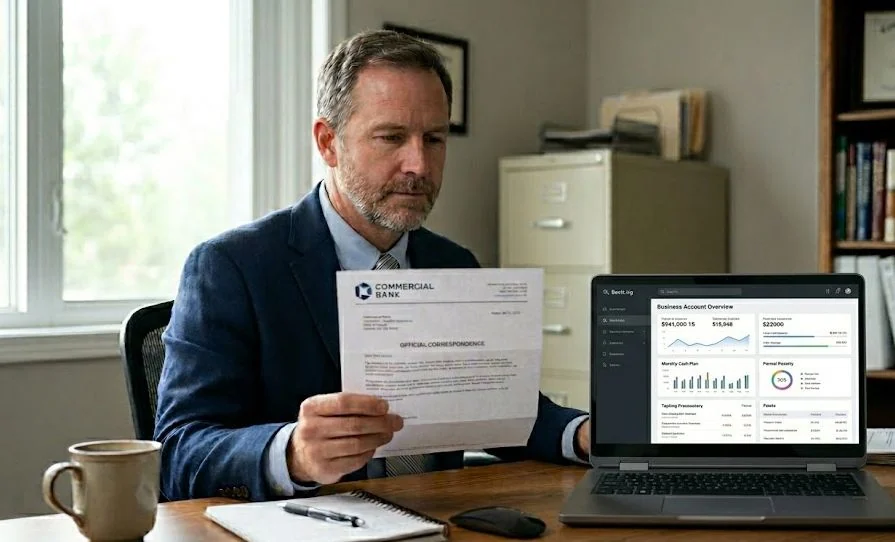
In most cases, the lender will notify you in writing. Written notice is generally required, though it may arrive after online access changes. You might also notice:
- your available credit drops in the online portal,
- your transfer or check draws are declined,
- a message appears in online banking, or
- you receive a letter requesting documentation or explaining the action.
If you see a change with no clear explanation, call and ask for the reason code and the exact action taken: freeze, suspension, or limit reduction.
What to look for in the letter
Before you call, read the notice closely and pull the relevant pages from your HELOC agreement. Useful details to locate:
- The reason for the action (property value decline, default-related, material change in finances, documentation issue, and so on).
- The effective date and whether it is described as temporary or indefinite.
- What evidence they relied on (automated valuation, account review, credit report update, insurance verification, tax status).
- What they want from you (proof of insurance, income documentation, identity documents, updated valuation, dispute instructions).
- How to request a review and any deadlines or mailing addresses.
Even if the letter is vague, those items give you a checklist for a more productive call.
What to ask to reconsider
If the lender took action due to home value, credit changes, or a perceived repayment risk, you are not powerless. You can often request a review and provide updated information.
If the issue is home value
- Ask what valuation method was used. Some lenders rely on automated valuation models.
- Request reconsideration with better data. If you have recent comparable sales, a recent appraisal, or documentation of improvements, ask how to submit it.
- Clarify whether a new appraisal is allowed and who pays. Policies vary, and you want the cost details in advance.
If the issue is credit or income
- Ask what specifically triggered the action. Was it a score threshold, a late payment, high utilization, or something else?
- Provide proof of stable income or assets if the concern is ability to repay.
- Correct errors quickly. If your credit report has inaccurate delinquencies or balances, dispute them with the bureaus and ask the lender if they will re-review once corrected.
If the issue is default-related
- Catch up on past-due amounts and request reinstatement of access, if the lender allows it.
- Resolve insurance or tax lapses and provide proof.
- Ask about hardship options if you are struggling. Even if access stays frozen, you may be able to negotiate a short-term payment arrangement that prevents things from escalating.
One practical tip: when you call, ask for the department that handles HELOC servicing or credit line management. Front-line reps can be helpful, but these decisions often sit with a specialized team.
Fixed-rate options and sub-accounts
Some HELOCs let you convert part of your balance into a fixed-rate segment (sometimes called a fixed-rate lock). If your HELOC has this feature, a freeze usually affects new advances, but it may not change the terms of an existing fixed-rate segment you already set up.
This is contract-specific. If you have fixed-rate segments, ask the servicer two very specific questions: whether the freeze blocks creating new fixed segments, and whether it changes how payments are applied across variable and fixed portions.
If the limit drops below your balance
This feels alarming, but it can happen. For example, if the lender reduces your line and your existing balance is now higher than the new limit, you are effectively “over-limit.” With HELOCs, that typically means:
- you will not be able to borrow more,
- you will need to pay the balance down over time, and
- the lender may, depending on your agreement and account structure, apply payments in a way that prioritizes bringing the balance down.
It typically is not treated as a payment default by itself when the over-limit status is caused by a lender-initiated reduction, but policies vary. Ask the lender to explain, in writing if possible, how payments will be applied and whether any additional restrictions apply.
Steps to take now
If your line is frozen or reduced, focus on control and documentation.
- Get the details in writing. Ask for the notice letter or secure message that explains the reason and effective date.
- Confirm your current terms. Interest rate, margin, index, minimum payment calculation, draw period end date, and any fees.
- Adjust cash flow. If you were using the HELOC as a working-capital buffer, build a short-term plan for the next 60 to 90 days.
- Avoid compounding credit stress. Try not to run up other high-interest debt while you sort this out.
- Consider alternatives carefully. A personal loan, a 0% intro APR card, or refinancing might help, but only if you can repay on schedule and the total cost makes sense.
When to get help
If you cannot get a straight answer about why access was restricted, or you believe the lender is not following your agreement, it can help to bring in outside support. Neutral options include:
- A HUD-approved housing counselor (often low-cost or free) to help you understand options and communicate with the servicer.
- A consumer law attorney, especially if you are facing foreclosure, believe there is an error, or need advice specific to your state.
- The CFPB complaint process if the servicer is unresponsive or you cannot get documentation that explains the action. A complaint is not a lawsuit. It is a formal way to force a clearer response trail.
I view these as escalation tools, not first moves. Most issues are resolved faster when you start with a calm request for the notice, the reason, and the review process.
FAQ
Can a bank freeze my HELOC without warning?
You will usually receive written notice, but the timing can vary. Sometimes the access change shows up in your online account before the letter arrives. If you see a sudden change, call and request the formal notice and the reason.
If my HELOC is frozen, can the lender demand full repayment immediately?
A freeze typically stops new borrowing. It does not automatically accelerate the balance. Immediate repayment demands are more commonly tied to serious default or other major contract violations. Check your agreement and ask the servicer to clarify your repayment terms.
Does freezing a HELOC change the interest rate?
Not by itself. Your rate generally continues to follow the index and margin described in your HELOC agreement. If you have a variable rate, it can still change with the market even while draws are frozen.
Can I refinance or open a new HELOC somewhere else?
Sometimes, yes. But if your home value dropped or your credit weakened, qualifying may be harder or more expensive. Also, if your current HELOC is frozen due to collateral concerns, another lender may see the same risk factors.
What if I think the lender’s home value estimate is wrong?
Ask what method was used and whether you can request a review. If they used an automated model, you may be able to submit comparable sales or request an appraisal under the lender’s process.
Bottom line
A HELOC is flexible credit, not guaranteed access forever. Lenders can freeze, reduce, or suspend a line when home values fall, your credit profile changes, or a default or documentation issue increases risk.
What does not change in a freeze is your responsibility for what you already borrowed. Keep paying on time, get clarity on the lender’s reason, and ask for the specific review process. When you approach it with good records and calm persistence, you often get a better outcome, or at least a clear plan forward.