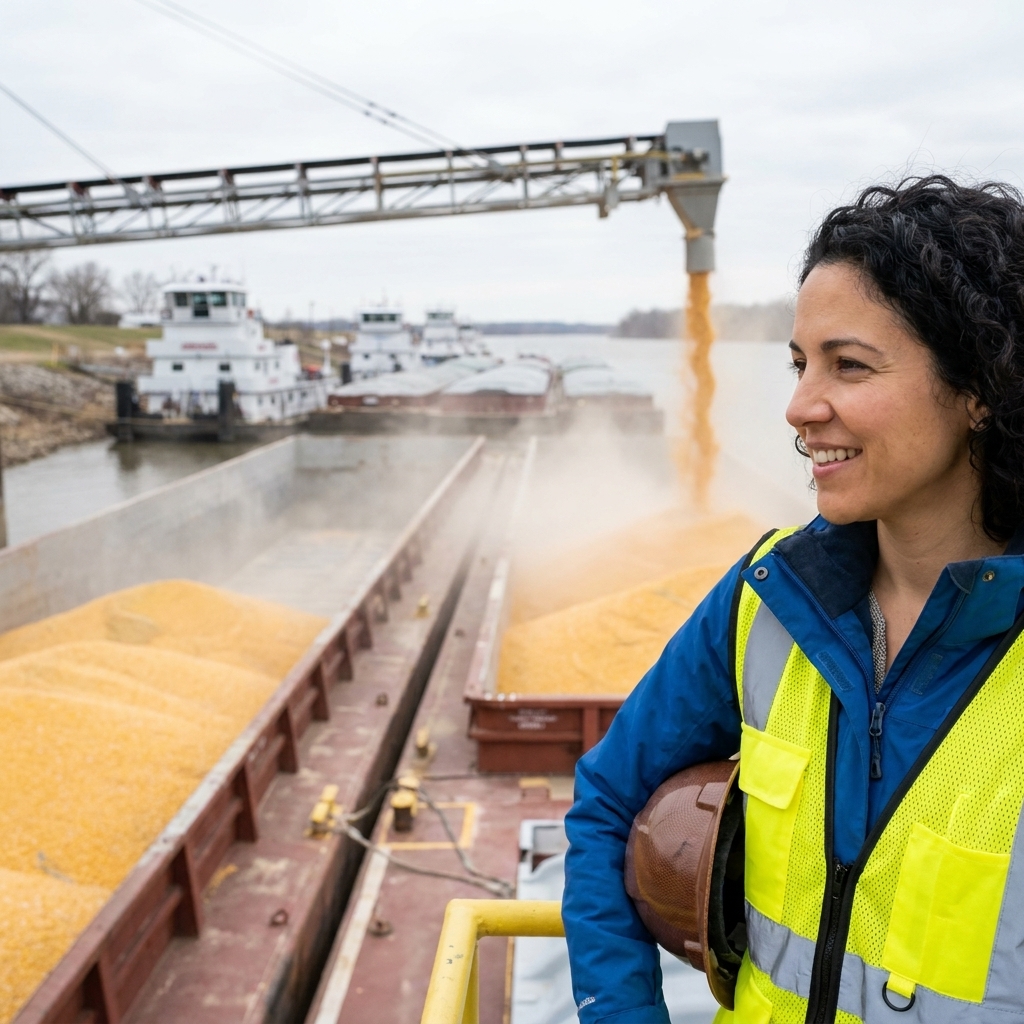
If you run a farm or any agribusiness that touches grain, oilseeds, livestock, or inputs, you already know the uncomfortable truth: you can do everything right operationally and still get blindsided by prices you do not control. A late season rally can punish a feed buyer. A sudden drop can erase a grower’s margin. And weather can turn a “great plan” into a survival year.
I grew up watching my parents run an agricultural supply business where one bad combination of timing, inventory, and interest rates could turn a normal season into a sleepless one. The good news is that you do not have to leave price or yield entirely to chance. You can manage those risks with two tools that work best as a pair: commodity hedging and crop insurance.
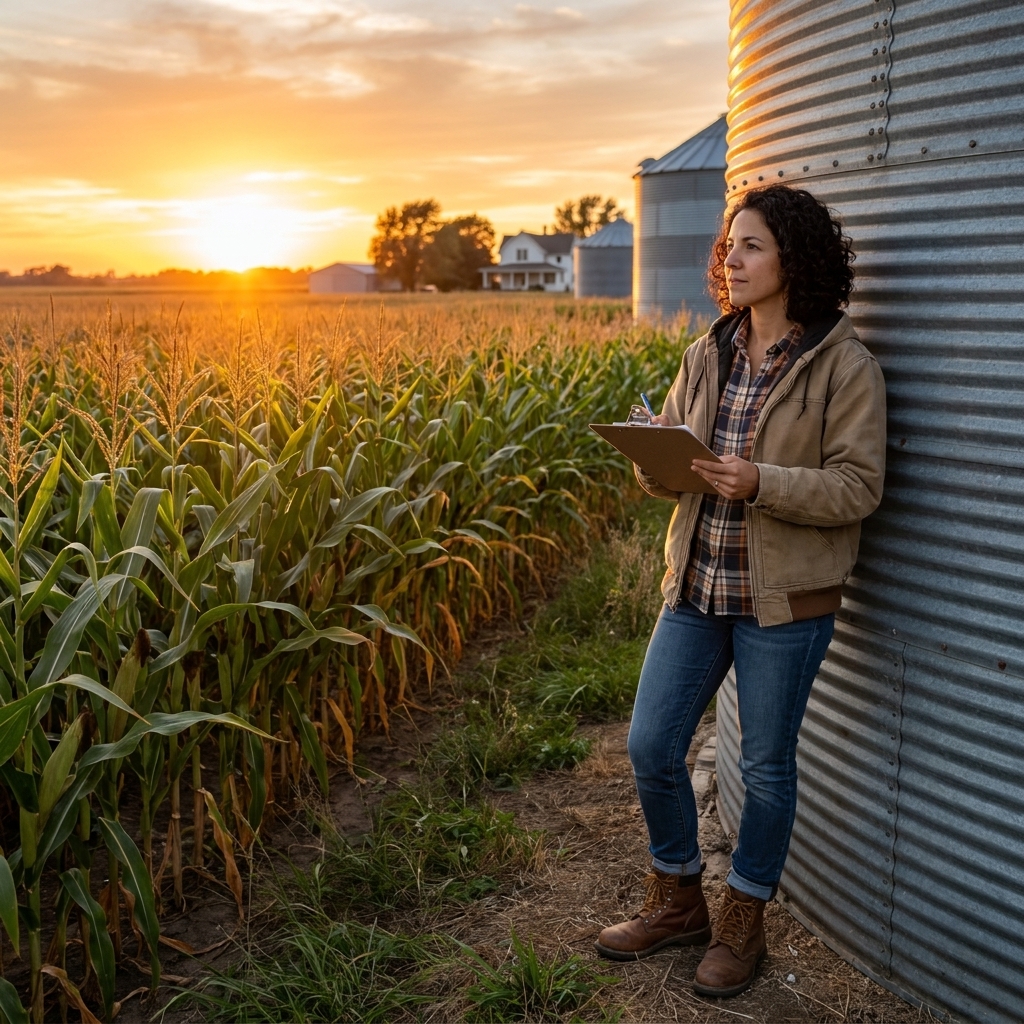
This guide will walk you through the basics in plain English, show where beginners get tripped up, and give you a simple framework you can use to start protecting revenue without turning your operation into a trading desk.
What you are protecting
Before you choose a futures hedge, buy a put, or call your insurance agent, get specific about the risk you need to control. In agriculture, it usually falls into four buckets:
- Price risk: The market price changes between today and when you sell (or buy) the commodity.
- Basis risk: Your local cash price moves differently than the futures price because of local supply, demand, and transportation.
- Yield risk: You produce fewer bushels or pounds than planned.
- Revenue risk: A combination of price and yield disappointments in the same year.
A lot of frustration comes from using the right tool for the wrong job. Futures and options are strongest for price risk. Crop insurance is designed to address yield and often revenue. Basis is real, and we manage it with better timing, stronger contracts, and realistic hedge sizing.
Hedging basics
Hedging is best understood as margin protection, not market prediction. When you hedge, you are choosing a tradeoff: you give up some upside in exchange for reducing the chance of a financially damaging outcome.
Here is a simple mental model I use with clients: your operation has two “accounts.”
- The physical business: Your crop or livestock, stored grain, feed needs, contracts with an elevator or processor.
- The hedge position: A futures or options position that tends to move opposite your exposure.
When the cash market hurts you, the hedge is designed to help you. You are trying to keep the combined result more stable.
Futures vs options
- Futures: A binding commitment to buy or sell at a standardized price level (you can exit by offsetting). A hedge can lock in the futures component of your price, but your final cash price is still futures plus or minus basis. Futures can also create margin calls.
- Options: The right, not the obligation, to buy or sell futures at a set price (the strike) before expiration. You pay a premium up front. Long options typically have no variation margin beyond the premium, but your broker may have minimum equity or house rules. Some option strategies (like spreads or short options) can involve margin.
Know your exposure
Your “natural” position depends on whether you produce the commodity or consume it.
If you are a producer
You are exposed to prices falling before you sell. Common protection tools include:
- Short futures (helps lock in the futures component of price, but introduces margin call risk and basis still matters)
- Buy puts (creates a price floor, keeps upside open minus premium)
- Minimum price contracts (often a cash contract plus an embedded option structure, terms vary)
If you are a buyer
You are exposed to prices rising before you buy. Common protection tools include:
- Long futures
- Buy calls
- Fixed price forward contracts with suppliers
Same concept, opposite direction. If you remember only one thing: hedge the move that hurts you.
Options basics
Agricultural options can sound intimidating because of the vocabulary, but the mechanics are straightforward.
Put options for producers
A put generally gains value as the underlying futures price falls. Producers often use puts to establish a floor. Think of it like paying an insurance premium to reduce the damage of a price drop.
- Strike price: The futures price level your put is tied to.
- Premium: What you pay for the put.
- Expiration: The date the option stops existing.
Call options for buyers
A call generally gains value as the underlying futures price rises. Buyers use calls to cap their risk if prices jump.
- Strike price: The futures price level your call is tied to.
- Premium: What you pay for the call.
- Expiration: The date the option stops existing.
Two option realities to respect
- Time decay: Options lose value as expiration approaches if the market does not move in your favor. You are buying time and protection, not just direction.
- Volatility matters: Option premiums rise when markets are jumpy. That can make protection more expensive exactly when you want it most.
The goal is not to master every “Greek.” The goal is to choose a structure you can explain to your lender and live with emotionally during a bad week in the market.
Beginner-friendly hedges
Below are a few common approaches that many agribusiness owners start with. The best fit depends on cash flow, risk tolerance, and how confidently you can forecast production or usage.
1) Buy a put to set a floor
When it fits: You want downside protection but do not want to cap upside.
Tradeoff: You pay a premium. If prices stay strong, you might feel like you “wasted” the premium, but what you actually bought was certainty.
2) Use a collar to cut cost
A collar usually means buying a put and selling a call. The call sale generates premium that helps offset the cost of the put.
When it fits: You want a floor, and you are willing to give up some upside beyond a certain price.
Tradeoff: Upside is capped above the call strike.
3) Scale in hedges
Many operations reduce regret by hedging in increments, like 10 to 25 percent at a time, tied to budgeted profit levels or seasonal milestones.
When it fits: You do not want one decision to dominate your year.
Tradeoff: You may not lock in the best price, but you also avoid the stress of trying to pick the top.
4) Hedge inputs too
Crop prices get the spotlight, but input spikes can be just as painful. If you are an operator with significant feed needs or a dairy with tight margins, protecting input costs can matter as much as protecting output prices.
Basis and contracts
Futures and options reference a standardized contract. Your cash price is local. The difference is basis, and it can widen at exactly the wrong time due to transportation constraints, local oversupply, or processor slowdowns.
How to manage basis risk
- Know your historical basis: Track your delivery points and seasonal patterns.
- Match the contract month to your marketing window: A hedge using the wrong month can add noise.
- Use clear cash contracts: Understand delivery windows, moisture or quality discounts, and any roll rules.
- Stay realistic on hedge size: Over-hedging production creates its own kind of risk if yields fall.
Basis is why “my hedge didn’t work” is often really “my hedge worked on futures, but my cash market moved differently.” Plan for that upfront.
A quick example
Here is a simple way to make the “two accounts” idea real. Let’s say you expect to sell corn at harvest.
- In spring, December corn futures are $5.00.
- Your local basis for harvest delivery is typically -$0.30, so your expected cash price is about $4.70.
- You buy a $5.00 put for $0.20.
Scenario: By harvest, futures drop to $4.20 and basis weakens to -$0.40.
- Your cash price is $4.20 - $0.40 = $3.80.
- Your put is worth about $0.80 (intrinsic value) at expiration.
- Your net option gain is about $0.80 - $0.20 = $0.60.
- Your rough effective price becomes $3.80 + $0.60 = $4.40.
Notice what happened: the hedge helped a lot, but basis still mattered. If basis had stayed at -$0.30, your cash price would have been $3.90 and your effective price closer to $4.50. This is why we separate price risk from basis risk and manage both.
Crop insurance
Commodity hedging helps with price swings. Crop insurance helps when the crop itself does not cooperate. For most growers, insurance is the backbone that makes the rest of the strategy safer because it reduces the odds that you are forced to make desperate marketing decisions after a loss.
Key terms you will hear
Note: The terms below are commonly used in the U.S. federal crop insurance program. Names and rules can vary by country and program.
- APH yield: Your Actual Production History, often used to set coverage yields.
- Coverage level: The percentage of yield or revenue insured.
- Projected price (price election): A price set during a defined window that helps determine guarantee levels.
- Indemnity: Payment when a covered loss triggers benefits.
Yield vs revenue coverage
- Yield-focused coverage: Protects against producing fewer units. Strong for weather and disease risk.
- Revenue-focused coverage: Protects against the combination of yield and price. It can be a strong fit in volatile markets, depending on premium cost, coverage level, unit structure, and what is available for your crop and county.

Insurance terms and availability vary by crop and county, and endorsements can change the math dramatically. The point here is not to memorize product names. It is to understand what your policy is designed to protect: bushels, dollars, or both.
How they work together
This is where things get powerful, especially for beginners. Think of your plan as layers:
- Layer 1: Crop insurance helps protect against yield shortfalls and, with revenue policies, major revenue drops. In some structures, the guarantee can also increase if prices rise (agent can confirm how this works where you farm).
- Layer 2: Hedging helps you protect specific price targets and stabilize cash flow for debt service, rent, payroll, and input commitments.
A practical layering mindset
If you carry strong revenue coverage, you may be more comfortable hedging a portion of expected production because insurance reduces the chance that a weather event leaves you short on physical bushels.
If your insurance coverage is lighter, you might prefer options over heavy futures hedging because options can reduce the risk of being over-committed if production disappoints.
Two common mistakes
- Assuming insurance eliminates marketing risk: Insurance helps, but it does not replace a marketing plan.
- Hedging 100 percent of expected yield early: That can backfire if you have a yield loss. A more conservative hedge ratio can be healthier for stress and liquidity.
If you want a simple rule: insure the crop for the things you cannot control, then hedge the price for the business decisions you can control, like when you want to commit margin.
A simple plan for this season
- Build a breakeven you trust. Include land, labor, machinery, interest, drying, storage, and a realistic yield assumption.
- Set a target margin. Decide what “good enough” looks like.
- Choose your protection tool. Many beginners start with puts for producers or calls for buyers.
- Hedge in increments. Tie each increment to a margin trigger or calendar date.
- Match hedge size to insurable production. Especially early in the season, avoid commitments that assume perfect yields.
- Document the plan. Write down why you placed each hedge, the contract month, and what would prompt you to adjust.
- Review with your team. Your lender, accountant, broker, and insurance agent should not be learning your plan after the fact.
That documentation step sounds boring, but it is what separates disciplined risk management from random trades that happened to be hedges.
Margin calls and liquidity
If you use futures, understand this before you place your first order: a good hedge can still create short-term cash strain. If the market moves against your futures position, you may need to post additional funds even if your cash commodity position is gaining value.
Ways to reduce stress
- Maintain a dedicated hedge liquidity buffer. Think of it as working capital for risk management.
- Use options when liquidity is tight. Premium is known up front.
- Hedge smaller percentages. Stability is the goal, not perfection.
Margin calls are not “bad.” They are a cash timing issue. But ignoring them is how good hedges turn into operational emergencies.
Elevator tools
Not every hedge has to happen through an account where you place futures and options yourself. Many local elevators offer tools like hedge-to-arrive (HTA) and accumulator style programs. They can be useful, but they also come with contract details that matter, especially delivery windows, fees, roll rules, and how basis is set.
In this guide, I focused on exchange-traded futures and options plus crop insurance because those pieces help you understand the core mechanics. If you use elevator tools, ask them to explain exactly what price component you are fixing (futures, basis, or both) and what you still have open.
Choosing partners
Your tools are only as good as the people helping you use them.
Questions to ask a broker or advisor
- How do you help clients decide hedge size relative to APH and insurance coverage?
- What is your approach to rolling contract months and managing basis?
- How will you communicate risk, not just opportunity?
- What fees, commissions, and platform costs should I expect?
Questions to ask your crop insurance agent
- Which policy type best aligns with my biggest risk, yield or revenue?
- How do prevented planting, replant, and quality adjustments work for my operation?
- What documentation do you need, and when?
- How do endorsements change the guarantee and the premium?
You deserve clear explanations. If you feel rushed or talked down to, keep looking. Financial stress is already heavy enough without a confusing support system.
FAQ
Is hedging the same thing as speculation?
No. Speculation aims to profit from price movement. Hedging aims to reduce the damage of price movement to your operating business. The same instruments can be used for both, but the intent and sizing are different.
Should I start with futures or options?
If you are brand new and cash flow predictability matters, many beginners start with options because the premium is paid up front for a simple long put or long call. Futures can be effective, but margin calls require liquidity planning.
How much should I hedge?
There is no universal number. A common starting point is hedging a modest percentage of expected production or usage, then increasing as the crop or buying schedule becomes clearer. Many operations also align hedge size with insurable production and comfort with yield risk.
Can I hedge and still sell to my local elevator?
Yes. Many hedges are done using futures and options while you still deliver and price grain locally. Just be mindful of basis and delivery terms. Your hedge tracks futures. Your paycheck depends on cash price.
Does crop insurance cover low prices?
Yield-focused policies generally do not. Revenue-focused coverage is designed to address price and yield together, subject to the policy rules. In some cases, revenue policies can also increase the guarantee if prices rise (depending on the policy structure). Your agent can show you how the guarantee is calculated for your crop and county.
Closing thought
In agribusiness, the operators who last are not the ones who call the market. They are the ones who build a system that can absorb ugly surprises and still make payroll, service debt, and invest for the next season.
Hedging and crop insurance are not about being fancy. They are about turning volatility into something you can budget for. Start small, stay consistent, and treat every hedge as part of a written business plan, not a bet.
Important: This article is for educational purposes only and is not financial, trading, or insurance advice. Hedging involves risk, and results depend on market conditions, basis, and execution. Talk with licensed professionals who understand your operation before making decisions.