When states rolled out pass-through entity tax elections (PTET), a lot of business owners felt the same thing my parents did any time a new tax option showed up for their agricultural supply company: relief that there might be a workaround, followed immediately by, Wait, what does this break?
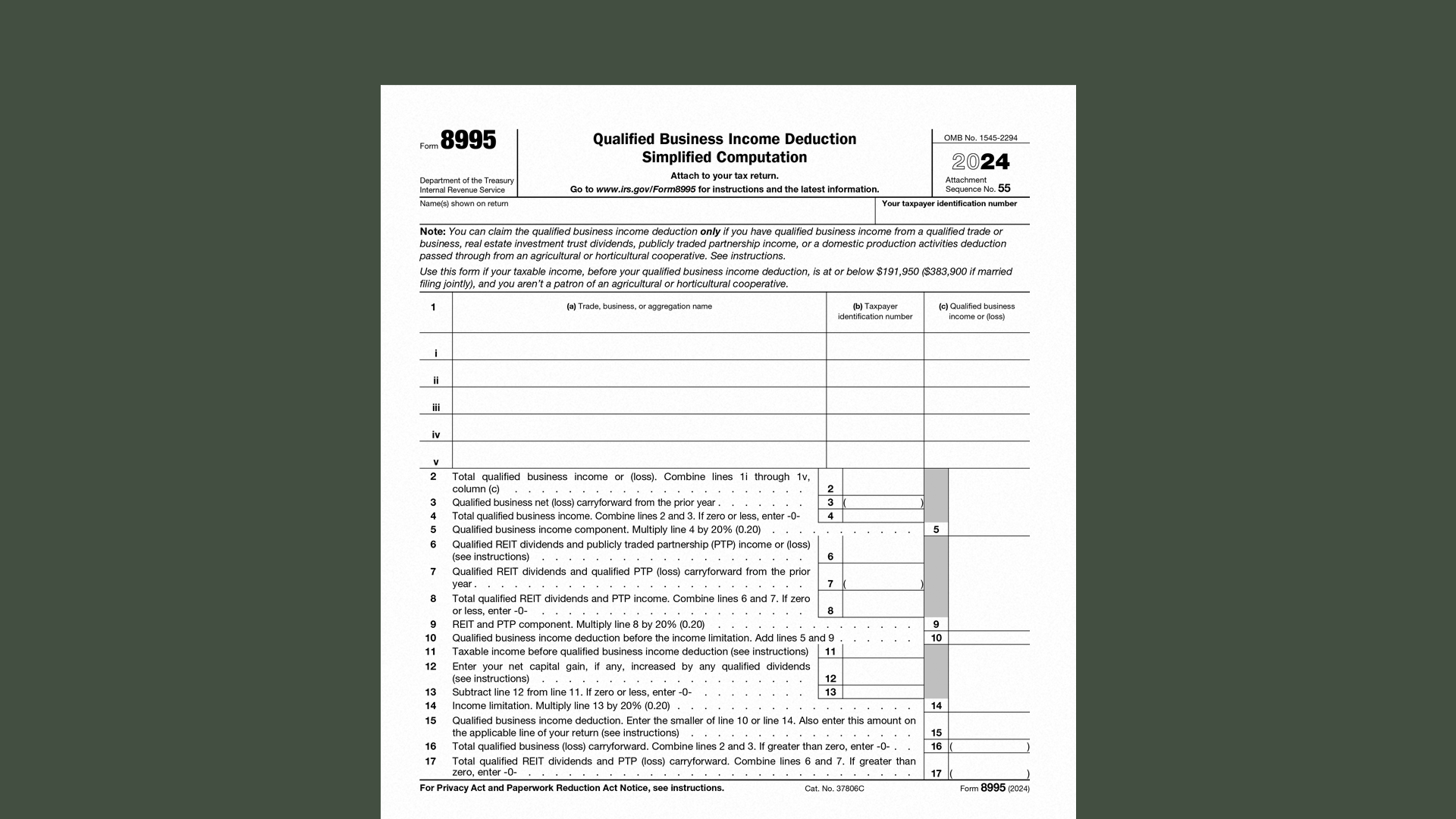
One common worry is the Qualified Business Income (QBI) deduction. If your S corporation pays a state PTET and deducts it on the business return, does that reduce the QBI that drives your federal 20% deduction?
In most real-world setups, yes. A PTET paid and deducted by the entity generally reduces the ordinary business income that flows through to you, and that flow-through income is typically the starting point for QBI. Lower QBI can mean a smaller QBI deduction.

Quick refresher: what QBI is based on
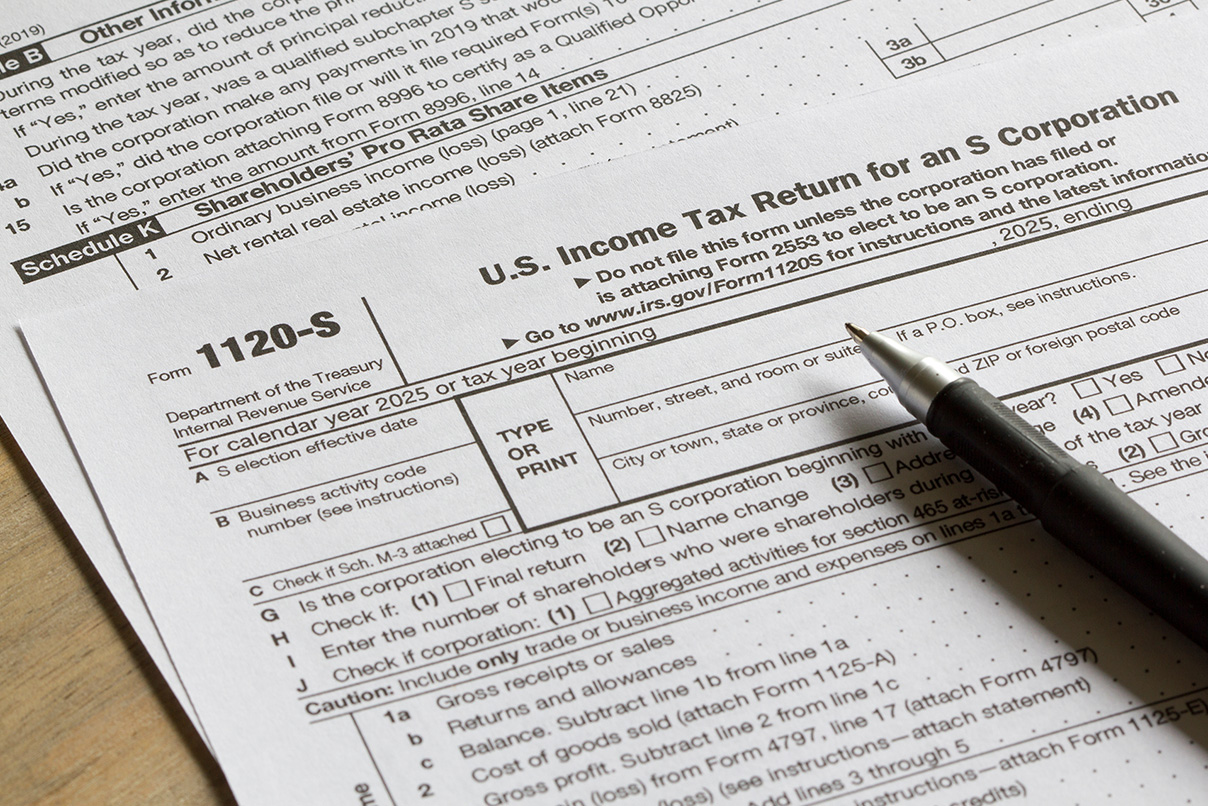
For an S corporation owner, your QBI generally starts with the business’s ordinary business income reported on your Schedule K-1 (Form 1120-S), commonly Box 1, and then gets adjusted under the Section 199A rules.
Conceptually, the QBI calculation starts with the income the business reports to you, not with how much cash you took out of the company. So anything the S corporation deducts that lowers ordinary business income can also lower the owner’s QBI, unless the item is separately stated or otherwise excluded under the QBI rules.
How PTET affects QBI
A PTET election is a state-level regime that lets the pass-through entity pay state income tax at the entity level. Under IRS guidance (including Notice 2020-75), qualifying state and local income taxes that are imposed on and paid by the entity are generally deductible by the entity in computing its non-separately stated income. Owners typically receive a state credit or exclusion to help prevent double state taxation.
From a federal QBI perspective, the key point is straightforward:
- If the S corporation deducts PTET on the S corporation return, that deduction usually reduces ordinary business income reported on the K-1.
- Because QBI often starts with that ordinary business income, the owner’s QBI tends to be lower.
- A lower QBI number can produce a smaller QBI deduction.
That does not automatically mean PTET is a bad deal. The state and federal math can still net out in your favor, especially when the alternative is paying nondeductible state income tax on your personal return because of the SALT cap. It just means you should not expect PTET to increase QBI, and you should plan for the possibility that it decreases it.
S corporation example
Let’s use one simplified S corporation with one owner. Assume the business is otherwise eligible for the QBI deduction and the owner is not limited by the W-2 wage and qualified property rules in this example. Also note that, in real returns, the QBI deduction is generally limited to 20% of taxable income minus net capital gain, which can cap the deduction even if QBI is higher.
Scenario
- Bright Lane Design, Inc. is an S corporation.
- It has $300,000 of ordinary business income before any PTET payment.
- The state offers a PTET election. The S corporation elects PTET and pays $30,000 of PTET during the year.
- The PTET is deducted at the S corporation level, reducing ordinary business income that flows through on the K-1.
Before PTET
Ordinary business income (flows to K-1): $300,000
Owner QBI (simplified): $300,000
Potential QBI deduction (20% of QBI): $60,000
After PTET
Ordinary business income before PTET: $300,000
Less: PTET deduction claimed by S corporation: $30,000
Ordinary business income after PTET (flows to K-1): $270,000
Owner QBI (simplified): $270,000
Potential QBI deduction (20% of QBI): $54,000
What changed?
The PTET reduced QBI by $30,000. As a result, the QBI deduction shrank by $6,000 (20% of $30,000), before considering any taxable-income, wage, property, or SSTB-related limitations.

Is PTET bad for the QBI deduction?
Mechanically, a PTET deduction that reduces ordinary business income usually reduces QBI, so it is common for the computed QBI deduction to be smaller.
The reason some owners experience PTET as more neutral is that their allowed QBI deduction may already be constrained by other rules, such as:
- the overall taxable-income limitation (20% of taxable income minus net capital gain)
- W-2 wage and qualified property limits
- SSTB phaseouts and thresholds
In those cases, reducing QBI might not reduce the final allowed deduction dollar-for-dollar, or it might change which limitation is doing the constraining.
Still, PTET can be beneficial overall because it may convert part of your state tax cost into an entity-level deduction that is not constrained the same way as personal state and local tax deductions.
In other words, it is possible for both of these statements to be true at the same time:
- Your QBI deduction goes down because QBI goes down.
- Your overall federal tax can also go down because you captured an entity-level deduction that you might not have been able to claim personally.
Whenever I walk business owners through this, I frame it like any other tradeoff: PTET can improve one part of the return while slightly shrinking another. You judge it on net impact, not on one line item in isolation.
When the QBI impact feels bigger or smaller
When you are near a threshold
If your taxable income is near the ranges where W-2 wage and qualified property limits or SSTB phaseouts start to matter, reducing QBI can change how those limits apply. Sometimes the PTET deduction makes the QBI deduction smaller simply because QBI is smaller. Other times, reducing income can move you into a more favorable zone where limitations bite less. The interaction can be unintuitive.
When there are multiple owners
PTET is typically allocated among owners based on the entity’s rules and the state’s approach. Each owner’s QBI starts with what is reported on their K-1, so the PTET deduction reduces the pool of income being allocated. The takeaway is the same, but the allocation mechanics matter.
When part of the flow-through is not QBI
Certain items are excluded from QBI or handled outside the “ordinary income” bucket. If a big slice of what flows through is not QBI to begin with, the relationship between PTET and your QBI can feel less direct. This is one reason I like running the numbers rather than relying on rules of thumb.
If you are comparing S corps and partnerships
The core concept is similar for partnerships, but K-1 reporting and separately stated items can change the details. This article focuses on S corporations because owners often look right at K-1 Box 1 and assume that is the whole story.
Practical planning takeaways
- Expect QBI to drop when PTET is deducted at the entity level. That is normal, and it is not a sign something was prepared incorrectly.
- Model the net impact, not just the QBI line. PTET is usually considered because of state tax deduction dynamics. You want to see total federal tax plus total state tax.
- Coordinate with payroll and reasonable compensation. In S corporations, wages and distributions already shape the QBI picture. PTET is another lever affecting pass-through ordinary income.
- Confirm how your state implements credits and add-backs. States vary. For example, some states require an add-back of certain taxes or deductions on the owner’s state return, while others provide a credit that does not perfectly match the entity payment. Those quirks are exactly why you model it.
FAQ
Does PTET always reduce QBI?
If the PTET payment is deducted by the pass-through entity and that deduction reduces ordinary business income, it will usually reduce the QBI amount that flows to the owner. The exact result depends on the business’s mix of income and deductions and how items are reported.
Is the QBI deduction calculated before or after PTET?
Generally, the QBI deduction is based on QBI after ordinary business deductions that reduce the income passed through to you. If PTET is deducted by the S corporation, it reduces the income figure that typically feeds into QBI.
Can PTET ever increase the QBI deduction?
PTET itself does not increase QBI. If the allowed QBI deduction ends up higher after PTET in a specific situation, it is usually because the lower income changed which limitation applied or how strongly it applied, not because PTET added to QBI.
Bottom line
A pass-through entity tax paid and deducted by an S corporation usually reduces the ordinary business income passed to the owner. Because that pass-through ordinary business income is commonly the starting point for qualified business income, PTET often reduces QBI and can reduce the QBI deduction.
If you are deciding whether a PTET election is worth it, treat the QBI reduction as one input, not the whole story. The decision is ultimately about total federal and state tax outcomes and how predictable the cash flow feels for your business.