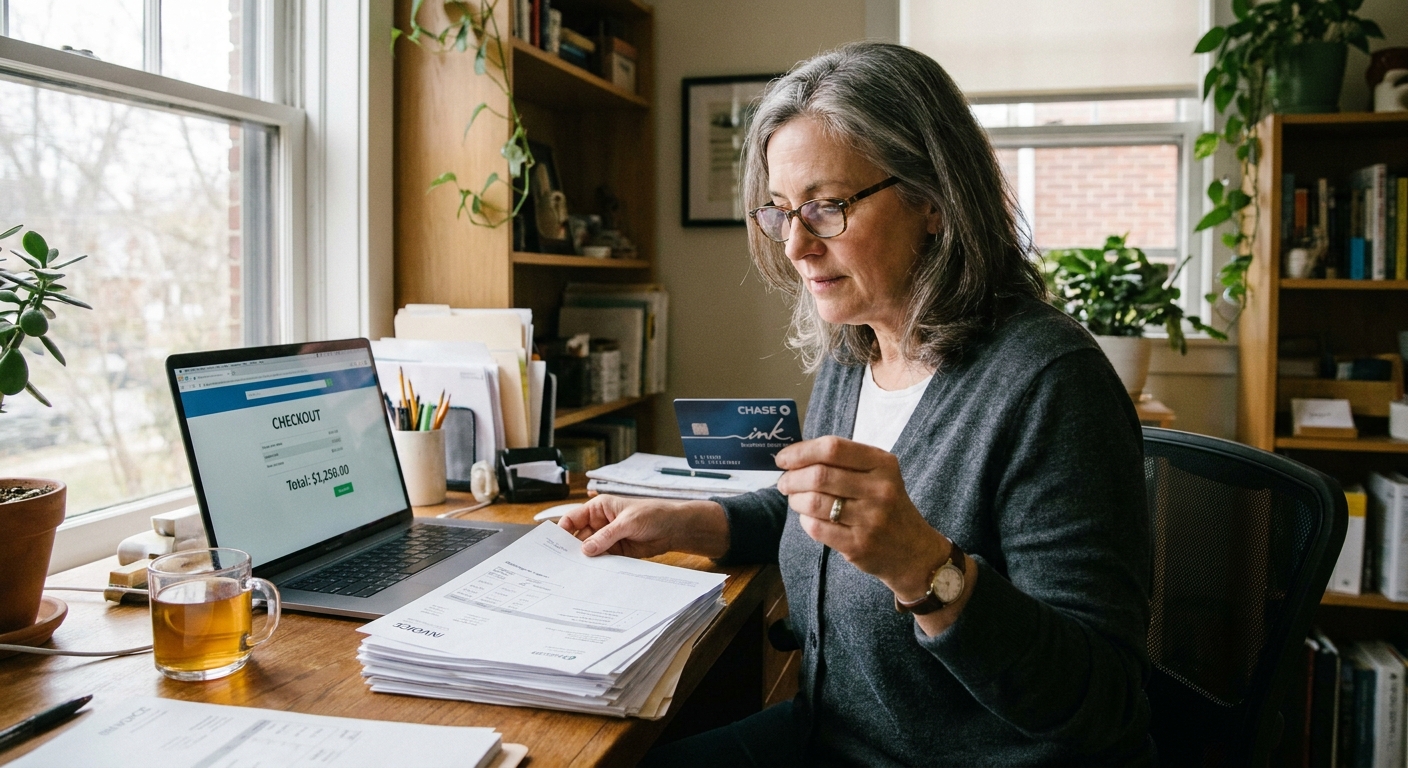
When I was growing up, I watched my parents run a mid-sized agricultural supply company where one month of slow-paying customers could ripple into everything else: loan covenants, vendor terms, even whether payroll felt tight. That early lesson still shapes how I coach founders today: your business financing choices never live in a vacuum. And one of the most common questions I hear is deceptively simple.
Does a business credit card report to your personal credit? Sometimes yes, sometimes no, and sometimes only if things go sideways.
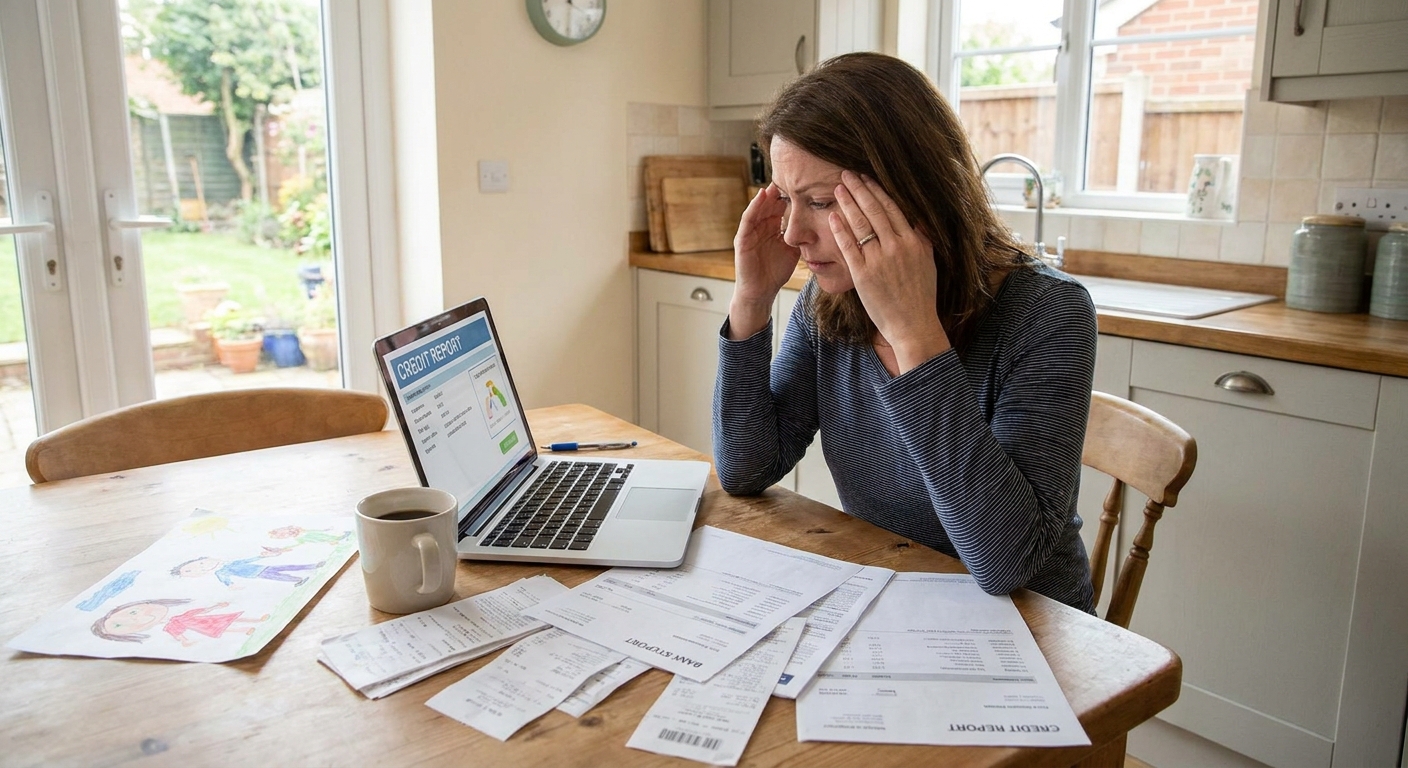
The short answer: it depends on the issuer and the kind of reporting
There are two separate reporting lanes to understand:
- Consumer credit bureaus: Experian, Equifax, TransUnion. This is your personal credit file and the scores tied to it.
- Business credit bureaus: Dun & Bradstreet (D&B), Experian Business, Equifax Business. This is your company’s business credit profile and business credit scores.
A business credit card can report to business bureaus, consumer bureaus, both, or neither in a meaningful way. For example, some issuers mainly use your personal credit for approval and monitoring but do not furnish routine account updates to consumer bureaus.
The most important detail is that "business card" does not automatically mean "stays off personal credit."
When a business credit card shows up on your personal credit report
Here are the most common scenarios where your business card activity ends up affecting your personal credit file.
1) The issuer reports the account monthly to consumer bureaus
Some issuers report business card accounts to the consumer bureaus on an ongoing basis. In that case, your card may appear as a tradeline (a listed credit account) on your personal credit report and can influence:
- Payment history (on-time payments can help, late payments can hurt)
- Credit utilization (balances relative to limits can affect your score if they are reported)
- Average age of accounts and new credit metrics
This is the scenario that surprises people, especially when they intentionally got a business card to keep utilization off their personal profile.
2) The issuer does not report monthly, but may report if you default
Many business card issuers do not report routine activity to consumer bureaus, but they may report negative information if the account becomes severely delinquent, charged off, or sent to collections. Even when an issuer does not directly furnish monthly updates, negative outcomes can still show up if a collection agency reports the debt.
- Good behavior can stay mostly invisible on your personal file.
- Bad outcomes can still become very visible.
For owners who like to keep personal credit clean and quiet, this is often the middle-ground reality.
3) You personally guarantee the card, but it still might not report monthly
Personal guarantees are common. A personal guarantee means you are legally responsible for the debt if the business does not pay. But a personal guarantee is not the same thing as consumer-bureau reporting.
Think of it as two separate questions:
- Liability: Are you on the hook? (Often yes.)
- Visibility: Does the account show up monthly on your personal credit report? (Depends on how that product is reported.)
4) The issuer does a personal credit check when you apply
Even if the card never reports monthly to consumer bureaus, many issuers still pull your personal credit when you apply, especially for small and mid-sized businesses. That can mean a hard inquiry on your personal report and can temporarily affect your score.
5) Corporate cards and true commercial underwriting can be different
Some larger businesses and venture-backed firms qualify for corporate card programs that underwrite primarily on the company’s financials and cash position, sometimes without a traditional personal guarantee. These programs can have very different reporting behavior than mainstream small-business credit cards, so you still want to confirm the specifics before you assume your personal credit is out of the picture.
What “reports to business bureaus” actually means
This is the other half of the confusion. Your card can help build your company’s credit profile if it reports to business bureaus like:
- Dun & Bradstreet (D&B): Often tied to PAYDEX and vendor-style payment experiences. Many businesses need a D-U-N-S number to build depth here.
- Experian Business: Collects trade and financial data; can reflect credit relationships and payment behavior.
- Equifax Business: Similar concept, different data ecosystem and scoring models.
One more nuance: coverage varies. Some issuers report to only one business bureau, not all of them, and some small-business products have limited business-bureau reporting even when the card is branded as “business.”
Important nuance: business-bureau reporting does not automatically create consumer-bureau reporting. You can have strong business credit file activity with minimal personal credit reporting, depending on the issuer.

One owner, two issuer policies: how the difference feels in real life
Let me show you how this plays out with one owner, two different business cards.
Meet Maya
Maya runs a small marketing studio. Cash flow is lumpy: clients pay net-30, her contractors want payment faster, and ad spend hits before revenue lands. She carries balances for short periods, but she pays on time.
Card A: reports monthly to consumer bureaus
Maya opens a business credit card with an issuer that reports activity to consumer bureaus. Here is what she experiences:
- Her personal credit report shows a new account.
- When she floats a large client campaign for 3 weeks, her reported utilization spikes.
- Even though it is for the business, her personal score can dip temporarily when balances report high.
This does not mean she did anything wrong. It just means her personal credit profile is now along for the ride.
Card B: does not report monthly, but may report if there is a default
Later, Maya opens a second business card for a different spending category with an issuer that typically does not report monthly to consumer bureaus. What changes:
- The day-to-day balance generally does not appear on her personal credit report.
- She still had a personal credit inquiry at application time.
- She still has personal liability if the business cannot pay.
From a stress standpoint, Maya prefers Card B for high-spend months because it is less likely to create personal-credit score turbulence from utilization swings.
The takeaway: Two products can both be business credit cards but behave very differently for your personal credit. The deciding factor is the issuer’s reporting approach and the specific product you have.
How to find out whether your business card reports to personal credit
You do not have to guess. Use this quick checklist.
Read the issuer’s reporting and credit bureau disclosure
Look for language in the cardmember agreement or product disclosure about reporting to:
- Consumer reporting agencies (Experian, Equifax, TransUnion)
- Business reporting agencies (D&B, Experian Business, Equifax Business)
If it is unclear, call and ask, “Do you report this business account to consumer bureaus monthly, or only in the event of delinquency?”
Check your personal credit reports after 30 to 60 days
If you already have the card, pull your personal reports and see if the account is listed. Do this even if you feel sure it should not report. Reality beats assumptions every time.
Confirm how employee cards are handled
If you issue employee cards, ask whether authorized user activity can ever be connected to personal credit reporting. Usually the primary concern is still the business account and the guarantor, but it is worth confirming how the issuer structures the account.
Assume policies can change, then verify again
Issuer reporting practices can shift over time, and even within the same bank the behavior can vary by product line. I treat verification as a habit, not a one-time task.
Does a business card ever help your personal credit?
It can, in a narrow sense, if it reports to consumer bureaus and you manage it well. On-time payments and a well-managed revolving account can support a strong personal profile.
But there is a tradeoff: business spending can be volatile. A high balance that reports at the wrong time can drag down your score even if you pay in full a few days later. That is why I generally encourage owners to treat personal credit impact as a risk to manage, not a perk to chase.
What about business charge cards?
Charge cards (where you are expected to pay in full each month) can behave differently from revolving credit cards. Some charge cards do not have a preset spending limit, and some scoring models treat those accounts differently when they appear on consumer reports.
But do not assume they are score-proof. If a charge card reports to consumer bureaus, it can still report a high balance or other fields that can influence your score depending on the model. The rule remains the same: check the issuer’s specific disclosure, then confirm what is actually showing on your reports.
Practical tips to protect your personal credit while using business cards
- Keep utilization predictable: If your card reports to consumer bureaus, consider making mid-cycle payments to reduce the balance that gets reported.
- Separate float from financing: If you regularly need 60 to 90 days of breathing room, a card may not be the best long-term tool for that job. Consider whether a line of credit fits the cash-flow pattern better.
- Set alerts and autopay minimums: Even one accidental late payment can be painful if it hits your personal file.
- Track guarantees across lenders: Founders often stack personal guarantees without realizing how much risk they have personally assumed.
- Remember the indirect effects: Even when a business card is not reporting monthly to consumer bureaus, lenders and issuers can still look at your overall obligations during manual underwriting, account reviews, or future applications.
FAQ
If my business card does not report monthly, can it still hurt my personal credit?
Yes. If you default, the issuer may report negative activity to consumer bureaus, and a collection agency can also report if the debt goes to collections. You may also see a hard inquiry from the application.
Will carrying a balance on a business card affect my personal utilization?
Only if that card reports to consumer bureaus as a revolving account on your personal file. If it does, the reported balance and limit can influence utilization.
Does reporting to D&B mean it will show up on my personal report?
No. D&B is a business credit bureau. Business-bureau reporting is separate from consumer-bureau reporting.
How do I build business credit without risking my personal score?
Start by choosing vendors and financial products that report to business bureaus, pay early or on time consistently, keep business information consistent across filings, and limit personal-credit reporting exposure by selecting issuers with reporting practices that fit your risk tolerance.