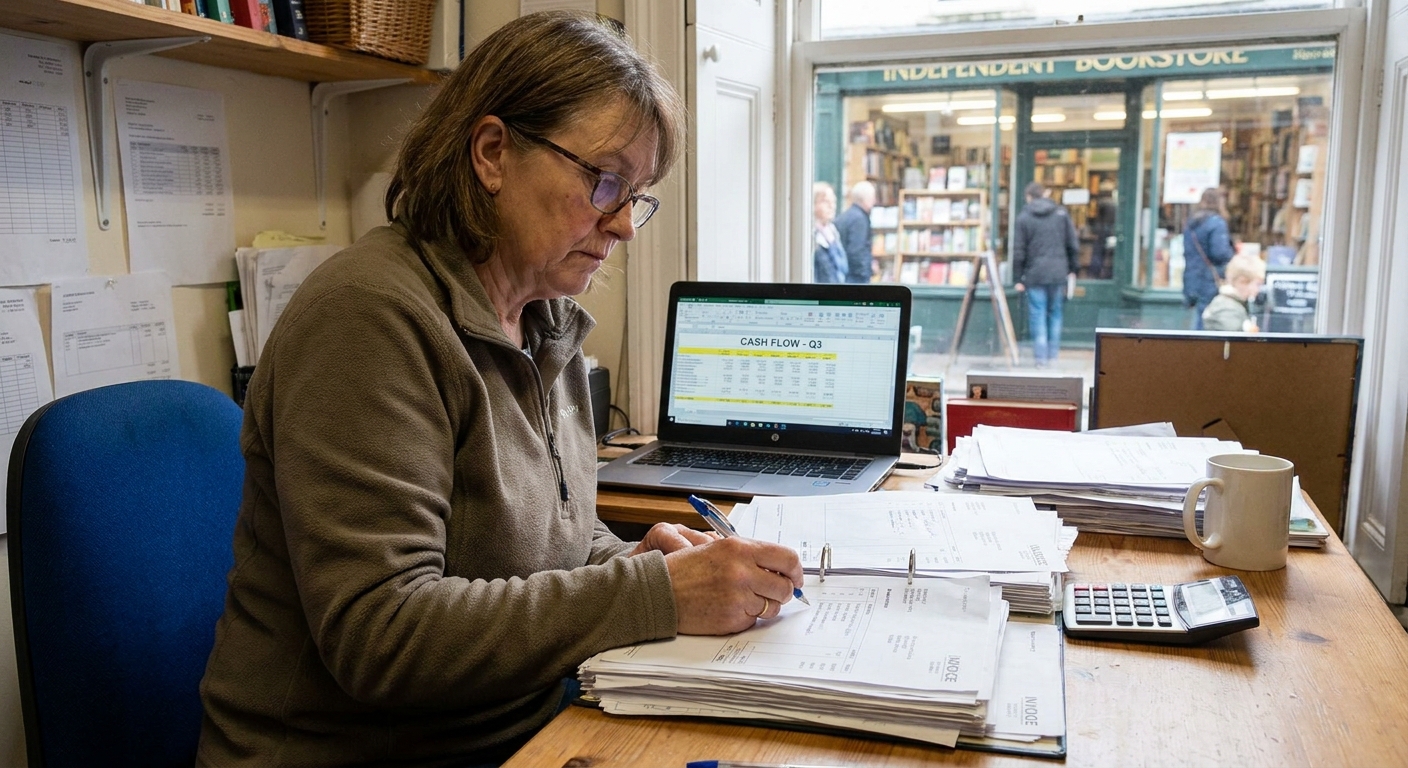
I grew up watching my parents run an agricultural supply company where cash flow was never just a spreadsheet. It was payroll on Friday, a fertilizer shipment that had to be paid before it could leave the yard, and customers who paid when they paid. The two tools that saved the most headaches in those moments were deceptively simple: a card for speed and short float, and a line of credit for flexible borrowing when the gap was bigger or longer.
If you are deciding between a business credit card and a business line of credit, the best choice usually comes down to timing: how fast you need the funds, how long you will carry the balance, and whether you want purchase protections and rewards or a lower-cost borrowing option.

What each product is
Business credit card
A business credit card is a revolving account used for purchases. If you pay the statement balance in full by the due date, you typically avoid interest. If you carry a balance, interest accrues based on the card’s APR. Many cards include rewards, purchase protections, and expense management tools.
Business line of credit
A business line of credit is a revolving credit facility from a bank or online lender. You draw cash (or sometimes pay vendors directly), pay interest on what you draw, and can re-borrow as you repay. Think of it as a reusable borrowing pool designed for working capital, not day-to-day card swipes.
Limits: generous versus scalable
Both products are revolving, but the way limits are set can feel different in the real world:
- Business credit cards often start with moderate limits and can grow quickly with strong personal credit, solid revenue, and consistent usage. Some issuers offer very high limits for established businesses, but approvals can be sensitive to personal credit and recent inquiries.
- Lines of credit are usually underwritten more like a business loan. Expect the lender to look at time in business, revenue, cash flow, existing debt, and bank statements. For stable companies, lines can be increased as financials strengthen, especially with a primary bank relationship.
Practical takeaway: if you are early-stage, a card may be easier to get and increase. If you have steady revenue and clean books, a line often becomes the more dependable long-term safety net.
Cost: APR, float, and fees
This is the comparison most founders care about: what is cheaper when cash gets tight?
When a business credit card can be cheaper
If you can pay the statement balance in full, a card can effectively provide an interest-free float for a short window. Depending on the card, your billing cycle, and when you make the purchase, the time from purchase to due date is often up to about 45 to 55 days.
One important detail people miss: the grace period generally applies only if you paid the previous statement balance in full. If you revolve a balance, many cards start charging interest on new purchases (until you get back to paying in full).
- Best use case: You have a short gap and a known incoming payment (client invoice, marketplace payout, seasonal receipts) before the due date.
- Hidden advantage: Many cards give purchase protections, easier vendor payments, and cleaner expense categorization.
- Common cost to watch: annual fees, penalty APR (after missed payments), cash advance fees, and vendor surcharges for card acceptance.
When a business line of credit can be cheaper
With a line, most products accrue interest as soon as you draw funds. There is typically no grace period. Rates may be lower than card APRs, especially at a traditional bank, and that difference can matter if you carry the balance for weeks or months.
A line can be more cost-effective when:
- You need cash, not just the ability to pay with a card.
- You expect to carry the balance longer than one statement cycle.
- Your vendors charge credit card processing fees you cannot pass on.
Also watch for line-of-credit fees and terms beyond the headline rate. Depending on the lender, you may see origination fees, draw fees, maintenance or renewal fees, minimum interest charges, and variable-rate risk if the line floats with a benchmark rate.
A quick rule of thumb: If you can realistically clear the balance inside a single billing cycle and keep your grace period intact, the card’s float often beats drawing on a line. If the balance will linger, a line tends to win on interest cost.
Interest mechanics: how the meter runs
You do not have to memorize formulas, but it helps to know what you are agreeing to.
- Cards commonly calculate interest using an average daily balance method when you carry a balance. If you pay in full, you generally avoid interest on purchases.
- Lines often charge interest based on the daily outstanding balance (simple interest is common, but lender methods vary). You typically pay interest only on what you draw, not the full limit.
If you are comparing offers, ask exactly how interest is calculated and whether fees apply even when you are not actively borrowing.
Payroll timing example
Let’s use a simple scenario I see constantly with service businesses.
Situation: You run a small marketing agency. Payroll of $18,000 hits on Friday. A client invoice for $25,000 is due next Wednesday, and historically they pay on time. Your bank account will be short for five business days.
Option A: Use card float to preserve cash
To be explicit, you are usually not paying payroll by card. You are preserving cash for payroll by moving other eligible, near-term expenses onto the card.
Many agencies can shift expenses like software renewals, ad spend, travel, shipping, and small vendor invoices to the card so the cash stays in the bank for payroll.
- If you shift $8,000 of expenses to the card and pay the statement in full when the client pays, your interest cost may be $0.
- If your card earns 2% cash back, you might earn about $160 in rewards on spending you were going to do anyway.
Option B: Draw $8,000 from a line of credit
If you draw $8,000 for about a week, you will pay interest for that week (plus any applicable draw or minimum fees). The cost may be modest, but it is rarely zero.
The point: For short, predictable gaps, using the card for eligible expenses can be cheaper than drawing on a line, because the grace period functions like a mini, interest-free loan.
Important caveat: If you miss the payoff and roll the balance, card APR can get expensive fast. The float strategy only works when you are disciplined and the incoming cash is highly likely.

Inventory timing example
Now let’s switch to a product business where timing and supplier terms matter.
Situation: You need to buy $60,000 of inventory today to meet seasonal demand. Your supplier offers a small discount for ACH and charges 3% extra for credit cards. You expect the inventory to sell through in 60 to 90 days.
- Paying by card could add $1,800 in processing fees immediately (3% of $60,000), and if you cannot pay it off quickly, you may carry a balance at a high APR.
- Using a line of credit may let you pay by ACH without fees and borrow for the period your cash is tied up in inventory.
The point: When you are financing inventory that converts to cash over multiple cycles, a line is often the more cost-effective, scalable working-capital tool.
Personal guarantees
This surprises people, so I like to be direct:
- Business credit cards: Many require a personal guarantee, especially for small and mid-sized businesses. That means if the business cannot pay, you are personally responsible.
- Business lines of credit: Many also require a personal guarantee, particularly for closely held businesses. Banks may additionally file a UCC lien on business assets for secured lines.
If avoiding a personal guarantee is a priority, options exist, but they are usually limited to larger, well-established companies or secured arrangements with strong financials. For most owner-operators, assume a guarantee is common for both products and read the agreement carefully.
Credit reporting
Another important difference is how these accounts show up in the credit world.
Business credit cards
Some issuers report account activity to business credit bureaus (like Dun & Bradstreet, Experian Business, and Equifax Business), while others primarily report to personal credit bureaus when there is a personal guarantee, especially if you miss payments. Reporting policies vary by issuer and product, and they can change over time.
Why it matters: If building a business credit profile is part of your plan, ask the issuer directly what they report and to where.
Business lines of credit
Lines of credit are often more likely than cards to be treated as commercial facilities in underwriting and, in many cases, reported to business credit bureaus. But reporting is still lender-dependent, and some lenders report inconsistently or not at all. If there is a personal guarantee, severe delinquency can also affect personal credit.
Why it matters: A well-managed line can support your business borrowing story, but it also becomes part of your ongoing debt picture when you apply for other financing.
Speed and access
- Credit card: Immediate access at checkout, plus online vendor payments. Great for distributed teams and daily purchasing.
- Line of credit: Access depends on the lender. Some provide fast transfers once the line is open, but it is still a step: you draw funds, then pay. Better for cash needs like payroll buffers, tax payments, or paying suppliers who do not accept cards.

Operational risks to plan for
In the real world, the risk is not just the interest rate. It is the moment the tool you rely on stops behaving the way you assumed.
- Card limits can be cut. Issuers can reduce limits based on risk models, utilization spikes, or broader economic tightening.
- Lines can be frozen or re-underwritten. Bank lines may be reviewed annually, can include covenants, and can be reduced if financials weaken.
- Redundancy buys calm. If your business is sensitive to timing, having both a card and a line, plus cash reserves when possible, can keep one hiccup from turning into an emergency.
How to choose
Choose a business credit card when
- You can reliably pay the statement balance in full most months.
- Your cash gap is short and tied to a known inflow.
- You want rewards, purchase protections, and clean expense tracking.
- Your vendors accept cards without punishing fees.
Choose a business line of credit when
- You need cash access for working capital, not just purchasing power.
- You expect to carry a balance beyond one billing cycle.
- You are funding inventory, payroll gaps, taxes, or larger operational swings.
- You want a dedicated liquidity backstop that is not tied to vendor acceptance.
Consider having both when
- You want the card for daily spending and float, and the line for true cash-flow bridging.
- You are deliberately building redundancy so one limit cut or one banking hiccup does not stall the business.
Common mistakes
- Using a card like a long-term loan. Cards are great for float, but carrying balances can quietly become one of the most expensive forms of financing.
- Opening a line only when you are already in trouble. Lines are easiest to get when your financials look strong. Set it up before you need it.
- Ignoring fees vendors pass through. A 2% rewards card is not a win if your supplier charges 3% to accept it.
- Missing the fine print on fees and rate resets. On cards, watch penalty APR and cash advance terms. On lines, watch draw fees, renewal fees, and variable-rate exposure.
- Mixing personal and business spending. It complicates taxes, clouds profitability, and can create legal and accounting messiness.
Tax and accounting notes
In many cases, interest you pay on business borrowing is treated as a business expense, subject to tax rules and limitations that can vary by situation. Credit card rewards are often treated like rebates rather than income, but treatment can depend on how the rewards are earned and used.
If you are making big financing decisions, it is worth confirming the specifics with your tax professional and bookkeeper so your reporting matches reality.
FAQ
Does a business credit card build business credit?
Sometimes. It depends on whether the issuer reports to business credit bureaus and what they report (positive payment history, balances, utilization). Ask before you apply, especially if building a business credit file is a priority.
Is a line of credit always cheaper than a credit card?
Not always. If you use a credit card’s grace period and pay in full, the effective interest cost can be zero. Most lines accrue interest as soon as you draw. Over longer carry periods, a line often becomes cheaper than revolving card debt, but the timeline and fees matter.
Will either require a personal guarantee?
Very often, yes for small businesses. Both products frequently include a personal guarantee, especially when the business is closely held or does not have a long credit history.
Can I use a business credit card for payroll?
Not directly in most cases. Some businesses pay a payroll provider, contractors, or related bills through bill-pay platforms that accept cards, but fees and limits vary. If you need a payroll buffer, a line of credit is usually the cleaner and more predictable tool.
The bottom line
If your cash-flow gaps are short and predictable, a business credit card can be the cheapest tool because of the built-in float, and it may even pay you back in rewards. If your gaps are longer, larger, or require cash, a business line of credit is usually the more sustainable working-capital solution.
And if you are building a business meant to last, having both, used intentionally, is often the calmest way to run operations: the card for everyday efficiency, the line for real liquidity.