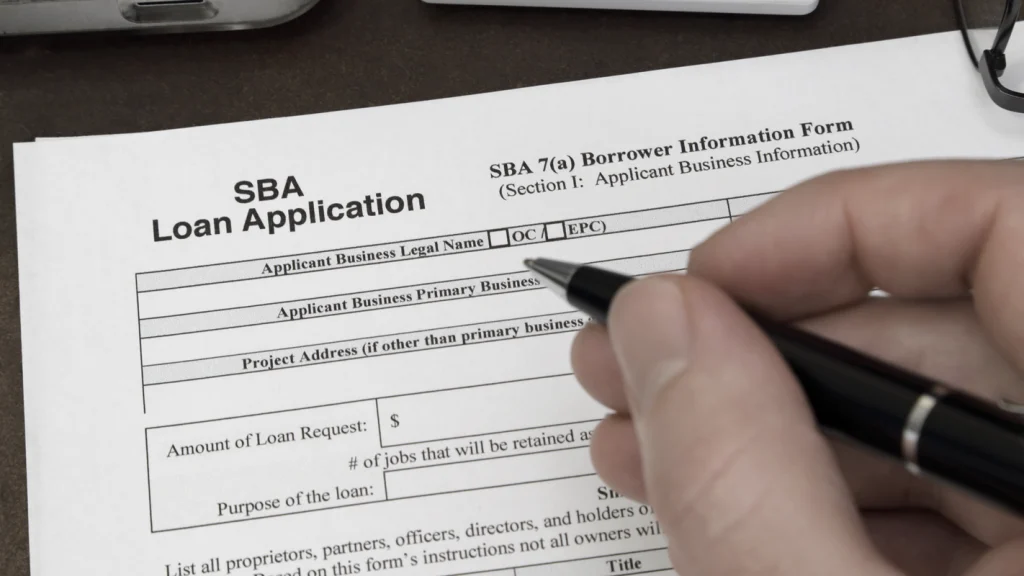
I grew up watching my parents juggle the very unglamorous side of entrepreneurship: notes coming due, seasonal cash flow crunches, and the constant question of which lender would give them room to breathe without trapping them in a bad deal. So when business owners ask me, “Can I use an SBA 7(a) loan to refinance what I already owe?” I hear the stress underneath the question.
In many cases, yes, SBA 7(a) loan proceeds can refinance existing business debt. But the SBA refinance rules are specific. You and your lender generally have to show that the debt is eligible and properly documented, and that the refinance creates a clear, measurable benefit to the borrower, not just a cleaner spreadsheet.

Below is how it generally works for term debt, lines of credit, and business credit cards, plus the common same-lender limitations you should plan around.
Quick answer: yes, if it fits SBA rules
An SBA 7(a) loan is flexible, and that flexibility can extend to refinancing existing business obligations. In a typical refinance request, the lender documents that the request:
- Refinances eligible business debt (a legitimate obligation of the business used for an eligible business purpose).
- Provides a benefit to the borrower that is specific and documentable, often tied to cash flow, stability, or risk.
- Fits SBA and lender refinance policy, including restrictions when the payoff is to the same lender making the new 7(a) loan.
This page focuses on obligations the business already owes. It stays away from acquisition underwriting and home mortgage refinancing. It also assumes no cash-out beyond paying eligible refinance payoffs and typical closing costs. The reason is simple: once you add cash-out, the lender has to document that the extra funds are for SBA-eligible uses, which can change the underwriting and structure.
What debt can a 7(a) refinance?
1) Business term loans
A 7(a) refinance is usually most straightforward when you are paying off an existing business term loan, such as:
- A bank term loan used for equipment, working capital, tenant improvements, or other operating needs
- An online lender term loan used for working capital
- A note used to finance eligible business assets already in place
In practice, lenders commonly ask for the original note, payment history, current payoff statement, and evidence showing what the original proceeds were used for. Your lender will typically be documenting this in the SBA credit memo to meet SBA requirements.
Watch-out: If the original proceeds were used for non-business or ineligible purposes, or the file is missing core documents, refinancing can stall fast.
Another watch-out: Some short-term products that look like loans on the surface, like MCA-style financing or daily remitters, can be difficult to refinance if terms are hard to map to an eligible obligation or if documentation and use-of-funds tracing is thin.
2) Revolving lines of credit
7(a) proceeds may also be used to refinance certain lines of credit, but lenders tend to scrutinize these more closely. One reason is that draws happen over time, so it is often harder to trace proceeds than with a single-disbursement term loan.
Expect questions like:
- Was the line used for normal operating expenses and working capital, or was it supporting chronic losses?
- Is the line repeatedly maxed out and re-borrowed, suggesting a structural cash flow issue?
- Can we document the business purpose of the draws?
While SBA programs can include revolving structures in some situations, most refinance transactions are ultimately underwritten and closed as term loans. Revolving structures are less common and are typically more lender-specific and documentation-heavy.
Watch-out: If the line never meaningfully revolves and has been acting like long-term debt, the lender may push for a term structure and a clearer working capital story.
3) Business credit cards
Refinancing business credit card debt with a 7(a) is possible in many cases, especially when the cards were used for ordinary and necessary business expenses and the monthly payments are squeezing cash flow.
What lenders typically want to see:
- Statements that show balances, payment history, and account ownership
- Confirmation that the accounts are business obligations (or personally guaranteed but clearly business-used)
- A reasonable explanation of what drove balances up and why the refinance fixes the issue instead of repeating it
If the credit card debt includes a meaningful amount of non-business spending, that portion may be excluded from the payoff. But if spending is heavily commingled and you cannot support business purpose with statements and a clean explanation, the lender may treat the payoff as partly or entirely ineligible, not just “slower to underwrite.”
Watch-out: Cash advances and undocumented transfers are harder to support. If you cannot trace use of funds to the business, expect more questions.

The key test: borrower benefit
When SBA and lenders talk about refinancing, they are usually looking for a clear benefit to the borrower. In plain English: the new SBA-backed loan should improve your business finances in a measurable way.
Common examples of borrower benefit include:
- Lower monthly payments that improve cash flow
- Lower interest rate or lower overall cost of capital
- Longer repayment term that makes the debt service sustainable
- Moving from variable to fixed to reduce payment volatility when appropriate
- Consolidation of multiple obligations into one predictable payment and one set of covenants
- Reducing near-term maturity or balloon risk that creates constant renewal pressure
What tends to go poorly is a refinance that simply rearranges balances without improving affordability, stability, or the underlying performance of the business.
A concrete example
Say your business has:
- A $180,000 online lender term loan at a high APR with 24 months remaining
- $45,000 on business credit cards at variable rates
If a 7(a) refinance consolidates both into one longer-term loan with a lower blended cost and a payment the business can sustainably make, that is the kind of benefit story underwriters understand and can document.
Same-lender refinance: read this
One of the most common surprises for owners is that refinancing can get more complicated when the debt being refinanced is held by the same lender that will make the new SBA 7(a) loan.
At a high level, SBA policy treats same-institution refinancing as an exception-based rule. In other words, it is generally prohibited unless a specific SBA-defined exception applies, and the lender must document that exception and the borrower benefit.
What this means for you:
- Expect extra scrutiny if you want Bank A to use a 7(a) loan to refinance debt you already owe to Bank A.
- Document the benefit clearly, including why the new structure is necessary and how it improves the business position.
- Ask early whether the lender will consider a same-lender refinance under their SBA program and what criteria they require.
If your current lender is not willing or able to do it, you may still be able to refinance through a different SBA lender. That is a separate relationship decision, but it is often the path of least resistance.
Common limits and ineligibilities
Even when the word “refinance” sounds straightforward, a few issues routinely make a payoff item ineligible or difficult:
- Non-business or ineligible use of proceeds in the original debt
- Personal debt without a clean business trail. Personal obligations are typically only refinanceable if you can clearly document the proceeds were used for eligible business purposes.
- Weak documentation where you cannot support what the original funds were used for
- Delinquent or defaulted debt. As a practical matter, SBA refinance requests generally work best when the existing debt is current. If it is past due or in default, it is often not eligible unless the lender can document SBA-allowable circumstances and still support the borrower benefit and repayment ability.
- Debt stacking patterns where new debt was repeatedly added without a stable repayment plan
None of these automatically mean “no,” but they do mean you should expect more underwriting questions and a higher bar for explanation.
Documents lenders ask for
Even when the debt type is eligible, the refinance is only as strong as your documentation. Underwriters typically look for:
- Payoff statements for every debt to be refinanced
- Original notes and loan agreements when available
- Proof of business purpose for the original debt (especially lines of credit and credit cards)
- Payment history showing how the obligations have been handled
- Business financials (tax returns, P&L, balance sheet, debt schedule, and sometimes interim statements)
- A clear written explanation of what changed and why refinancing solves the cash flow pressure
If you are consolidating multiple obligations, a clean and complete debt schedule speeds up the process and reduces underwriter back-and-forth.

What lenders worry about
If refinancing feels like it should be purely mathematical, you are not wrong. But lenders are also underwriting behavior and risk. The most common concerns I see are:
- Refinancing to cover operating losses without a believable plan to return to profitability
- Debt stacking, where new debt was added repeatedly without stable repayment capacity
- Unclear use of funds on revolving debt and credit cards
- Thin cash flow, where even the improved SBA payment leaves no cushion
This does not mean you cannot get approved. It means your application should tell the story plainly: what caused the strain, what has changed, and how the new structure creates breathing room without kicking the can down the road.
Common scenarios
Scenario A: Replace short-term debt
Good fit when: the debt is legitimate business debt, payments are squeezing cash, and the business is otherwise stable.
Underwriter focus: improved monthly payment and proof the business can service the new SBA note.
Scenario B: Consolidate credit cards
Good fit when: balances grew due to one-time events like inventory timing, a slow receivables period, or a temporary drop in sales, and you can show business use.
Underwriter focus: statements, business purpose, and a plan that prevents rerunning the balances.
Scenario C: Pay off a line that never revolves
Good fit when: the line was effectively used like term debt and converting it into a term structure improves stability.
Underwriter focus: whether the business has normalized working capital needs and whether the line supported sustainable operations.
Fees, timing, and terms
A refinance is still a full SBA loan process. You should plan for underwriting, closing, and third-party steps. Depending on the lender and structure, costs can include an SBA guaranty fee (when applicable), packaging or lender fees, and standard closing expenses. Fee rules and any waiver programs can change, so your lender should confirm what applies to your specific request.
Timeline varies widely by lender and file complexity. Many straightforward refinance files land in the range of 30 to 90-plus days from application to closing, and longer is not unusual if documentation is messy or there are multiple payoffs to untangle.
On term length, many lenders tie maximum terms to what is being refinanced and what collateral supports it. For example, working-capital debt may be underwritten differently than debt tied to long-lived assets. Your lender should be able to walk you through what term is realistic for your specific payoff mix.
FAQ
Can I refinance term debt and credit cards together?
Often, yes. Many 7(a) refinance deals are consolidations. The key is that each payoff item is eligible, properly documented, and the refinance produces a clear borrower benefit, such as better cash flow, lower cost, or reduced maturity risk.
Do I need perfect credit to refinance?
No, but the lender will look at business and personal credit, payment history on existing debts, and whether there were recent delinquencies. Strong documentation and a believable cash flow story matter a lot.
Can a 7(a) refinance debt with my current bank?
Sometimes. Same-lender refinances are generally prohibited unless a specific SBA exception applies, and the lender must document that exception and the borrower benefit. Many lenders also apply tighter internal rules.
Is a 7(a) refinance the same as debt relief?
No. A 7(a) refinance is still a loan that must be repaid. It can reduce pressure by improving terms and cash flow, but it is not forgiveness.
How to decide if it is worth it
When I help owners think this through, I come back to three questions:
- Is the debt clearly business related and well documented?
- Will the SBA structure materially improve cash flow or risk? Lower payment, lower cost, longer term, more stability.
- Does the business have a sustainable path forward? Not perfection, but a real plan backed by numbers.
If you can answer “yes” to all three, a 7(a) refinance can be a powerful reset. If one of those is shaky, you may still have options, but you will want to address the weak spot before you spend weeks gathering paperwork and paying third-party fees.