I grew up watching my parents run a mid-sized agricultural supply business, and I learned early that taxes do not care whether “the owner” is a person or a legal entity. They care who the taxpayer is, what kind of income is flowing through, and who reports it. Section 199A, the qualified business income (QBI) deduction, follows largely the same framework for trusts and estates, but with special allocation rules when income is retained versus distributed.

Let’s walk through when a trust or estate can claim the QBI deduction, how the taxable-income threshold applies at the trust or estate level, and how distributions can shift the deduction to beneficiaries.
Quick answer: yes, if the trust or estate has QBI
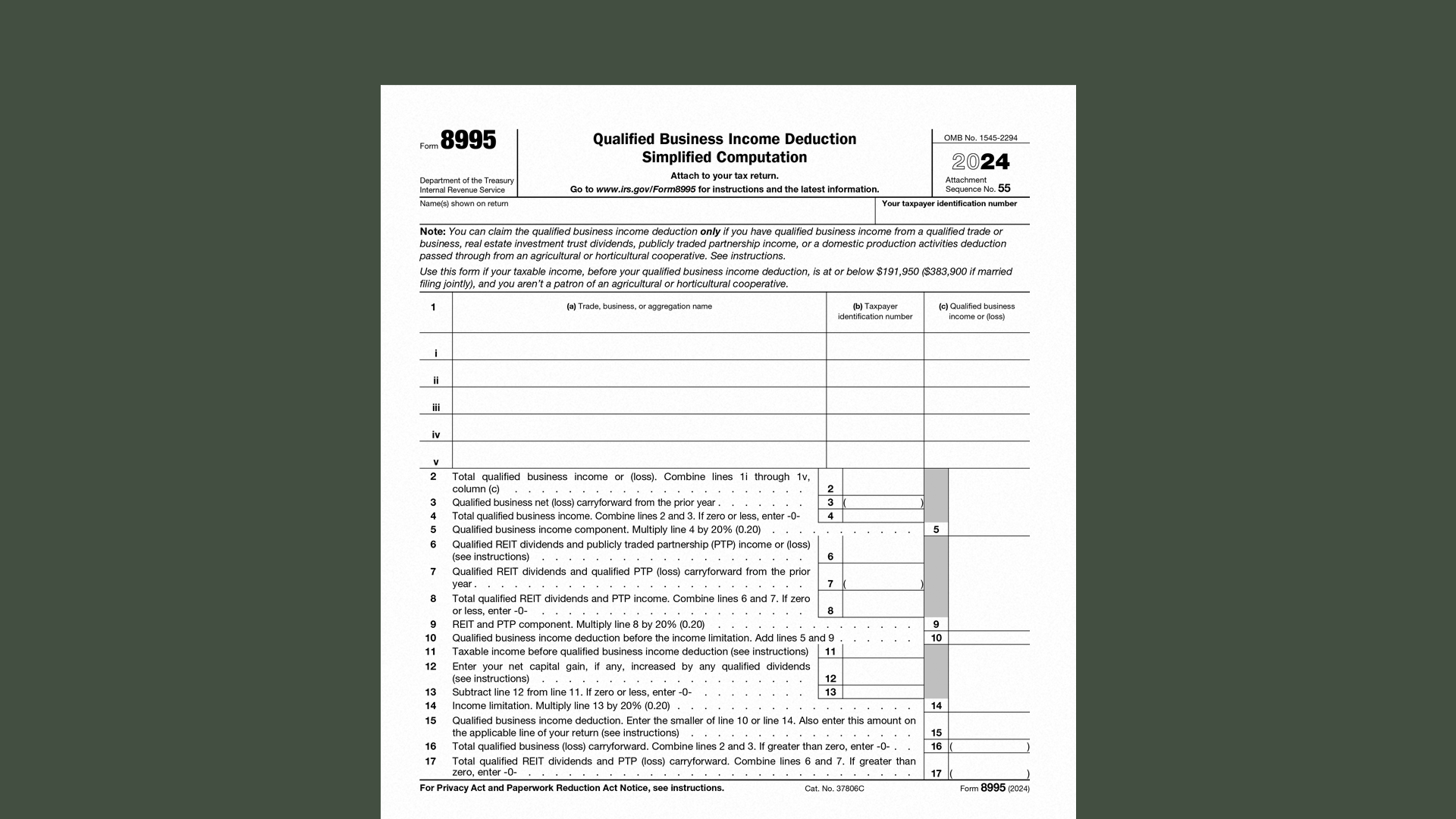
A trust or estate can claim the QBI deduction if it has qualified business income from a qualified trade or business (generally a pass-through business such as an S corporation, partnership, or sole proprietorship activity reported on Schedule C or E).
Practically, this usually shows up when a trust or estate:
- Owns an interest in an LLC or partnership conducting an active business.
- Owns S corporation shares in an operating company.
- Directly operates a business activity (less common, but possible).
QBI generally does not include items like capital gains, interest or dividend income not properly connected with the business, or certain payments to partners such as guaranteed payments for services. Also, W-2 wages are not QBI, but W-2 wages paid by the business can matter because they feed the wage limitation when the income thresholds are exceeded.
Whether rental income counts depends on facts and circumstances and whether the rental rises to the level of a trade or business under Section 162. As a practical pointer, many taxpayers look to the rental real estate safe harbor guidance (Rev. Proc. 2019-38) to evaluate whether a rental activity may qualify.
One more reminder I give clients every year: the Section 199A taxable-income thresholds are indexed and change annually, so the analysis should be done using the current-year numbers.
Who claims Section 199A on a trust or estate return?
Trusts and estates file income taxes on Form 1041. If the trust or estate is a non-grantor trust or an estate and it has QBI, it computes the QBI deduction on Form 1041 using the Section 199A rules.
But here is the key: the deduction does not automatically “stay” on the trust return. It depends on what income is retained by the trust or estate versus what is distributed to beneficiaries, and how the Section 199A items are allocated under the regulations.
If the trust is a grantor trust, the grantor is generally treated as the owner for income tax purposes. In plain terms, the QBI items are typically reported on the grantor’s individual return (Form 1040), not claimed as a deduction on a non-grantor Form 1041 calculation.
How the taxable-income threshold applies to the trust or estate
Section 199A has income-based limitations. The most important one is the taxable income threshold where W-2 wage and qualified property limits begin to apply, and where certain service businesses (SSTBs) can face phaseouts.
For a trust or estate, those threshold calculations apply to the trust or estate’s taxable income, not the grantor’s or beneficiary’s taxable income.
Why that matters
Trusts reach the top tax brackets quickly. That means it is common for a trust that retains income to move into the range where Section 199A limitations begin to apply sooner than an individual owner would.
If the trust retains enough taxable income, the QBI deduction could be constrained by:
- W-2 wage limits and the alternative limit tied to qualified property (UBIA), depending on the trust’s taxable income.
- SSTB rules, if the underlying business is a specified service trade or business and the trust’s taxable income is high enough to trigger a phaseout.
On the other hand, if income is distributed out, the trust’s taxable income may drop. That can change which taxpayer is actually subject to the threshold and limitation calculations: the trust, the beneficiaries, or both.
How distributions can shift QBI items to beneficiaries
When a trust or estate distributes income to beneficiaries, that income is typically carried out via distributable net income (DNI) and reported to beneficiaries on Schedule K-1 (Form 1041).
For Section 199A purposes, beneficiaries may receive their share of:
- QBI
- W-2 wages (if applicable)
- Qualified property (UBIA) information (if applicable)
- REIT/PTP items, if the trust holds those investments
However, it is not simply “whatever cash was distributed.” The trust or estate must allocate Section 199A items between the fiduciary and the beneficiaries based on the regulations, generally tracking the way items are carried out through DNI (and becoming more nuanced with multiple beneficiaries and different allocation provisions in the governing instrument).
Beneficiaries then use that information to compute their own QBI deduction on their individual returns, subject to their taxable income thresholds.
The practical takeaway
A trust can be the taxpayer claiming the QBI deduction on Form 1041, but distributions often shift some or all of the QBI deduction opportunity to the beneficiaries. This is not about “assigning” deductions casually. It follows how the income is taxed and how the Section 199A items are allocated.
Example: a trust that owns part of an operating business
Here is a clean example that shows the mechanics without getting lost in edge cases.

Setup
- A simple trust owns a 30% membership interest in an operating LLC taxed as a partnership.
- The LLC runs a non-SSTB business (think light manufacturing or a local distribution operation).
- The LLC allocates $120,000 of ordinary business income to the trust for the year (this is the trust’s share of QBI, assuming it meets QBI rules).
- The trust has minimal other income and deductions.
- Because it is a simple trust, it must distribute its income currently to the beneficiary.
What happens on Form 1041 and the K-1
- The trust reports its K-1 from the LLC on Form 1041.
- Because the trust distributes income, much of that taxable income is carried out to the beneficiary through DNI.
- The beneficiary’s Schedule K-1 (Form 1041) should include the 199A information necessary for the beneficiary to compute their QBI deduction on their own return.
Who gets the QBI deduction?
In this simple trust scenario, the beneficiary is often the one in position to claim the QBI deduction, because the income is taxed on the beneficiary’s return. The trust may have little or no taxable income left after the distribution, meaning there may be little or no QBI deduction left to claim at the trust level.
That said, distributing income is not a magic move. If the beneficiary’s taxable income is high enough, the same wage, property, and SSTB limitations can still reduce the deduction on the beneficiary’s return.
If, instead, this were a complex trust that retained a meaningful amount of income, the trust might claim a QBI deduction on the portion of QBI it retains, and the beneficiary might claim a QBI deduction on the portion carried out to them. Same business, but potentially very different outcomes depending on retention, thresholds, and limitations.
Common mistakes I see with trust and estate QBI
1) Assuming the trust can always take 20% of business income
The 20% figure is the headline, but it is not automatic. Limitations can reduce it, and trusts can run into those limitations quickly when they retain income.
2) Ignoring W-2 wages and qualified property data
Once taxable income is above the threshold, the wage and property limits can matter a lot. If the K-1 package does not include the right 199A details, the deduction may be understated or effectively unavailable.
3) Confusing grantor trusts with non-grantor trusts
If a trust is a grantor trust, the grantor is generally treated as the owner for income tax purposes. That often means the QBI items belong on the grantor’s Form 1040 reporting, rather than being computed as a separate non-grantor trust deduction on Form 1041. Non-grantor trusts compute under the trust and estate rules on Form 1041.
4) Treating distributions like a planning switch without checking DNI and the trust document
Distributions follow the trust instrument and fiduciary rules, then the tax rules. You cannot always distribute “just enough” to optimize 199A without considering beneficiary rights, trustee discretion, and DNI mechanics. And even when you can distribute, the 199A allocation rules still control how QBI, wages, and UBIA are split between the trust and beneficiaries.
What to gather before you or your CPA calculates it
If a trust or estate owns part of an operating business, these items make the QBI calculation much smoother:
- The business K-1 and its Section 199A statement (QBI, W-2 wages, UBIA of qualified property, and any SSTB designation).
- The trust’s distribution records for the year and beneficiary allocations.
- Form 1041 draft numbers, especially taxable income and DNI.
- Whether the trust is grantor, simple, complex, or an estate in administration.
FAQ
Can an estate claim the QBI deduction during administration?
Yes, an estate can potentially claim the QBI deduction if it has QBI from a qualified trade or business during administration. As with trusts, the estate’s taxable income level and distributions to beneficiaries can affect where the deduction is ultimately realized.
If the trust distributes all income, does the trust lose the deduction?
Often, yes in the sense that the trust itself may have little or no taxable income left to benefit from a deduction. But the QBI-related items can shift to beneficiaries through the K-1, allowing beneficiaries to potentially claim the deduction on their returns, subject to the allocation rules.
Does the trust have to materially participate for the income to be QBI?
Material participation is not a universal requirement for QBI. The bigger gatekeeper is whether the activity rises to a trade or business under Section 162, which is especially important for rentals. Grouping decisions and how the activity is reported can be pivotal. Passive activity loss limits can still affect the taxable income picture and suspended losses, but they are not the basic definition of QBI.
Is professional services income eligible if the trust owns the business?
It depends. If the business is an SSTB, the QBI deduction can phase out once taxable income is high enough. Trusts can run into that phaseout quickly if they retain income, while beneficiaries may or may not depending on their own taxable income.
The bottom line
A trust or estate can absolutely be the taxpayer that claims the QBI deduction, but only to the extent it has QBI and taxable income that supports the deduction. The taxable-income threshold applies at the trust or estate level for retained income. When income is distributed, the QBI items often travel with it to beneficiaries through the K-1, based on DNI and the Section 199A allocation rules.
If your trust owns part of an operating business, the cleanest next step is to review the K-1’s 199A statements alongside the trust’s distribution pattern and Form 1041 draft. That one comparison typically reveals where the deduction is supposed to land.