
I grew up watching my parents run a mid-sized agricultural supply company, and I can still remember the stress that hit when a lender’s “estimated fees” turned into a larger, messier number at the finish line. Mortgages are not identical to business loans, but the feeling is the same: you think you are shopping the rate, and then the fee stack shows up.
If you are refinancing, you are essentially taking out a new mortgage to replace the old one. That means a new set of closing costs, plus a few refinance-specific quirks like prepaid interest timing, first payment timing, and escrow account changes.
Let’s break down what refinance closing costs and fees typically are, what is negotiable, and how to estimate your likely out-of-pocket cash to close.

Typical refinance closing costs: the realistic range
You will hear a lot of rules of thumb about refinance costs. The cleanest way to think about it is in two layers:
- Fees (lender + third-party services): often roughly 2% to 5% of the loan amount, but it can be lower or higher depending on lender pricing and local title costs.
- Prepaids (escrow + per-diem interest): not really “fees,” but they can still add meaningful cash-to-close and can make the total feel like 2% to 6% or more in some cases.
Your actual number depends heavily on:
- Loan size (some fees are flat, others scale with balance)
- Your state and county (title and recording fees vary a lot)
- Credit score and loan type (pricing adjustments can show up as points)
- Equity and property type (appraisal and underwriting complexity)
- Whether you escrow taxes and insurance (cash-to-close can jump if the escrow account is being set up or replenished)
Also important: some items people call “closing costs” are true fees (money you pay to get the loan), while others are prepaids (money you would have paid anyway, just collected upfront at closing). Knowing the difference makes the estimate much less scary.
The full refinance fee stack
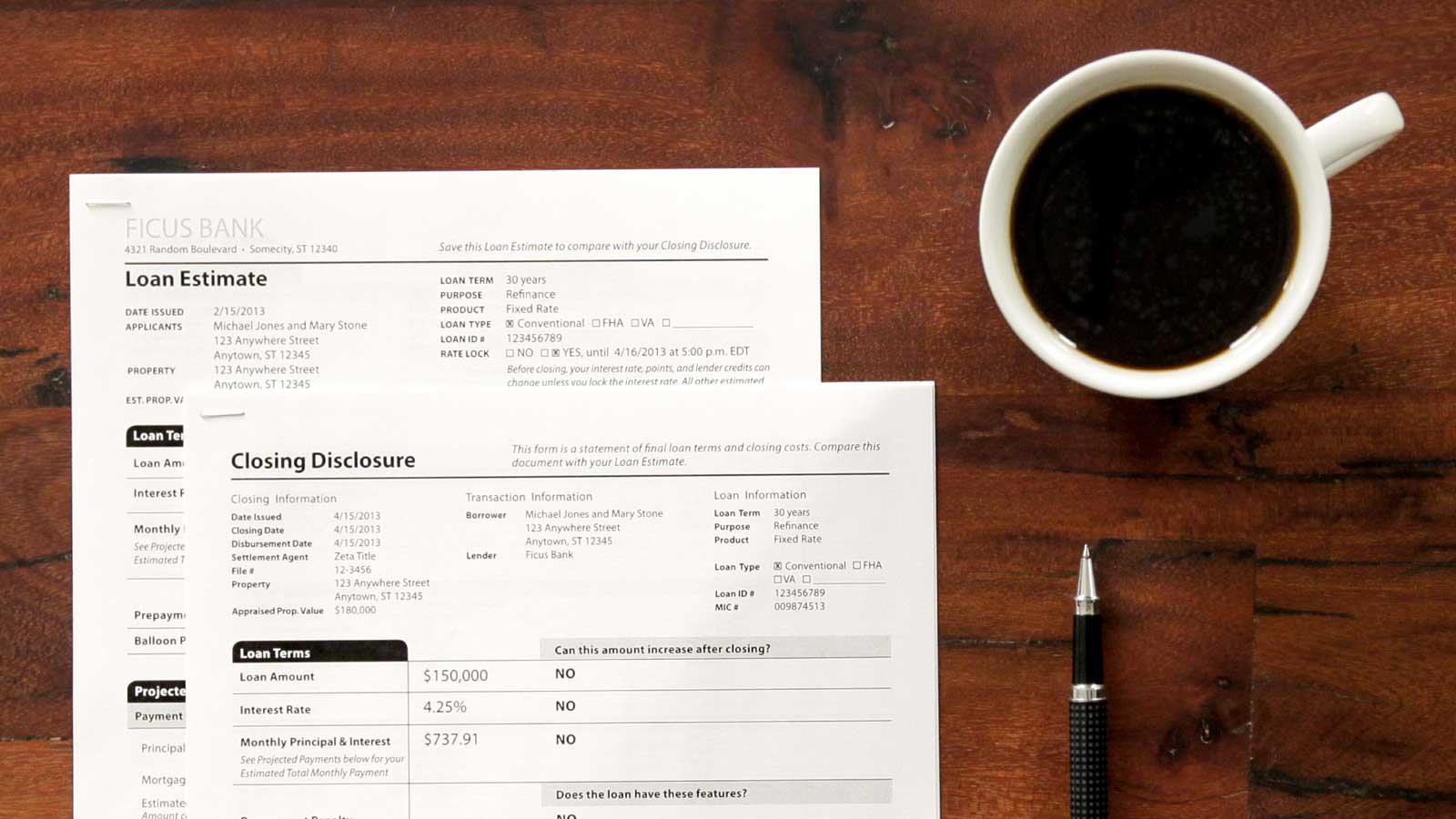
Your Loan Estimate and Closing Disclosure group costs into buckets. Here is what those buckets usually include in plain English.
1) Lender fees
These are the charges from the lender for making the loan. Common line items include:
- Origination fee (sometimes a percentage of the loan amount, sometimes flat)
- Underwriting fee
- Processing or administration fee
- Lock pricing or extension costs (often reflected through points or credits, and sometimes as a lock extension fee if your closing slips)
What to know: these fees are often the most negotiable category, especially if you have strong credit, significant assets, or competing offers.
2) Points
Points can be confusing because they are not mandatory, but they show up in many refinance quotes.
- Discount points: upfront cost you pay to buy a lower interest rate.
- Lender credits: the lender covers some closing costs in exchange for a higher interest rate.
What to know: points change the cost math. A “no closing cost refinance” typically means you are paying costs through a higher rate or rolling them into the loan, not that costs disappeared.
3) Appraisal fee
Many refinances require a new appraisal to confirm the home’s value. This is typically a few hundred dollars, but can be higher for complex properties or certain geographies.
What to know: some loans qualify for an appraisal waiver, depending on your equity, loan type, and the lender’s automated valuation results. If you are offered a waiver, confirm in writing whether an appraisal fee is truly removed.
4) Credit report and verification fees
Expect smaller fees related to pulling your credit and verifying income, employment, or assets. These are usually modest, but can add up alongside other third-party charges.
5) Title charges and settlement services
Even though you already own the home, the new lender still wants clean title and proper documentation. Common title and settlement costs include:
- Lender’s title insurance (required in most refinances and protects the lender, not you)
- Owner’s title insurance (often optional on a refinance, and many borrowers do not buy it again)
- Title search and title exam
- Settlement/escrow/closing fee (the company coordinating the closing)
- Notary fee (if applicable)
What to know: title costs vary widely by state. In some places, title insurance is regulated; in others, you can shop meaningfully.
6) Government recording fees and taxes
Your county or municipality may charge to record the new mortgage documents. Some states or localities also impose mortgage or transfer taxes.
What to know: these are generally not negotiable. They are “this is what it costs to record the paperwork where you live” charges.
7) Prepaid interest
At closing, you typically prepay interest from your closing date through the end of that month. This is why closing on the 3rd versus the 28th can change cash to close.
What to know: prepaid interest is not a junk fee. It is a calendar issue.
8) Escrow setup and escrow changes
If your new loan will escrow property taxes and homeowners insurance, you may need to fund a new escrow account at closing. That can include:
- Several months of property tax reserves
- Several months of homeowners insurance reserves
- Sometimes mortgage insurance reserves, if applicable
Important refinance quirk: if your current mortgage has an escrow account, that balance is usually refunded to you after your old loan is paid off. That refund can take several weeks and, in many cases, around 2 to 6 weeks depending on the servicer and timing. In the meantime, you may be fronting the new escrow funding.
9) Insurance and flood certification
Depending on your property and lender, you may see fees related to flood zone determination, or requirements to show current homeowners insurance coverage.
How to estimate cash to close
When readers ask me, “How much will I actually need in the bank?” my answer is: estimate cash to close, not just “closing costs.” Cash to close includes fees plus prepaids, minus credits, and plus or minus escrow adjustments.
A simple estimation method
Use this rough checklist to build an estimate before you even apply:
- A) Lender and third-party fees: start with 2% to 4% of the new loan amount (use the higher end if your balance is small or your area has higher title costs).
- B) Add prepaid interest: estimate 10 to 20 days of interest as a placeholder. Closing later in the month usually reduces this.
- C) Add escrow funding: if you escrow, assume 2 to 6 months of taxes and insurance combined. This depends on your tax due dates and insurance renewal schedule.
- D) Subtract lender credits: if you accept a higher rate in exchange for credits, subtract those from the total.
- E) Consider your escrow refund: expect a refund from the old servicer if you had escrow, but do not rely on that money to show up immediately.
One timing nuance people miss
Closing later in the month often lowers prepaid interest because you are paying fewer days through month-end. That can reduce cash due at closing, but it does not automatically mean the refinance is “cheaper overall.” Your first mortgage payment is typically due after a full month has passed, so the first payment date can shift based on when you close. In other words: less prepaid interest usually means you are simply paying more of your interest through regular monthly payments instead of at the closing table.
Rolling costs into the loan vs paying out of pocket
Some refinance costs can be rolled into the new loan amount, which reduces the cash you bring to closing, but it also:
- Increases your loan balance
- Increases total interest paid over time
- Can affect your loan-to-value ratio and pricing
For many households, “rolling in” is not automatically bad. It is a trade: liquidity now versus paying more over time.
Which refinance fees are negotiable
Not every line item is up for debate. But more is negotiable than most people realize, especially on the lender side.
Often negotiable
- Origination, underwriting, and processing fees: ask for a fee waiver or reduction, especially if you have competing Loan Estimates.
- Discount points: you can usually choose fewer points (higher rate) or more points (lower rate). The right choice depends on how long you will keep the loan.
- Lender credits: you can request more credits by accepting a slightly higher rate, or reduce credits if you want the lowest possible rate.
- Title and settlement provider: in many cases you can shop. Ask the lender what services you can shop for and whether they have any restrictions.
Sometimes negotiable, sometimes fixed
- Appraisal fee: the fee is usually set by the appraisal management process, but you can ask whether you qualify for an appraisal waiver or whether another valuation option exists.
- Notary and courier fees: can vary by provider and location.
Usually not negotiable
- Government recording fees
- Local taxes tied to the transaction
- Prepaid interest (but you can influence it by choosing your closing date)
- Escrow funding (driven by tax and insurance timing and required reserve levels)
My favorite negotiation lever
If you compare two lenders, ask each one for a quote with the same:
- Interest rate (or as close as possible)
- Points (0 points is the cleanest baseline)
- Lender credits (either none or the same target)
- Lock period
- Closing date estimate
This reduces the chance you pick the “cheapest” offer that was only cheap because the quote assumed points, a shorter lock, or a different escrow setup.
Costs by loan type
Closing costs can differ based on the product, not just the lender.
Conventional refinance
Often has the most lender-to-lender variation in underwriting and origination fees and pricing adjustments based on credit score, loan-to-value, and occupancy.
FHA streamline vs FHA refinance
An FHA streamline refinance may reduce documentation and sometimes appraisal requirements for eligible borrowers. FHA loans also come with mortgage insurance rules that can affect the long-term cost picture, not just closing day fees.
VA IRRRL vs VA cash-out
VA Interest Rate Reduction Refinance Loans (IRRRLs) can have different fee structures and funding fee considerations. The VA funding fee may apply depending on eligibility and circumstances.
Cash-out refinance
Cash-out often has tighter pricing and underwriting because the lender is increasing the principal balance beyond simply replacing the old loan. Appraisal requirements are also common.
Cost-saving moves that work
If you want to reduce the refinance bill, focus on the levers that materially move the number.
- Get at least two Loan Estimates and ask each lender to beat the other’s lender fees or credit amount.
- Choose your closing date intentionally to manage prepaid interest. Closing later in the month typically reduces prepaid interest due at closing.
- Ask about appraisal waivers if you have strong equity and a straightforward property.
- Shop title where allowed, especially if your state permits meaningful competition on premiums and settlement fees.
- Run a break-even analysis on points: if it takes 6 to 8 years to recoup points and you might move in 3, points probably do not serve you.

Frequently asked questions
Can refinance closing costs be deducted on taxes?
It depends on the fee type and your tax situation. In general, points paid on a refinance are often deducted over time by amortizing them over the life of the loan, while points tied to certain home improvements can be treated differently in some situations. The IRS guidance most people end up circling back to is the mortgage interest deduction rules in IRS Publication 936. Because the details matter, this is one of those moments where a quick check with a tax pro can prevent an expensive assumption.
Is a “no closing cost refinance” real?
It is real in the sense that you might not write a check at closing. But the costs are typically covered through lender credits (meaning a higher rate) or added to your loan balance. The best question to ask is: “What is my interest rate and loan amount with and without lender credits?”
Why did my cash to close jump right before closing?
The usual culprits are:
- A change in closing date (prepaid interest changes)
- An escrow adjustment (taxes and insurance reserves recalculated)
- A rate lock change that affected points or credits
- A corrected title or recording estimate once the settlement company finalized figures
Do I pay closing costs again if I refinanced recently?
Yes, a refinance is a new loan with new closing costs. In rare situations, a lender may offer special pricing or credits for repeat customers, but the process still has third-party and prepaid components.
Are the fees worth it?
Even though this article is about costs, it helps to connect the fee stack to a decision rule you can actually use.
Two quick tests:
- Monthly savings test: take your expected monthly payment savings and compare it to the fees you are paying out of pocket.
- Break-even month: divide total refinance costs (true fees, not prepaids) by monthly savings to estimate how long it takes to break even.
If you plan to sell, move, or refinance again before your break-even point, you may still refinance, but you should do it eyes-wide-open and consider lender credits, fewer points, or a different product.
The best refinance is not the one with the lowest headline rate. It is the one where the total cost, timeline, and your real life plans all fit together without financial stress.