I grew up watching my parents run a mid-sized agricultural supply company where the definition of “small” changed depending on who was asking. A local banker saw a family business. A supplier saw a serious buyer. The IRS saw a set of forms. The SBA is similar: “small business” is not a vibe. It is a size standard tied to your industry code, and it is a core eligibility requirement for SBA 7(a) and 504 financing.
This page will help you answer one practical question before you spend weeks on an SBA loan package: Do you meet the SBA size standard? We will cover how to find your NAICS code, whether your industry uses receipts or employees, how the SBA calculates them (at a practical level), and how affiliation with related companies can push you over the limit. I will also separate size standards from another common gate: credit and broader underwriting.
What the size standard means
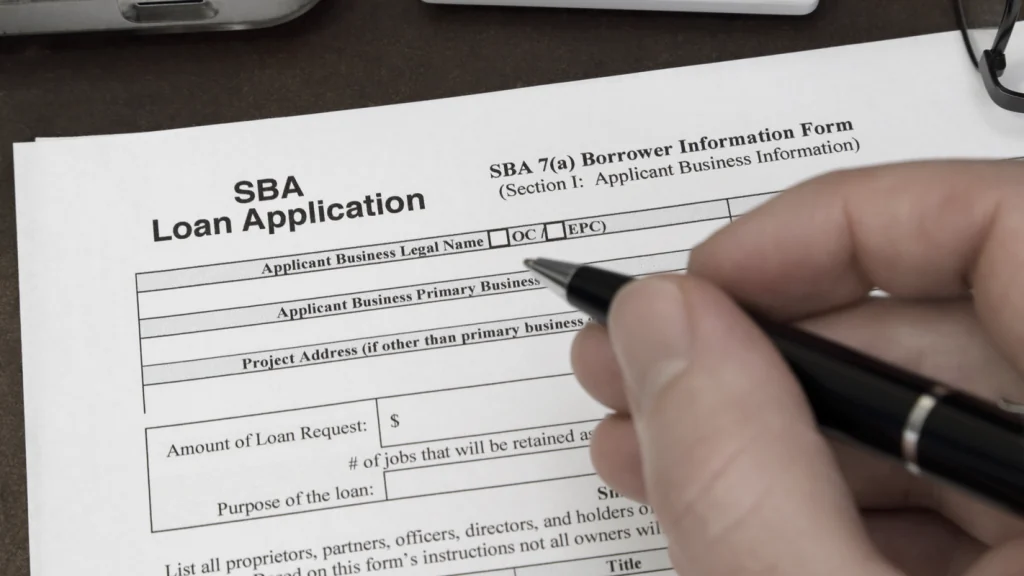
For most SBA business loan programs, your company generally must qualify as “small” under the SBA’s definition. That definition is usually based on:
- Your industry, identified by a NAICS code (North American Industry Classification System).
- A size metric tied to that NAICS code, usually either average annual receipts or number of employees.
- Affiliation rules that may require you to add other businesses’ receipts or employees to yours if there is common ownership or control.
Think of the SBA size standard like a speed limit that changes by neighborhood. You do not get to pick the limit based on what feels fair. You look it up for the specific road you are on.
Step 1: Find your NAICS code
Your NAICS code should reflect the primary activity of the business, which is typically the activity that generates the largest share of revenue.
Where to find a likely NAICS code
- Your prior tax returns (some preparers include NAICS).
- Your SAM.gov registration if you have done government contracting.
- State or local licensing paperwork (sometimes listed).
- NAICS lookup tools online, using keywords for your core activity.
A quick reality check I recommend
Ask: If a stranger looked at your revenue, would they describe your business the same way? For example, a company that manufactures custom metal parts but also sells parts online might feel like “ecommerce,” but if manufacturing drives most receipts, manufacturing is likely the right lane.
If you are between two codes, this is where an SBA lender or SBA-focused attorney can help you document the rationale. The code you use matters because it determines which limit applies.
Step 2: Look up the size standard
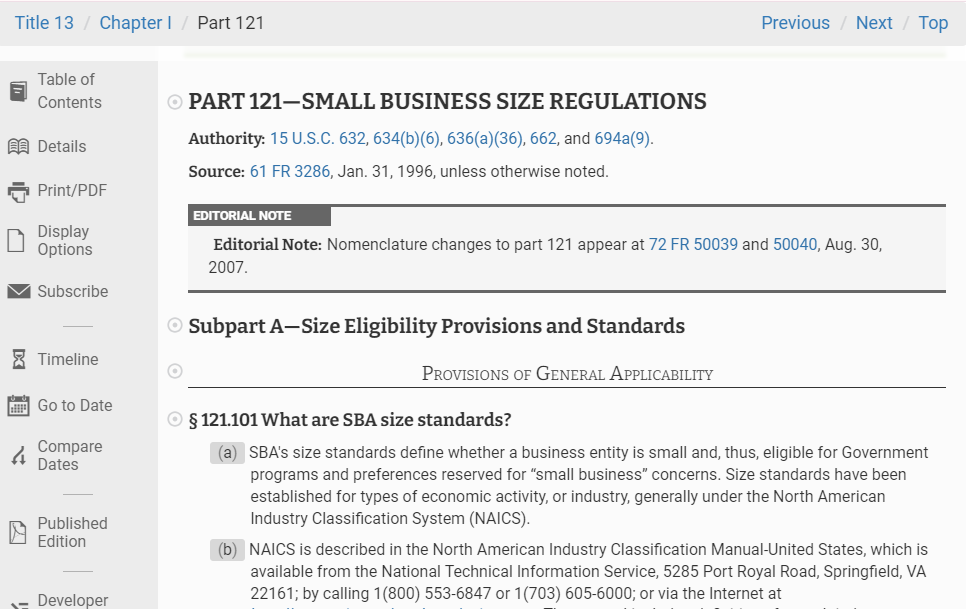
Once you have a NAICS code, check the SBA size standard for that code using the SBA’s resources, including the SBA Size Standards Tool on SBA.gov. This is the fastest way to see:
- Whether your industry uses receipts or employee count.
- The maximum receipts or employees allowed to be considered small.
Tip: Make sure you are looking at the right standard for your context. Most borrowers focused on 7(a) and 504 lending use NAICS-based standards, but the SBA also has alternate size standards in certain situations. When in doubt, use the SBA tool and confirm with your lender early.
Step 3: Receipts or employees
Different industries get different measuring sticks. Many service industries are measured by receipts. Many manufacturing and some wholesale industries are measured by employees. The SBA tool will tell you which one applies to your NAICS code.
If your NAICS uses receipts
In plain English, receipts are a revenue-based measure. But it is worth saying out loud: SBA “receipts” is a defined term, and it is not always identical to whatever your accounting system labels as “revenue” (there can be inclusions, exclusions, and adjustments depending on the facts). Your lender will typically use your tax returns as the anchor for this calculation.
For most businesses, the SBA looks at average annual receipts over a multi-year period (commonly five years). If you are newer or you do not have five full years of history, lenders generally work with what exists and apply SBA methodology for partial periods.
Practically, here is how to prepare:
- Pull your most recent business tax returns.
- Pull internal financial statements for the most recent year if your tax return is not filed yet.
- Be ready to explain unusual spikes or one-time contracts.
Receipts are not the same as profit. I have seen owners assume they qualify because margins are thin. Size standards are usually about the topline, not how hard you worked to earn it.
If your NAICS uses employees
Employee-based standards generally use an average number of employees over the SBA lookback period (commonly the prior 12 months). In most cases, the average includes both full-time and part-time employees based on SBA counting rules. Your lender will tell you what records they want and how they calculate the average.
Preparation steps:
- Export payroll reports that show headcount over time.
- Make sure you can support the numbers with payroll filings.
- Flag any staffing changes due to acquisitions, seasonal swings, or a ramp-up for a major contract.
If your business relies on a lot of contractors, discuss your labor model with the lender. Contractors typically are not counted as “employees” for SBA size purposes, but there are edge cases (for example, certain co-employment arrangements or misclassification issues), and heavy contractor reliance can still raise underwriting questions even if it does not change the size calculation.
Affiliation rules
If I could wave a flag for business owners who have been building thoughtfully, it would be this: you might be “too big” because of other businesses you own or control, even if each company looks small on its own.
The SBA applies affiliation rules to determine whether multiple entities should be treated as one for size purposes. If you are affiliated with other companies, you may have to combine receipts or employee counts when testing your size standard.
One important caution: affiliation is fact-specific and can get technical fast. Concepts like negative control, minority protections, and investor rights matter, and the analysis can vary by program context and current SBA guidance. If your ownership or governance is even mildly complex, verify early with your lender or an SBA-focused attorney.
Common triggers
- Common ownership: You (or a small group) own controlling interests in multiple companies.
- Control: Even without majority ownership, certain rights, agreements, or governance structures can create control.
- Management overlap: The same people control day-to-day operations across entities.
- Identity of interest: Close relatives with aligned business interests can trigger scrutiny.
- Investment structures: Certain investors, options, convertible instruments, or veto rights can shift the control analysis.
Affiliation is why I always ask founders, “What else do you own a piece of?” and “Who can say no to you?” Those answers can matter as much as your P&L.

Quick self-check
You do not need to become an SBA lawyer to do a useful first pass. Here is a simple checklist I recommend before your first 7(a) or 504 lender meeting.
1) Confirm your primary NAICS
- Write down your best-fit NAICS based on primary revenue activity.
- List any secondary lines of business that are significant.
2) Save the size standard result
- Use the SBA Size Standards Tool on SBA.gov and save the result for your file.
- Note whether it is receipts or employees.
3) Calculate your number
- Receipts industries: estimate average annual receipts using tax returns and current-year financials.
- Employee industries: estimate average headcount using payroll and HR records.
4) Run an affiliation scan
- List all entities you own in whole or in part.
- List any entities owned by your spouse or close relatives where operations or finances overlap.
- List parent companies, holding companies, and sister companies.
- List investors with control rights or meaningful veto rights.
If anything on the affiliation scan looks complicated, bring it up early. It is far easier to structure the conversation around facts than to have a lender discover an affiliated entity late in underwriting.
Common pitfalls
- Picking the NAICS that sounds right instead of the one tied to where most of your money is actually made.
- Confusing profit with receipts, especially in low-margin industries.
- Forgetting affiliates, including holding companies, sister companies, or spouse-owned entities with overlap.
- Assuming minority investors cannot create control. Certain rights can matter more than the percentage on paper.
- Letting ownership changes happen mid-process without telling the lender. New investors, buyouts, or reorganizations can change affiliation.
Where to verify
Before you invest serious time in packaging a deal, check the official source and keep a copy for your records. The most practical starting points are:
- SBA Size Standards Tool on SBA.gov for NAICS-based standards.
- SBA Size Standards Table if you prefer to browse by industry.
Your lender may also have an internal intake form that mirrors these rules. That form is helpful, but when there is any discrepancy, defer to the SBA’s published size standards and your lender’s SBA compliance team.
Size vs underwriting
This is an important mental model: being “small enough” does not mean you are approved, and being “not small” can stop the process even if you have perfect credit.
Most SBA lenders evaluate multiple layers, including:
- Size eligibility (what we covered here).
- Credit and cash flow (your ability to repay).
- Time in business, industry risk, and management experience.
- Down payment or equity injection expectations in some scenarios.
- Collateral considerations, especially for larger requests.
If you are worried about your credit profile, treat that as a separate prep track. Clean financial statements and strong debt coverage can help, but they do not replace baseline eligibility rules.
7(a) vs 504
If you are deciding between SBA programs, particularly 7(a) and 504, the size-standard check is still your first reality filter. Once you are confident you qualify as “small” under SBA rules, comparing programs becomes a productive next step.
As a high-level reminder:
- SBA 7(a) is flexible and often used for working capital, acquisitions, refinance (when eligible), and sometimes real estate.
- SBA 504 is typically used for major fixed assets like owner-occupied commercial real estate or heavy equipment, with a structure that includes a CDC component.
If your size standard check comes back clean, then comparing 7(a) vs 504 is worth your time. If your affiliation analysis puts you over the limit, a good lender can discuss non-SBA alternatives.
FAQ
What if I have multiple NAICS codes?
Most businesses can credibly map to more than one NAICS code. For SBA size standards, the usual focus is the primary industry, often based on the largest share of revenue. If you have two meaningful lines, document why one is primary and bring that documentation to the lender.
Do startups have “receipts” for the SBA test?
If you are early stage, you may not have several years of tax returns. Lenders typically work with what exists, such as interim financials and projections, but the size standard still applies. The lender will guide you on the best way to document your status.
If I am under the limit today, could I become ineligible later?
Yes. Fast growth is a great problem, but it can affect SBA eligibility. Also, changes in ownership, investor rights, or company structure can change the affiliation picture. If you expect a revenue jump due to a contract or acquisition, or you are planning a cap table change, talk to the lender early about timing and documentation.
Is affiliation only about ownership percentage?
No. Ownership is a major factor, but control can show up through voting rights, management, contractual veto rights, or close relationships. If you have a holding company, sister companies, or investors with meaningful control rights, assume affiliation questions will come up.
A simple next step
If you want one action item after reading this, do this: write down your NAICS code, look up the SBA size standard, and run the affiliation scan before your first lender call.
It is the fastest way to avoid the most frustrating SBA conversation: spending weeks gathering documents, only to learn you were never “small” under SBA rules once all related entities were added in.