When I was growing up, I watched my parents juggle business cash flow in a way that would make most people sweat. If inventory arrived early, you needed money early. If customers paid late, you waited. And sometimes the most “available” source of cash was tied to the house. That is exactly why HELOC questions still hit me as both practical and personal.
If you used a home equity line of credit (HELOC) to pay business expenses, you might be able to deduct the interest. The catch is that it usually is not deducted as mortgage interest. Instead, the IRS uses interest tracing rules. Translation: the deductibility depends on what the money was used for, not what collateral secured the loan.
This page focuses on HELOC proceeds used for business. Qualified-residence interest rules for buying, building, or improving the home belong on our home-interest deductibility coverage.

HELOC interest for business: the core rule
Yes, HELOC interest can be deductible when the borrowed funds are properly allocable to ordinary and necessary trade or business expenses, subject to the normal limitations that apply to business interest and your type of activity.
The IRS generally follows an interest tracing concept: interest expense is allocated based on the use of the loan proceeds.
So a HELOC can create different tax “buckets” over the year if you use it for different purposes, such as:
- Business use: potentially deductible as business interest
- Investment use: potentially deductible as investment interest (different limits and forms)
- Personal use: generally nondeductible personal interest
- Home purchase or improvement: potentially qualified-residence interest (covered elsewhere)
The most important practical point is this: the HELOC itself is not the tax category. The spending is.
One more reality check: even if the spending was business-related, other limitations can still apply depending on the facts, including basis, at-risk, and passive activity rules (common trouble spots for real estate and side businesses).
What interest tracing means
Interest tracing is exactly what it sounds like. You are proving, with a paper trail, where the borrowed dollars went. If those dollars paid ordinary and necessary business costs, you treat the related interest as business interest.
A simple example
Imagine you draw $40,000 from your HELOC and do two things:
- $25,000 to buy inventory and pay shipping deposits for your business
- $15,000 for a family vacation
In broad terms, you would allocate the HELOC interest: about 62.5% connected to business use and about 37.5% personal. The personal portion is generally not deductible.
Now add a real-world wrinkle: most people make payments, take additional draws, and carry balances that change monthly. That is why strong recordkeeping is not just “nice to have”. It is the difference between a clean deduction and a messy argument later. And depending on how active the line is, the math may require a month-by-month, or even daily, balance schedule to support the allocation.
When it counts as business interest
HELOC interest is typically treated as business interest when the proceeds are used for costs that are ordinary and necessary for your business, such as:
- Inventory purchases
- Business rent or lease payments
- Payroll (including contractor payments)
- Business insurance
- Marketing and advertising spend
- Professional fees (legal, accounting)
- Software subscriptions and equipment (note: equipment may be depreciated, but interest is a separate issue)
- Sales tax or other business taxes (depending on circumstances)
Two important cautions:
- Owner draws and distributions: If you pull HELOC money and then simply transfer it to yourself, that trail can become harder to support as “business use” unless you can show it reimbursed documented business expenses or was otherwise used in the business.
- Mixed personal and business spending: If a draw lands in a personal checking account and you spend from there, tracing becomes harder but not necessarily impossible. It just raises the documentation bar.
Also, taxes are a good example of why wording matters. Paying legitimate business taxes is often a normal business expense, but penalties and certain interest charges can follow their own rules. If you are using a HELOC to catch up on a tax bill, it is worth confirming how your specific payments should be treated.
Where to deduct it
Where you report the deduction depends on how your business is taxed and who is actually the borrower. This is one of the most common points of confusion I see with founders who are used to thinking “HELOC equals mortgage interest”.
Sole proprietor (Schedule C)
If you are a sole proprietor (including a single-member LLC taxed as a sole proprietorship), business interest is typically deducted on Schedule C as an interest expense, to the extent it is properly traced to Schedule C business spending.
Best practice: Keep a spreadsheet or bookkeeping memo that ties each HELOC draw to specific Schedule C expenses, then ties the interest allocation to those draws.
Partnership or multi-member LLC
Partnerships add a key nuance: who is the borrower matters.
- If the partnership is the borrower on the debt and uses the proceeds in the business, the interest is generally deducted at the partnership level on Form 1065 and flows to partners on the K-1, subject to limitations.
- If you personally take a HELOC and pay partnership expenses, you are usually in one of these fact patterns: you made a loan to the partnership, you made a capital contribution, or you paid expenses on behalf of the partnership under a reimbursement arrangement. In those cases, the interest may end up being deducted at the partner level, or treated through reimbursements, depending on documentation and how it is booked.
This is where getting tax advice is worth the fee because small paperwork differences can change the reporting.
S corporation
S corporations create another common trap. If you personally borrow via a HELOC and pay S corp expenses directly, the S corp is not automatically the borrower just because it benefited from the money.
In practice, you generally want one of the following to be true and documented:
- Formal shareholder loan: a promissory note, a stated interest rate where appropriate, clear bookkeeping entries, and a consistent repayment approach.
- Accountable plan reimbursement: if you pay business expenses personally, the company reimburses you under a written accountable plan and you retain receipts and logs.
Without that structure, the interest deduction can become harder to support, and you can wind up with a records problem instead of a clean tax result.
C corporation
If the corporation is the borrower and uses funds for business purposes, interest is generally deducted at the corporate level, subject to limitations. If you personally borrow and fund the corporation, you are again in the shareholder loan or capital contribution documentation world, and the interest may be deductible at the shareholder level depending on how the transaction is structured.
Business interest limits
Even if your HELOC interest is business interest under tracing rules, the amount you can deduct may be limited.
The biggest limitation that can apply to some businesses is the IRC Section 163(j) business interest expense limitation, which can cap business interest deductions for certain taxpayers based on a formula tied to income.
Many smaller businesses are exempt because they meet the average annual gross receipts test, but not everyone qualifies. Certain elections (including some real property and farming elections) and group or ownership structures can also change the analysis. If your interest expense is large relative to income, get help here.
Separating business and home uses
HELOCs are built for convenience, which is exactly what makes tax documentation tricky. If you use the same line for multiple purposes, you need a system that makes it obvious which dollars went where.
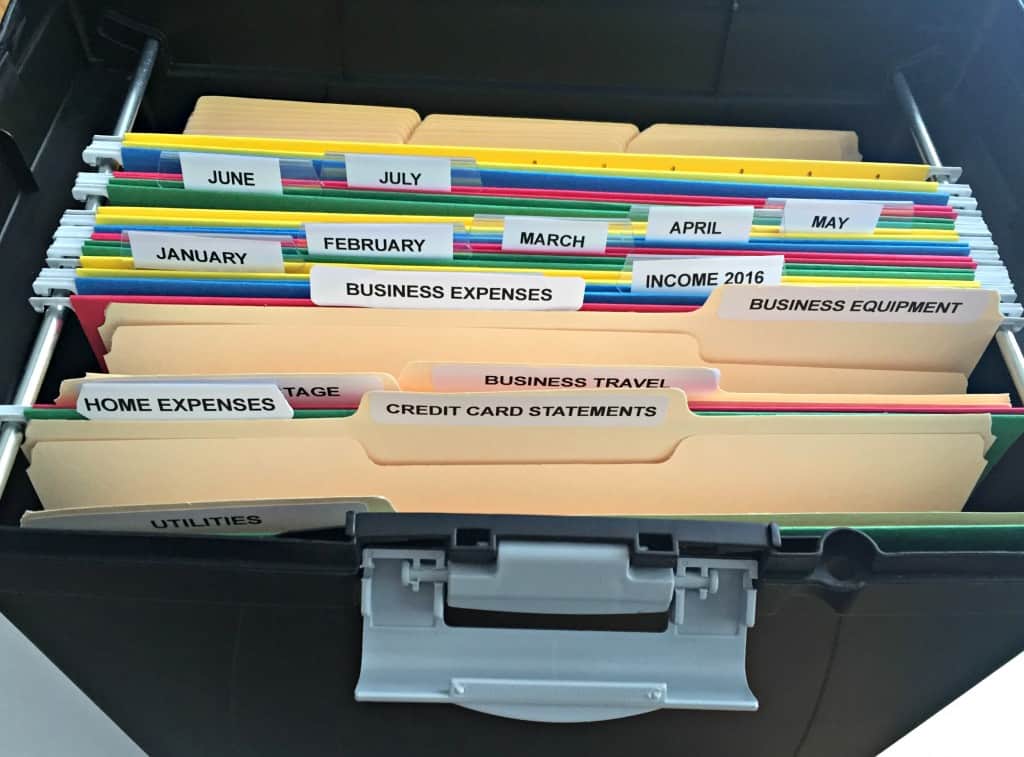
Recordkeeping that works
- Use separate draws for separate purposes. If you need $12,000 for business and $8,000 for the kitchen, do two draws, not one $20,000 transfer.
- Create a dedicated “HELOC Business” bank pathway. Ideally, route business-purpose draws into a business checking account, then pay business expenses from there.
- Save the draw confirmation and the matching expense proof. Keep the HELOC advance record, the bank deposit record, and the invoices or receipts.
- Document reimbursements. If you paid a business bill personally, keep the receipt and reimburse yourself through the business with a clear memo.
- Track principal separately from interest. Your deduction is based on interest, but your tracing support often begins with principal flows.
A clean documentation bundle
For each HELOC draw tied to business spending, try to maintain:
- The HELOC draw statement or confirmation (date and amount)
- Bank statement showing where the funds landed
- Invoices, receipts, or vendor statements showing business purpose
- A simple allocation note if the draw funded more than one business expense
- Your HELOC monthly statement showing interest charged for the period
Allocating interest on mixed-use HELOCs
If you use one HELOC for both business and personal or home projects, your goal is to allocate interest in a way you can explain and support.
Common approaches include:
- Specific tracing by draw: You connect each draw to a purpose and maintain that categorization as the balance changes.
- Sub-accounting spreadsheet: You maintain a running schedule that tracks a business balance and a nonbusiness balance inside the HELOC based on draws and repayments.
Because HELOCs revolve, repayments reduce the overall balance, and the “right” allocation is not always a simple one-time ratio. In practice, many people use a consistent month-by-month schedule based on statements, and some situations call for a daily balance approach.
Common mistakes
- Assuming it is automatically mortgage interest. If the funds were not used to buy, build, or improve the home securing the HELOC, the mortgage-interest deduction is usually not the right bucket.
- Commingling funds without a paper trail. A transfer into personal checking followed by dozens of mixed transactions is a tracing headache.
- No memo lines. If you reimburse yourself or move money between accounts, write memos that state what it was for.
- Forgetting that the borrower matters. Entity-level deductions usually require entity-level debt. If you are the borrower and the business is just the spender, you need clean loan or reimbursement documentation.
- Missing the timing. Interest accrues over time. Your reporting should match the year, the statements, and your accounting method. Most small businesses are cash-basis, but not all.
FAQ
If I use a HELOC for my LLC, can I deduct the interest?
Often, yes, if the HELOC proceeds were used for legitimate business expenses and you can trace the funds. How you report it depends on whether the LLC is taxed as a sole proprietorship, partnership, or corporation, and whether the LLC is the borrower or you personally are.
What if I used the HELOC to buy equipment for my business?
The interest can still potentially be business interest if the proceeds were used for the business. The equipment itself may be depreciated or expensed under applicable rules, but that is separate from whether the interest is deductible.
If I use the HELOC to cover payroll, is that deductible?
Interest connected to funds used for payroll can generally be business interest, assuming the payroll is ordinary and necessary and you can trace the proceeds to the payroll payments.
Do I need to itemize deductions for this?
Not necessarily. Business interest is generally deducted in the business tax reporting area (for example, Schedule C), not as an itemized mortgage-interest deduction. Itemizing is more relevant to qualified-residence interest rules, which are a separate topic.
What if I used part of the HELOC for investing?
That portion may be investment interest, which has its own limitation rules and is often reported with Form 4952. This is another reason clean tracing matters, because business interest and investment interest are not interchangeable.
How detailed do my records need to be?
Detailed enough that a third party could follow the money: draw date, deposit account, and the specific business expenses paid. If your HELOC supports multiple purposes, you should also be able to explain your allocation method and show the schedule you used.
The bottom line
If you used HELOC funds for your business, you may be able to deduct the interest. The IRS generally cares less about the fact that your home is collateral and more about how the borrowed money was used. Interest tracing is the bridge between the loan and the deduction.
If you want the simplest path, keep business draws separate, route them through business accounts, and keep draw-to-expense documentation tight. If you have mixed-use draws, complex entity structures, passive or real estate activities, or large interest costs, it is worth getting a pro to help you set up a tracing schedule you can stand behind.