If you have a HELOC, it can feel a little like having a financial pressure valve in your house. When life is stable, the flexibility is a gift. When life gets messy, that same flexibility can mask a growing problem until it is urgent.
I grew up watching my parents run a mid-sized agricultural supply company. Some months were smooth. Other months, it was weather, fuel costs, and customer timing all at once. The stress was not just the bills. It was the uncertainty, and how fast a lender relationship could shift when cash flow shifted. A HELOC default has that same emotional whiplash: one month you are current, the next month you are behind and the rules change.
This article walks through what “default” means on a HELOC, what “acceleration” looks like in real life, how foreclosure typically enters the picture, and how you can still owe money even after a sale. I will use one main example: a borrower who misses payments during the draw period. I will also briefly contrast that with a lender freezing your HELOC while you are still current, because that is stressful but not the same thing as default.

First, what counts as “default” on a HELOC?
In plain English, default means you broke the agreement you signed. Most people associate default with missing payments, but your HELOC contract can define default more broadly.
The most common default: missed required payments
During the draw period, many HELOCs require at least interest-only payments. Even if you can still draw from the line, missing the required minimum payment can put you in default after the lender’s grace period and delinquency rules.
Other triggers that can be considered default
Depending on your lender and contract terms, default can also be triggered by things like:
- Not paying property taxes and letting them go delinquent
- Letting homeowners insurance lapse
- Violating occupancy rules (for example, if the HELOC was priced as owner-occupied and the home becomes a rental)
- Fraud or misrepresentation in the application
- Bankruptcy filing (this is complex and varies, but it is commonly addressed in loan documents)
The key takeaway: default is a contract definition, not just a feeling of “I am behind.” If you are unsure which events matter for your loan, pull up your HELOC agreement and look for the “Events of Default” section.
A real-world timeline: missed payments in the draw period
Let’s use a simple scenario. Meet Maya. She opened a HELOC to renovate her kitchen and cover some short-term business expenses while her freelance income ramped. Her HELOC requires interest-only payments during the draw period.
Then two clients delay payment. A few weeks becomes a few months. Maya misses her HELOC payment, thinking she will “catch up next month.”
Stage 1: delinquency, late fees, and credit reporting
Once Maya misses a due date, several things can happen quickly:
- Late fees may be assessed if she misses the grace period.
- The interest rate may increase if her agreement includes a penalty or default-rate clause (not every HELOC does).
- Collection calls and letters typically start early.
- Credit reporting often begins after the account is 30+ days past due, though reporting practices can vary by lender.
Even if she plans to sell the house later or refinance, those credit marks can make the next step harder and more expensive.
Stage 2: the lender may restrict access to the credit line
Many lenders will freeze further draws once the account is delinquent. That matters because a HELOC feels like a safety net, but once you need it most, it can stop functioning like one.
Stage 3: default status and formal notices
As delinquency continues, lenders often escalate communication. Depending on your state, your loan documents, and your lender’s policies, you could see:
- A formal notice of default or demand letter
- A deadline to cure the default by paying a specified amount
- Referral to a collection or loss mitigation department
Timing varies widely. In some situations it can move faster than you expect. In others, it drags out. Either way, the important shift is that the loan stops being handled like “a bill you missed” and starts being handled like “a secured debt problem.”
Acceleration: when the lender calls it all due
Acceleration is one of the most misunderstood parts of default. It means the lender invokes a contract right to declare the entire outstanding balance due immediately, not just the past-due payments.
In Maya’s case, she thought she needed to scrape together two missed interest payments plus fees. After acceleration, the letter may demand the full HELOC balance, plus interest and certain lender costs.
If you are scanning your mail for warning signs, acceleration letters often have titles like “Notice of Acceleration” or “Demand for Payment in Full,” or similar language that makes it clear the full balance is being called due.
Why acceleration matters
- It can eliminate manageable catch-up options unless the lender offers a repayment plan or agrees to rescind acceleration after you reinstate.
- It increases the urgency to find a solution fast, such as selling the home, refinancing, or negotiating terms.
- It often precedes foreclosure if the balance is not repaid or resolved.
Important nuance: acceleration is allowed by many contracts, but lenders do not always accelerate immediately. Some try workout options first. Still, you should plan as if acceleration is possible once the HELOC is in default.
How foreclosure enters the picture
A HELOC is usually secured by your home, commonly as a second lien behind your primary mortgage. That security interest is what gives the lender foreclosure leverage.
Second-lien reality check
Being a second lien affects both the lender’s incentives and your outcome. If the first mortgage lender forecloses, a junior HELOC lien is often wiped out by the foreclosure sale. That can sound like relief, but it does not always erase the underlying HELOC debt. Depending on state law, the loan terms, and whether the debt is treated as recourse, the lender may still be able to pursue collection as an unsecured debt after the lien is gone.
HELOC foreclosure basics
If the HELOC remains unresolved, the lender can move toward foreclosure under your state’s process. Some states allow nonjudicial foreclosure (outside court) for certain deeds of trust. Others require judicial foreclosure (through court). The details vary, but the arc is often similar:
- Notices and waiting periods required by state law and your loan documents
- Opportunity to cure the default within a set timeframe
- Foreclosure sale scheduled if the account remains in default
- Property is sold at a foreclosure auction or transferred through another legal mechanism
If you are also behind on your first mortgage, that first-lien lender is often the one that forecloses first. But a HELOC lender can still foreclose in many situations, especially if there is sufficient equity to make it worth pursuing.
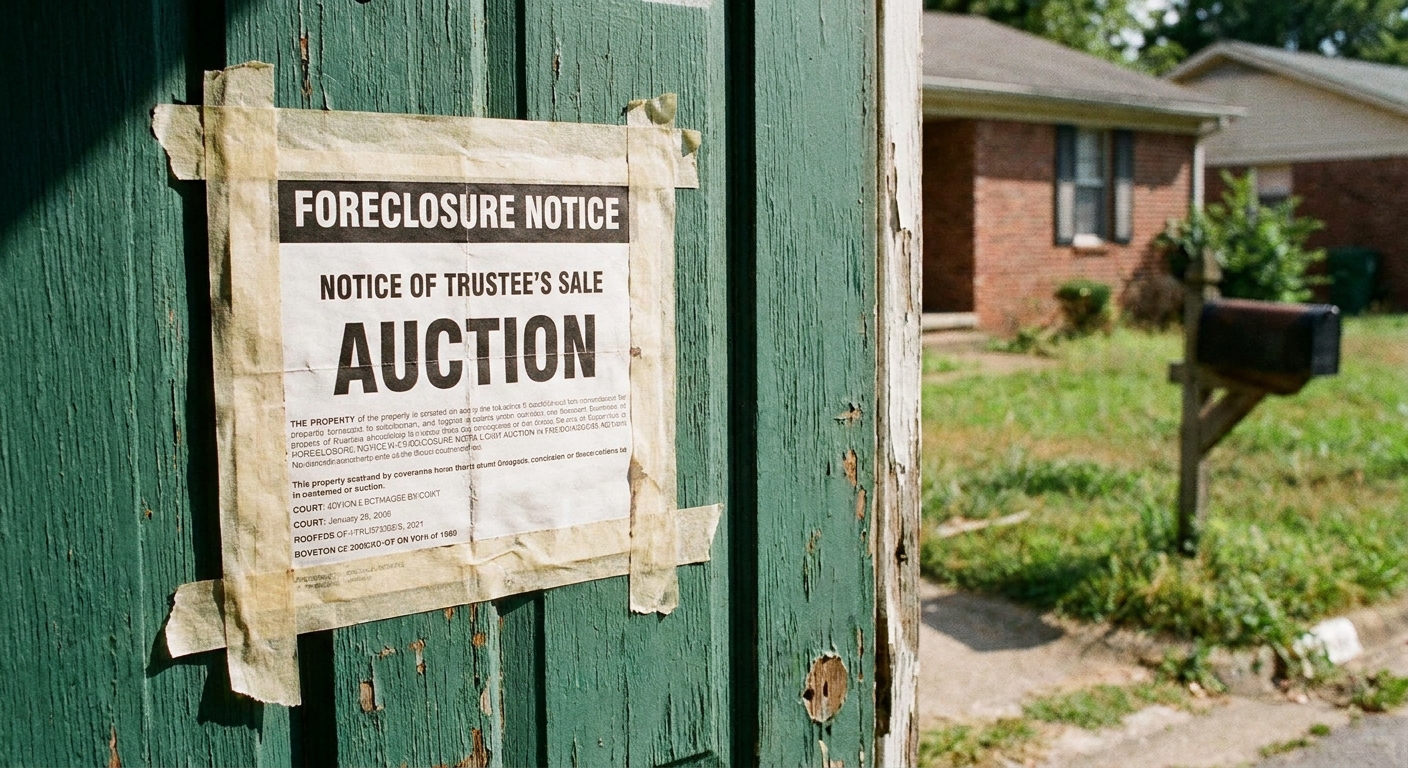
After the sale: deficiency balances
A painful surprise for borrowers is that foreclosure does not always wipe the slate clean.
Here is the key concept: your home sale proceeds have to cover what you owe. If the home sells for less than the total debt and costs, you can be left with a deficiency, which is the remaining unpaid balance.
How the math can work
Imagine Maya’s home sells at a foreclosure sale for $350,000.
- She owes $330,000 on her first mortgage.
- She owes $60,000 on her HELOC.
- There are also foreclosure-related costs and fees.
Even before we talk about fees, that sale price may not fully cover both loans. Because the first mortgage is usually paid first, there might be little or nothing left for the HELOC lender.
If state law and the loan structure allow it, the HELOC lender may pursue Maya for the remaining unpaid HELOC balance as a deficiency, or in some cases as an unsecured collection account if the lien was wiped out by someone else’s foreclosure.
Will the lender always pursue a deficiency?
Not always. It depends on:
- State law (deficiency judgments are limited or prohibited in some situations, and rules differ for purchase-money vs. refinance debt)
- Whether the lender can legally seek a deficiency under the foreclosure method used
- Your assets and income and the lender’s cost-benefit analysis
- Whether you negotiate a settlement or resolution
Because deficiency rules can be highly state-specific, it is worth talking to a housing counselor or an attorney in your state if foreclosure is on the table.
Quick contrast: a HELOC freeze while you are current
People sometimes use “default” to describe any time their HELOC becomes unusable. But there is an important distinction:
A lender freeze or reduction can happen even when you are current. For example, if home values drop, your lender may reduce your available credit line or suspend future draws based on collateral risk. Depending on your agreement, it can also be triggered by changes in your credit profile, debt-to-income picture, documentation issues, suspected fraud, or other “reasonable cause” standards written into the contract.
In a freeze-while-current situation, the consequences are usually about access to credit. In a default situation, the consequences can escalate toward acceleration and foreclosure.
If you cannot make your HELOC payment
If you take nothing else from this, take this: the best time to act is before the account hits 30 days past due, and definitely before it hits 60 to 90.
1) Call the lender and ask about loss mitigation
Loss mitigation is the lender’s umbrella term for options that can reduce the chance of default becoming foreclosure. Ask what programs are available for a HELOC specifically. Options might include:
- Short-term forbearance
- A repayment plan to catch up over time
- A temporary interest rate reduction (less common, but it exists in some cases)
- Modification or restructuring (often harder on HELOCs than first mortgages, but possible)
If you want the call to be productive, ask for specifics:
- The reinstatement amount (what it takes to bring the account current, if reinstatement is still allowed)
- The payoff amount (what it takes to pay the HELOC off in full today)
- Whether the lender will consider a repayment plan and what documentation they require
- Whether there is a path to rescind acceleration after you pay a stated amount
- Where and how to submit financials, and how long review typically takes
2) Stop drawing from the line
If you are already struggling with payments, adding to the balance can turn a tight situation into an unrecoverable one. In my planning work, I have seen this spiral happen fast.
3) Build a simple 60-day catch-up budget
This is not about perfection. It is about cash flow triage.
- List the minimums for mortgage, HELOC, taxes, insurance, utilities, and food.
- Cut or pause discretionary spending temporarily.
- Focus on preventing foreclosure triggers like tax or insurance lapses.
4) Watch for payment shock after the draw period
Even if you handled interest-only payments fine, the repayment period can be a turning point. Payments often jump when the HELOC starts amortizing principal and interest. If you are near the end of your draw period and the payment increase looks unmanageable, treat that like a yellow light and call early.
5) Consider selling before the timeline is forced
If the numbers do not work, selling the home on your terms can be less damaging than a foreclosure timeline. It can also preserve equity that would otherwise be eaten up by costs and a distressed sale process.
6) Get help early
A HUD-approved housing counseling agency can help you review options and communicate with lenders. If there is a realistic risk of foreclosure or a deficiency claim, a local attorney can explain state-specific rights and risks.
FAQ
Is a HELOC default the same as defaulting on my first mortgage?
They are separate loans, but both are secured by the home in most cases. Defaulting on either can create foreclosure risk. Also, falling behind on one often makes it harder to refinance or fix the other.
Can I lose my home from defaulting on a HELOC?
Yes. A HELOC is typically secured by your home, and the lender may pursue foreclosure if the default is not resolved and the legal and economic conditions support it.
How long does it take for a HELOC lender to foreclose?
There is no single universal timeline. It depends on your lender, your state’s foreclosure process, and whether you are working out an alternative. In some places the process is relatively fast. In others it is slower. But waiting until you receive a sale notice is almost always waiting too long.
If the house is sold, am I automatically off the hook for the HELOC balance?
Not automatically. If sale proceeds do not fully cover what you owe and your state allows deficiency collection in your situation, you could still owe the remaining balance. And if your HELOC lien is wiped out by another lender’s foreclosure, the lien may be gone while the debt remains collectible as unsecured, depending on state law and the loan terms.
Will defaulting on a HELOC ruin my credit?
It can significantly damage your credit, especially once late payments are reported and if the account goes to collections, is charged off, or ends in foreclosure. The earlier you address missed payments, the more damage you may prevent.
The bottom line
A HELOC default usually starts quietly with late fees and credit reporting, then can escalate into acceleration, and in the worst-case path, foreclosure and a potential deficiency balance after the sale. The common thread is speed. Once you are behind, timelines compress and options narrow.
If you are worried you will miss a payment, treat that as an early warning signal, not a personal failure. Call the lender, understand your contract triggers, and get support. The goal is to keep a short-term cash flow problem from becoming a long-term housing problem.