Growing up, I watched my parents run an agricultural supply business where cash flow was always a little unpredictable. The lesson that stuck with me was simple: avoiding a monthly fee is great, but not if the “solution” adds a bigger risk somewhere else.
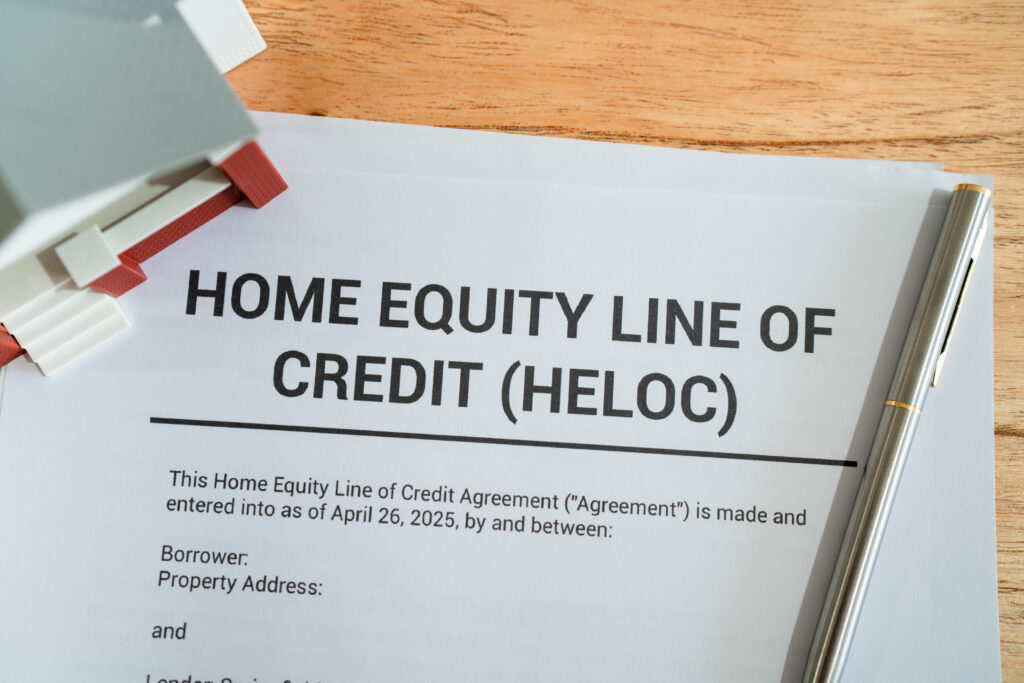
That is exactly the tradeoff when buyers consider a piggyback HELOC to avoid private mortgage insurance (PMI). Done well, it can lower long-term costs. Done carelessly, it can add payment shock and more financial fragility right when you need stability most.
What a piggyback HELOC is (the 80-10-10 setup)
A piggyback structure is a way to buy a home with less than 20% down without putting mortgage insurance on the first loan.
The most common version is called an 80-10-10:
- 80% first mortgage (typically a conventional fixed-rate or ARM)
- 10% second lien, often a HELOC (home equity line of credit) opened at purchase, or sometimes a fixed-rate second mortgage
- 10% down payment from your cash
The point is that the first mortgage stays at 80% loan-to-value (LTV), which is the typical threshold where PMI is not required on a conventional loan.
Sometimes you will see variations like 80-15-5 (smaller down payment, bigger second loan) or 75-15-10 (larger down payment, smaller first). The concept is the same: keep the first mortgage at or below 80% LTV, then cover the rest with a second loan and your down payment. Availability and maximum combined loan-to-value (CLTV) limits vary by lender and market, and some lenders are stricter with purchase-money HELOCs.
How PMI works when you use one loan
If you take out one conventional mortgage above 80% LTV, lenders usually require PMI. PMI protects the lender, not you, but you pay the premium.
PMI is most commonly paid monthly and collected with your mortgage payment by the servicer as a separate premium line item. Other structures exist too, including upfront (single premium) and lender-paid PMI (where the cost is typically baked into the interest rate).
PMI cost varies based on:
- Your credit score
- Down payment size
- Loan amount
- Property type and occupancy (primary home vs. rental)
- Debt-to-income profile and underwriting
In plain English: PMI can be “not that bad” for a high-credit borrower putting 10% down, and very expensive for lower credit and a small down payment.
This article focuses on the purchase decision: piggyback HELOC vs. one loan with PMI. PMI cancellation rules are real, rule-bound, and loan-specific, so treat “PMI is temporary” as a maybe until you confirm your servicer and loan terms.
Piggyback HELOC vs. PMI: the real comparison
Most buyers compare the monthly PMI line item to the HELOC payment and assume whichever is smaller wins. I get it. But the better comparison is total monthly obligation, rate risk, and time horizon.
1) Two payments instead of one
An 80-10-10 typically means:
- Payment #1: principal and interest on the first mortgage (plus escrow if applicable)
- Payment #2: interest, or interest plus principal, on the second lien (HELOC or fixed-rate second mortgage)
With PMI, you usually have one mortgage payment plus a PMI premium that is commonly collected alongside it (or structured differently if you choose upfront or lender-paid PMI).
Two payments are not automatically bad. But they can change your budgeting reality, especially if the second lien is variable-rate and moves faster than your income.
2) Variable rate risk on the HELOC
Most HELOCs have a variable interest rate tied to an index (often the prime rate) plus a margin.
That means the HELOC payment can rise even if your first mortgage is fixed. This is the core “gotcha” with piggyback HELOCs.
Some lenders offer an option to lock part of a HELOC balance into a fixed-rate segment, but the terms vary widely. Assume variability unless you have clear written terms that say otherwise.
3) PMI may be temporary, while HELOC interest can linger
PMI is often viewed as “dead money,” and emotionally, I understand that. But PMI on a purchase can be a temporary cost for borrowers who plan to:
- Pay down the balance over time
- Benefit from rising home values
- Eventually reach an LTV where PMI is no longer required under the loan’s rules
Important qualifier: whether PMI can be removed, and when, depends on your loan type, your payment history, the servicer’s policy, and whether removal is based on amortization schedules or a new appraisal.
With a HELOC, you are still paying financing costs, and because many HELOCs start as interest-only during the draw period, balances can stick around longer than you expect unless you have a payoff plan.
4) Closing costs and pricing differences
With an 80-10-10, you are underwriting, documenting, and servicing two loans. That can mean:
- Additional lender fees
- Separate appraisal or valuation requirements (sometimes waived, sometimes not)
- More moving parts and more underwriting scrutiny
Sometimes the second-lien costs are modest. Sometimes they erase a big portion of the PMI savings. You need official estimates from the lender, not a guess.
5) Your first mortgage rate may change with and without PMI
Many buyers assume the first mortgage interest rate is identical in both scenarios. It may not be.
Some lenders price loans differently depending on LTV. An 80% first mortgage may price better than a 90% first mortgage with PMI, or the difference may be negligible. This is why you compare full loan offers, not just the PMI line item.

A simple side-by-side example (80-10-10 vs. PMI)
Let’s use round numbers to show what you should be comparing. These are not quotes, just a framework.
Home price: $400,000
Option A: One loan with PMI
- Down payment: 10% ($40,000)
- Mortgage: $360,000 (90% LTV)
- PMI: varies, but assume a monthly premium
- Interest rate: based on lender pricing for 90% LTV and your credit profile
Option B: 80-10-10 piggyback
- Down payment: 10% ($40,000)
- First mortgage: $320,000 (80% LTV)
- Second lien: $40,000 (10%), often a HELOC
- PMI: none on the first mortgage, because it is at 80% LTV
What to compare
- Total monthly payment today: (first mortgage P&I + second-lien payment) vs. (single mortgage P&I + PMI)
- Total monthly payment under stress: what happens if the HELOC rate rises 1 to 3 percentage points?
- Total interest and fees over your expected time in the home: 3 years, 7 years, 15 years makes a huge difference
A quick numbers reality check
On a $40,000 HELOC balance, a 2 percentage point rate increase is roughly $67 more per month in interest-only cost (0.02 times $40,000 divided by 12). A 3 point jump is roughly $100 more per month. Those are back-of-the-napkin figures, but they are useful for stress-testing.
PMI, for standard borrower-paid monthly PMI, typically does not move up and down each month based on interest rates. It is generally set at origination based on your coverage, credit, and down payment, though it can change if you change PMI structure or refinance.
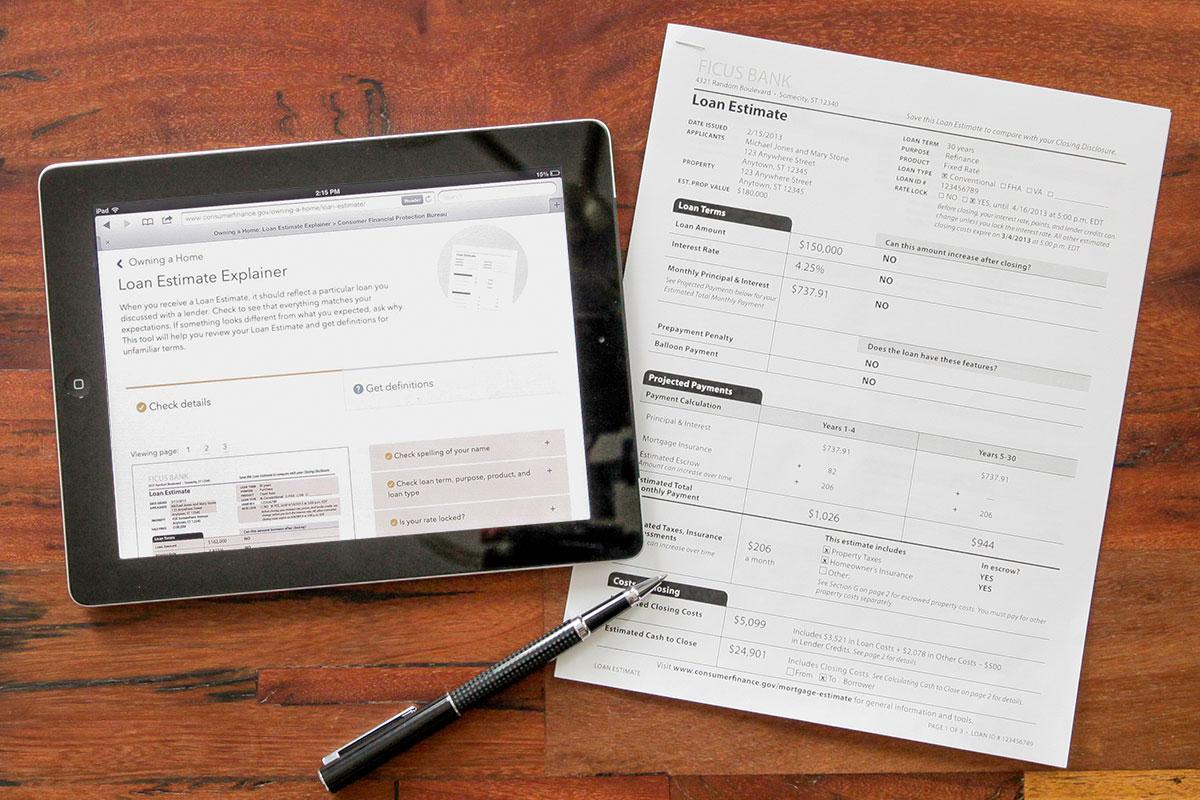
If you do not want to estimate, do this instead: ask your lender for Loan Estimates for both structures and plug the real line items into this comparison grid.
When a piggyback HELOC can make sense
I tend to see piggyback HELOCs work best when the buyer has a strong plan and a little financial breathing room.
- You have excellent credit and can qualify for favorable pricing on both loans.
- PMI would be unusually expensive relative to the second-lien interest cost.
- You expect a short or medium time horizon and want flexibility (for example, you may pay down the HELOC aggressively in 12 to 36 months).
- You have irregular income but predictable large cash events (bonuses, RSUs, a planned business distribution) and want the option to pay down the HELOC in chunks.
- You want to preserve cash reserves for renovations or a business, and the HELOC is part of a deliberate liquidity strategy, not a stretch.
When avoiding PMI with a HELOC can backfire
Here are the scenarios where I get cautious quickly.
- Your budget is already tight. Two loans add complexity and reduce margin for error.
- You are sensitive to payment changes. A variable-rate HELOC can rise, sometimes faster than people expect.
- You are counting on future raises or “eventually” refinancing. Hope is not a strategy, especially with rate uncertainty.
- You might need to move soon. Transaction costs can make “PMI avoidance” irrelevant if you sell quickly.
- Your second-lien terms are unfavorable (high margin, short interest-only period, or a big rate floor).
- You are using the second lien to stretch into a home you cannot comfortably afford. PMI is not the problem in that situation.
If you recognize yourself in any of these, a single mortgage with PMI can be the more stable choice, even if it feels annoying to pay for insurance.

Other real-world frictions to know
Qualifying can be tougher than people expect
You do not just have to qualify for the first mortgage. You have to qualify while carrying both payments. Many lenders also apply stricter rules for combined LTV (CLTV), reserves, and documentation on piggyback structures.
Refinancing can be harder with a second lien
If rates drop and you want to refinance the first mortgage later, a second lien can add a step called subordination. The second-lien lender has to agree to stay in second position behind the new first mortgage. This is solvable most of the time, but it adds friction, time, and sometimes negotiation.
Draw period vs. repayment period payment shock
Many HELOCs have a draw period where payments can be interest-only. After that, the HELOC enters repayment and the payment can jump because you are paying principal plus interest on a schedule. Combine that with a higher variable rate, and the “payment shock” can be very real.
Tax treatment is not a rounding error
Mortgage interest rules, HELOC interest deductibility, and the on-again off-again nature of PMI deductions are policy-dependent and personal. Do not make this decision assuming everything is deductible. If deductibility matters to your math, confirm with a qualified tax professional.
Questions to ask your lender before you choose
If you are considering an 80-10-10, get clear answers to these questions in writing.
- What is the second lien, and is it a HELOC or fixed-rate loan? Do not assume.
- What is the HELOC index and margin? Ask how the rate is calculated, how often it adjusts, and whether there is a cap.
- Is the HELOC interest-only? If yes, for how long, and what happens to the payment when amortization begins?
- Are there annual fees, minimum draws, or early closure fees? Some HELOCs have maintenance fees or penalties if closed quickly.
- Can any portion of the HELOC be fixed? If yes, what are the terms and costs?
- What are the total closing costs for the two-loan structure? Compare line-by-line with the one-loan-with-PMI option.
- How does the first mortgage rate change between 80% LTV and 90% LTV? You need both Loan Estimates to compare accurately.
- What CLTV limit is being used, and what reserve requirements apply? Make sure you understand the qualifying box you are being put into.
- If I refinance later, what is the subordination process? Ask how often they approve subordination and what the timeline typically looks like.
A practical decision framework
If you want a quick way to pressure-test the decision, here is the checklist I use with clients.
Choose a piggyback only if you can answer “yes” to most of these
- I can handle the second-lien payment if rates rise materially.
- I have a clear plan to pay down the second lien principal within a defined time window.
- I have sufficient emergency reserves after closing.
- I have compared two official Loan Estimates, not just ballpark rates.
- I understand the second-lien draw period, repayment period, and fees.
- I understand refinance friction, including subordination, and I am comfortable with it.
Choose one loan with PMI if you value simplicity and stability
- I want one predictable payment structure.
- I do not want variable-rate exposure right after buying.
- I expect PMI to be manageable relative to my budget.
- I would rather keep my financing straightforward while I adjust to homeownership costs.
FAQ
Is a piggyback HELOC the same as a home equity loan?
No. A HELOC is typically a revolving line with a variable rate. A home equity loan is usually a one-time lump sum with a fixed rate and a set amortization schedule. Some piggyback purchases use a fixed-rate second mortgage instead of a HELOC, and in some markets that is more common.
Does an 80-10-10 always eliminate PMI?
It often eliminates PMI on the first mortgage because the first loan is at 80% LTV. But you still pay interest and possibly fees on the second loan. “No PMI” does not mean “no extra cost.”
Can the HELOC payment change even if my first mortgage is fixed?
Yes. Your first mortgage payment may stay stable, while your HELOC payment can rise or fall as rates move and as you pay down the line.
What credit score do I need for an 80-10-10?
There is no single cutoff across all lenders. In practice, piggyback loans tend to work best for borrowers with stronger credit and clean documentation because you are qualifying for two loans at once, often with stricter CLTV and reserve requirements.
What is the biggest risk of using a purchase-money HELOC to avoid PMI?
Variable rate risk and payment uncertainty. If rates rise, the HELOC can become much more expensive than the PMI you were trying to avoid. The second-biggest risk is assuming you will refinance easily later without considering second-lien subordination.
The bottom line
A piggyback HELOC can be a smart tool, especially for borrowers with strong credit, solid reserves, and a payoff plan for the second lien. It can also be a fragile structure if you are stretching to qualify or if your budget cannot handle rate-driven payment increases.
If you are deciding between these two routes, ask your lender for Loan Estimates for both scenarios and compare them the way you would compare any business proposal: not just by today’s monthly payment, but by risk, flexibility, and your realistic timeline.