When I was growing up, I watched my parents sign stacks of paperwork any time the business needed a new line of credit. What stuck with me was not the numbers. It was the feeling of, Wait, why does Mom have to sign this if Dad is the one borrowing?
That same confusion shows up all the time with home equity lines of credit. If you are opening a HELOC, you might assume only the borrower signs. In practice, a spouse often has to sign something, even if they are not the one applying and even if they will not be listed as owing the money.
This article breaks down the key concept that clears up most of the confusion: owing the debt is different from consenting to the lien.
Two roles: the note vs. the lien
A HELOC usually involves two buckets of documents:
- The promissory note (the debt): This is the promise to repay. Whoever signs the note is generally the person legally responsible for the HELOC balance.
- The mortgage or deed of trust (the lien): This is what gives the lender rights against the home as collateral. Whoever signs this is agreeing that the home can be used to secure the line of credit.
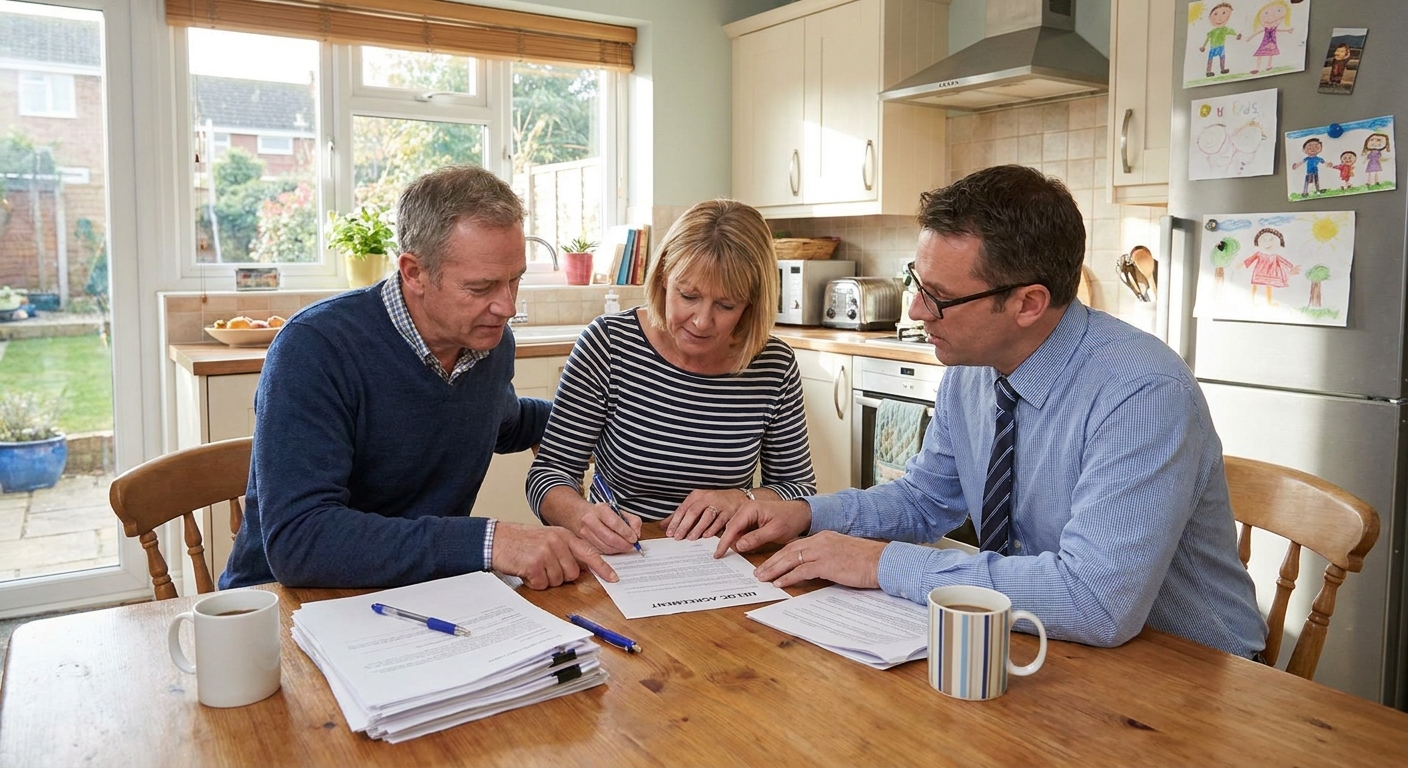
It is common for one spouse to sign the note (they owe the debt) while the other spouse signs only the mortgage or deed of trust (they do not owe the debt, but they consent to the lien on the property).
That is why you may hear a lender say: “Your spouse is not on the loan, but they still have to sign.” They often mean sign the lien documents, not become a borrower.
When a spouse usually must sign
Signature requirements vary by state and by how your home is titled, but these are the most common situations where a non-borrowing spouse is asked to sign.
1) Homestead protections
Many states provide special protections for a primary residence, often called homestead rights. The big idea is simple: the law may require both spouses to agree before the primary home can be pledged as collateral, even if only one spouse owns the home on paper.
If your state has strong homestead rules, a lender may require the non-borrowing spouse to sign the mortgage or deed of trust so the lien is enforceable against the home.
2) Community property or marital property rules
In some states, assets acquired during marriage are treated as jointly owned (or at least jointly protected) regardless of whose name is on the deed. Even outside formal community property states, some places recognize marital interests that can complicate a lender’s ability to foreclose unless both spouses have consented.
To reduce legal risk, lenders often ask the non-borrowing spouse to sign documents acknowledging and consenting to the lien.
3) Your spouse is on title or has an ownership interest
This is the most straightforward scenario. If both spouses are owners of the home, lenders typically require all titled owners to sign the mortgage or deed of trust so the HELOC lien covers the full property. While it can be legally possible in some places for one owner to encumber only their share, most lenders will not accept a partial-interest lien for a consumer HELOC.
4) Bank or title company policy
Even when a state does not strictly require a spouse’s signature, a bank or credit union may have internal policies driven by risk management. Title companies may also require spousal signatures to insure the lender’s lien position.
In plain English: even if it feels optional, the lender may treat it as non-negotiable because they want certainty that the lien holds up.

What your spouse agrees to by signing
Most non-borrowing spouses worry that signing anything means they are taking on the HELOC payment. That is a fair concern, but it depends on what they are signing.
Signing the note usually means owing the debt
If your spouse signs the promissory note, they are typically a co-borrower. That means they share responsibility for repayment, and the HELOC may appear on their credit report.
Signing the lien usually means consenting to collateral
If your spouse signs only the security instrument (the mortgage or deed of trust), they are usually acknowledging something like:
- The home is being pledged as collateral for the HELOC.
- If the HELOC is not repaid, the lender can enforce the lien according to state law.
- They are not necessarily agreeing to personal liability for the balance (that is typically in the note, not the lien document).
Watch for separate guaranty or co-signer paperwork
This is the part people miss. Sometimes a non-borrowing spouse is asked to sign additional documents like a spousal consent, homestead waiver, or marital rights waiver. Those usually relate to property rights, not the promise to repay.
But if you see a separate document labeled (or described as) a guaranty, co-signer agreement, or language like promise to pay or joint and several liability, that is different. That can create personal liability even if the spouse is not otherwise treated as a borrower.
Important: The exact effect depends on the wording of your documents and state law. Before anyone signs, ask the lender or closing agent to point out where the non-borrowing spouse is, and is not, assuming personal liability.
HELOC vs. home equity loan
Not much changes, from a signature standpoint. A HELOC is a revolving line of credit, while a home equity loan is usually a one-time lump sum installment loan. But both are typically secured by a lien against the home.
So if the reason your spouse must sign is homestead protection, marital property rights, or ownership and title issues, the requirement often applies to both products.
The bigger difference is operational: HELOCs involve future draws, and lenders may be extra cautious about ensuring lien enforceability for a product that can be used repeatedly over time.
Common scenarios
“My spouse is not on the deed. Can they still be required to sign?”
Yes. Homestead or marital property rules can give a spouse rights in a primary residence even if they are not listed as an owner on the deed. Lenders may require the spouse’s signature to confirm consent to the lien.
“I owned the home before marriage. Does my spouse still need to sign?”
Possibly. Some states treat a primary residence as protected by homestead rights regardless of when it was acquired. Also, improvements paid for during marriage or refinancing history can complicate what is considered marital versus separate interests.
“If my spouse signs the deed of trust, will the HELOC show on their credit report?”
Usually, no. A non-borrowing spouse who signs only lien or consent documents should not be reported as an obligor. That said, the lien itself can still show up in public records and title searches, and reporting errors do happen. If credit impact is a concern, ask the lender how the account will be reported and confirm who is listed as borrower.
“Does my spouse have to be at closing?”
If they are required to sign, they generally must sign the required documents. Whether that happens in person, with a mobile notary, or via remote online notarization depends on your lender, your state, and the type of documents being notarized. Some lenders still require wet signatures for certain instruments or follow investor rules that limit remote options.
“What if someone else is on title with me?”
If the property is co-owned with someone other than your spouse (for example, a parent, an ex-spouse, or a trust), that co-owner may also need to sign the lien documents. Lenders typically want every titled owner to consent so the HELOC lien attaches to the entire property.
How to confirm before you apply
If you want to avoid a last-minute scramble, do this early:
- Ask the lender directly: “Will my spouse have to sign the note, the mortgage or deed of trust, or both?”
- Clarify the reason: “Is this because of state homestead rules, our title, or bank policy?”
- Ask about any guaranty: “Will my spouse be asked to sign any guaranty, co-signer agreement, or promise-to-pay document?”
- Review your title situation: If you are not sure how the home is titled, your county recorder’s office or your last closing packet can help you confirm.
- Ask for document previews: Many lenders can provide sample forms or early disclosures showing signature blocks so you can see what is coming.
In my experience, the stress is rarely about the signature itself. It is about feeling surprised or feeling like you are being asked to take on liability you did not agree to. Clear questions upfront fix most of that.
Closing table checklist
- Which document makes someone personally responsible for repayment?
- Which document places the lien on the home?
- Is the non-borrowing spouse signing anything that creates personal liability, such as a guaranty?
- Will the non-borrowing spouse be listed as a borrower on statements and credit reporting?
- If only one spouse is borrowing, can we confirm the signature lines reflect that?
If anything feels unclear, pause and request an explanation in plain language. A reputable lender or closing agent should be able to walk you through exactly what each signature does and does not mean.
FAQ
Can I get a HELOC without my spouse signing anything?
Sometimes, but it depends on your state’s homestead or marital property laws, how the home is titled, and your lender’s policies. If the lender needs your spouse’s consent for the lien, the HELOC generally cannot close without it.
If my spouse signs the mortgage or deed of trust, are they a co-borrower?
Not necessarily. Co-borrower status usually comes from signing the promissory note. Signing lien documents can be purely a consent to use the home as collateral. Always confirm which documents your spouse is signing.
Does a spouse have to sign for a HELOC on a rental property?
Homestead rules usually focus on a primary residence, so requirements can be different for a non-owner-occupied property. However, marital property considerations and title ownership can still trigger spousal signatures. Ask your lender how they are treating the property and why.
Should we talk to a lawyer?
If there is any uncertainty about ownership rights, separate versus marital property, or what a signature could mean in your specific state, a local real estate attorney can be worth the cost. A quick review is often enough to prevent a costly mistake.