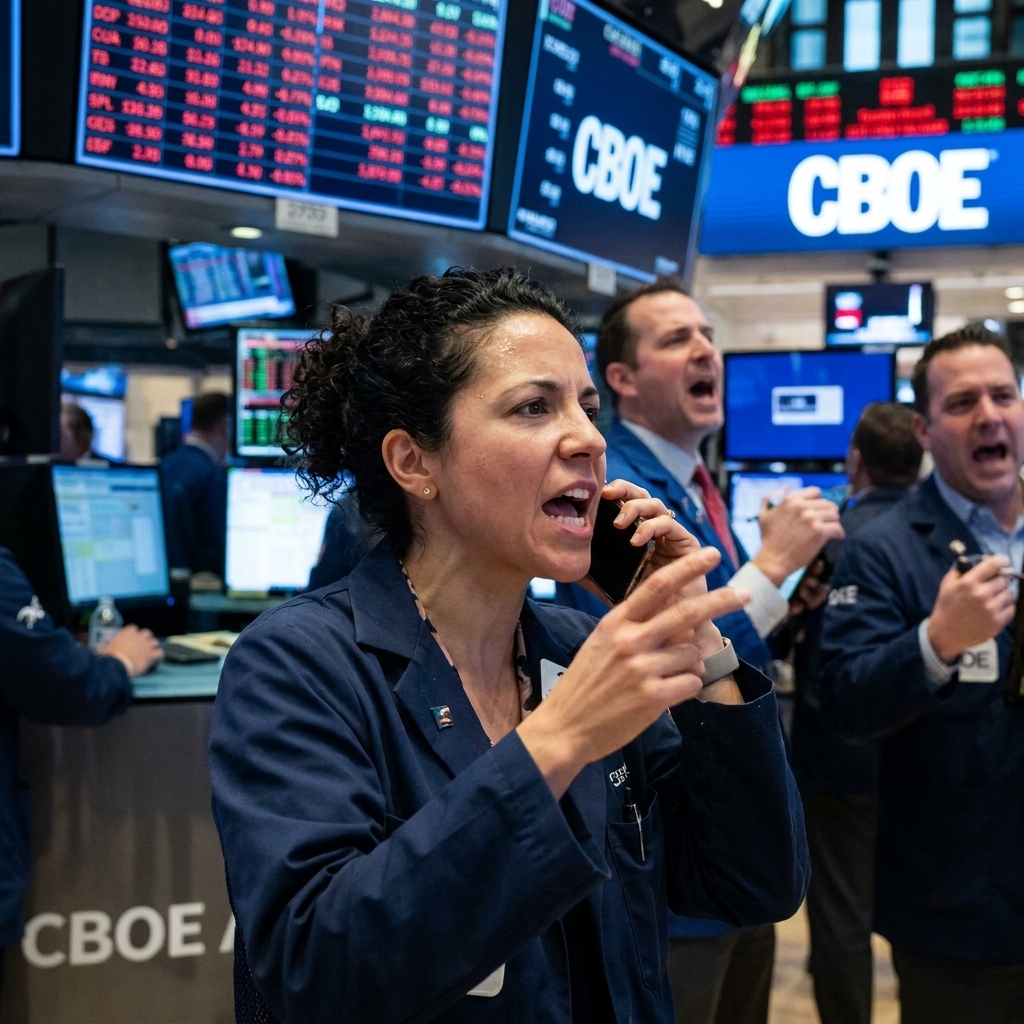
When markets get choppy, I see a very human instinct kick in: we want someone at the wheel. That is the emotional case for active mutual funds, especially in downturns. The analytical case is tougher. Active managers may have more discretion and more levers to pull in a crisis, but they also come with higher costs and a performance bar that is surprisingly hard to clear.
Here is a data-driven look at what tends to happen to active vs. passive mutual funds in volatile markets, what you are really buying when you pay higher fees, and a practical decision framework you can use for your own portfolio.
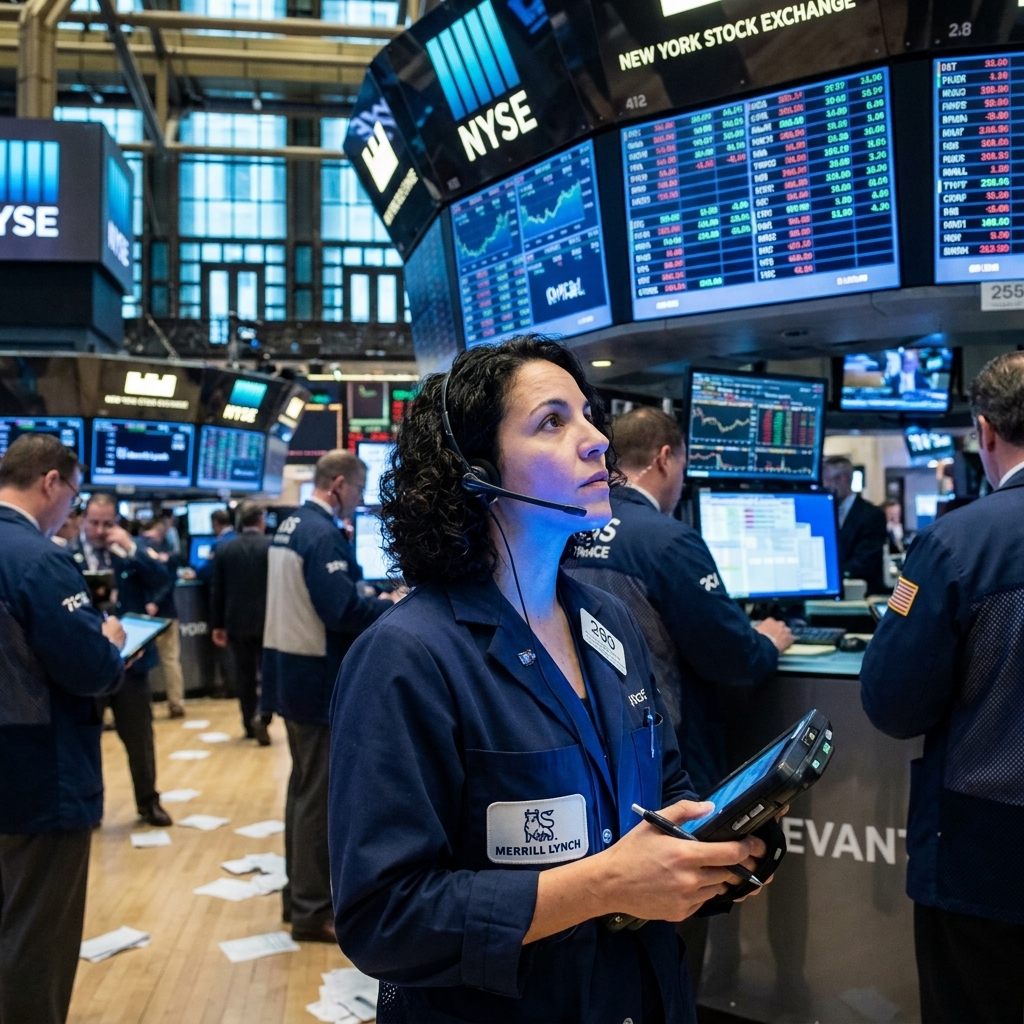
Active and passive in a downturn
Passive mutual funds (index funds)
A passive mutual fund typically tracks an index (like the S&P 500) and aims to deliver the market return minus a small expense ratio. In volatile markets, passive funds will fall when the index falls. They do not attempt to sidestep risk, rotate sectors, or raise cash.
Active mutual funds
An active fund hires a manager (and usually a team) to select securities, manage risk, and try to beat a benchmark. In a downturn, active managers can:
- Hold more cash or short-term bonds (if the mandate allows)
- Shift sector exposure (for example, away from highly levered cyclicals)
- Favor higher quality balance sheets
- Realize losses that can offset realized gains inside the fund, which can help reduce or avoid taxable capital-gains distributions (helpful, but not something shareholders can “claim” directly)
But remember: those decisions do not just have to be “good.” They have to be good enough to outperform after fees, and consistent enough to matter over your holding period.
What the data says in rough markets
The cleanest broad dataset most investors can access is the S&P Dow Jones Indices SPIVA (S&P Indices Versus Active) scorecards. SPIVA reports, by category and time horizon, the percentage of active managers that underperform their benchmarks after fees. SPIVA also seeks to address survivorship bias by accounting for funds that close or merge, which matters when you look at long horizons.
Core finding: most active funds lag over time
Across many equity categories and especially over longer horizons (10 to 15 years), SPIVA has repeatedly shown that a majority of actively managed funds underperform their benchmarks after fees. In plain English: active “wins” exist, but they are rarer than marketing makes them feel.
A concrete example: In SPIVA’s U.S. year-end scorecards, the 10-year results in large-cap U.S. equities have typically shown a clear majority of active funds underperforming their benchmark net of fees. (If you are publishing this, I recommend inserting the most recent year-end statistic for your audience, for example, “In the latest SPIVA U.S. Year-End 20XX report, X% of active U.S. large-cap funds underperformed over 10 years,” and linking the PDF.)
In crises, active can look better, but it is inconsistent
In sharp selloffs, some active funds do provide better downside capture, meaning they lose less than the benchmark. The problem is that:
- Not all active funds are defensive. Many are fully invested and track the benchmark closely, but still charge active-level fees.
- The funds that protect on the way down do not always lead on the way back up. Recoveries can be fast, and staying defensive too long can create a lasting performance gap.
- Leadership changes. The manager who handled one crisis well may not be in the same seat for the next one.
The most honest summary is: active has the ability to be different, but the market does not reliably reward that difference after costs.
Fees matter more when returns are muted
In a bull market, it is easy to ignore a 1.0% expense ratio. When returns are muted or negative, that same fee feels like a heavier anchor because it is a larger share of what you earn.
A simple math check
Imagine two funds in the same category:
- Passive index mutual fund: 0.05% expense ratio
- Active mutual fund: 1.00% expense ratio
That is a 0.95% annual headwind for active. The fee is deducted regardless of whether the manager adds value. So if the benchmark is down 10%, paying a higher fee does not make “down 9%” the default outcome. The manager still has to generate roughly 0.95% of additional gross return just to match the passive option net of costs.
Costs are also broader than the expense ratio:
- Trading costs (higher turnover tends to mean higher friction)
- Cash drag (cash can help in drawdowns, but it is a performance cost in rebounds)
- Tax costs (active mutual funds can distribute capital gains even in down years, depending on turnover and shareholder flows)
One more nuance that matters in taxable accounts: ETFs are often more tax-efficient than mutual funds because of the in-kind creation and redemption mechanism. Mutual funds, especially active ones, are generally more likely to pass through capital-gains distributions.
If you want downside protection
Many investors buy active funds in volatile markets for one reason: “I want to lose less.” That is a reasonable goal, but you have to be precise about what kind of “lose less” you are paying for.
Also, be careful with attribution. A fund that loses less might simply be tilted toward factors like quality, low volatility, or value, not necessarily making superior tactical calls. That can still be a good choice, but it is different from “manager skill.”
Metrics to check
- Maximum drawdown: The worst peak-to-trough decline. Helpful for understanding stress.
- Downside capture ratio: How much of the market’s losses a fund captures in down periods. Lower can be better.
- Upside capture ratio: How much of the market’s gains the fund captures in up periods. Too low can be a red flag.
- Tracking error: How different the fund behaves versus its benchmark. Low tracking error can signal “closet indexing.”
- Sharpe ratio: Risk-adjusted return. Useful, but sensitive to the chosen time period.
If an active fund is marketed as defensive but shows high correlation to the benchmark and low tracking error, you may be paying active fees for index-like behavior.

Where active has better odds
Active’s odds improve in areas where markets are less efficient or benchmarks are harder to replicate cleanly. That does not guarantee outperformance, but it can make the opportunity set more realistic.
Places active can be more competitive
- Small-cap and micro-cap equities: Less analyst coverage, wider dispersion of outcomes.
- International and emerging markets: Higher frictions, varying accounting standards, geopolitical dispersion.
- Municipal bonds: Credit research and tax-aware positioning can matter, and trading can be less liquid.
- Unconstrained or flexible bond strategies: Duration management and credit positioning can help when rate risk is the main story.
Even here, fees still matter. In some categories, “better odds” can get erased by “higher costs.”
Where passive is hard to beat
In highly efficient, heavily researched markets, the hurdle for active is simply high.
Places passive often shines
- Large-cap U.S. equities: The S&P 500 is intensely covered. Mispricings get competed away quickly.
- Core investment-grade bond exposure (depending on the benchmark and fund design): Low-cost, diversified exposure is often the main job.
In volatile periods, passive can be emotionally harder because it does not promise a “plan.” But as a baseline building block, low-cost indexing is still one of the most consistent tools retail investors have.
Common misconceptions
“Active managers go to cash, so they will protect me.”
Some do, some cannot (by mandate), and some should not because it changes the portfolio you thought you owned. Cash is also a timing decision. If markets rebound quickly, staying in cash too long can create whipsaw risk and opportunity cost.
“The best funds will keep being the best funds.”
Performance persistence is weaker than most people assume. Manager changes, style drift, and market regime shifts can all turn yesterday’s winner into tomorrow’s laggard.
“Higher fees mean better talent.”
Fees are a price tag, not proof. What matters is whether the process is repeatable, risk-aware, and aligned with the benchmark and the investor’s needs.
A practical decision framework
If you are deciding whether to pay for active in a volatile market, I recommend starting with three questions.
1) What is the job of this money?
- Core, long-term growth (10+ years): Passive often wins on simplicity and cost.
- Downside-managed sleeve: Consider active, but define success (smaller drawdowns, smoother ride, or absolute return).
- Income and tax management: Active can be worthwhile in certain bond and muni strategies, but scrutinize distributions.
2) Is the fund truly active?
Look for signs of “closet indexing”:
- High fee plus low tracking error
- Holdings that resemble the benchmark
- Performance that hugs the index, just slightly worse after costs
3) Is the edge plausible net of costs?
Ask, in plain language:
- What is the manager’s repeatable advantage?
- When does it tend to work, and when does it tend to struggle?
- How much turnover is there, and what has that meant for taxes and distributions?
- Is the fee reasonable for the category?
Quick screening steps
- Compare net results to a true low-cost index peer in the same category over 3, 5, and 10 years (and look at worst calendar year).
- Check manager tenure and team stability. A great “fund track record” can include multiple regimes and multiple decision-makers.
- Review turnover and distribution history, especially in taxable accounts. A fund can “perform fine” pre-tax and still disappoint after-tax.
A grounded takeaway
If you want the most evidence-based answer, it is this: passive tends to be the default winner over time because costs are certain and outperformance is not.
Active can earn its keep during downturns in specific cases, especially when:
- You are in a less efficient market segment
- The strategy is genuinely differentiated (not benchmark-hugging)
- The manager has demonstrated disciplined risk management across cycles
- The fee is not doing most of the damage before the portfolio even starts
The best real-world compromise for many investors is a core-and-satellite approach: build the core with low-cost index funds, then use a smaller satellite allocation for carefully chosen active strategies where you believe the odds and the fee structure make sense.
Quick FAQ
Are active mutual funds better in a recession?
Not automatically. Some active funds reduce losses more than the benchmark, but many still underperform net of costs. The strategy and category matter more than the “active” label.
Should I switch to active funds when markets get volatile?
Usually, no as a reactive move. Switching in the middle of volatility often becomes a timing decision. If you want active exposure, decide based on your long-term plan and a clear role for active in the portfolio.
What is the biggest risk of active in a downturn?
Paying higher fees for index-like exposure, or missing the rebound due to defensive positioning that lingers too long. Taxes from capital gain distributions can also surprise investors in taxable accounts.
What is the simplest approach if I feel overwhelmed?
Use diversified, low-cost index mutual funds (or ETFs) aligned to your risk tolerance, keep an emergency fund, and rebalance on a schedule. In volatile markets, a good plan beats a perfect prediction.
Disclosure: This article is for educational purposes and does not constitute investment advice. Consider your risk tolerance, time horizon, and tax situation, and consult a qualified professional for personalized guidance.