When my parents were running their agricultural supply business, there was one number that seemed to quietly control everything: what the bank believed our assets were worth. Not what we felt they were worth, not what a neighbor said they could sell for, but the value the lender could defend on paper.
HELOCs work the same way. Before a lender gives you a revolving line of credit against your home, they need a credible value estimate. Sometimes that means a traditional in-person appraisal. Sometimes it is faster and cheaper, like an exterior-only appraisal, a desktop or hybrid appraisal, or an automated valuation model (AVM) based on data.
Here is how lenders decide which method to use, what you might pay, and what to do if your home value comes in lower than you expected.

Quick answer: yes, some valuation is nearly always required
Most HELOC lenders require a value determination before closing. That determination can be:
- Full appraisal (interior and exterior inspection)
- Exterior-only appraisal (often called a drive-by appraisal)
- Desktop or hybrid appraisal (an appraiser develops the value without an interior visit, using data and photos, sometimes with a third-party inspection)
- AVM (Automated Valuation Model, a data-driven estimate that typically involves no visit)
Which one you get depends on your loan size, your equity, property type, your credit profile, and the lender’s risk rules. A small number of programs may rely on an AVM only or advertise “no appraisal” in limited situations, but the lender is still establishing a value they will lend against.
Why HELOC lenders care so much about the value
A HELOC is secured by your home, so the lender wants to confirm they can recover their money if they ever have to foreclose and sell. That is why your home value and your combined loan-to-value ratio (CLTV) drive the decision.
CLTV compares your total mortgage debt to the home’s value:
CLTV = (current mortgage balance + new HELOC limit) ÷ appraised value
Many lenders cap CLTV typically around 80% to 90%, though requirements vary by lender and can shift based on credit score, occupancy (primary vs investment), property type, debt-to-income, and other program rules.
That cap is exactly why the valuation method matters: the higher the defensible value, the more potential borrowing capacity you have.
Full appraisal: when lenders want an interior inspection
A full appraisal is the most traditional method. A licensed appraiser visits your home, inspects the interior and exterior, takes photos, measures the property, notes condition and upgrades, and compares it to recent nearby sales. The output is a written appraisal report that supports an opinion of value.
Common reasons a lender requires a full appraisal
- Higher HELOC limits: The larger the line, the more the lender wants a fully documented valuation.
- Higher CLTV: If you are borrowing near the lender’s maximum, they may want the strongest support for the value.
- Unique or hard-to-value homes: Custom homes, rural properties, or homes with limited comparable sales often need a human appraiser.
- Multi-unit or non-warrantable scenarios: 2 to 4 units, condos with quirks, or properties with mixed use can trigger stricter valuation.
- Recent market volatility: In rapidly shifting markets, some lenders tighten requirements.
- Concerns from underwriting: Prior listing history, condition concerns, or inconsistent data can lead to a full appraisal request.
Typical cost and timing
Costs vary by region and property complexity, but a full appraisal for a HELOC often runs about $400 to $800+. It can be higher for large, complex, or remote properties.
Turnaround time is often several days to two weeks, depending on scheduling and how backed up local appraisers are.
Exterior-only appraisal: when the lender wants a human, but faster
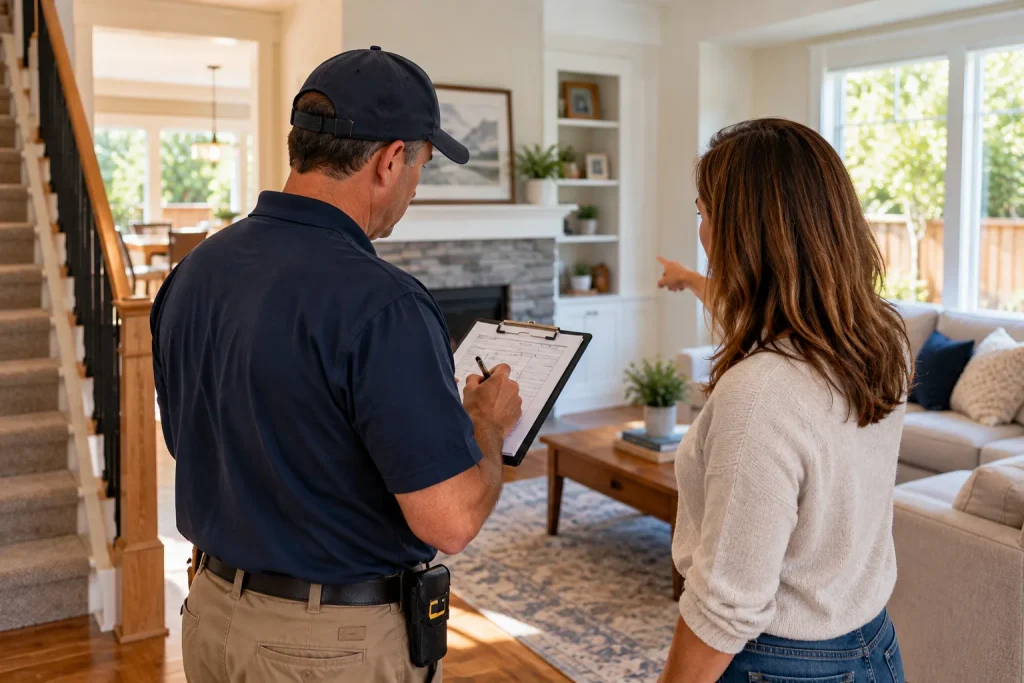
An exterior-only appraisal (often called a drive-by appraisal) typically means the appraiser does not inspect the interior. They verify the property exists, evaluate exterior condition, note neighborhood factors, and rely more heavily on public records and comparable sales.
When an exterior-only appraisal is common
- Moderate loan amounts where the lender wants more than an AVM but less than a full interior inspection.
- Lower-risk profiles, such as strong credit and plenty of equity.
- Standard single-family homes in neighborhoods with lots of comparable recent sales.
Typical cost and timing
Exterior-only appraisals are generally cheaper than full appraisals. A common range is about $150 to $400, but pricing varies by market and lender contracts.
Timing can be quicker, often a few days if an appraiser is available.
One important nuance: because the appraiser does not see inside, they must make assumptions about interior condition. If your home is in significantly better condition than typical comps, the exterior-only method may not give you credit for that the way a full appraisal might.
Desktop and hybrid appraisals: a common middle ground
Desktop appraisals are developed by a licensed appraiser without an in-person visit, using public records, MLS data where available, maps, and sometimes borrower-provided or third-party photos. Hybrid appraisals usually combine a third-party property data collection visit with an appraiser’s analysis and final value opinion.
When lenders use them
- Standard properties with strong comparable sales data.
- When speed matters, but the lender still wants an appraiser to sign off.
- When an AVM result is uncertain and the lender wants a step up without going all the way to a full interior appraisal.
If the lender starts with an AVM and then “upgrades” you to a desktop, hybrid, exterior-only, or full appraisal, expect the timeline to stretch and the fee to potentially change. It is worth asking upfront what happens if the valuation method changes midstream.
AVM: when the lender relies on data instead of a visit
An Automated Valuation Model (AVM) uses data such as recent sales, public property records, tax assessments, MLS data (where available), and market trends to generate a value estimate. No one comes to your house.
When lenders use an AVM for a HELOC
- Lower HELOC limits where the lender’s risk is smaller.
- Very strong equity positions where the CLTV would remain conservative even if the AVM is a bit off.
- Homes in data-rich areas with many comparable sales.
- Fast approvals: Many online and bank HELOC processes use AVMs to keep the application moving.
Cost and timing
AVMs are typically low cost or no direct cost to the borrower because the lender can generate them instantly. You might still see an “appraisal” or “valuation” fee on your estimate, but it is often smaller than a full appraisal fee.
The tradeoff
AVMs can be very accurate in cookie-cutter neighborhoods with frequent transactions. They can be less reliable for unique homes, homes with major renovations not reflected in public records, or markets with fewer sales. If the AVM flags uncertainty, the lender may upgrade you to an exterior-only, desktop or hybrid appraisal, or a full appraisal.
Who pays for the appraisal on a HELOC?
It depends on the lender and on promotions, but in many cases:
- The borrower pays the appraisal or valuation fee, either upfront or at closing.
- The lender may waive it as a promotion, especially for strong borrowers or higher-balance HELOCs.
- The lender may pay but require you to keep the HELOC open for a certain period. If you close it early, they may charge you back for third-party costs.
Always read the HELOC estimate and closing disclosures carefully. Ask one very specific question: If I close or refinance this HELOC within the first 12 to 36 months, do you charge back appraisal, title, or recording fees?
How the appraisal affects your HELOC limit
Your HELOC limit is usually determined by:
- Appraised value (or AVM value)
- Lender’s max CLTV
- Your current mortgage balance
- Lender’s HELOC maximums (minimum and maximum line sizes)
Example: how value sets the limit
Let’s say:
- Home value estimate: $500,000
- Current mortgage balance: $320,000
- Lender max CLTV: 85%
Max total debt allowed: 85% × $500,000 = $425,000
Potential HELOC limit: $425,000 − $320,000 = $105,000
If the value comes in at $470,000 instead, max total debt is $399,500 and your potential HELOC limit becomes $79,500. Same house, same mortgage, different value. That is why this step can feel so personal.
What to do if the appraisal comes in low
A low valuation can reduce your credit limit or cause a denial if you no longer fit the lender’s CLTV requirements. Before you panic, treat it like any other business decision: verify inputs, challenge errors, then adjust the plan.
1) Ask for a copy of the appraisal or valuation summary
In the U.S., federal rules generally require lenders to provide applicants a copy of appraisals and other written valuations promptly after completion, or earlier upon request. Review it for:
- Incorrect square footage
- Wrong bed or bath count
- Missing finished basement or additions that are permitted and recorded
- Condition assumptions that do not match reality
- Comparables that seem far away or clearly inferior
2) Request a reconsideration of value (if the lender allows it)
Many lenders have a process called a Reconsideration of Value (ROV). You are most likely to succeed when you provide specific evidence, such as:
- Two or three better comparable sales (same neighborhood, similar size, similar condition, sold recently)
- Documentation of major upgrades (receipts, permits, contractor invoices)
- Corrections to factual errors
Avoid arguments like “Zillow says.” Automated estimates can be useful context, but appraisers and underwriters need supportable comps and accurate property data.
3) Consider lowering the requested line
If your goal is access to cash, not the biggest possible limit, a smaller HELOC may fit the CLTV rules without fighting the valuation.
4) Pay down the first mortgage (if you were planning to anyway)
Reducing your existing mortgage balance can improve CLTV even with a lower value. This only makes sense if you have the cash and your broader financial plan supports it.
5) Try another lender, but do it strategically
Different lenders have different valuation overlays. One may accept an AVM where another insists on a full appraisal. That said, if the issue is truly market value and not an appraisal error, changing lenders may not change the result.
6) Wait if time is on your side
If you are not under a deadline, you may choose to wait for additional neighborhood sales to support a higher value or to complete planned improvements. Just keep in mind: improvements do not always translate dollar-for-dollar into value, especially if they are very personalized.
How to prepare for a HELOC appraisal
If a full appraisal is required, you cannot sell your home to the appraiser, but you can make the facts easy to verify.
- Make the home accessible: Clear paths to the attic access, electrical panel, water heater, and key rooms.
- Provide an upgrade list: Include dates and rough costs for big-ticket items like roof, HVAC, windows, kitchen remodel, basement finish.
- Gather permits when available: Especially for additions, finished basements, or major systems.
- Handle obvious deferred maintenance: Small fixes do not always boost value, but they can reduce negative condition adjustments.
- Know your comps: If you are in a neighborhood with a few standout comparable sales, have addresses ready.

HELOC appraisal FAQ
Can I use my own appraisal for a HELOC?
Usually no. Most lenders require an appraisal ordered through their own process to meet independence rules. They may review outside information, but they typically will not accept a borrower-ordered appraisal as the official valuation.
Will a HELOC lender use the purchase price if I bought recently?
Sometimes, but not always. If you purchased very recently and the lender believes the sale was arm’s length, it can influence valuation. Still, many lenders will run an AVM or require an appraisal if market conditions have changed or if you are requesting a high CLTV.
Does a HELOC appraisal affect my property taxes?
A lender appraisal is generally for underwriting and does not directly change your assessed value. Property taxes are set by local assessment methods, not your bank’s appraisal. That said, if you appeal your taxes, appraisal-type evidence can be relevant.
Is an AVM the same as Zillow or Redfin?
Conceptually similar, but not identical. Zillow and Redfin publish consumer-facing estimates. Lenders use AVMs built for underwriting and risk management and may combine multiple models with internal rules.
Can I refuse a full appraisal and ask for an AVM?
You can ask, but the lender decides. If their underwriting requires an interior inspection, declining the appraisal usually means the application cannot move forward.
The bottom line
You do not always need a full, inside-the-house appraisal for a HELOC, but you should expect some valuation method. The lender’s goal is simple: establish a defensible home value so they can set your credit limit within their CLTV rules.
If you are applying soon, plan for the valuation step the same way you would plan for interest rates or fees. Ask which method the lender expects to use, what it costs, and what happens if the value comes in lower than anticipated. A two-minute conversation upfront can save you weeks of frustration later.